Posts tagged as:

words

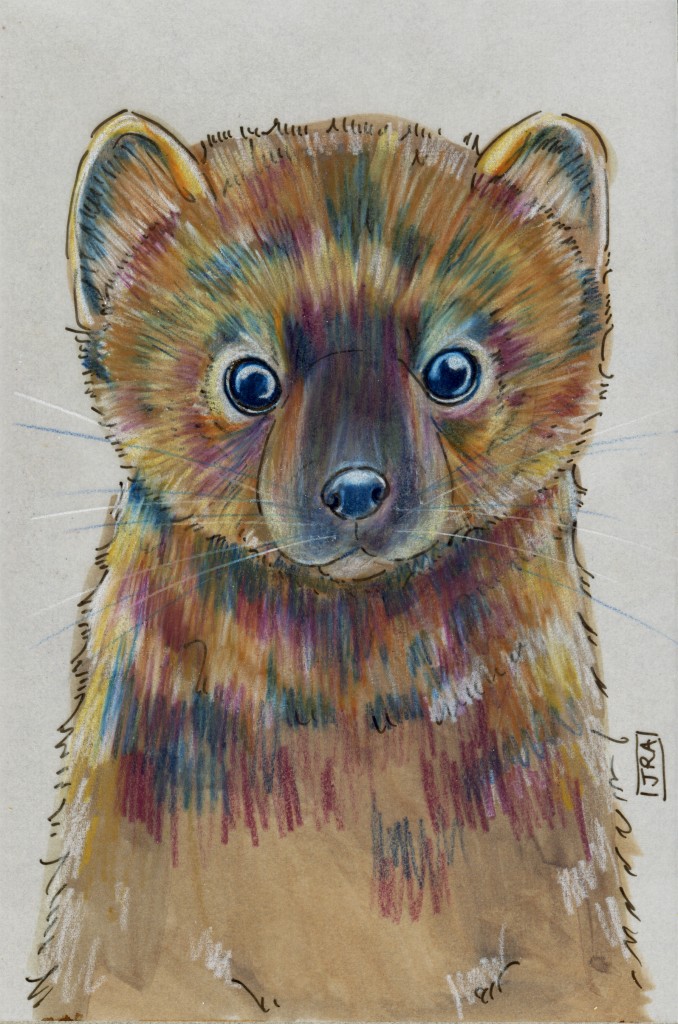
Beech marten (click image to enlarge)

0323

The World Cup continues and so do the mammals! Today we have a beech marten from Slovenia. Also called the stone marten, the beech marten is pretty widespread in Europe and Asia. It lives in forests, nests in cozy crevices and hollows, and eats rodents, birds and their eggs, and berries. In researching the beech marten, I learned a new word: commensal, as in “Commensal beech martens may cause damage to roofs, insulation, and electrical wiring and pipes in houses and cars,” which is a quote from the beech marten’s page on the IUCN Red List. The dictionary says that a commensal relationship is one in which one organism benefits and the other is neither benefited nor harmed (hmm, I think I may have been in a commensal relationship myself once or twice), which confused me because it seems like damage to roofs, insulation, and electrical wiring could qualify as harm. Basically, in biology, commensal animals are those who live among humans and may annoy us but don’t get in the way too much, if I’m understanding it correctly. Rats, for example, are commensal with us. And Wikipedia points out that the mites that live in our eyelash follicles are an example of commensalism, too! Oh good!

Slovenia came in third in Group C, ahead of Algeria but behind the U.S. and England. The team was formed after Slovenia split from Yugoslavia in 1991, and this was their second World Cup.

Group C Results

In Group C, we had the European beaver from England, the American badger from the U.S., the Barbary macaque from Algeria, and today’s Slovenian beech marten. Tough group! The beaver is a rodent, but a tough one, and even though beech martens do eat rodents, I don’t think they eat rodents that weigh ten times more than they do. Badgers are notoriously vicious. I usually give an edge to primates, but the Barbary macaque is kind of small and herbivorous. So I think the mammalian Group C goes in the exact order the soccer one did, and the two mammals continuing on to the Round of 16 are:

American Badger (USA)
and
European Beaver (England)

{ 4 comments }

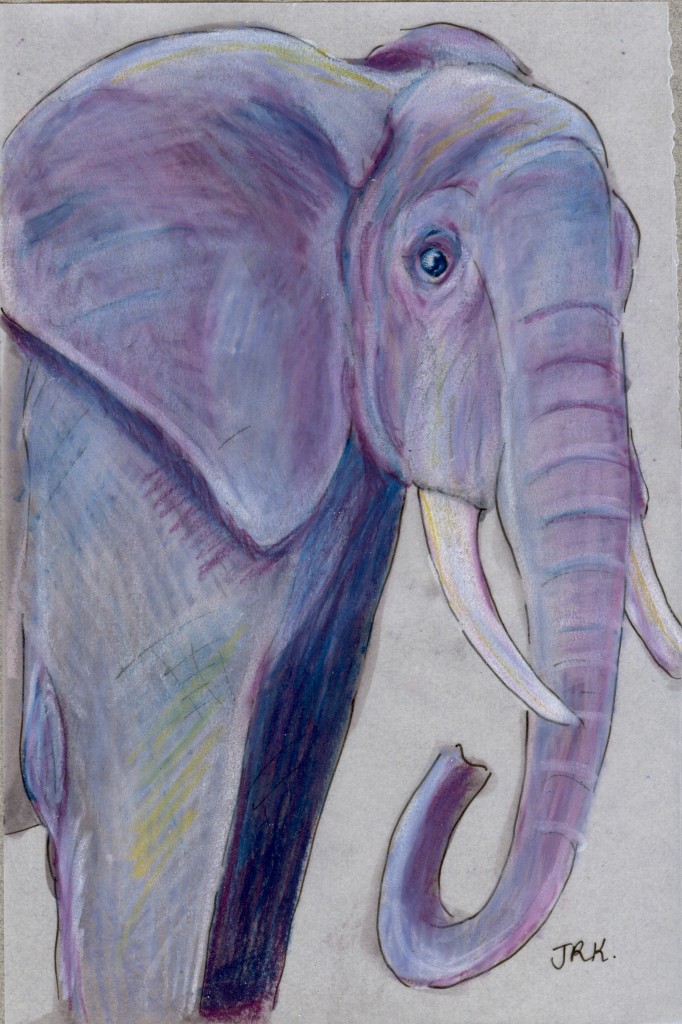
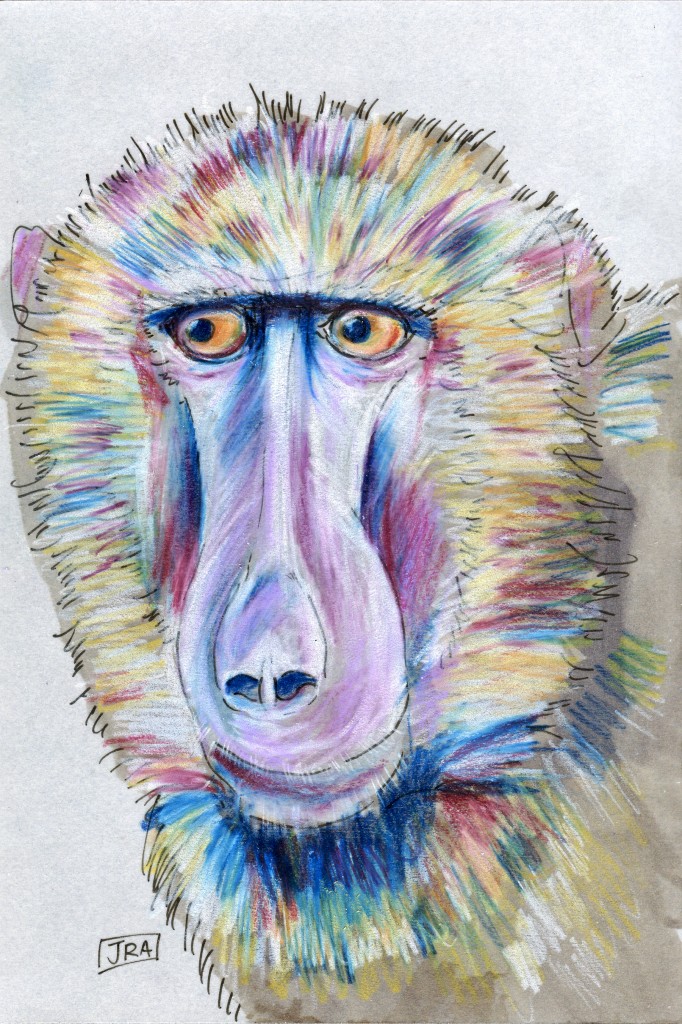
African bush elephant (click image to enlarge)

0319

We’re still celebrating the World Cup here at the Daily Mammal, and today we’re closing out Group B with Nigeria and the African bush elephant. These days, scientists generally divide the African elephant into two species, the bush elephant and the forest elephant. Then there’s the Asian elephant, for a total of three kinds of elephants in the world. The biggest is the African bush elephant, which can stand nearly 12 feet tall and weigh, oh, 10 tons or so. In fact, the African bush elephant is the largest land mammal of all.

I’ve just learned a few interesting things about elephants. One is that the sound of buzzing bees will drive elephants away, which means there may be an easy way to keep them from destroying farms and getting themselves killed: play them a recording of a buzzing hive, and feet-don’t-fail-me-now, or at least until they realize that it is just a recording. We need to do more study to see what would happen.

Another thing: the most common natural death for elephants is starvation. They go through several sets of teeth, each new set growing in just as the previous set is used up. But the last of their teeth are worn out around the age of 65 or 70, not to be replaced, and without being able to really eat, they starve to death. It seems so cruel, but that’s evolution for you.

And finally, a new word: musth. It’s the name for a periodic state that male elephants go through, when their testosterone levels shoot up and they become aggressive, cranky, and dangerous to know, with only one thing on their minds. The word comes from a Persian word meaning intoxicated. (The link above is to a site about keeping elephants in zoos and circuses. About musth, it says, “It is also very discouraging for the elephant keeper to work with a withdrawn, extremely aggressive elephant, which disapproves everything and actually is out to kill him.” I imagine that’s true!)

Nigeria’s soccer team is nicknamed the Super Eagles. This is their fourth World Cup; twice before they’ve made it to the Round of 16, but never any further. They came in third in this year’s African Cup of Nations, the biggest tournament in Africa (well, when the World Cup isn’t there, of course). I suppose it’s possible that they could move out of the first round this year, but of all the possible endings in Group B, only one allows that possibility. (They need Argentina to beat Greece, and then Nigeria needs to beat South Korea, and the goal differential among the non-Argentina teams needs to fall in Nigeria’s favor.) I wish that in this first World Cup held in Africa the African teams were doing better, but Ghana is the only one that’s won a game so far. (Nigeria likely would have won against Greece if not for Sani Kaita’s red card; see my Greece post for more on that.)

Group B Results

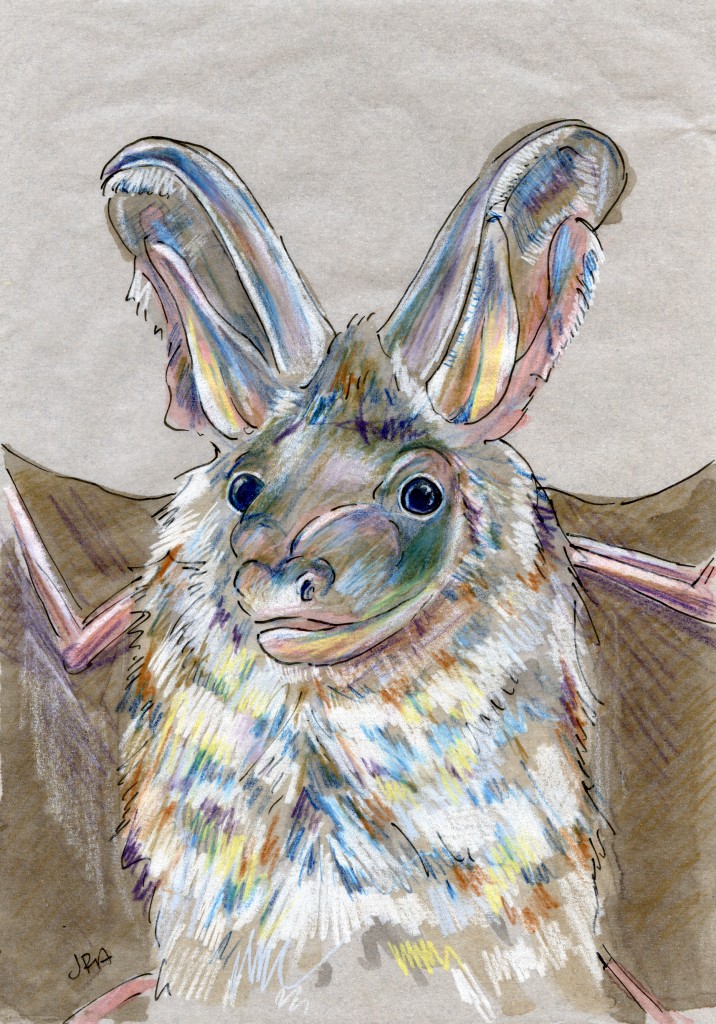
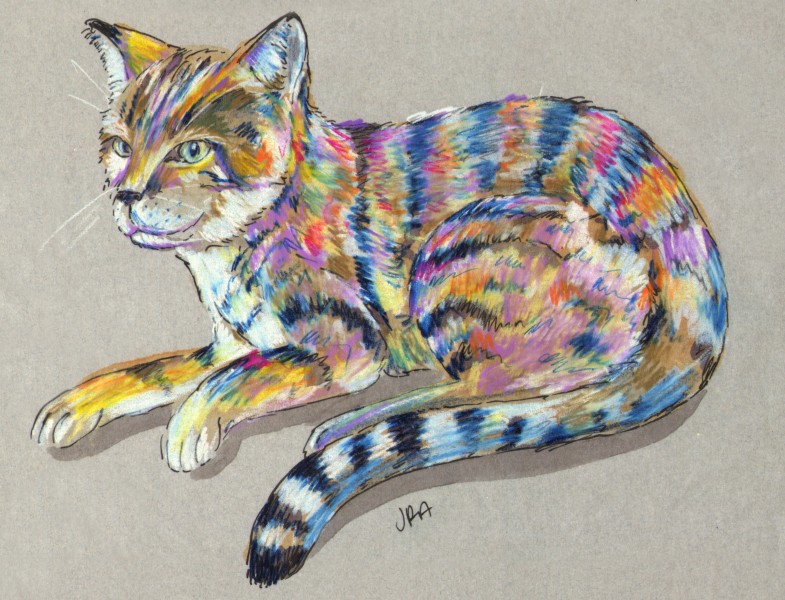
What two mammals will continue on to the Group of 16 Mammals from Group B? We have South Korea’s leopard cat, the Mediterranean horseshoe bat from Greece, Argentina’s Patagonian mara, and this here elephant. The bat may be able to get some draws by flying away from the match. Let’s say that’s what it does in all three matches, earning it 3 points (you get one point for a draw in the World Cup). The elephant obviously would trample the mara and the cat, giving it three points for each win and one for its draw with the bat, or a total of 7 points. I think the cat would beat the mara and draw with the bat, so it would have 4 points, and the mara would just have one point for its draw with the bat. So continuing on to the next round from this group are:

African bush elephant (Nigeria)
and
Leopard cat (South Korea)

{ 8 comments }

Red Squirrel (Sciurus vulgaris)

by JR Kinyak on June 11, 2010

in Rodents

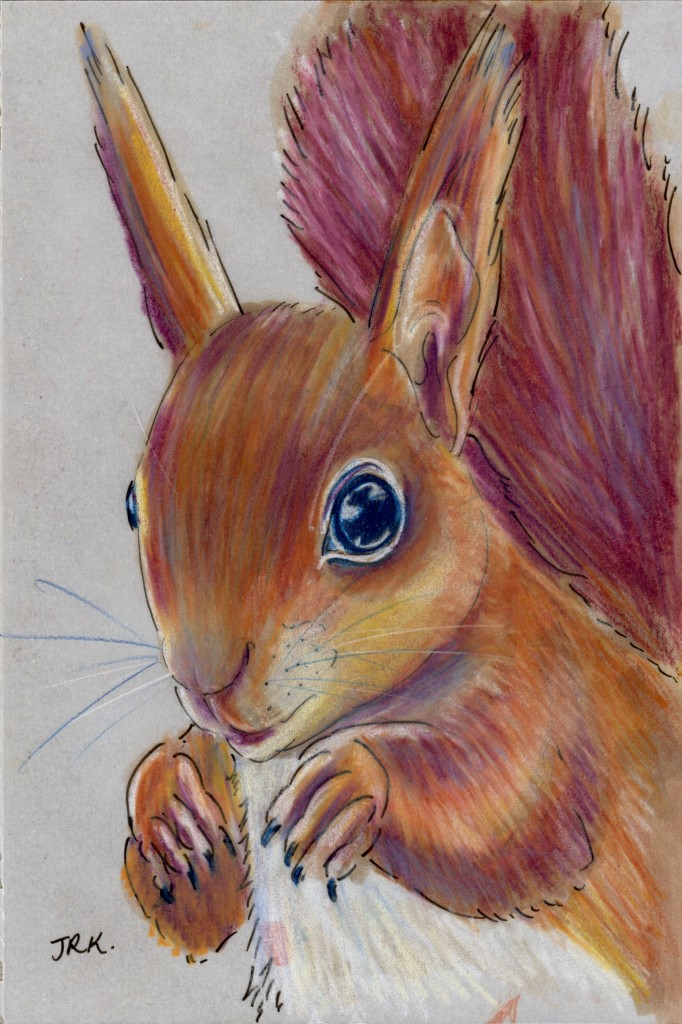
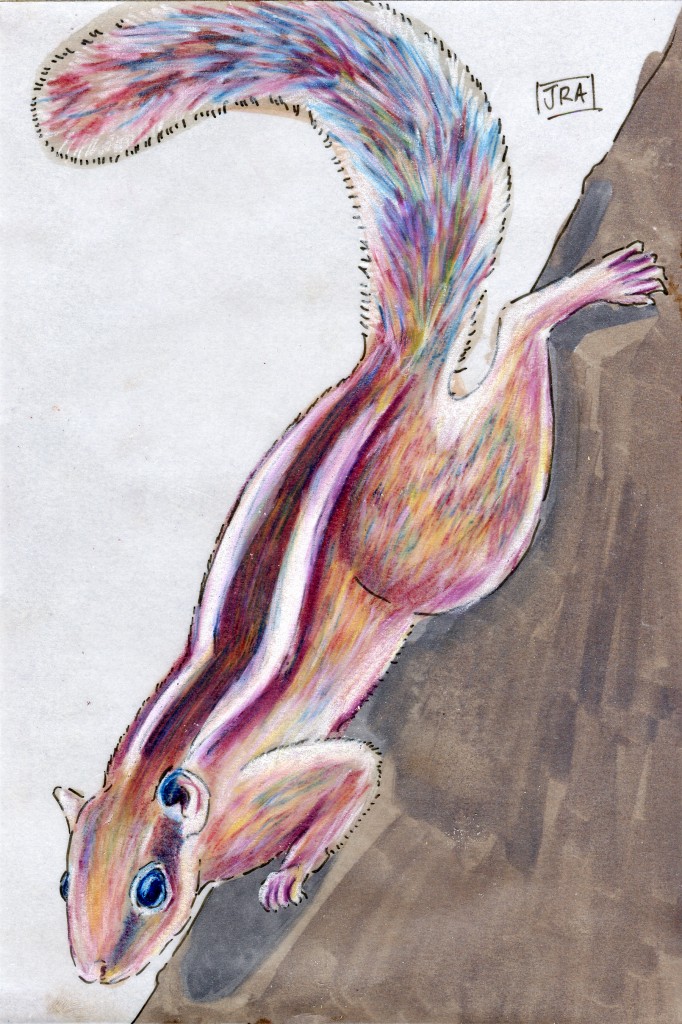
Red squirrel (click image to enlarge)

0310

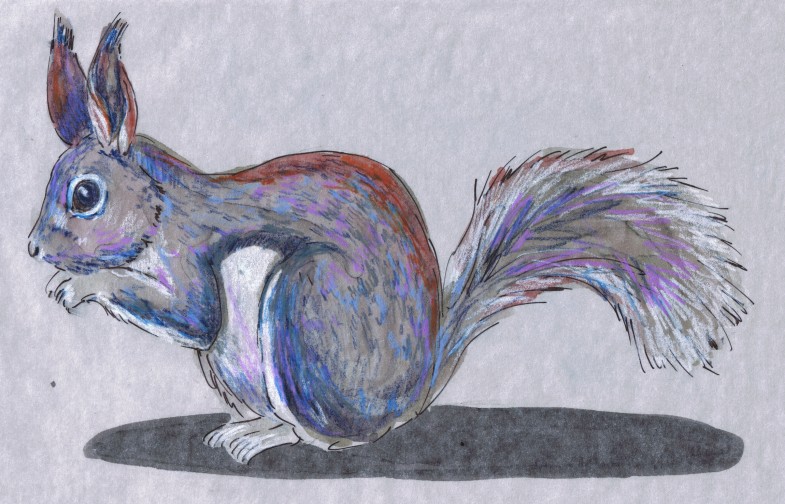
This pretty red squirrel species lives in Europe and Asia. In Italian, its name is scoiattolo comune, in German it’s Eichhörnchen, in French it’s ecureuil roux, in Swedish it’s ekorre, in Danish it’s egern, and in Spanish it’s ardilla roja.

Earlier this week, our friends visited, and one of their kids, nine-year-old Nicola, drew some mammals with Coco and me. Here are Coco’s and Nicola’s squirrels, which are a different species from the red squirrel I drew, but fit here anyhow.

Sleeping squirrel by Coco, age 11


Hungry squirrel by Nicola, age 9

{ 0 comments }

Brush-tailed Phascogale (Phascogale tapoatafa)

by JR Kinyak on September 13, 2009

in Marsupials

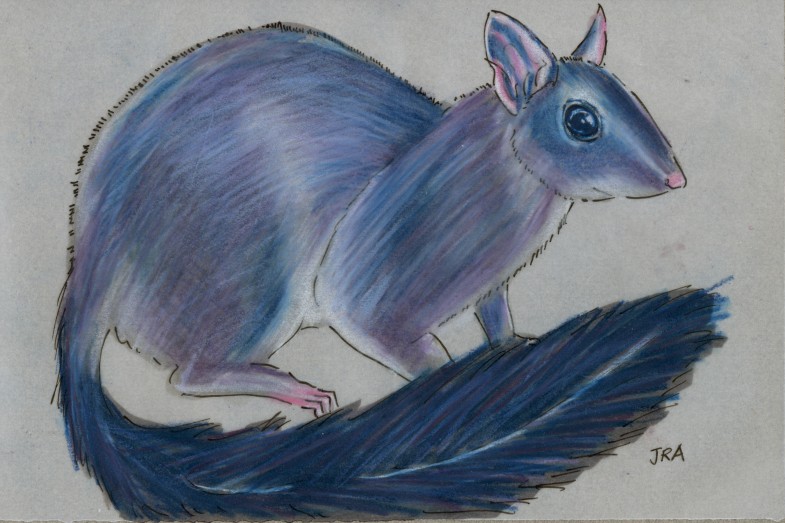
Brush-tailed phascogale (click image to enlarge)

Brush-tailed phascogale (click image to enlarge)


0286

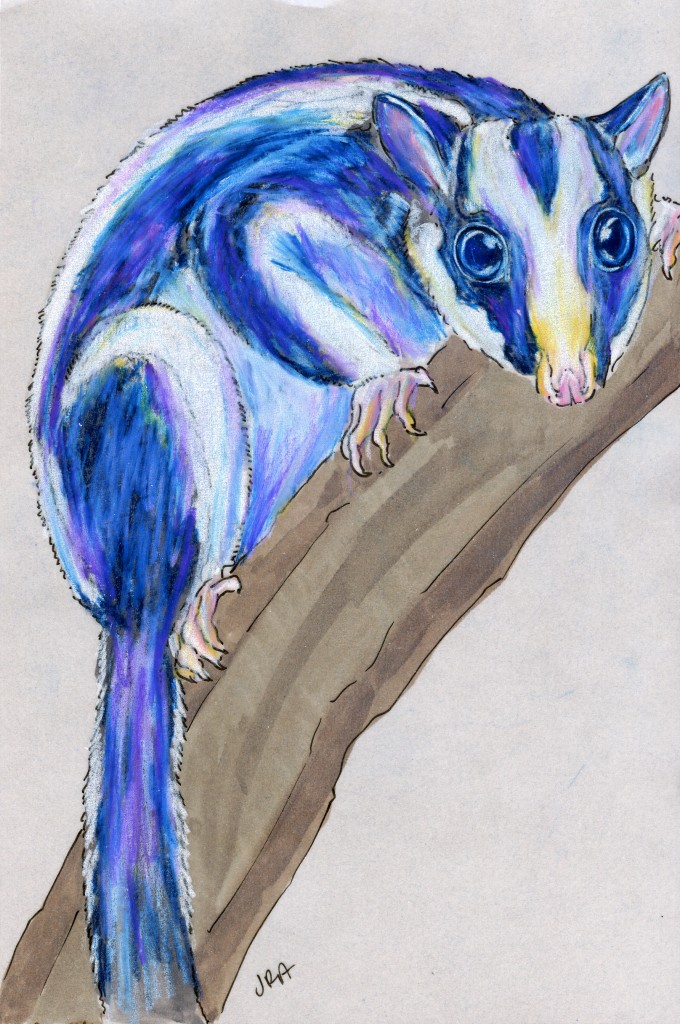
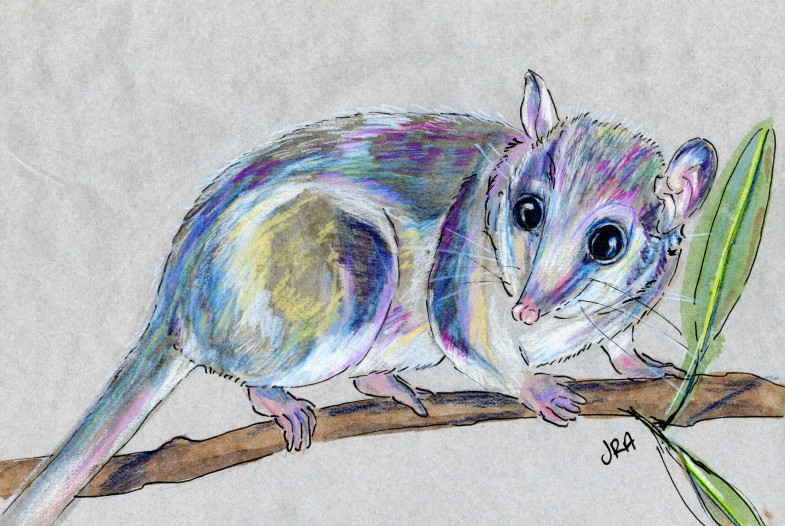
The brush-tailed phascogale (also called the tuan or the brush-tailed marsupial mouse) is a marsupial that lives in a few scattered regions around the edges of Australia. Brush-tailed phascogales (perhaps I’ll call them BTPs) are arboreal, nocturnal, and solitary—in other words, they scamper around the treetops at night, all alone in the moonlight. They like to eat lizards, birds, insects, and small mammals like mice, and they’re pretty agonistic, a zoological word meaning combative. BTPs can make a few different noises, and I like the way Walker’s describes them:

“When disturbed, P. tapoatafa utters a low, rasping hiss, which apparently is an alarm note. When angered, tuans emit a series of staccato ‘chit-chit’ sounds. Sometimes, when excited, tuans slap the pads of their forefeet down together while holding an alert, rigid pose, thus producing a sharp rapping sound. At times they also make a rapid drumming noise by quick vibrations of the tail.”

That all sounds quite similar to my daughter’s 5th-grade band in their first week together after the teacher told them, “You can make as much noise as you want before you pack up.”

The IUCN classifies the BTP as near threatened. Its numbers have been declining because of habitat loss and alteration and, to a lesser extent, being eaten by foxes and cats.

{ 1 comment }

Fisher (click image to enlarge)

Fisher (click image to enlarge)


0269

Fishers live only in North America, and currently only in northern North America, from Alaska and Canada down to the Sierra Nevadas and the Appalachians. At one time, they ranged as far south as Tennessee and North Carolina, but they’ve disappeared from much of their historic range because of excessive trapping and habitat loss from logging.

Fishers don’t get their name because they eat fish. They mainly eat birds, small mammals, and carrion. It’s possible that they’re called fishers because at one point they raided some fisherman’s fish traps, but it’s most likely that the name comes from the Dutch word fitchet, or polecat—an animal the fishers resemble. (Incidentally, fitchet comes from the root visse, which means “nasty.”)

The fisher is one of the only animals that can kill a porcupine. It sounds quite horrific, really. The fisher will circle the porcupine, taking every opportunity to bite the porcupine’s face, where it doesn’t have quills. The porcupine circles, too, trying to keep its back to the fisher. Sometimes the porcupine will seek protection by pressing its face against a tree; the fisher might climb the tree and attack from above, forcing the porcupine away. When the porcupine has sustained enough injuries to the face to wear it out and stop it from protecting itself, it dies, often from shock, blood loss, or injuries to the top of the head! Then the fisher starts eating, beginning with the heart, liver, and lungs, and leaving behind only the feet, skin, and bones of the porcupine.

{ 4 comments }

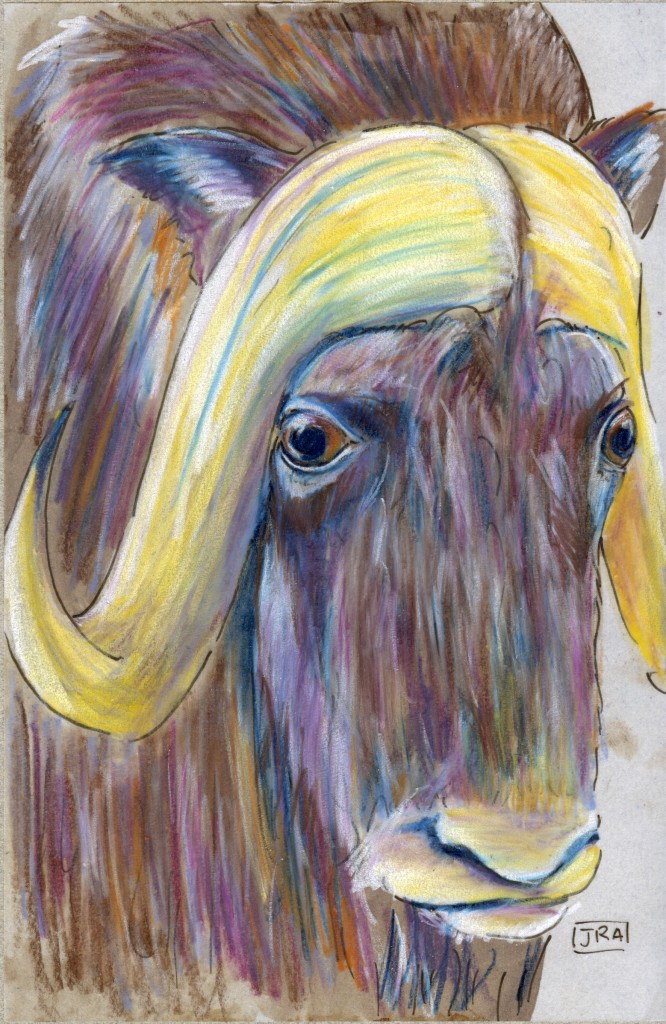
Muskox (click image to enlarge)

Muskox (click image to enlarge)


0265

To honor (if that’s the word) Sarah Palin’s stepping down as governor as Alaska, let’s meet some of the mammals of the 49th state. (Because yesterday’s beluga whale lives in Alaska, I took the liberty of retroactively including it in this theme week, which I only just thought of.)

The muskox’s scientific name means “musky sheep-cow.” DNA analysis suggests that it’s more closely related to the goat family than to sheep or cows, and it doesn’t have musk, per se, but it does have rather pungent urine that it uses in various intimidating ways.

Muskoxen are native to Alaska, Greenland, and Canada, but they became extinct in Alaska in the 1800s. In the 1930s, 34 muskoxen from Greenland were reintroduced to the then-territory, and now there are some 2,000 living in the state. They’ve been introduced to Svalbard, Russia, and parts of Scandinavia, too.

The muskox has two coats, an outer one called guard hairs and an incredibly warm, downy undercoat called qiviut. And yes, that is an acceptable Scrabble word! Pronounced kiv-ee-yute, qiviut is several times warmer than sheep’s wool and softer than cashmere. As you can imagine, that means it’s very luxurious and expensive. (If anyone wants to send me a qiviut scarf, I won’t complain!)

Qiviut is one of the muskox’s very effective Arctic adaptations; others include short legs and a lot of body fat. Those short legs and fatty bodies mean that muskoxen can’t run very fast for very long, so when they’re threatened, a herd of muskoxen will line up facing their predator, showing their fearsome horns and keeping their calves behind them. If the predators come from multiple directions, the muskoxen form a circle with the babies in the middle.

{ 1 comment }

Bat-eared Fox (Otocyon megalotis)

by JR Kinyak on May 8, 2009

in Carnivores

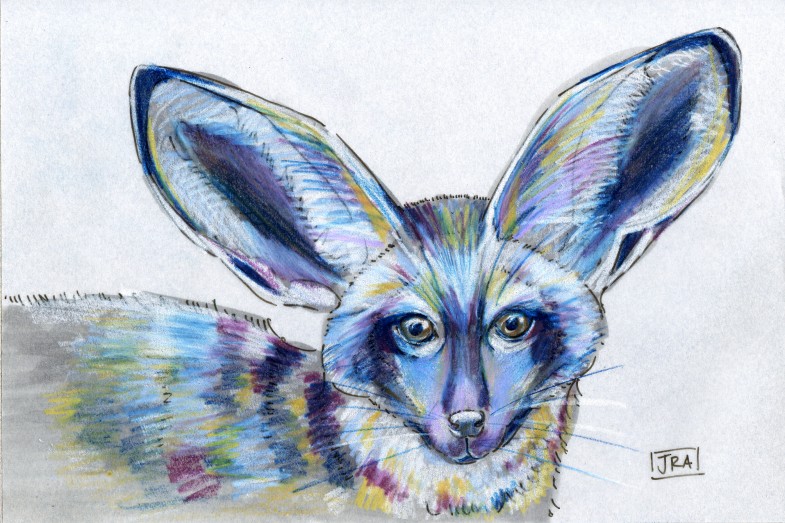
bat-eared fox (click image to enlarge)

bat-eared fox (click image to enlarge)


0259

Well, that’s an apt name! This fox (whose scientific name translates into something like ear-dog big-ear), lives in two separate areas of Africa that are about 1,000 km (621 miles) apart. One is in the eastern part of the continent, ranging from Ethiopia and southern Sudan to Tanzania, and one is in the south, from southern Angola to South Africa. Depending on where they live, bat-eared foxes eat insects, other arthropods, rodents, birds’ eggs, and plants. They’re especially keen on termites and dung beetles.

Besides those extra-large ears (which they use for sending each other visual signals as well as for hearing, and I wouldn’t be surprised if they serve a cooling purpose, too, out there in the desert), the bat-eared fox has unusual dentition, which means the arrangement of its teeth. May I throw around some more mammalogist jargon just to impress you? The bat-eared fox has more teeth than any other placental, heterodontal mammal. That means it has a lot of choppers. Okay, specifically, it has the most teeth of all of the non-marsupial mammals that have kinds of teeth that are different from each other. For instance, humans: we’re placental with heterodontal dentition. But our pieholes are not nearly so crowded with the ol’ pearly whites.

{ 2 comments }