Posts tagged as:

wolf

Ethiopian Wolf (Canis simensis)

by JR Kinyak on April 9, 2010

in Carnivores

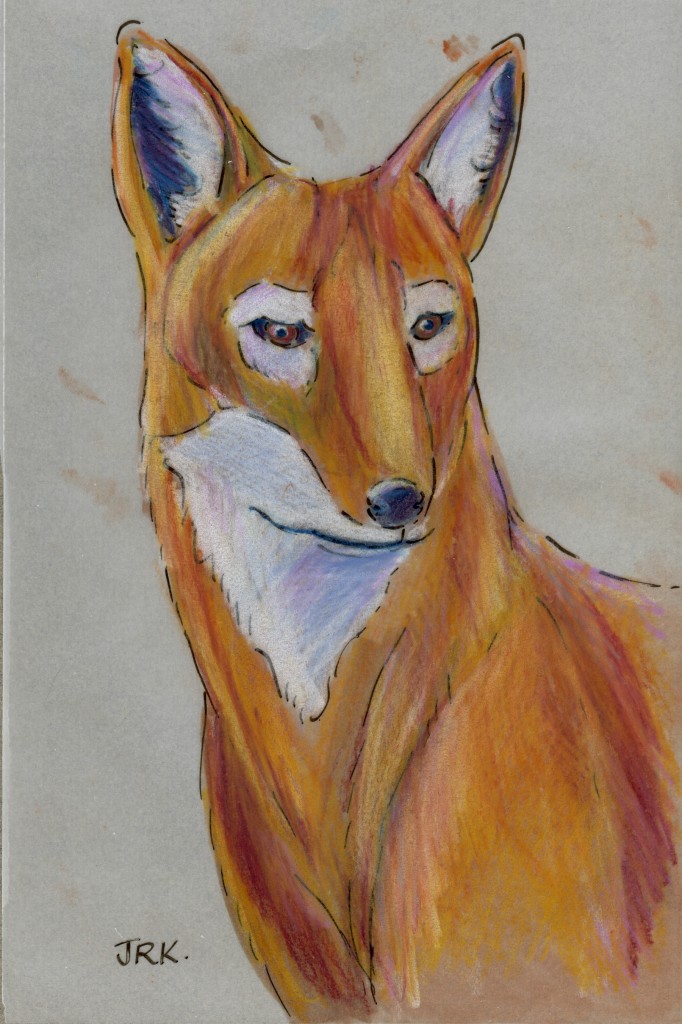
Ethiopian wolf (click image to enlarge)

0290

Why not stay in Ethiopia’s mountains a while? The Ethiopian wolves live there, too—all 500 of them. Like the gelada monkeys, these wolves are being killed off by climate change as less and less habitat is available to them and more and more people start farming higher and higher in the mountains. Perhaps I haven’t stressed this enough: we are killing off our fellow mammals because we just don’t care. I, for instance, “care” very deeply; Ted will tell you how impassioned I get. But do I trade in my pickup for a hybrid? Do I move to a city where I can bike everywhere instead of driving? Do I even unplug my appliances at night? No. Why? Part of it is that I feel completely helpless and it seems so futile. Part of it is just pure not caring.

Maybe instead of a Daily Mammal book club, or in addition to the next one, we could start a Daily Mammal Do Something club. What do you think?

Anyway, I guess the good news is that there are 500 Ethiopian wolves left. According to my Princeton Encyclopedia of Mammals, the Ethiopians call them ky kebero (red jackal), jedalla farda (horse’s jackal), or walgie (trickster). That last one is interesting to me because the Ethiopian wolf is closely related to the coyote, another trickster of lore, only here in North America.

You may note that the wolf has fox-like features. That’s because like the fox, it’s adapted to eat mostly rodents: rats, moles, and the like. (And speaking of eating rodents, I bought the coolest product in Taos yesterday: synthetic owl puke, which contains a complete synthetic mole skeleton!) The Ethiopian wolves look for rodents alone, but they will occasionally hunt in packs when they’re in the mood for larger prey.

They live in packs, too, in which there’s a dominant female who gets to breed. But interestingly, the breeding female doesn’t always mate with the male members of her own pack, to whom she may be related. Instead, she mates with males from neighboring packs. And when she does mate with her own menfolk, she only mates with the dominant ones, but when she mates with the neighbors, their status doesn’t matter.

Here’s Theo’s great drawing of the Ethiopian wolf.

Ethiopian wolf by Theo, age 13 (click image to enlarge)

{ 3 comments }


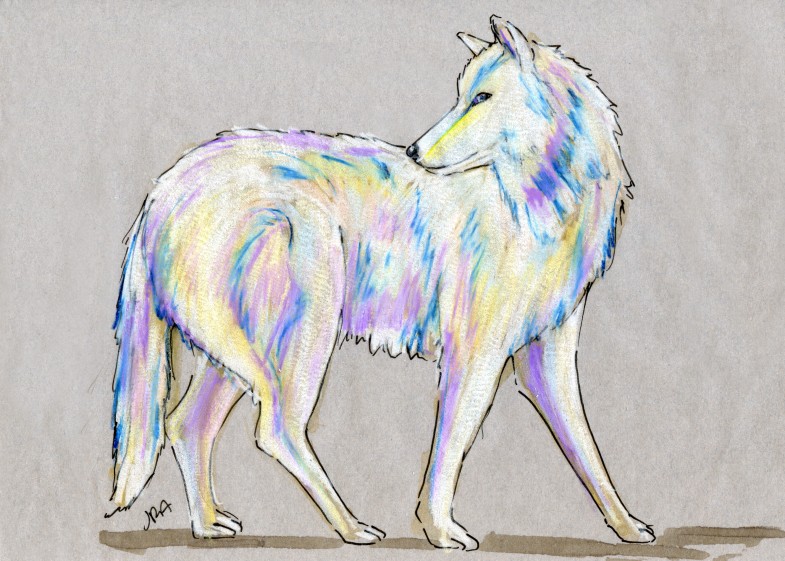
The arctic wolf, which Nancy requested, is a subspecies of the gray wolf. It’s a little smaller with a shorter nose and ears and a white coat year-round. The arctic wolf is very isolated in the northernmost parts of North America and in Greenland, and the World Wildlife Foundation tells me that it’s the only wolf subspecies that isn’t threatened, which is good news for it, at least.

Meanwhile, wolves in Alaska are up against the nightmare of aerial hunting, which you may want to help stop. (That link includes a video that isn’t terribly graphic but does show the hunting, which is upsetting.)

Arctic Diary: Tracking Wolves from the BBC
(by a professional explorer, a job title that I didn’t know still existed but I’m sure glad it does)
Arctic Wolves and their Prey from the NOAA

{ 4 comments }

24 Hours: Gray Wolf (Canis lupus)

by JR Kinyak on December 22, 2007

in Carnivores,Mammalthons


0079

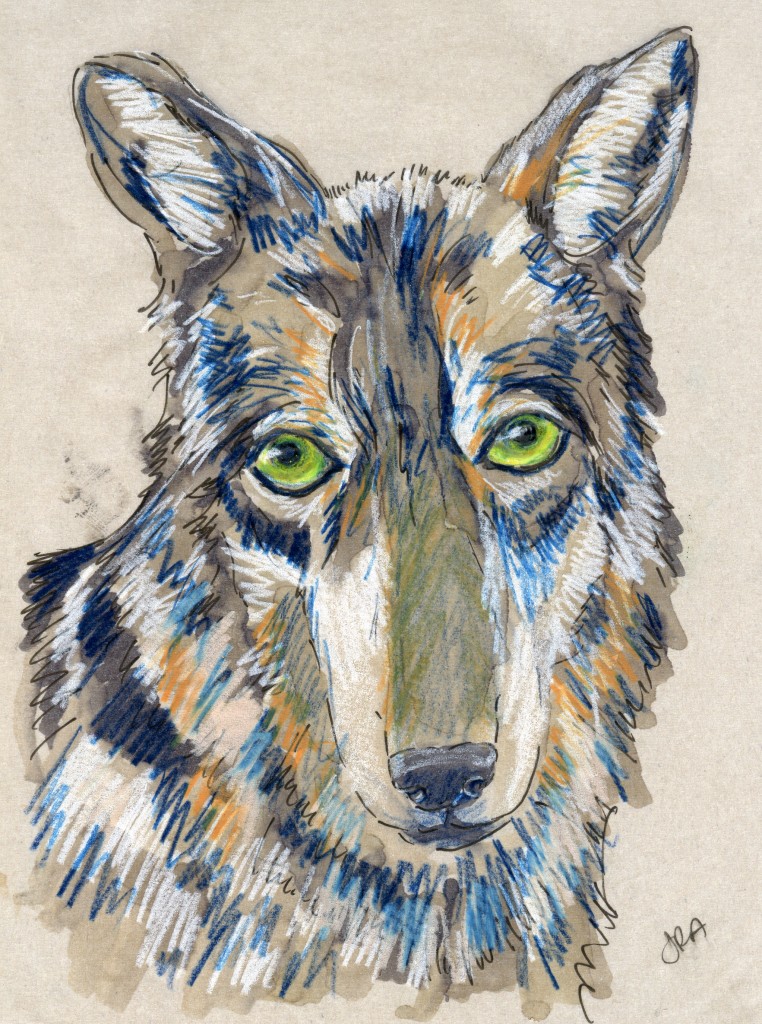
Here’s a gray wolf for Jay. The gray wolf is the largest of the canines. It was once prevalent throughout the world; now it’s restricted mainly to northern North America, Asia, and Europe, with a few small populations surviving in western Europe.

{ 2 comments }