Posts tagged as:

traditional medicine

Cape fur seal (click image to enlarge)

Cape fur seal (click image to enlarge)


0271

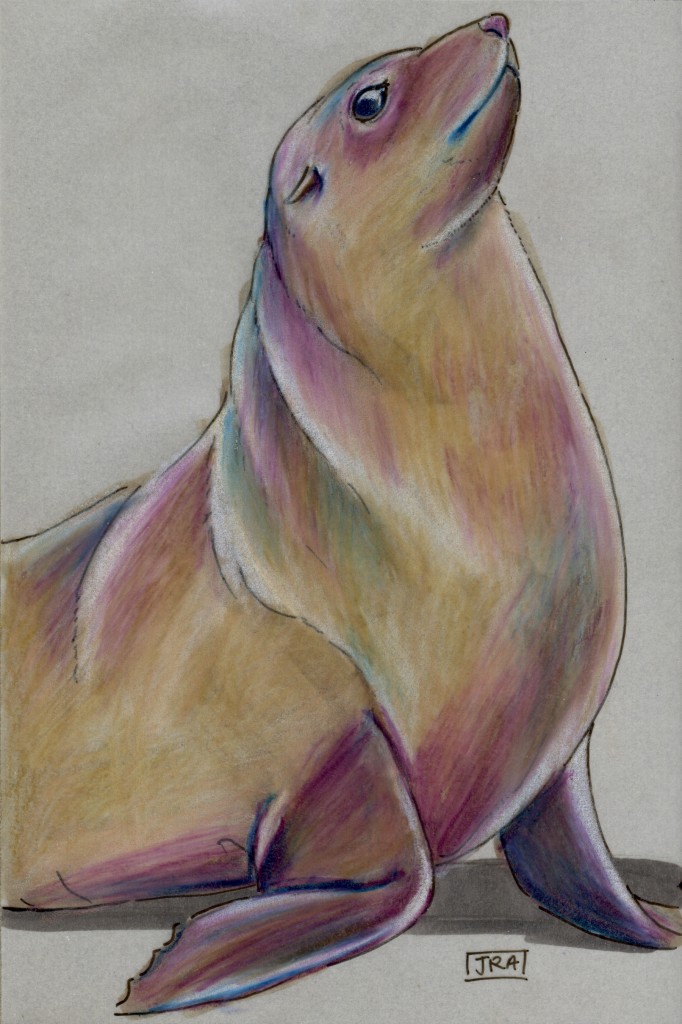
Daily Mammal Now is an occasional Daily Mammal feature in which we meet a topically newsy mammal that I hadn’t previously drawn. Now, let’s meet the Cape fur seal, or more precisely, the Afro-Australian fur seal, of which the Cape fur seal is a subspecies. Afro-Australian seals live, unsurprisingly, off the coasts of Africa and Australia, specifically southwestern Africa and southern Australia. They’re called fur seals because their fur has been used to make coats and such. Baby fur seals have especially prized fur. The genitalia of male seals is sometimes used as an aphrodisiac in traditional medicine.

The largest Cape fur seal colony is on the coast of Namibia. Every year, the Namibian government allows seal hunts. This year the seal season runs from July 1 until November 15. The government is allowing hunters to club 85,000 baby seals and 5,000 adult males. The hunt takes place in relative secrecy so as not to attract attention or scare people.

Namibia is one of only five countries that still allow seal hunts. There is some disagreement among experts about the humaneness of clubbing seals; some maintain that done correctly, it’s more humane than shooting. But because of the perceived cruelty, seal products have long been banned in the United States and other countries, and beginning in 2010, they’ll be illegal in the European Union, too (with the exception of those created by subsistence hunting on the part of native populations).

This year’s Namibian seal hunt has been in the news the past couple of weeks because a South African organization, Seal Alert-SA, has been trying to buy out the only company that deals in Namibian seal pelts. (Coats made by the company supposedly fetch up to US$110,000.) With animal welfare activists claiming that the seal hunt hasn’t started because of the pending deal and the Namibian government saying that it has, it’s unclear what exactly is going on.

The National: “$14m deal to end Namibia’s Seal Cull”

The AP: “Namibian seal hunt to go on, 90,000 to be clubbed”

African Conservation Foundation: “Seal Cull NOT Started, Hang-in There Baby Seals, Help Coming”

Seal Alert-SA’s blog

{ 7 comments }

Click image to enlarge.

Click image to enlarge.

0251

Our current system of naming animals and plants is based on the system that Carl Linnaeus published in 1758. While others, including Aristotle, had previously attempted to organize the world’s living things into various arrangements, Linnaeus gave us an important innovation: the binomial system. Each animal (or plant or whatever) is known by a unique pair of names; no other creature has the same name. We’re the only Homo sapiens; the cotton-top tamarin is the only Saguinus oedipus. (Of course, there can be other members of the genus Homo and the genus Saguinus, but they have to have distinctive second, or species, names.)

The organization that keeps track of and codifies the system of naming animals is the International Commission on Zoological Nomenclature. The rules are quite extensive. My favorite guidelines are those that require namers to make every effort to ensure that their names are euphonious (pleasing to the ear) and that they don’t give offense.

Linnaeus was Swedish, but he wrote in Latin, as did pretty much everyone else writing about scientific matters at the time. The scientific names of animals are often referred to, casually, as their Latin names, and the rules governing naming do require the Latinization of some words. But there’s also a lot of classical Greek in the names, and many names derive from local words for the animals.

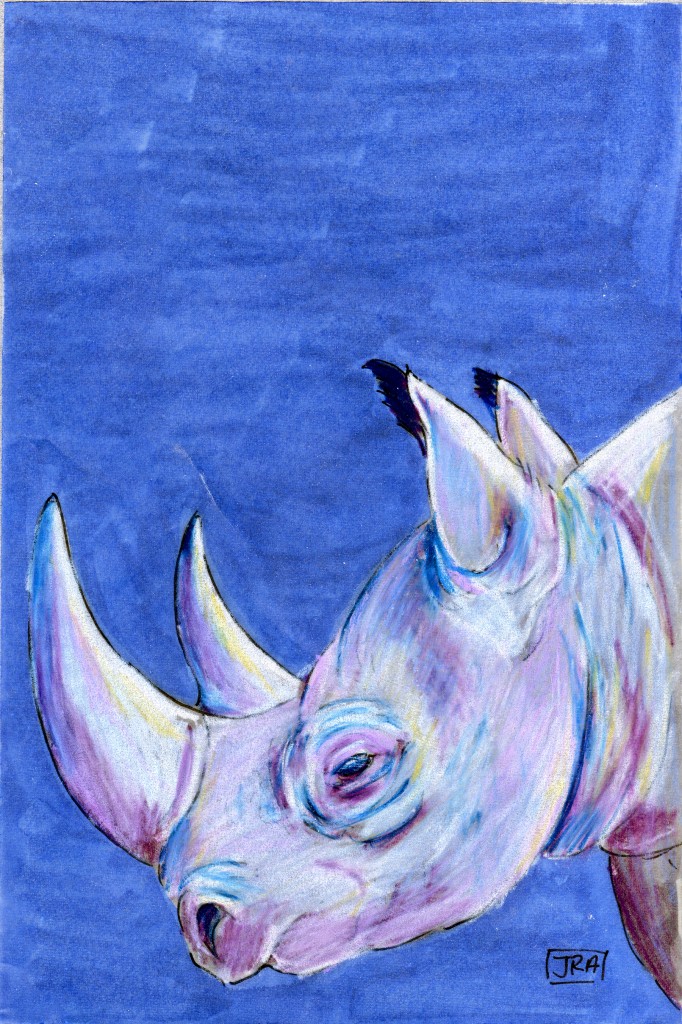
Many animals have redundant names (tautonyms, to use the official terminology), like Gorilla gorilla, Dama dama, and Uncia uncia. Usually, this happens when the name of the animal’s genus (the first name in the binomial system) changes, but the species name can’t. I like the black rhinoceros’s name because it’s redundant in two languages: diceros means two horns in Greek and bicornis means two horns in Latin.

The black rhinoceros’s common name is odd, too. The rhino is not black; it’s gray. Apparently, it was named the black rhinoceros to distinguish it from the white rhinoceros, which is also gray, not white. That animal’s common name comes from the Dutch word weit, which means wide, like the rhino’s muzzle. (My source for all this is A.F. Gotch’s book Mammals: Their Latin Names Explained.)

The black rhino is classified as critically endangered, the last step before extinction. It’s so bad, in fact, that the IUCN, which assesses the status of the world’s species, obscures the rhino’s range on its map “for security reasons.” While the black rhino was pretty numerous at the start of the 20th century, poaching caused a 96 percent decrease in the species’ population between 1970 and 1992. Black rhino horns are carved to create decorative handles for weapons and used in traditional medicine. Traditional medicine is going to be the death of a lot of mammal species.

{ 2 comments }

click image to enlarge

0231

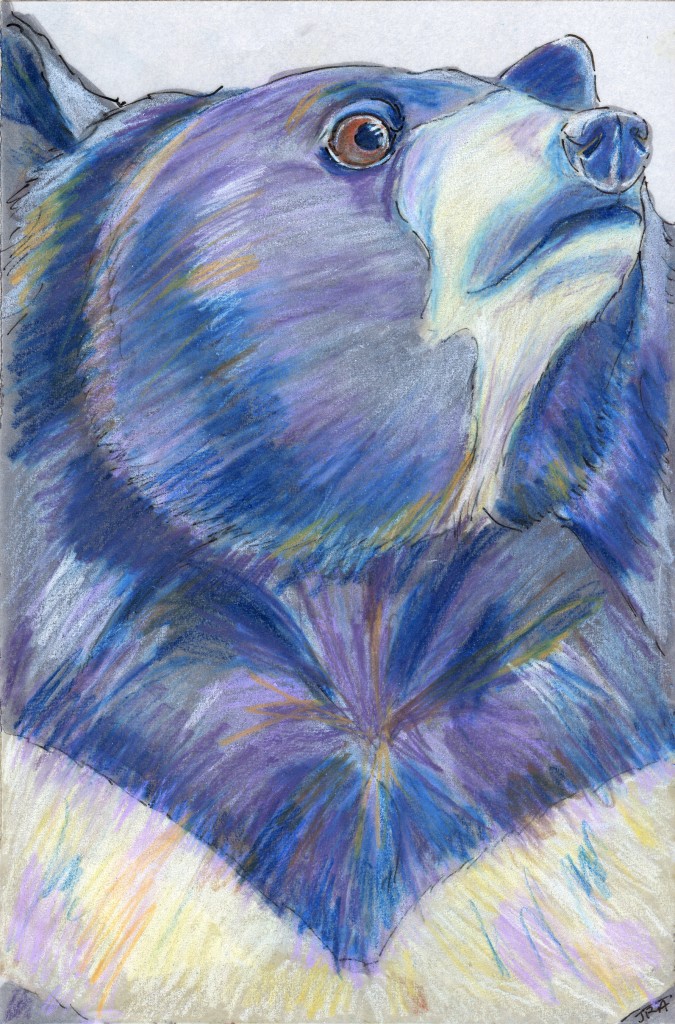
Today is the last day of Hibernators Week at the Daily Mammal, so I’d like to introduce you to a bear, that classic hibernator. This particular bear is an Asiatic black bear. It lives in forests in several countries in southern Asia, including China, Japan, Iran, and Pakistan, among others. In the northern parts of its range, it hibernates, filling up on acorns and seeds to put on fat before time to head into the den. In the south, only females who are going to give birth in the winter hibernate.

IUCN classifies this bear as vulnerable, which is the last stage before endangered. Unfortunately, the Asiatic black bear is extensively hunted for its paws and its hide, and it’s a victim, like nearly everyone else, of habitat destruction. But the biggest and most upsetting threat to the Asiatic black bear is the “traditional medicine” industry. I knew that bear gall bladders were used in traditional Chinese (and Korean, Vietnamese, and others) treatments, but not until just now did I know just how terrible this is—not until just now did I think about it, I’m sorry to say.

In “traditional medicine,” a bears’ gall bladders and the bile they produce are used to treat hemorrhoids, pinkeye, impotence, headaches, heart disease, and more. Wild bears are hunted and their gall bladders taken. In 1980, informing us that this would reduce the number of wild bears killed, China began allowing bears to be “farmed” for their bile. (It didn’t reduce the number of bears being hunted in the wild. Instead, it made wild bear bile more valuable.)

And this is where it gets really, realy ugly. The “humane” method of harvesting the bears’ bile is to create a permanent hole in the bear’s abdomen and gall bladder, through which the bile drips. Other methods include metal catheters, repeated surgeries, and metal jackets. The bears on the “farms” are kept in cages not much bigger than they are. Their teeth and claws are pulled. They moan in pain, banging their heads on the bars of their cages. They live in terror and agony. This can go on for their entire lifetime: 25 years. Of pure torture. And there are thousands of bears undergoing this abuse right now.

It’s enraging, cruel, disgusting, and inhuman. And it’s also completely unnecessary. Not only does “traditional medicine” recognize a range of herbal substitute for bear bile, but Western medicine has synthesized the compound that gives the bile what healing capacity it has. (An acid in mammalian bile is especially concentrated in bears. This acid can help treat some liver ailments. But again, no one needs to take it from bears, and there’s no rational reason to think it can help a headache or hemorrhoids.)

When I added the Asiatic black bear to my list of hibernators for this week, I was just thinking about how fun it would be to draw a big, furry bear. Now I’m angry. Today, the Associated Press reported on a rescue of 12 Asiatic black bears from years of torture on a “farm” in China. They were suffering from liver tumors, blindness, and ringworm, and some of them were compulsively biting the bars of their cages. The group that rescued them is called Animals Asia, and you can help it rescue bears through a donation. If you knit, there’s another way you can help. The bears need surgery after their rescue, and they need to keep warm when they’re under anesthesia. Knitters are helping them by making big old bear mittens for them to wear. You can find out more at this site, and you might also like to read the Animals Asia blog about its rescue efforts.

{ 2 comments }

Tonkin Snub-nosed Monkey (Rhinopithecus avunculus)

by J.R. Atkins on January 8, 2009

in Primates

click image to enlarge

0200

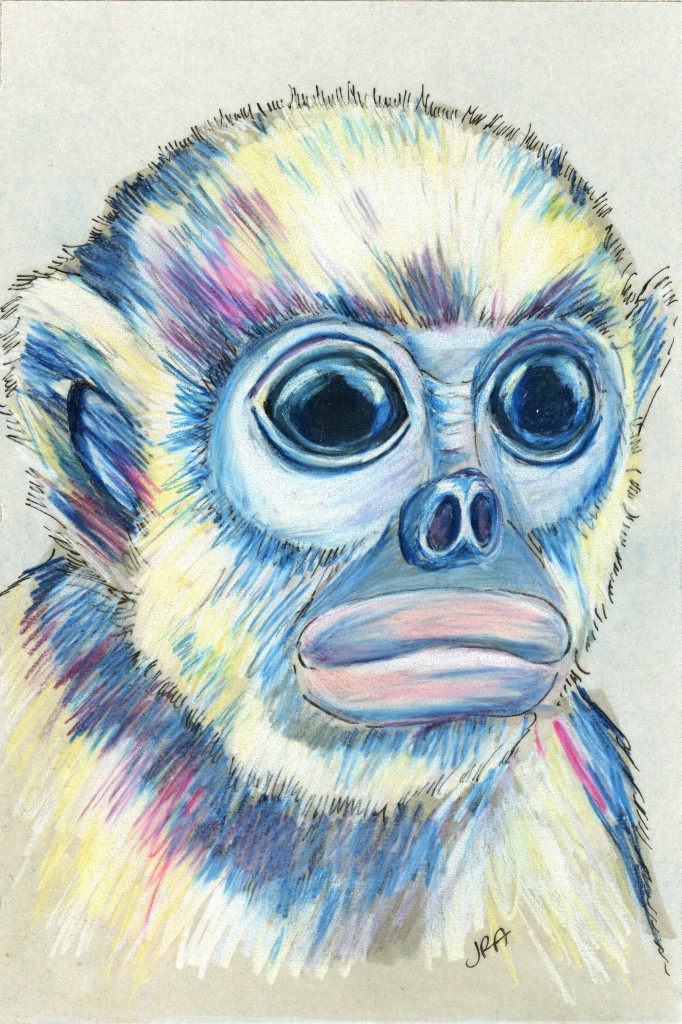
This funny fur-face, whose scientific name translates to nose-ape uncle, is one of the world’s rarest mammals. Only about 200 of them exist. They live in forests in a little bitty section of northeastern Vietnam near the Chinese border, where they eat fruit and bamboo and rush around up in the leaves saying “ga-ga! ga-ga!” There are two reasons we’re down to so few of them: deforestation, especially for the lumber trade and to make room for cardamom farms, and hunting. The Tonkin snub is an unfortunate ingredient in traditional medicines. (At one time, it was thought that the monkey’s pelt could ward off rheumatism.) I’m not sure whether it’s also hunted for bushmeat; some sources say yes, but some say that it doesn’t taste very good and so doesn’t make a very popular dinner.

A small bit of good news came out last month, when Flora & Fauna International announced it had found a previously unknown (to scientists, anyway) population of the little guys. This group of about 20 Tonkin snub-noses was afraid of humans, possibly indicating an earlier run-in with hunters. Locals in the area told of another, maybe larger group, too.

{ 4 comments }

Ground Pangolin (Manis temminckii)

by J.R. Atkins on June 15, 2008

in Other Orders

0177

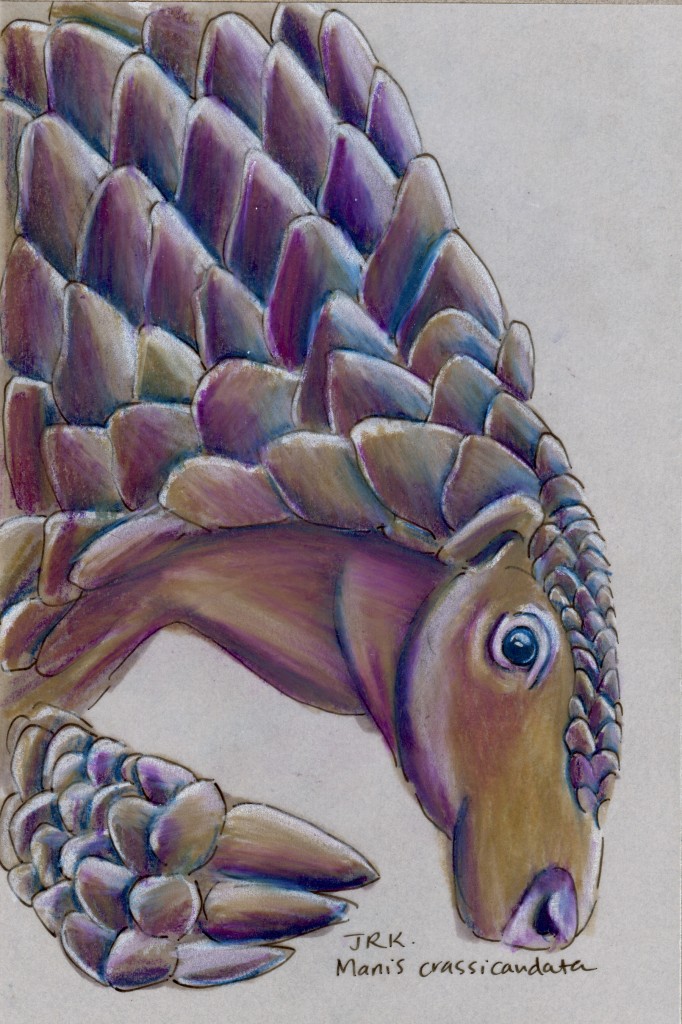
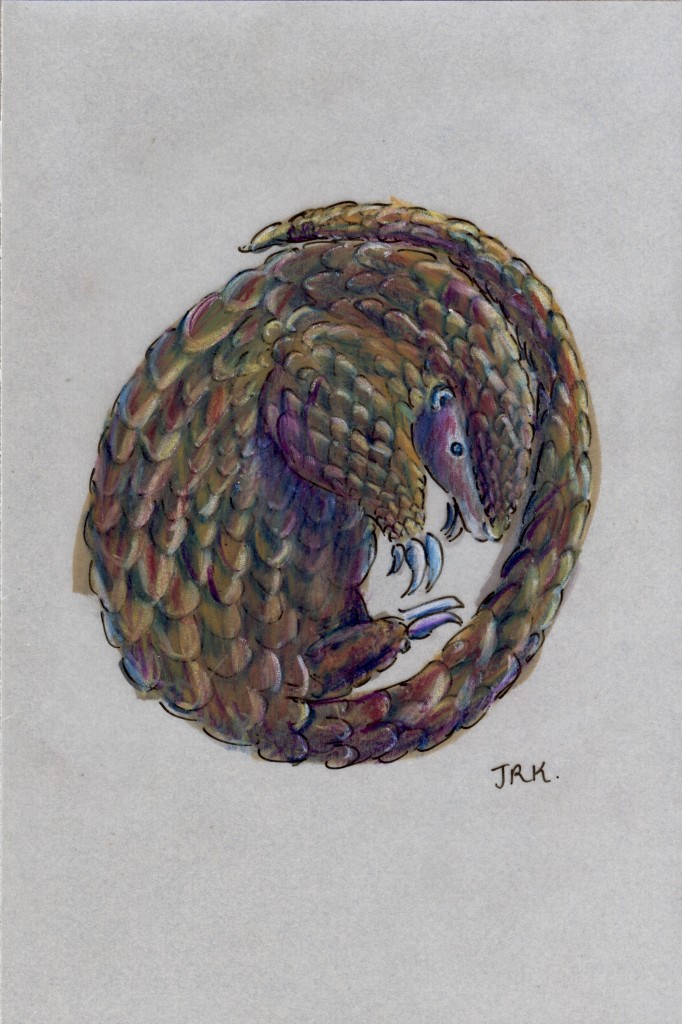
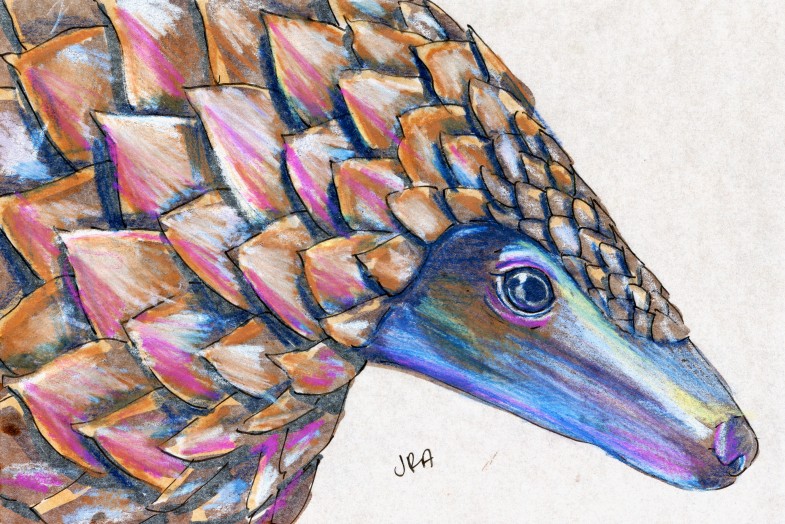
This walking pinecone is a member of one of Africa’s three pangolin species. Born with soft scales that harden within a few days, baby pangolins ride around on their mother’s tail and start eating termites instead of nursing on pangolin milk when they’re a few months old. Pangolins can’t see very well, but they can hear and smell really well (notice I didn’t say that they smell good). Since they’re covered in hard scales, I’d guess their sense of touch isn’t tops, either, but I can’t tell you about their sense of taste.

Ground pangolins roll in a ball to escape danger, and they’re nearly impossible to unroll. They can move their scales, and in fact they have to move them to clean under them, using their claws to scratch out the gunk and their tongues to eat the delicious bugs they find tucked away under there.

Pangolin scales and skin are used in medicine and in making trinkets and jewelry and cowboy boots. Hyenas and leopards prey on pangolins and sometimes they get caught up in brush fires or zapped by electric fences. They’re shy creatures snuffling through the world, and more vulnerable than they look.

Consecutive days of mammals: 1
Previous record: 16

{ 6 comments }

Rock Hyrax (Procavia capensis)

by J.R. Atkins on June 9, 2008

in Other Orders

click image to enlarge

0176

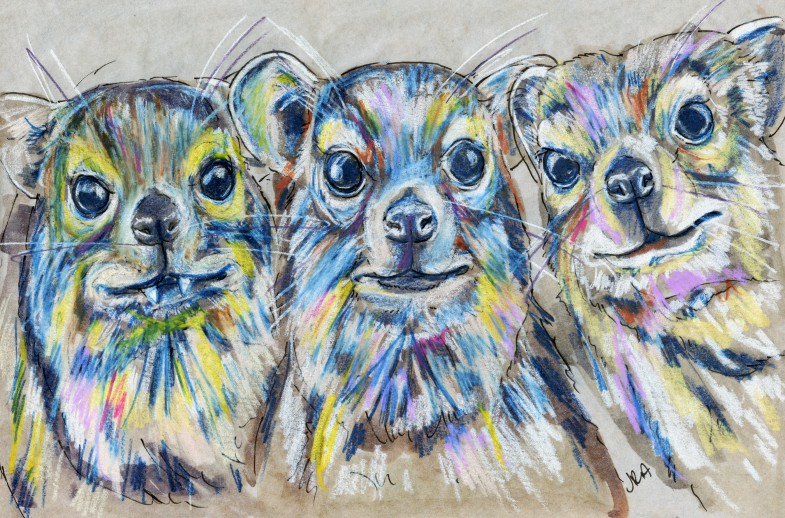
These funny fellows are rock hyraxes, furry little scurrying, jumping guys that live in the desert in Africa and the Middle East. See the teeth on the one on the left? Those are thought to be remants, evolution-wise, of tusks, as the hyrax is related to the elephant (and to manatees).

The rock hyrax lives in herds of several dozen, and they tend to all use the bathroom in the same spot. Well! Their urine is “glutinous,” and when it’s sitting out on a rock in the sun (and, depending on who you ask mixing with their feces), the whole mess becomes kind of stickily crystallized into a solid mass. Then it’s called hyraceum and is used to make medicine and perfume.

Rock hyraxes are mentioned in the Bible, where they’re called conies in many translations. In the book of Proverbs (30:24–28) there’s a list of things that are small but wise. Conies are “creatures of little power, yet they make their home in the crags.”

Consecutive days of mammals: 5
Previous record: 16

{ 4 comments }

click image to enlarge

0148

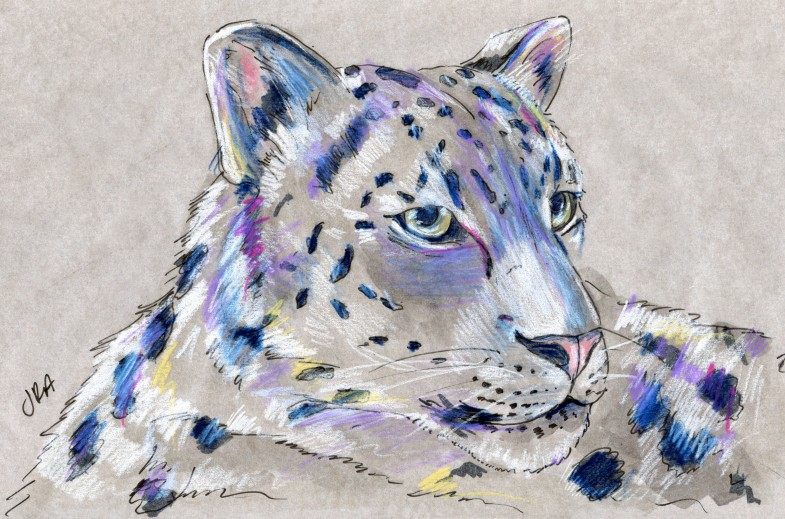
Here’s the first of several mammals requested by my dad for this second 24-Hour Mammal Marathon. A nice start, this furry and beautiful animal, don’t you think? Snow leopards live in the mountains of central Asia and are very endangered. They’re hunted for their coats, used in traditional Asian medicines, and killed when they prey on livestock. Then there’s the ubiquitous habitat destruction, not only of the snow leopard’s habitat but also that of its prey, which means it has trouble finding food.

The ‘thon is on!

—————-
Now playing: Prince – I Wanna Be Your Lover
via FoxyTunes

{ 6 comments }