Posts tagged as:

sleeping

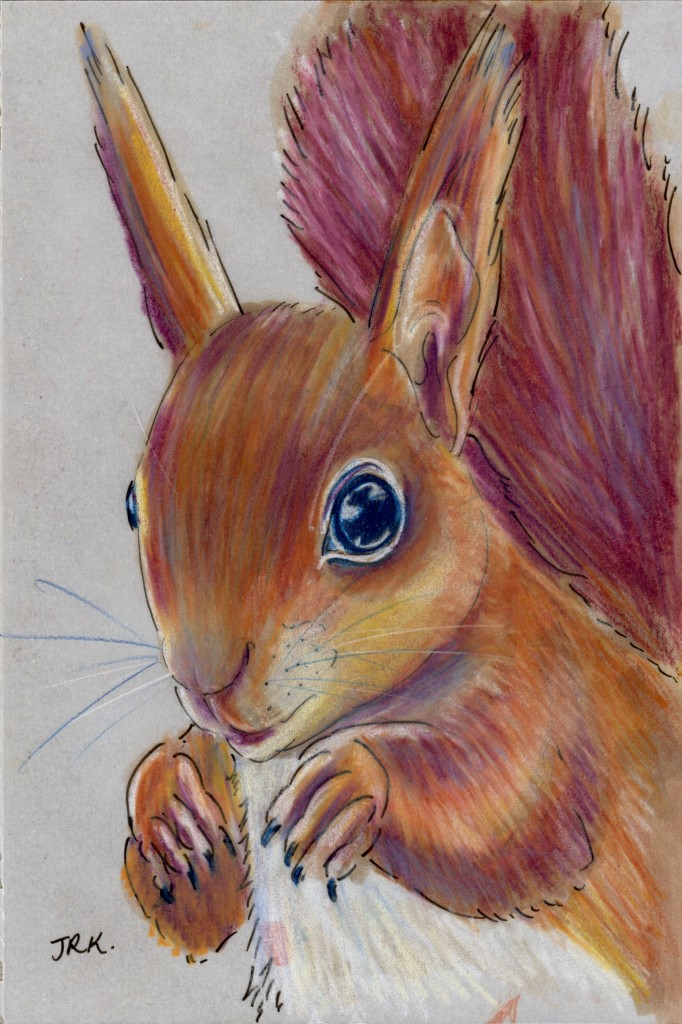
Red Squirrel (Sciurus vulgaris)

by JR Kinyak on June 11, 2010

in Rodents

Red squirrel (click image to enlarge)

0310

This pretty red squirrel species lives in Europe and Asia. In Italian, its name is scoiattolo comune, in German it’s Eichhörnchen, in French it’s ecureuil roux, in Swedish it’s ekorre, in Danish it’s egern, and in Spanish it’s ardilla roja.

Earlier this week, our friends visited, and one of their kids, nine-year-old Nicola, drew some mammals with Coco and me. Here are Coco’s and Nicola’s squirrels, which are a different species from the red squirrel I drew, but fit here anyhow.

Sleeping squirrel by Coco, age 11


Hungry squirrel by Nicola, age 9

{ 0 comments }

click image to enlarge

0208

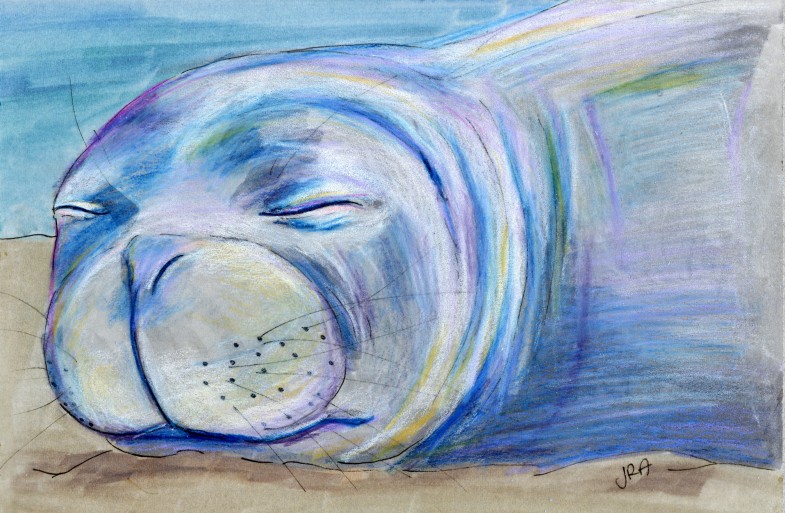
To celebrate the inauguration of President Barack Obama in a week, let’s meet some mammals of Hawaii, where Obama grew up.

Hawaii’s status as a volcanic island chain means any species there—of fish, lizards, trees, whatever—had to arrive there from somewhere else at some point. As far as I can ascertain, only one land mammal can call itself a native Hawaiian, and we’ll meet it tomorrow. Today, say hello to the Hawaiian monk seal, one of two mammals found on Hawaii and nowhere else.

The monk seal gets its name because of its solitary nature. The Hawaiian monk seal is now confined almost exclusively to the Leeward Islands, where the Polynesians never really settled. This endangered mammal just doesn’t do well with encroaching humans—who does, right? When a pregnant Hawaiian monk seal is annoyed by humans and their dogs, she’ll move somewhere else to give birth, and that somewhere else is often not a very good place to raise a baby. Humans’ fishing activities make it harder for the monk seals to find fish to eat, and they can get entangled in fishing nets and drown, too.

Mother Hawaiian monk seals stay with their babies for about six weeks after giving birth. During these weeks, the mother seals stop eating, losing a couple hundred pounds. (I can see the magazine covers now: “The Hawaiian Monk Seal Diet: From Baby Bump to Beach Body in Six Weeks!”) Most seals live in colder climates, and the Hawaiian monk seal doesn’t seem to have any adaptations for its tropical home. In fact, it has the same amount of blubber as polar seals. In the hottest part of the day, it hauls itself onto the beach to take a nap in wet sand, like the seal in this picture, or in the shade. (I hope the endangered-species policies of the new administration will help them sleep a little better.)

According to Walker’s Mammals of the World, “during the spring and summer adult males cruise constantly along favorite basking beaches in search of receptive females.” Sounds like humans!

{ 1 comment }

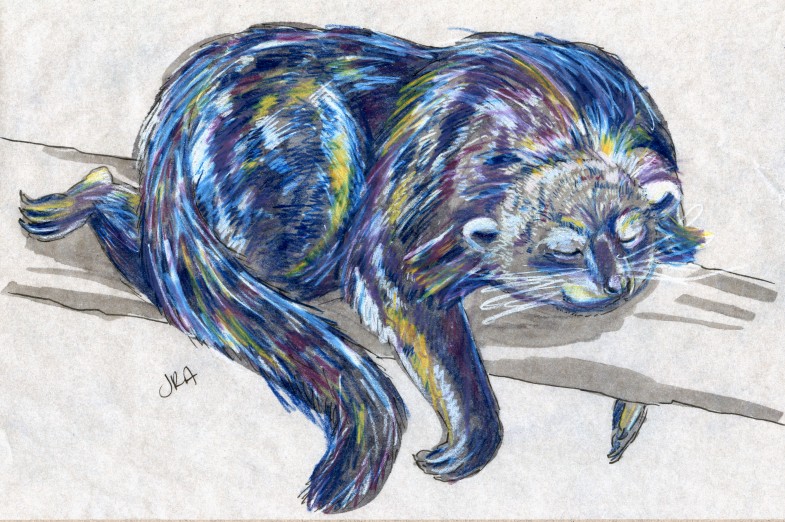
Binturong (Arctictis binturong)

by JR Kinyak on March 31, 2008

in Carnivores

Get ready for the second-ever Daily Mammal 24-Hour Mammal Marathon!

click image to enlarge

0136

Ivan T. Sanderson calls this guy “one of the most astonishing and paradoxical animals known” in Living Mammals. I had never heard of them until Claire e-mailed me to request one, and I’m so glad she did. They’re related to sloths and to civets, and like sloths, they seem to grow algae on their fur that can give them a greenish hue. They’re nocturnal, eat bamboo, other shoots, fruit, tree frogs, and insects, and they live in Asia. Excitingly, Walker’s Mammals of the World says that binturongs make good pets—they’re very affectionate and follow their owners around like dogs! They are also known as bearcats and they have prehensile tails. Please, let’s get one! Or maybe not:

“Snarling porch sitter thought to be a binturong” from the Pittsburgh Post-Gazette

{ 4 comments }

Back Orders: Fossa (Cryptoprocta forex)

by JR Kinyak on January 9, 2008

in Carnivores, Mammalthons


0102

Jennifer’s stuck on a bus, so I’m posting this one for her. No, really, she is.

This one was requested by Russell.

This little cat-like carnivore is endemic to Madagascar. It spends most of its time sleeping, which is why Jennifer didn’t draw its amazing brown eyes. Now she wishes she had. But I like this little tyke just the way she is! What do you think?

{ 3 comments }

Eastern Gray Squirrel (Sciurus carolinensis)

by JR Kinyak on July 3, 2007

in Rodents

easterngraysquirrel720030

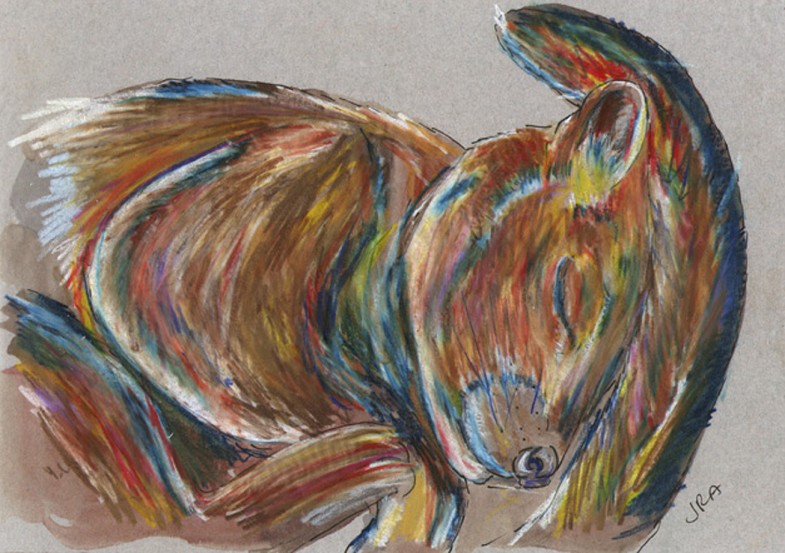
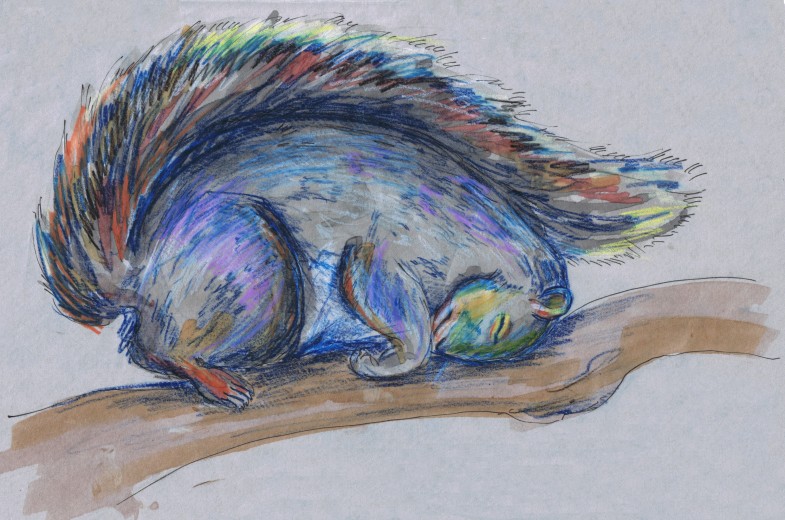
Maggie asked for a gray squirrel doing yoga, so here’s a fellow practicing his balasana! And it’s another tree sleeper, sort of a companion piece to the red panda from a couple of weeks ago. (That red panda is my favorite of my drawings so far.)

The eastern gray squirrel is an animal I don’t see much now that I’ve moved back to New Mexico. While his name indicates that he’s from the Carolinas, he’s actually widespread throughout eastern North America. The Sciurus part of squirrels’ Latin names comes from the Greek words skia, or shade, and oura, which means tail: squirrels are shade-tails, like this one here.

{ 2 comments }

Red Panda (Ailurus fulgens)

by JR Kinyak on June 18, 2007

in Carnivores

redpanda720016

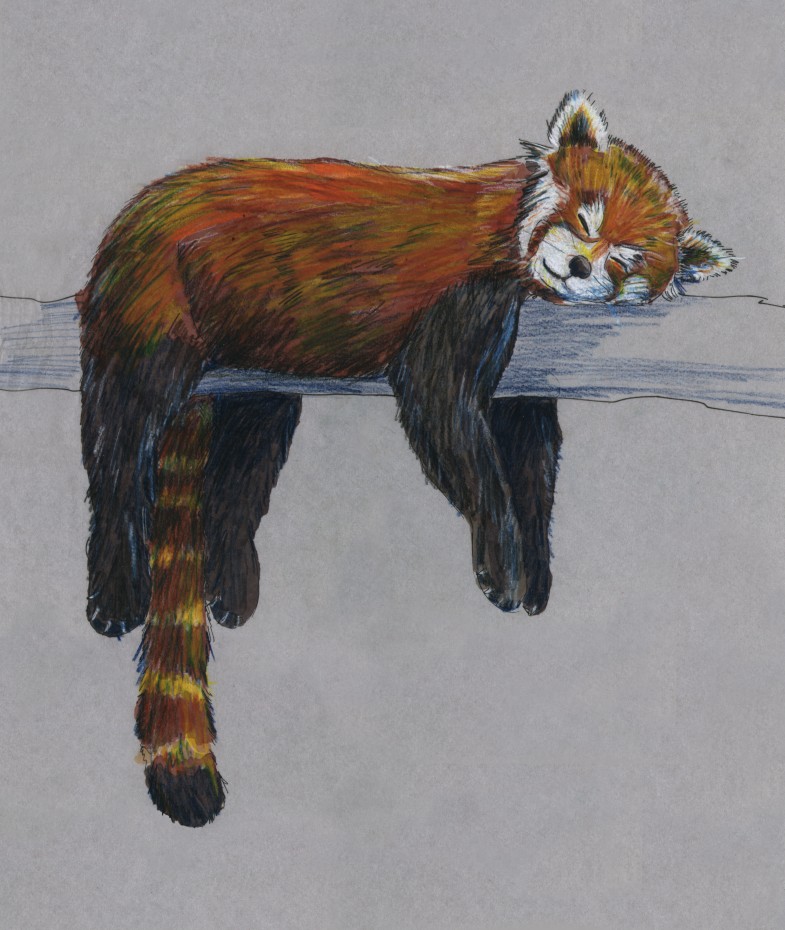
This really is how they sleep! My dictionary says the red panda is native to high bamboo forests. It’s related to the raccoon, and is also called the lesser panda, which seems to diminish its beauty a bit. Laura wanted a red panda, and here it is.

{ 0 comments }