Posts tagged as:

sheep

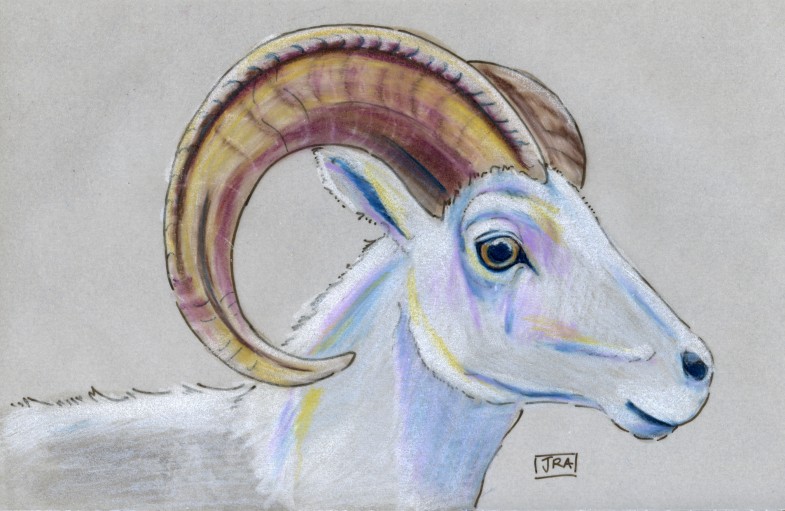
Thinhorn sheep (click image to enlarge)

Thinhorn sheep (click image to enlarge)


0267

The thinhorn sheep is closely related to the bighorn sheep, only its horns are more thin than big. (Another relative of the two is the snow sheep, which lives in Siberia.) There’s a bit of nomenclatural confusion with these guys. Never mind that some scientists think that all members of Ovis should actually be in Capra (the goats). The specific issue with the thinhorns is that they’re divided into two subspecies, Dall (or Dall’s) sheep and Stone (or Stone’s) sheep. Only some people don’t think they should be considered separate species. And a lot of people call them all Dall sheep instead of thinhorns.

Whatever you call them, these sheep live in dry, mountainous regions, and only in Alaska and northwestern Canada. Thinhorn rams band together in cranky, uncomfortable groups, jostling each other for position. When it comes time to start meeting ewes, the rams really start in, fighting with their horns to establish a hierarchy. The winners get to mate more; the losers are run out of town on a rail. (Ewes fight amongst themselves, too, with their shorter horns. They live in women-and-children groups when they’re not mating.)

Thinhorn rams have six separate ranges that they live in during different seasons. Ewes have four. These sheep are preyed upon by wolves, coyotes, golden eagles, and bears, as well as human hunters.

{ 2 comments }

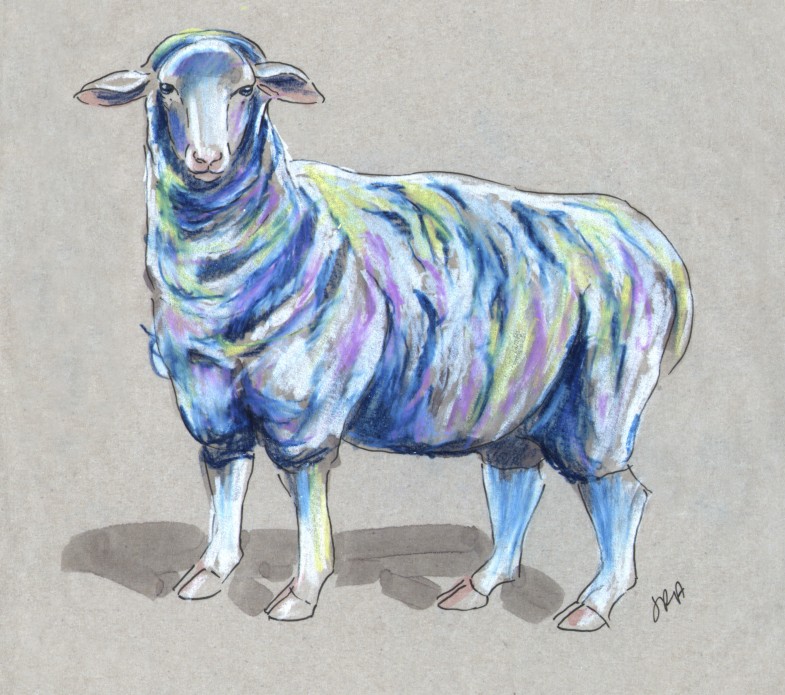
Domestic Sheep (Ovis aries)

by JR Kinyak on December 15, 2007

in Ungulates

Please consider contributing at least $25 to Defenders of Wildlife to get your own original Daily Mammal art! Read more about 24 Mammals in 24 Hours!


0072

Sheep have been domesticated for between 9,000 and 11,000 years. Scientists still haven’t figured out for sure which wild sheep species the domestic sheep descend from, but I can tell you that domestic sheep have smaller eye sockets and brain cases than their wild brethren. Also, various strains of sheep have been bred to have no wool, no horns, and no external ears. You may know of my obsession with Iceland. The sheep there are notably individualistic with a very weak flocking instinct.

{ 0 comments }

Bighorn Sheep (Ovis canadensis)

by JR Kinyak on June 6, 2007

in Ungulates

bighornsheepf72bighornsheepm720004

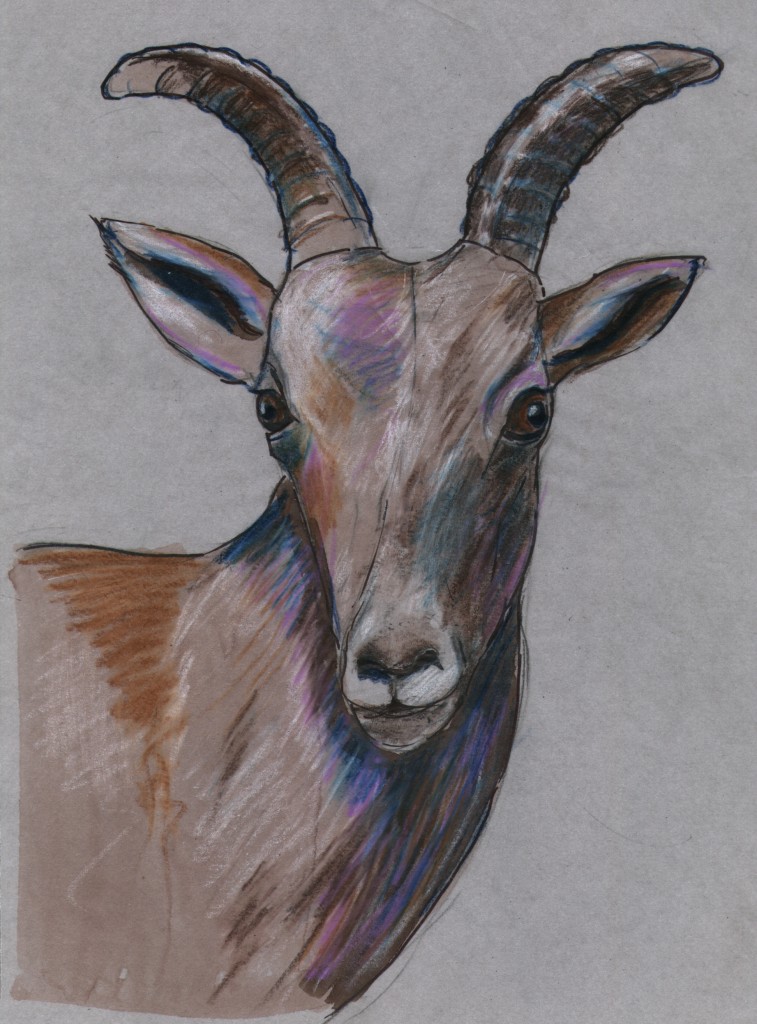
Leigh also wanted a bighorn sheep! We have the female on top, and then the male. I love how their horns make mounds on their heads. You can see how if the female’s kept growing, her flesh would mound up and she wouldn’t have that elegant divot in the middle of her head anymore. I wonder if the horns hurt when they’re coming in. Also, there is a subspecies of bighorn that’s only in the desert, including west Texas, but I didn’t really research what the differences are.

{ 0 comments }