Posts tagged as:

seal

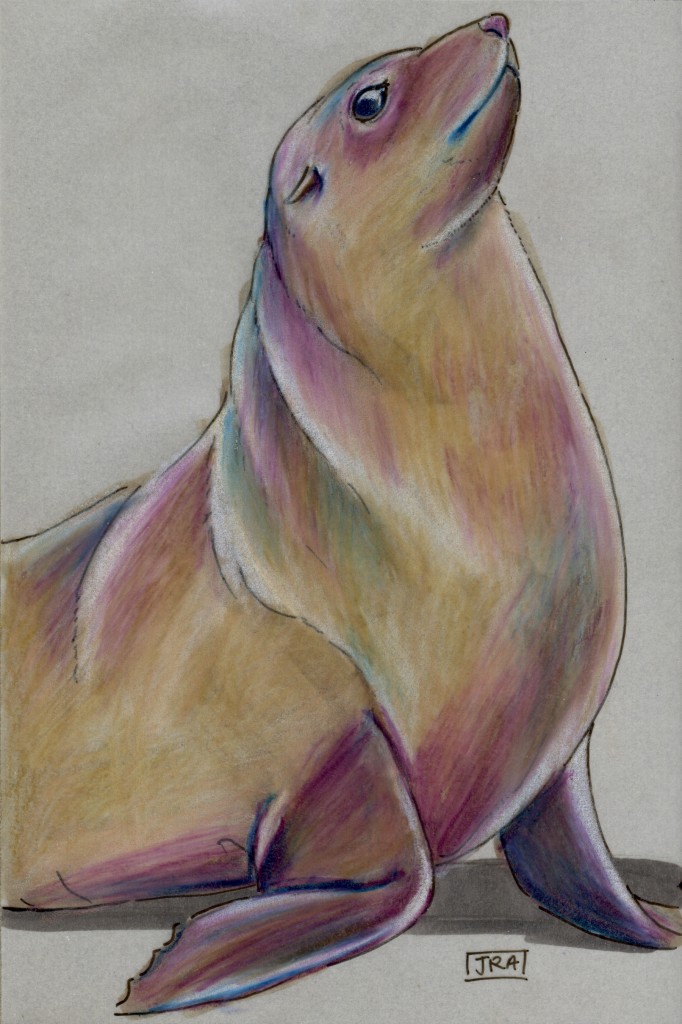
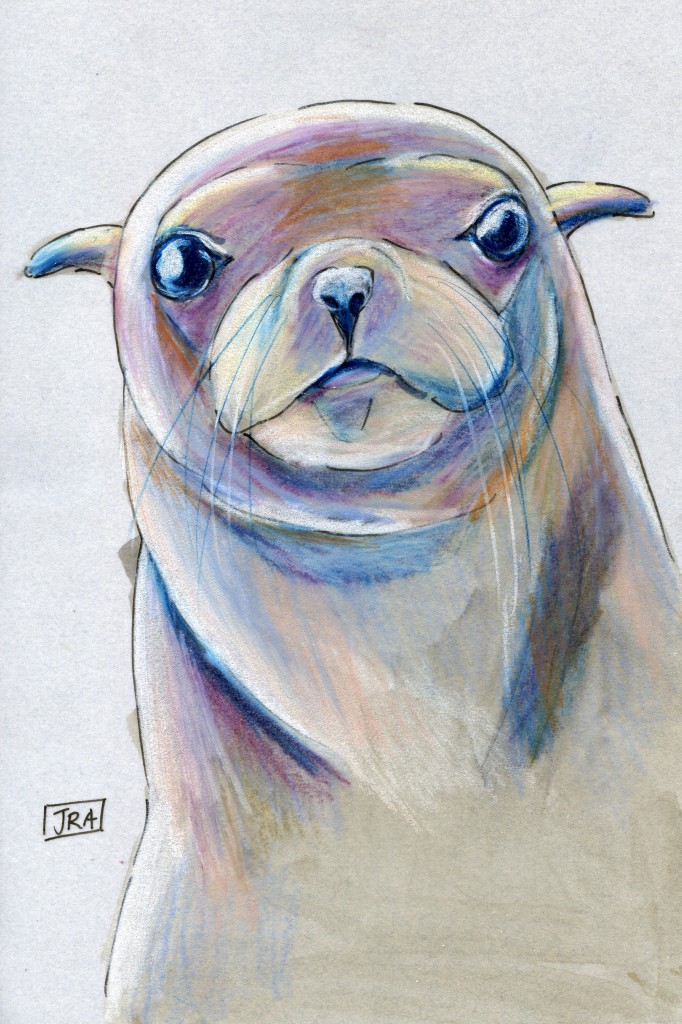
Cape fur seal (click image to enlarge)

Cape fur seal (click image to enlarge)


0271

Daily Mammal Now is an occasional Daily Mammal feature in which we meet a topically newsy mammal that I hadn’t previously drawn. Now, let’s meet the Cape fur seal, or more precisely, the Afro-Australian fur seal, of which the Cape fur seal is a subspecies. Afro-Australian seals live, unsurprisingly, off the coasts of Africa and Australia, specifically southwestern Africa and southern Australia. They’re called fur seals because their fur has been used to make coats and such. Baby fur seals have especially prized fur. The genitalia of male seals is sometimes used as an aphrodisiac in traditional medicine.

The largest Cape fur seal colony is on the coast of Namibia. Every year, the Namibian government allows seal hunts. This year the seal season runs from July 1 until November 15. The government is allowing hunters to club 85,000 baby seals and 5,000 adult males. The hunt takes place in relative secrecy so as not to attract attention or scare people.

Namibia is one of only five countries that still allow seal hunts. There is some disagreement among experts about the humaneness of clubbing seals; some maintain that done correctly, it’s more humane than shooting. But because of the perceived cruelty, seal products have long been banned in the United States and other countries, and beginning in 2010, they’ll be illegal in the European Union, too (with the exception of those created by subsistence hunting on the part of native populations).

This year’s Namibian seal hunt has been in the news the past couple of weeks because a South African organization, Seal Alert-SA, has been trying to buy out the only company that deals in Namibian seal pelts. (Coats made by the company supposedly fetch up to US$110,000.) With animal welfare activists claiming that the seal hunt hasn’t started because of the pending deal and the Namibian government saying that it has, it’s unclear what exactly is going on.

The National: “$14m deal to end Namibia’s Seal Cull”

The AP: “Namibian seal hunt to go on, 90,000 to be clubbed”

African Conservation Foundation: “Seal Cull NOT Started, Hang-in There Baby Seals, Help Coming”

Seal Alert-SA’s blog

{ 7 comments }

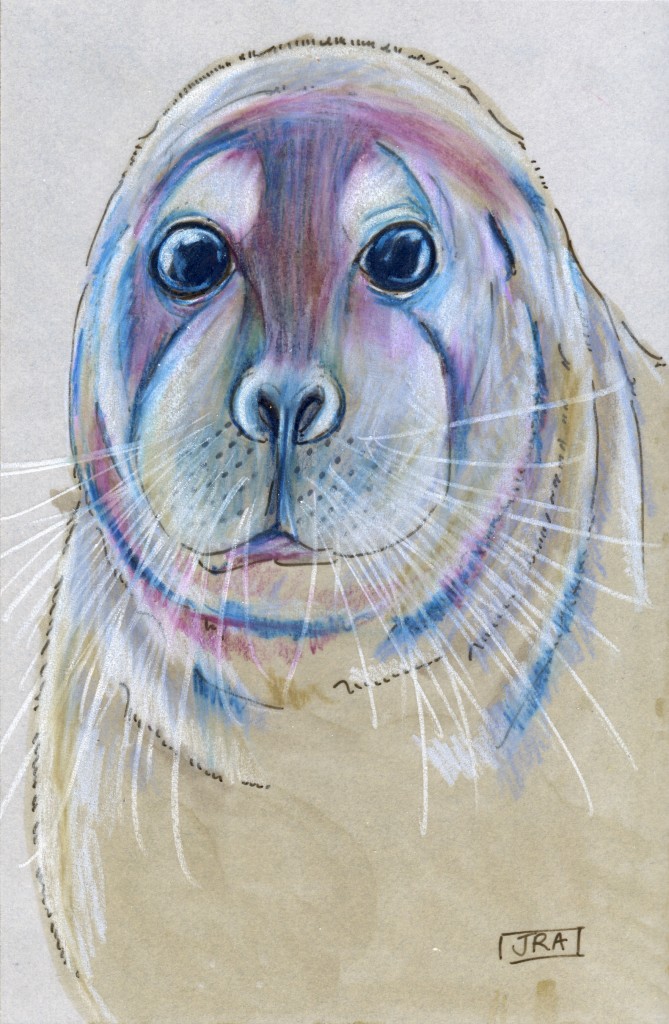
Bearded seal (click image to enlarge)

Bearded seal (click image to enlarge)

0266

We continue our visit with the mammals of Alaska today, with this guy, the bearded seal. Like the bearded pig, he’s really more mustachioed than bearded, but that’s okay. Bearded seals live throughout the arctic. They eat mostly benthic creatures, which means creatures that live at the bottom of the water. That’s probably what their long, brushy whiskers are for: helping them find food at the bottom of the sea. They’re solitary and generally spend their time alone, floating around on small ice floes. Bearded seals are important to arctic native people for their hides and meat. Ivan T. Sanderson, in Living Mammals of the World, describes what it’s like to hunt these seals:

“Bearded seals are hunted by the Eskimos for their tough hide and tender flesh and they display a most singular trait when shot, leaping into the air and turning a complete back somersault from the ice into the water, so that one never knows if they are dead or alive.”

Isn’t that just like Ivan to say? By the way, I don’t ever want to take a month off from drawing mammals again! These last four have been so difficult, but each one gets a little easier. Next time you notice me falling down on the job, shoot me an e-mail, will you?

{ 0 comments }

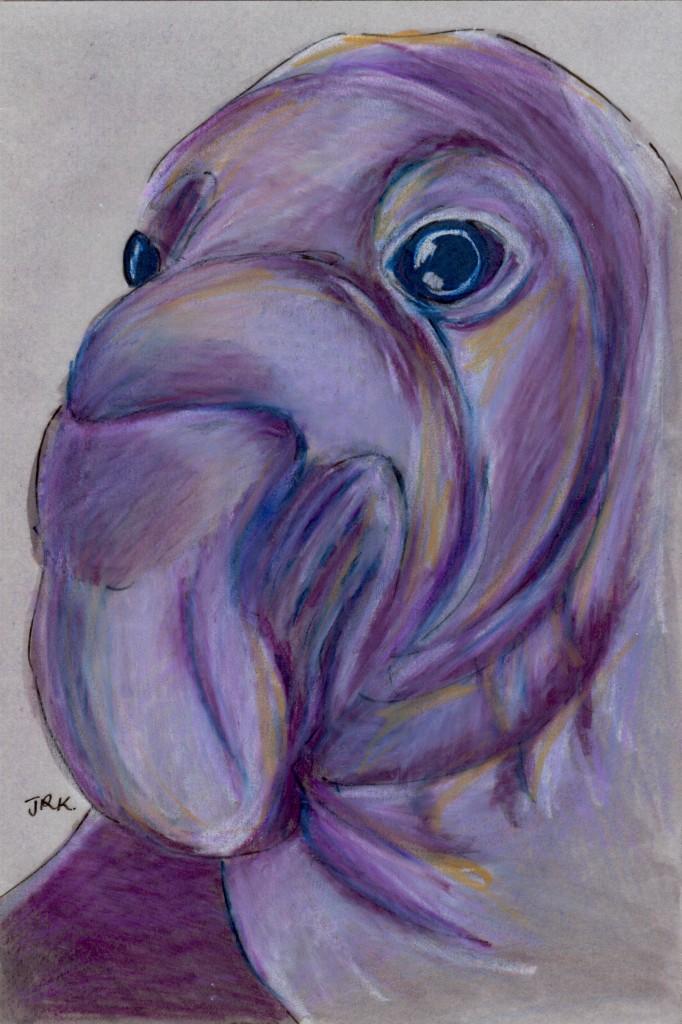
Guadalupe fur seal (click image to enlarge)

Guadalupe fur seal (click image to enlarge)


0257

Between yesterday’s squirrel and this seal today, I’m thinking about just going ahead and declaring this Interesting Ears Week.

The Guadalupe fur seal, as a species, has a dramatic story, full of hope and heartbreak. Once numerous from the Revillagigedo Islands of Mexico to the Farallones off of San Francisco, the seals were hunted so relentlessly in the 19th century that they were thought to be extinct from 1895 to 1926. Then, some fishermen “discovered” a group of them on Guadalupe Island, off Baja California. What did these fishermen do with these invaluable seals, thought lost forever? Why, killed them, of course.

Everyone thought they were gone for good again, but in 1949, one bull was spotted, and in 1954, people found a group on Guadalupe Island. In the half-century since then, and thanks to legal protection in both Mexico and the United States, the seals have made it back up to the Farallones once more, and their population is increasing.

{ 0 comments }

click image to enlarge

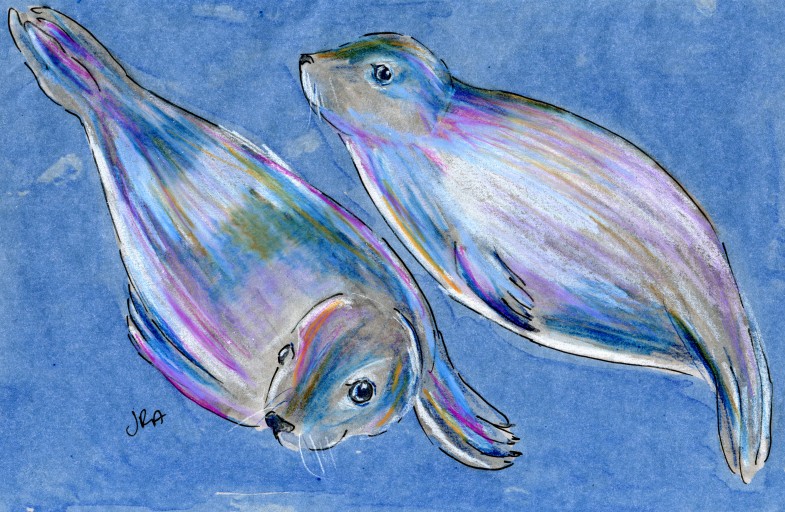
Here are two harbor seals that will be waiting for Heather when she wakes up because I like her twice as much! Don’t worry, there is almost no chance that they will fall victim to the Steller sea lion’s intrapinnipedal appetites.

—————-
Now playing: Nas – The World Is Yours
via FoxyTunes

{ 6 comments }

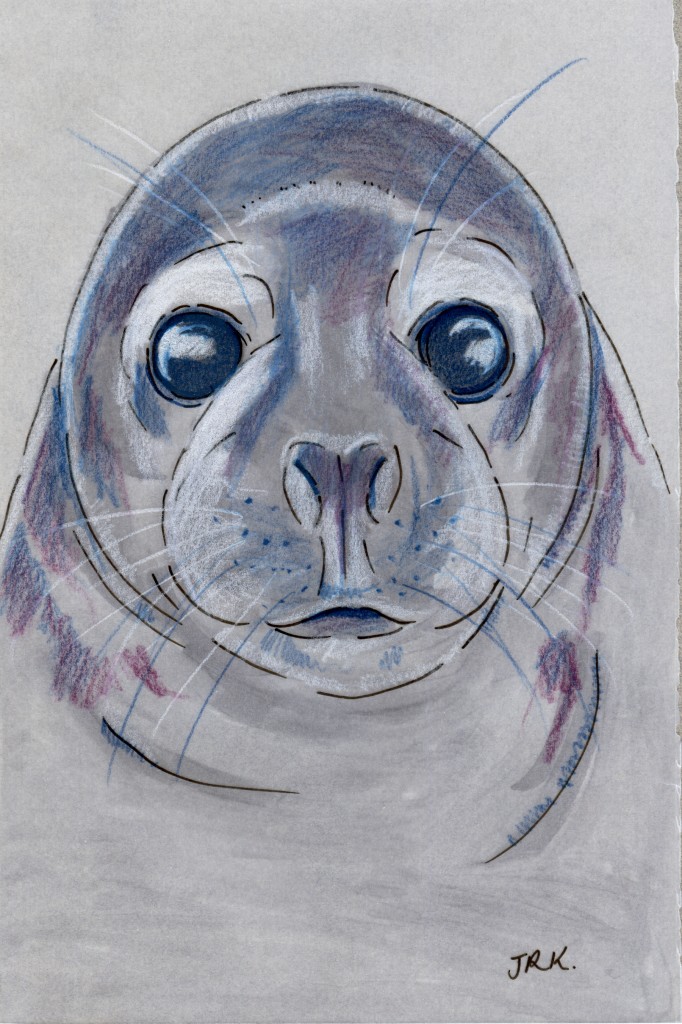
Harbor Seal (Phoca vitulina)

by JR Kinyak on December 12, 2007

in Marine Mammals

Please consider contributing at least $25 to Defenders of Wildlife to get your own original Daily Mammal art! Read more about 24 Mammals in 24 Hours!


0070

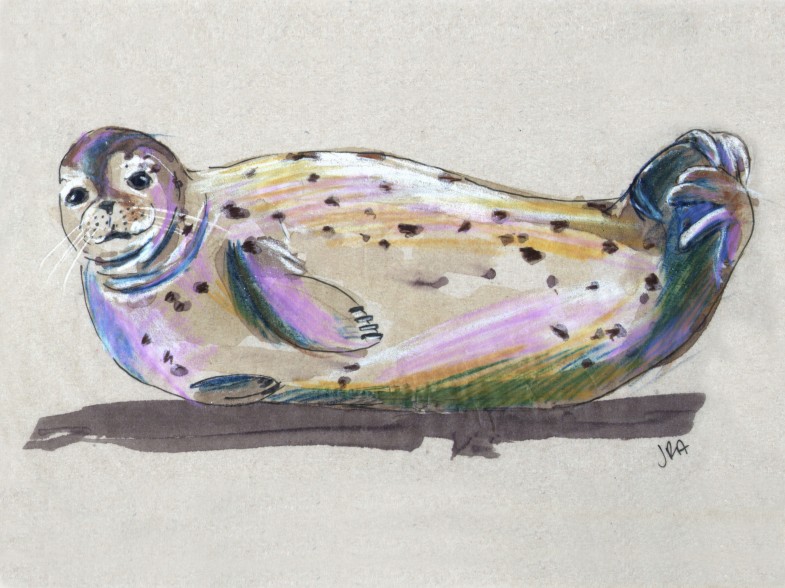
This harbor seal is for Jeana. Harbor seals, which are also called common seals, live throughout the northern Pacific and Atlantic coasts. They are born on land, and while babies are born with fuzzy baby-wool, they lose it a few hours after birth. Living Mammals of the World says that harbor seals are “sometimes quite pathetic in their attachment to human beings.” Rude, isn’t it?

The Marine Mammal Center in the Marin Headlands, across the Golden Gate Bridge from San Francisco, rescues and rehabilitates marine mammals. I visited once, and they had a sea lion with a gunshot wound, recuperating in the hope of returning to the Pacific Ocean.

{ 0 comments }

Hooded Seal (Crystophora cristata)

by JR Kinyak on August 22, 2007

in Marine Mammals


0058

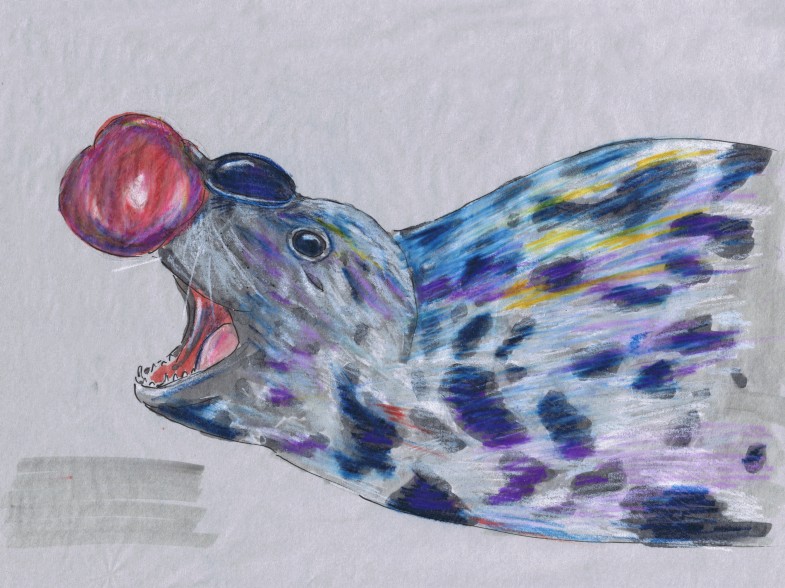
That’s not a ball balanced on this seal’s nose—it’s his nasal cavity! Males of this species (who can be as large as 900 pounds and 9 feet long) can inflate their nasal cavities out their nostrils. They turn inside out “like a glove’s fingers,” according to one description. They do this when they’re courting or particularly angry. That’s not the hood of their name, though—the hood is the bump on their nose, which they can also inflate! The hooded seal’s Latin name means bladder-carrying, crested.

I wonder if the tradition of training seals to balance red balls on their noses came from observations of this species.

{ 2 comments }