Posts tagged as:

pig

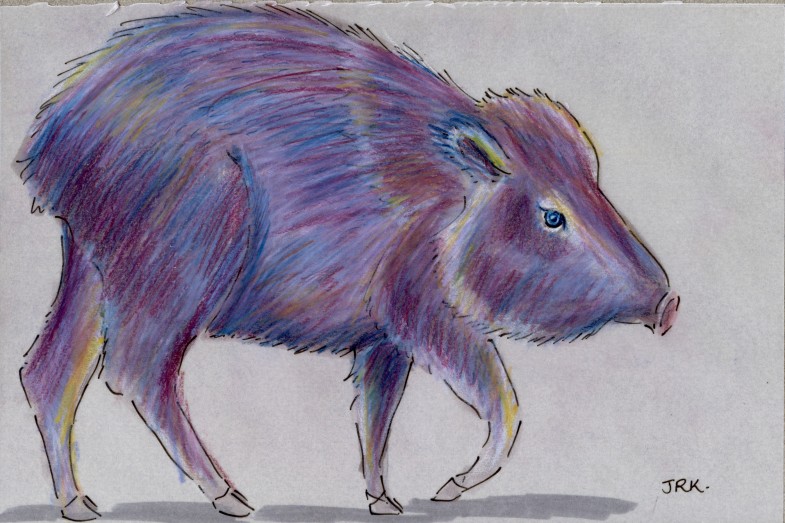
Chacoan Peccary (Catagonus wagneri)

by JR Kinyak on June 7, 2010

in Ungulates

Chacoan peccary (click image to enlarge)


0302

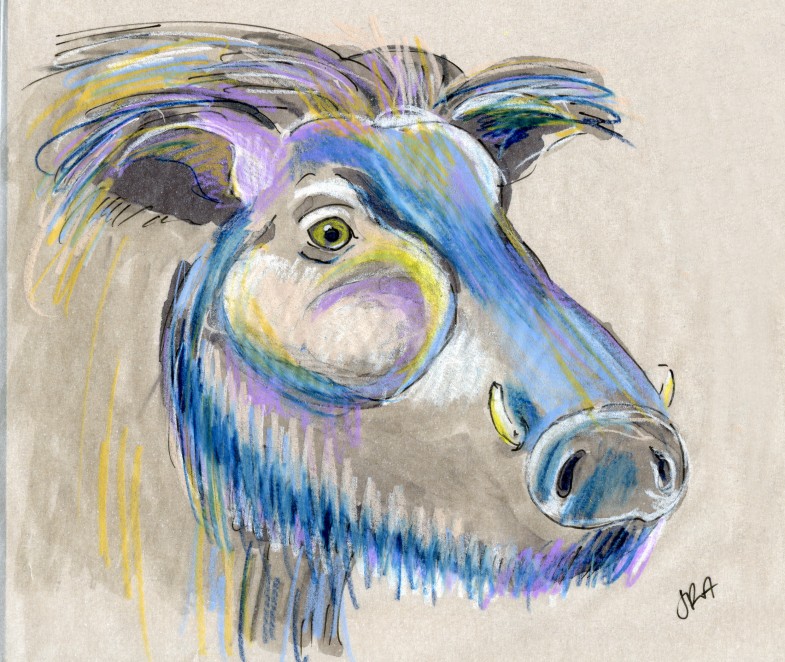
This peccary species lives in the Gran Chaco of South America, a region that overlaps Argentina, Bolivia, and Paraguay. It lives in the driest, hottest parts of the area, and its main food is cacti. The Chacoan peccary is endangered, mainly because of hunting but also because of habitat destruction. Oddly, this peccary was first described by scientists in the 1930s based on fossil evidence and was thought to be extinct (by scientists, not by people who lived in the Gran Chaco and saw the peccary all the time) until 1975.

Below, see Coco’s cute Chacoan peccary and the prelimary sketch I did for mine.

Chacoan peccary by Coco, age 11


Chacoan peccary sketch

{ 2 comments }

Mammal News Roundup

by JR Kinyak on June 26, 2008

in Mammal News

Well, I was going to post a new mammal drawing today, which would have brought us to six consecutive days! But alas, I decided to pick tonight to try out a new paper (I was going to try to find a more archival replacement for my usual tracing paper) and, well, it’s just not working out for me. So instead, here’s an installment of the Mammal News Roundup.

May 28, 2008, The Guardian: Jane Goodall, a hero to mammals including me and my friend Tynan, is proposing that the Nobel Prize committee add a new prize, “for advancing medical knowledge without experimentation on animals.” I absolutely agree that, at the very least, we could drastically cut back on how often we experiment on animals now that we have amazing scientific technology and that we should actively recognize and reward new ways of doing science that don’t involve harming animals, but a Nobel Prize for such a niche seems like it would not quite fit in with the others.

June 23, 2008, CNN.com: The U.S. Supreme Court will hear a case regarding whether or not it’s okay for the Navy to disregard the welfare of whales when it’s performing sonar tests. Despite evidence showing, apparently, that whales, dolphins, and other marine mammals can be injured or killed by military sonar, President Bush tried to create an exemption that would allow the tests to be conducted without an environmental impact assessment. Courts up to the Supreme Court have sided with the whales.

On the other hand, the court isn’t going to hear a case about the proposed fence along the U.S.-Mexican border, meaning that the law that gives “the secretary of homeland security the power to bypass laws or regulations prohibiting the fence’s construction” stands. A law that gives someone the power to break the law is an interesting law indeed. This is an issue I feel very strongly about, but I’m not going to start ranting about it right now.

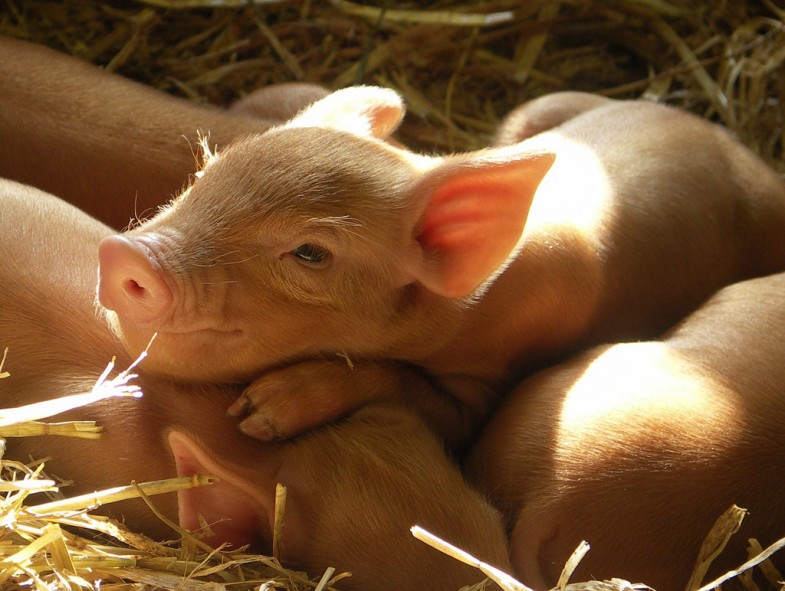
June 24, 2008, NewScientist.com: A study suggests that piglets—being raised for their meat—who get to listen to music and play in their own rec room are less stressed. The piglets in the study listened to music by Bach and Elgar, chosen for its resemblance to porcine grunts! Less stress for pigs means better pork for humans.

June 20, 2008, The Guardian: The demilitarized zone between North and South Korea was once farmland. Now that it’s been left to its own devices, endangered animals have been quite successfully making their homes there. But the DMZ isn’t likely to stay natural and wild for long, since development and industry are encroaching, so a group wants to have the zone declared an official nature reserve: the most dangerous nature reserve in the world, according to this article. The article is accompanied by a slide show about the wildlife of Korea’s DMZ.

Photograph by Scott Bauer, United States Department of Agriculture

{ 2 comments }

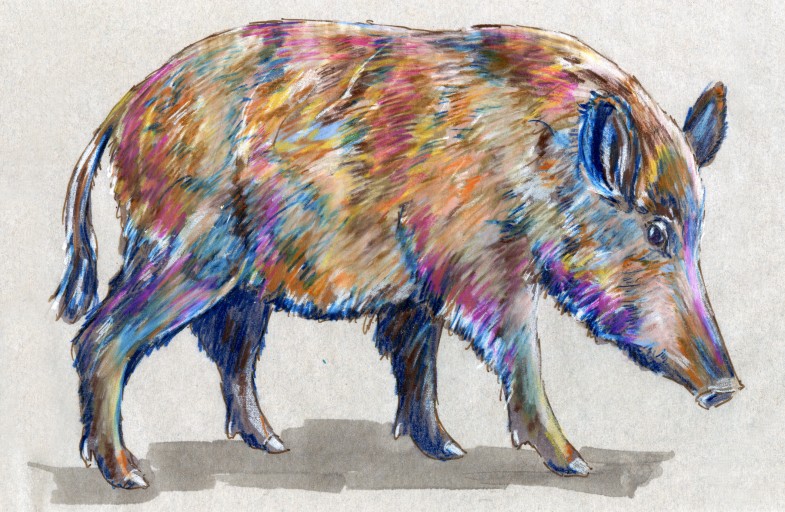
click image to enlarge

0114

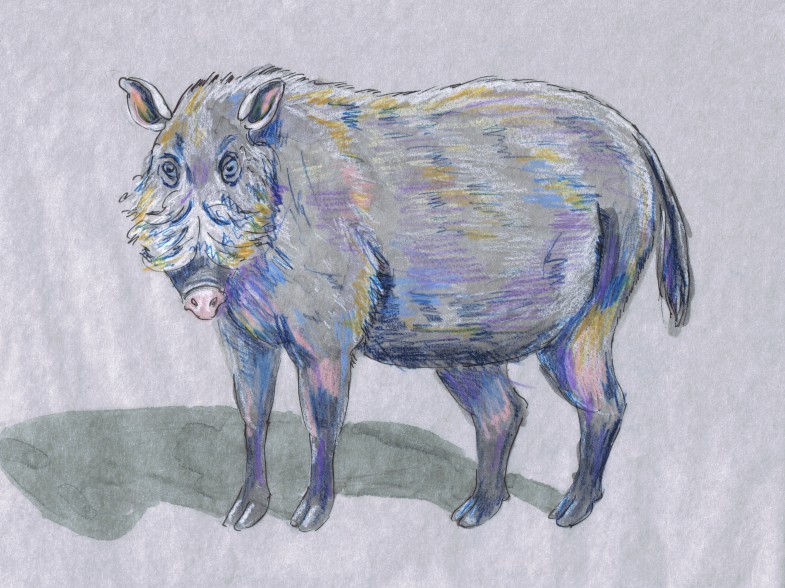
Native to Europe, North Africa, and Asia, the European wild boar came to North Carolina in 1912 when a man working in the Snowbird Mountains had 14 of them shipped over to start a game preserve. By the early 1920s, those 14 had grown into 60–100, and a hunt was held with dogs. Well, the hunters managed to kill only two of them, and many of the rest escaped. They multiplied and thrived, and I suppose that most of the wild boars now common throughout North Carolina are descendants of those first 14. (This is all according to the North Carolina Wildlife Resources Commission’s wild boar section.)

About the European wild boar, our old friend Ivan T. Sanderson has this to say:

They are most competent and single-minded beasts and are intolerant of any interference. Even the babies will put up a determined defense and the males will attack with calculated strategy. Their bite is worse than that of any mammal with the exception of the Killer Whale, and actually much worse than that of the Great Cats though being a ripping rather than a slicing action.

Be careful, North Carolina!

Make an origami wild boar

{ 0 comments }

Giant Forest Hog (Hylochoerus meinertzhageni)

by JR Kinyak on December 17, 2007

in Ungulates

Please consider contributing at least $25 to Defenders of Wildlife to get your own original Daily Mammal art! Read more about 24 Mammals in 24 Hours!


0074

These wild hogs live in central Africa. The male of the species is a vicious fellow, liable to attack his fellow hog with great ferocity, sometimes butting heads so hard that someone’s cranium busts. According to the Ultimate Ungulate website, when two male giant forest hogs fight, “The victor urinates, grinds his teeth, and bites at the loser, who in turn flees the area with his tail raised.”

Giant forest hogs like to live in thicket and brush, favoring forested areas near watering holes. Their major predators are hyenas and leopards. I drew this hog’s snout way too short, but you should get the idea. Can’t you just hear him snorting?

{ 4 comments }

Bearded Pig (Sus barbatus)

by JR Kinyak on July 24, 2007

in Ungulates


0052

This fellow lives in Sumatra and Malaysia. Although he’s called a bearded pig, he’s actually a mustachioed pig. Enhancing the cut of his jib is the fact that he’s the slenderest of all the pigs. He wears it well, doesn’t he? Ted thinks he should wear a monocle, while I picture him in a top hat.

{ 5 comments }

Babirusa (Babyrousa babyrussa)

by JR Kinyak on July 14, 2007

in Ungulates

babirusa720042

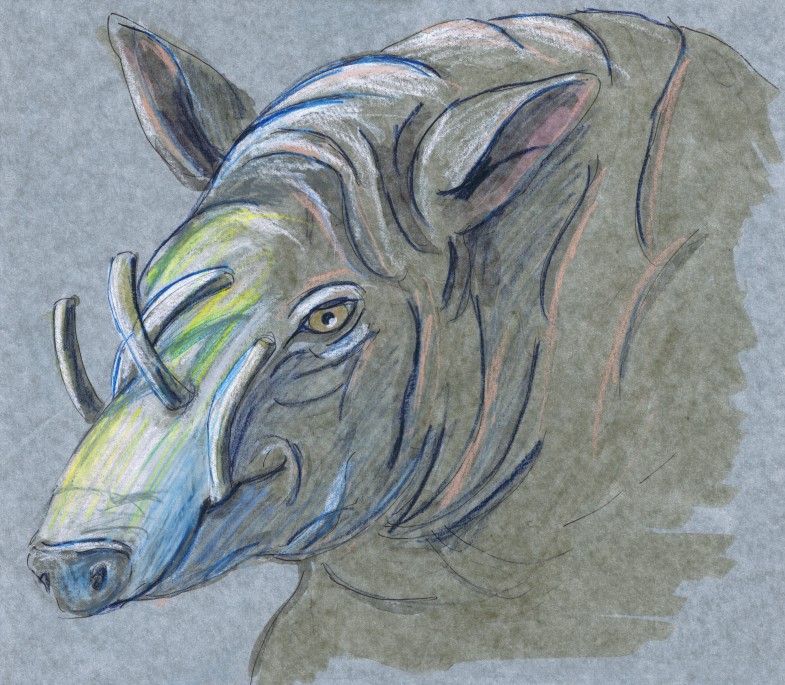
This fellow is a babirusa, a Malaysian wild hog whose Latin name means “pig deer.” See the top tusks? Well, those are his upper incisors, which curve up through the roof of a male babirusa’s snout and cross in front as they grow. The best guess as to why the babirusa has these tusks is that they protect his eyes from his fellow babirusa’s lower tusks. I also love how this guy’s common and Latin names together are the same name, spelled three different ways. I can think of several more ways to spell it that I might suggest they add in there.

The St. Louis Zoo has a good page about babirusas.

{ 0 comments }

Javelina (Tayassu tajacu)

by JR Kinyak on June 15, 2007

in Ungulates

javelina720013

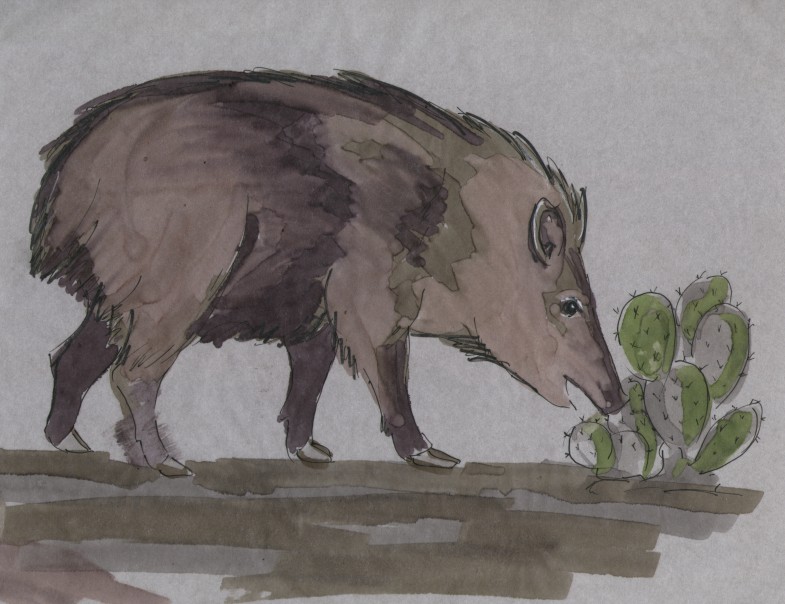
Javelinas live in the desert southwest, just like me. They travel in herds, and members of a herd smell alike, thanks to the javelinas’ habit of rubbing against their friends to mingle musks. It helps them remember who’s who and keeps them from getting lost, as their eyesight is quite poor. Javelinas, which are also called peccaries, have coarse fur, small hooves, and tough, leathery mouths, which means they can eat prickly pears without hurting themselves.

From what I can tell, although a lot of people think that the javelina’s name comes from the word javelin, the two words are actually unrelated. (This javelina is for my dad.)

Living with urban javelina on the Arizona Game and Fish website.

{ 0 comments }