Posts tagged as:

now

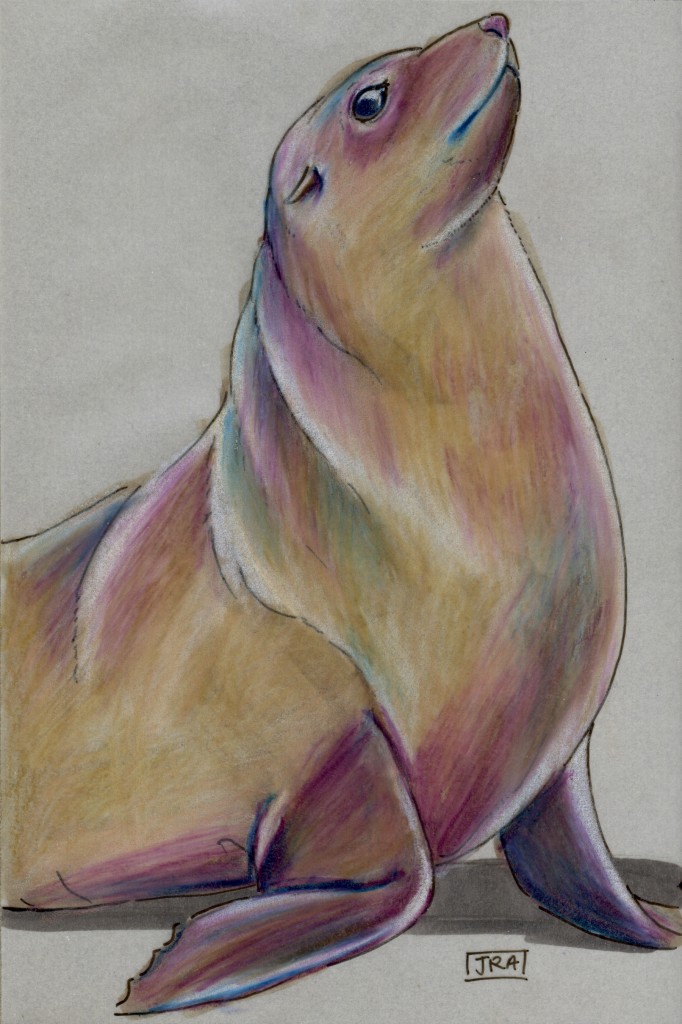
Cape fur seal (click image to enlarge)

Cape fur seal (click image to enlarge)


0271

Daily Mammal Now is an occasional Daily Mammal feature in which we meet a topically newsy mammal that I hadn’t previously drawn. Now, let’s meet the Cape fur seal, or more precisely, the Afro-Australian fur seal, of which the Cape fur seal is a subspecies. Afro-Australian seals live, unsurprisingly, off the coasts of Africa and Australia, specifically southwestern Africa and southern Australia. They’re called fur seals because their fur has been used to make coats and such. Baby fur seals have especially prized fur. The genitalia of male seals is sometimes used as an aphrodisiac in traditional medicine.

The largest Cape fur seal colony is on the coast of Namibia. Every year, the Namibian government allows seal hunts. This year the seal season runs from July 1 until November 15. The government is allowing hunters to club 85,000 baby seals and 5,000 adult males. The hunt takes place in relative secrecy so as not to attract attention or scare people.

Namibia is one of only five countries that still allow seal hunts. There is some disagreement among experts about the humaneness of clubbing seals; some maintain that done correctly, it’s more humane than shooting. But because of the perceived cruelty, seal products have long been banned in the United States and other countries, and beginning in 2010, they’ll be illegal in the European Union, too (with the exception of those created by subsistence hunting on the part of native populations).

This year’s Namibian seal hunt has been in the news the past couple of weeks because a South African organization, Seal Alert-SA, has been trying to buy out the only company that deals in Namibian seal pelts. (Coats made by the company supposedly fetch up to US$110,000.) With animal welfare activists claiming that the seal hunt hasn’t started because of the pending deal and the Namibian government saying that it has, it’s unclear what exactly is going on.

The National: “$14m deal to end Namibia’s Seal Cull”

The AP: “Namibian seal hunt to go on, 90,000 to be clubbed”

African Conservation Foundation: “Seal Cull NOT Started, Hang-in There Baby Seals, Help Coming”

Seal Alert-SA’s blog

{ 7 comments }

click image to enlarge

0191

Daily Mammal Now is an occasional feature that offers a drawing and discussion of a mammal currently in the news.

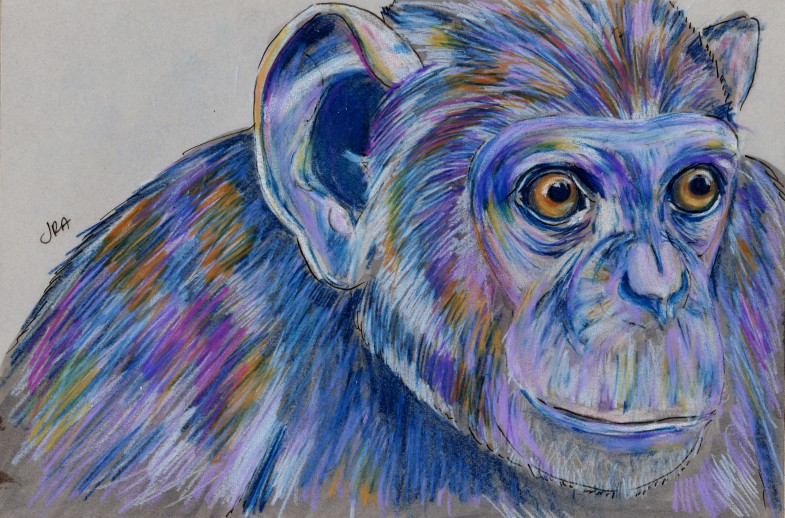
In June of this year, a committee of the Spanish parliament voted to grant limited “human” rights to the other great apes (chimpanzees, bonobos, orangutans, and gorillas). The law, which is expected to go on the books some time in the next several months, will prohibit laboratory testing on great apes, as well as holding them in captivity for entertainment purposes. Zoos can keep their apes, but circuses and the like cannot.

As far as I can tell, the idea behind this new act has been pushed forward by the Great Ape Project, an organization cofounded by the ethicist and animal rights activist Peter Singer. The Great Ape Project calls for all great apes to be granted freedom from torture, the right to live, and the right to freedom. This includes the right of due process and the right not to be imprisoned without a fair trial. (I’m not sure whether the Spanish act uses the same language as the Great Ape Project or whether the Great Ape Project has just seized the Spanish act as an easy way to get its message out. It’s not clear to me if the act uses the phrase “human rights” or speaks of all great apes—including humans—as equals.)

I have mixed feelings about this idea. I support a ban on using great apes as laboratory-test subjects, and I support banning cruelty toward animals in all forms. If I were in charge, factory farms would not exist, animal shelters would not euthanize animals just because they’d been there too long, high school students wouldn’t dissect frogs or rats or cats, and almost all animal testing—maybe even all of it—would be illegal.

What’s with my ambivalence toward the Great Ape Project, then? I support pretty much all of its aims. Where they lose me is with their talk about a community of equals and the right to due process. There’s something condescending about it. If we are declaring ourselves the species that has the ability to grant rights, how can we be equal? Since chimps can’t defend themselves in a court, a human advocate would need to be appointed. Who appoints that person? How do we know that what that person says is truly what the ape wants?

If all apes are to be granted freedom from imprisonment, where are we going to put the thousands of zoo, circus, and laboratory animals that we’d have to set free? Couldn’t it be crueler to send them out into the wild when all they’ve ever known is captivity? I think it’s shameful to keep apes in cold metal cages, and I’d love to see them in nice sanctuaries where they have social groups and plenty of space, but that’s still captivity, or imprisonment if you want to use the Great Ape Project terminology.

I guess I just don’t think we are equals. Our species, the great ape called Homo sapiens, has evolved so many capabilities so far beyond even those of our nearest cousins, the chimpanzees. I think that makes us responsible for them, and for all animals, and by accepting that responsibility, we help them far more than we would by calling them our equals and taking away our power to make choices about their treatment. Our dominion over the beasts doesn’t give us the right to abuse, use, or hurt them. It’s the opposite: it gives us the duty to treat them kindly. We don’t need to grant them personhood to fulfill that duty.

The New York Times came out in favor of Spain’s act: “When Human Rights Extend to Nonhumans.”

The Wall Street Journal was against it: “Monkey Business.”

The Chimpanzee Health Improvement, Maintenance, and Protection Act provides for peaceful retirement (as opposed to euthanasia) for “surplus” laboratory chimpanzees.

The Great Ape Project advocates for “equality beyond humanity.”

42 Ways to Help Animals in Laboratories: download a nice PDF from the Human Society of the United States on this page.

The American Anti-Vivisection Society was founded in 1883 and works to stop experimentation on animals.

Consecutive days of mammals: 1
Record: 16

{ 0 comments }

The second Daily Mammal 24-Hour Mammal Extravaganza is coming April 19! Reserve your own special mammal now: just click the “donate” button in the right-hand navigation bar. Get an original, custom-made work of art and help animals at the same time!

click image to enlarge

0142

Today is the inaugural installment of a new periodic Daily Mammal spotlight feature, which I’m calling Daily Mammal Now. (I admit that I got the idea from Dr. Phil’s “Dr. Phil Now.” I just don’t have the newsy-sounding arrangement of my theme song to play for these special “Now” episodes. In fact, no theme song at all.) Daily Mammal Now (like Dr. Phil Now) will focus on mammals that have been in the news. If you see a mammal in the news, please drop me an e-mail or comment on this site to tip me off! Get the scoop if you have a nose for news!

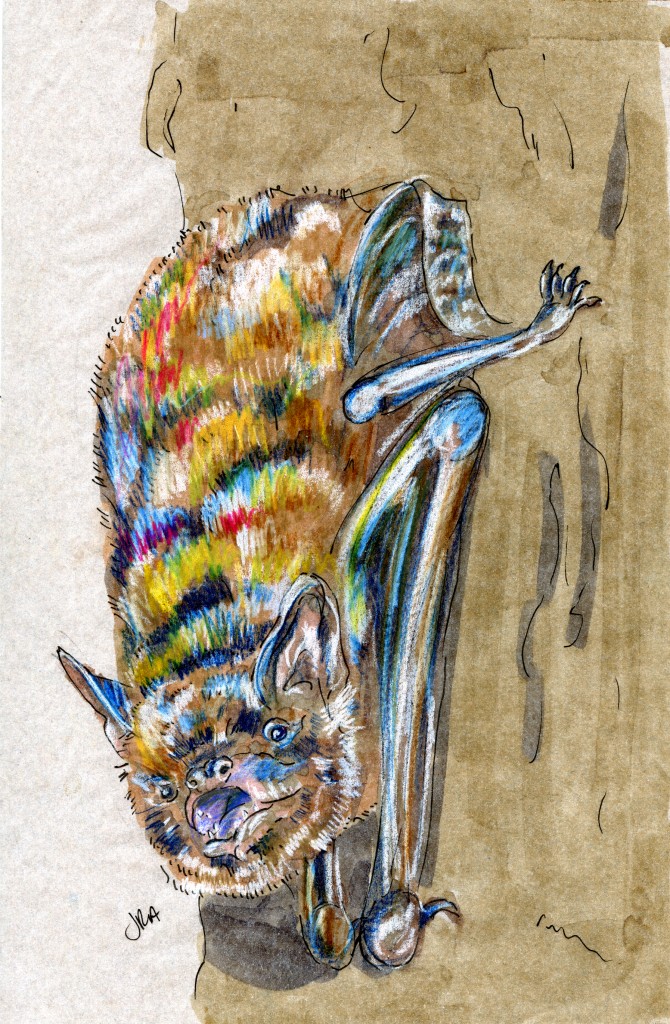
A couple of weeks ago, the New York Times ran an article called “Bats Perish, and No One Knows Why.” Alarmingly, certain populations of bats in New York, Vermont, and Massachusetts have been stricken with what they’re calling White Nose Syndrome. Is it a virus? Is it caused by exposure to a toxin? Is it bacterial? Well, no one knows. What they do know is that it makes the bats very thin and sometimes spotted with a white fungus. Since last winter, it’s been killing bats who should have been peacefully hibernating. Instead, they’re staggering out of caves and mines in broad daylight in the dead of winter and dropping dead. One scientist quoted in the article calls them “dead bats flying.”

This particular bat, the Indiana bat, has been on the federal endangered species list for four decades now. The major threats to its survival are human-caused: commercialization of the bats’ cave habitats, pesticides, “human disturbance,” and the like. While some Indiana bat populations seemed to be on the upswing, now White Nose Syndrome threatens to knock them back down again. Scientists fear that the syndrome could cause extinctions of several species.

The phenomenon reminds me of Colony Collapse Disorder, the mysterious catastrophe that has been killing bees, and the lethal fungus that attacks frogs. Unlike Dr. Phil on his topics, there’s not much I can say about these strange syndromes. I’m baffled, and all I can do is read the news and see what happens. What do you think?

{ 0 comments }