Posts tagged as:

names

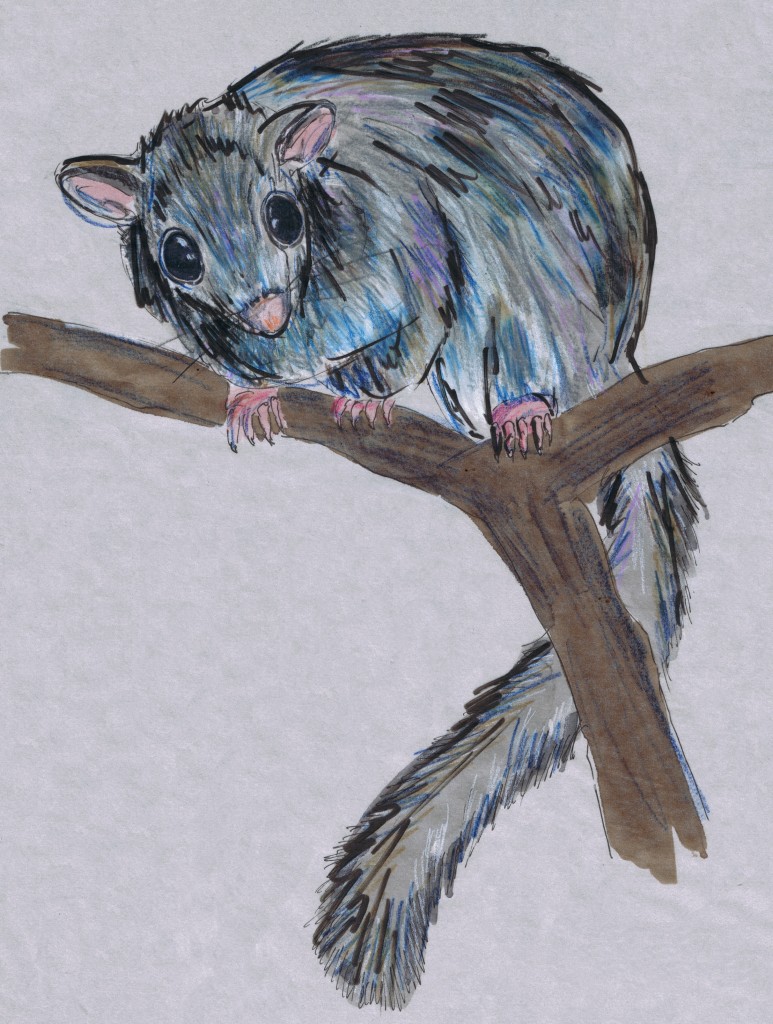
Sewellel (Aplodontia rufa)

by JR Kinyak on February 27, 2011

in Rodents

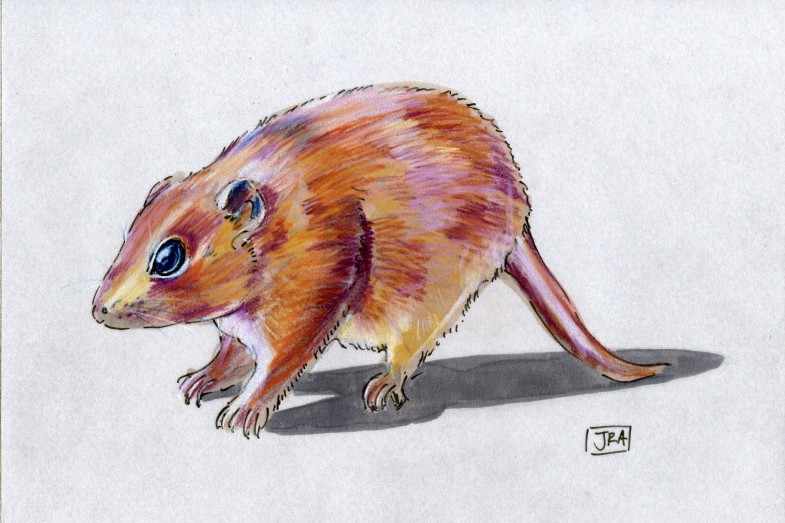
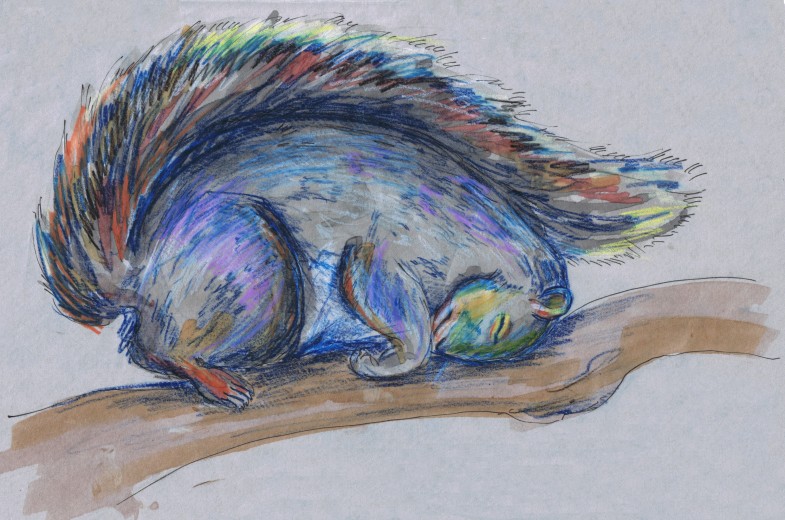
Sewellel

Sewellel (click image to enlarge)


0350

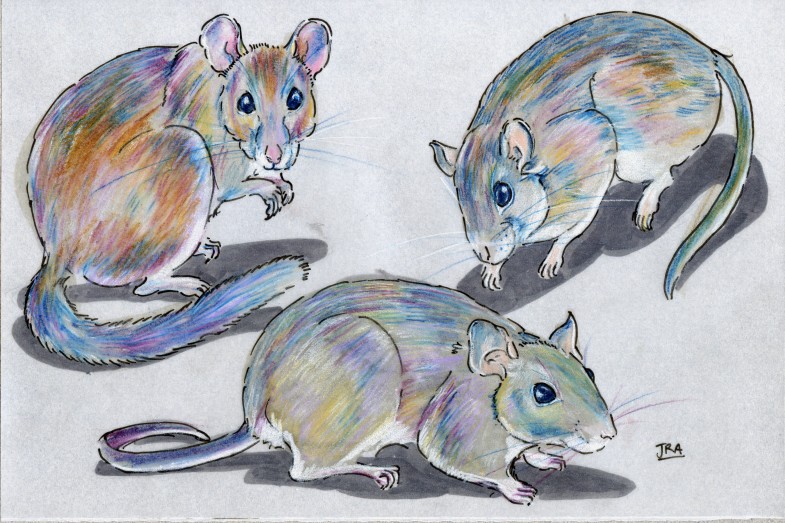
The sewellel, which is also known as the mountain beaver, even though it doesn’t live in the mountains and isn’t much of a beaver, lives along the coasts of British Columbia, Washington, Oregon, and California, in moist, cool, rain forest environments. It is one of the most primitive rodents in existence, meaning that it really isn’t different from its ancient fossilized ancestors, and it doesn’t have any close living relatives. Sewellels (the name comes from a Chinookan word for a cloak made from the sewellel’s fur, according to Wikipedia) live in burrows that include latrine chambers. When they defecate, they take their poop into their mouths and then either eat it, if it’s soft, or toss it into the latrine, if it’s hard.

{ 4 comments }

Gray Seal (Halichoerus grypus)

by JR Kinyak on February 26, 2011

in Carnivores

Gray seal

Gray seal (click image to enlarge)


0349

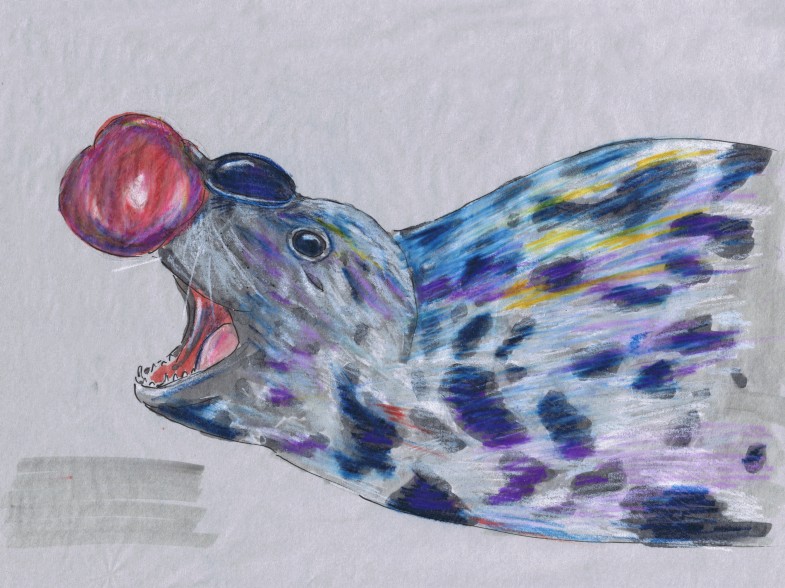
The gray seal lives in the north Atlantic, separated into three isolated populations. The seal’s scientific name, Halichoerus grypus, means “hooked-nose sea pig,” and refers to the male gray seal’s distinctively long nose. (The one I drew is a female. Sorry.) This seal’s numbers are increasing throughout its range—yay!

{ 2 comments }

Red Squirrel (Sciurus vulgaris)

by JR Kinyak on June 11, 2010

in Rodents

Red squirrel (click image to enlarge)

0310

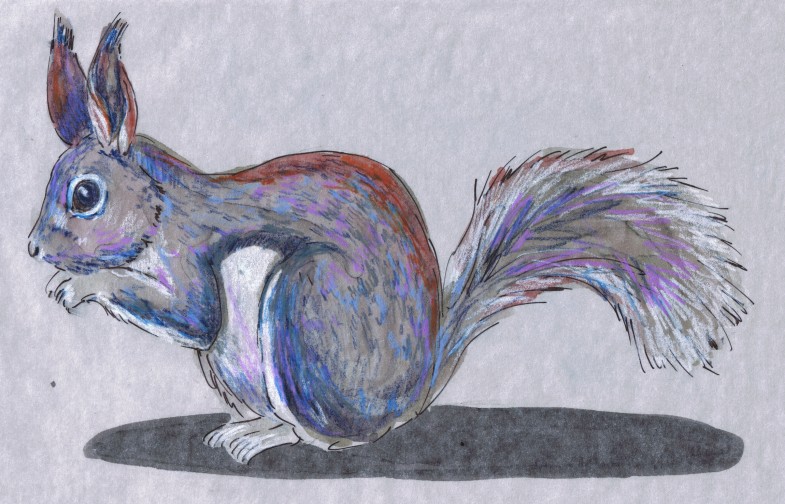
This pretty red squirrel species lives in Europe and Asia. In Italian, its name is scoiattolo comune, in German it’s Eichhörnchen, in French it’s ecureuil roux, in Swedish it’s ekorre, in Danish it’s egern, and in Spanish it’s ardilla roja.

Earlier this week, our friends visited, and one of their kids, nine-year-old Nicola, drew some mammals with Coco and me. Here are Coco’s and Nicola’s squirrels, which are a different species from the red squirrel I drew, but fit here anyhow.

Sleeping squirrel by Coco, age 11


Hungry squirrel by Nicola, age 9

{ 0 comments }

Emperor Tamarin (Saguinus imperator)

by JR Kinyak on July 10, 2009

in Primates

Emperor tamarin (click image to enlarge)

Emperor tamarin (click image to enlarge)


0272

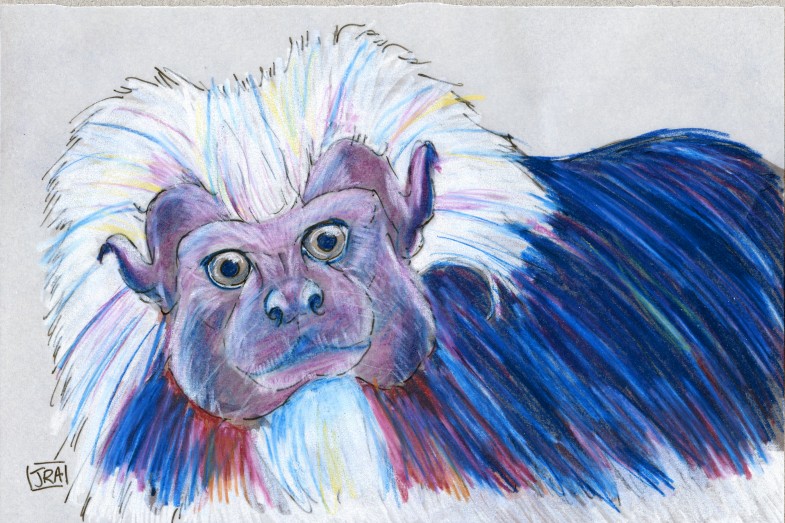
I have two things I’d like to share with you about the emperor tamarin (also known as the emperor marmoset). First, according to Mammals—Their Latin Names Explained by A.F. Gotch,

“A taxidermist, so the story goes, had never seen a live tamarin and twisted the white ‘moustache’ upwards to look like the Emperor of Germany, instead of letting it droop in the natural position. It thus acquired the name Emperor Tamarin as a joke, but the name stuck, and the Latin name became established as Saguinus imperator.”

Second, check out this clip from a BBC series called Clever Monkeys, in which we learn about the mother emperor tamarin’s cunning use of mannies, and then have a good weekend:

{ 2 comments }

Fisher (click image to enlarge)

Fisher (click image to enlarge)


0269

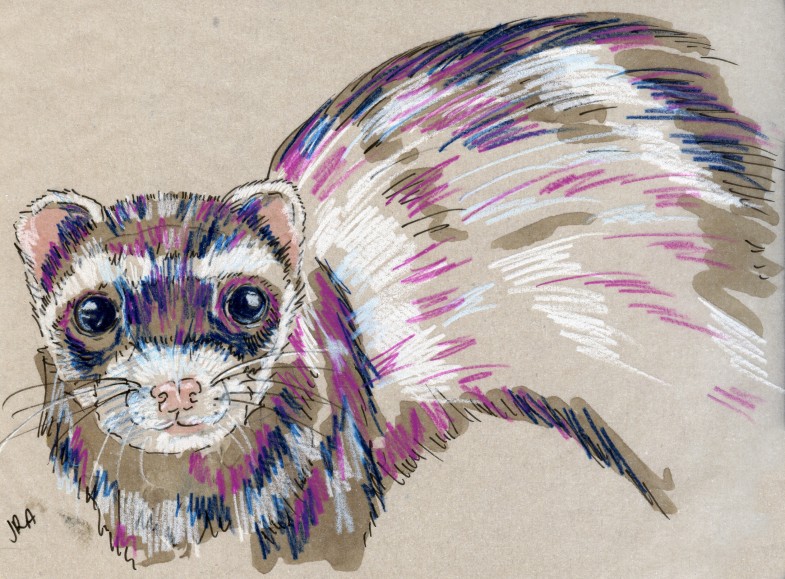
Fishers live only in North America, and currently only in northern North America, from Alaska and Canada down to the Sierra Nevadas and the Appalachians. At one time, they ranged as far south as Tennessee and North Carolina, but they’ve disappeared from much of their historic range because of excessive trapping and habitat loss from logging.

Fishers don’t get their name because they eat fish. They mainly eat birds, small mammals, and carrion. It’s possible that they’re called fishers because at one point they raided some fisherman’s fish traps, but it’s most likely that the name comes from the Dutch word fitchet, or polecat—an animal the fishers resemble. (Incidentally, fitchet comes from the root visse, which means “nasty.”)

The fisher is one of the only animals that can kill a porcupine. It sounds quite horrific, really. The fisher will circle the porcupine, taking every opportunity to bite the porcupine’s face, where it doesn’t have quills. The porcupine circles, too, trying to keep its back to the fisher. Sometimes the porcupine will seek protection by pressing its face against a tree; the fisher might climb the tree and attack from above, forcing the porcupine away. When the porcupine has sustained enough injuries to the face to wear it out and stop it from protecting itself, it dies, often from shock, blood loss, or injuries to the top of the head! Then the fisher starts eating, beginning with the heart, liver, and lungs, and leaving behind only the feet, skin, and bones of the porcupine.

{ 5 comments }

Indian palm squirrel (click image to enlarge

Indian palm squirrel (click image to enlarge)

0255

The Indian palm squirrel is a funambulist of the palms! Thinking of the words somnambulist or ambulatory, you can almost come close to figuring out what that means: a fun walker! Sort of. A funambulist is a tightrope walker (funis is Latin for rope; the word fun, on the other hand, comes from the Middle English fon, meaning fool, and this squirrel is no fool).

Indian palm squirrels are endemic to India and Sri Lanka. In a Hindu legend, the god Ram was searching for his beloved wife Sita, who had been kidnapped by a demon. At one point in the epic that tells his story, he must build a bridge across a sea, and he is aided by an army of monkeys and bears. But monkeys and bears aren’t the only animals that help him. This is from a version of the story on the India Times website:

The entire army of monkeys promptly got to work, under the supervision of Hanuman and Jamvant. Ram sat under a tree thinking of Sita and the days ahead.

After a while, he noticed something that moved him to tears. A little squirrel, who had been watching the monkeys carry huge boulders and rocks to build the bridge, began to do her bit to help the Lord. She began carrying little pebbles in her mouth and her tiny hands from a little mound near the tree to the site of construction.

A much amused and pleased Ram picked up the squirrel and petted her, running his fingers from her head down to her tail. The squirrel was blessed and forever marked with stripes—the mark of Lord Ram and a trophy of love.

A while back, a commenter suggested that the Daily Mammal could function as a sort of horoscope, where your personality can be compared to characteristics of the mammal I draw on your birthday. So if you, like me, were born on May 4, you resemble an Indian palm squirrel: you’re agile, fearless, hardworking, and willing to wreak minor destruction to get what you want.

{ 0 comments }

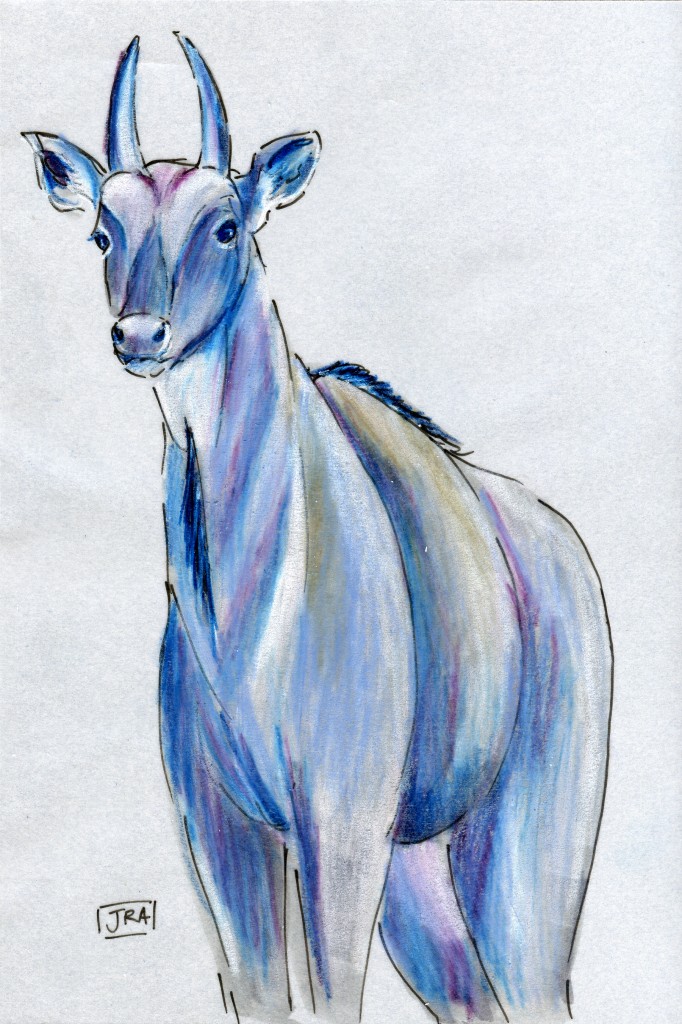
Nilgai (click image to enlarge)

Nilgai (click image to enlarge)


0254

The nilgai is an antelope that lives in India and parts of Nepal and Pakistan. For an antelope, it has a weird scientific name: Boselaphus tragocamelus means ox-deer-goat-camel. Perhaps they just really didn’t know and wanted to hedge their bets. The word nilgai comes from a Hindi word meaning “blue bull.” (The male nilgai’s bluish gray hide reminds me of grulla, my favorite color in Ben K. Green’s The Color of Horses. When I was a kid, my dad and I enjoyed looking at that book at B. Dalton or Waldenbooks while my mom and sister were shopping elsewhere in the mall.)

Some 35,000 feral nilgai roam ranchland in Texas. In the 1930s, the King Ranch decided to experiment with breeding the hardy antelope in tough Texas as an alternative source of meat. That didn’t really take off. Now, the Texas nilgai are handy targets for trophy hunters.

{ 2 comments }