Posts tagged as:

lemur

click image to enlarge

0222

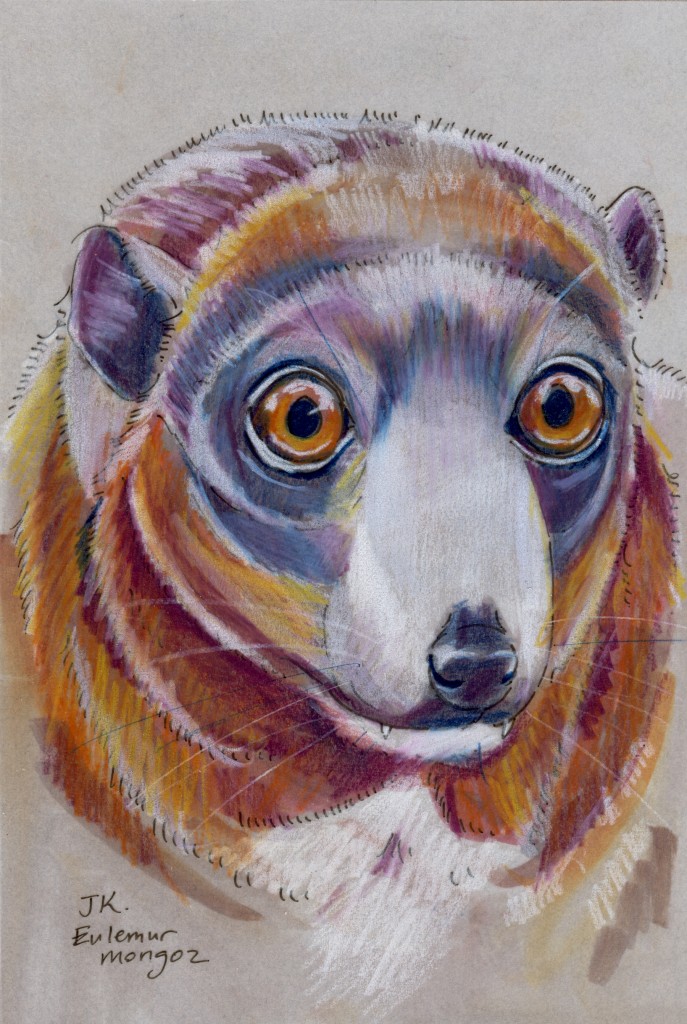
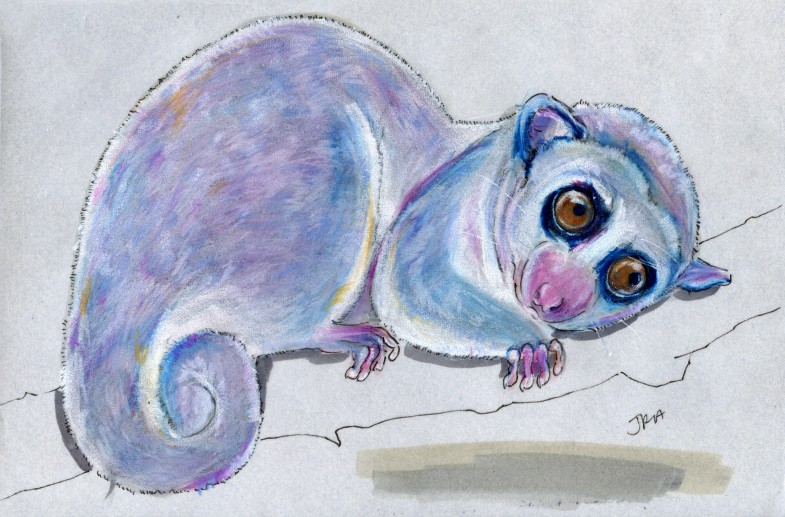
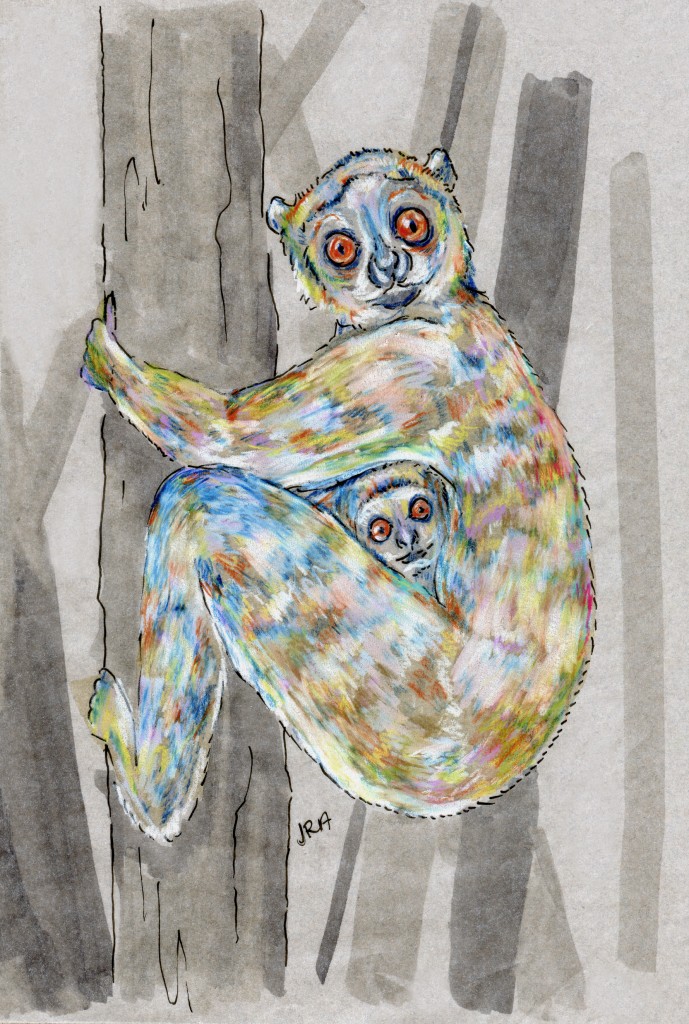
Well, I originally picked this lemur for Hibernators Week because I was under the impression that it was an estivator (see Sunday’s post if you’re wondering what I’m talking about). My beloved but flawed Ivan T. Sanderson told me that, as did Animal Diversity Web. But from what I can tell, that’s not necessarily correct. These Malagasy lemurs go into torpor between March and November…which is winter in the southern hemisphere. It’s rather hemisphericentric of us to call that estivation, isn’t it? Estivation can also refer to torpor during a hot or dry season, so maybe it’s not technically wrong, but it certainly is etymologically. So instead of an estivator, here’s a torpid primate for you.

But the fact that the fat-tailed dwarf lemur is a torpid primate is extraordinary enough, it turns out. This guy is one of only two primate species that enter into seasonal torpid periods, and our friend here is the only primate that is torpid for such a long period. And that fat tail of his? It’s literally a fat tail, where the fat-tailed dwarf lemur stores the fat reserves that get it through its torpid season. And it gets really fat, more so than I showed here.

These lemurs feast on fruit, flowers, nectar, pollen, and the occasional insect or two. They may be responsible for pollinating some of the plants in their Malagasy home, and the fact that they mark the branches they’re traveling on with their feces helps create a fecund (I just looked it up, and feces and fecund do not come from the same root at all—weird, huh?) environment for parasite plants to grow on the trees. During Madagascar’s wet season, fat-tailed dwarf lemurs spend their nights eating up to get those tails nice and plump while they can. When it gets dry, they curl up in little balls and drift off into torpidity.

A word about Madagascar. I’m sorry to say that the country is in turmoil right now, and demonstrations have killed about a hundred people in the past few weeks. Today, the president of Madagascar fired the mayor of the nation’s capital, Antananarivo, after the mayor announced that he was now going to be in charge of the country. It’s all pretty awful and unfortunate. Madagascar is one of the most special and important places on earth, biologically, and is plagued by poverty, deforestation, and violent political upheaval. I wish all the Malagasy people and animals well right now. Here is a New York Times article from today about the situation.

And now a quick word about lemurs. You might like to watch this short video of the director of Duke University’s Lemur Center talking about why she thinks it’s irresponsible of scientists to keep “discovering” new lemur species, a state of affairs that obviously has an effect on the Daily Mammal. I regret that I didn’t get the chance to go to the Lemur Center when I had occasion to travel to North Carolina, and I hope I will get to visit someday. Of course, I also long to visit Madagascar.

{ 1 comment }

click image to enlarge

0171

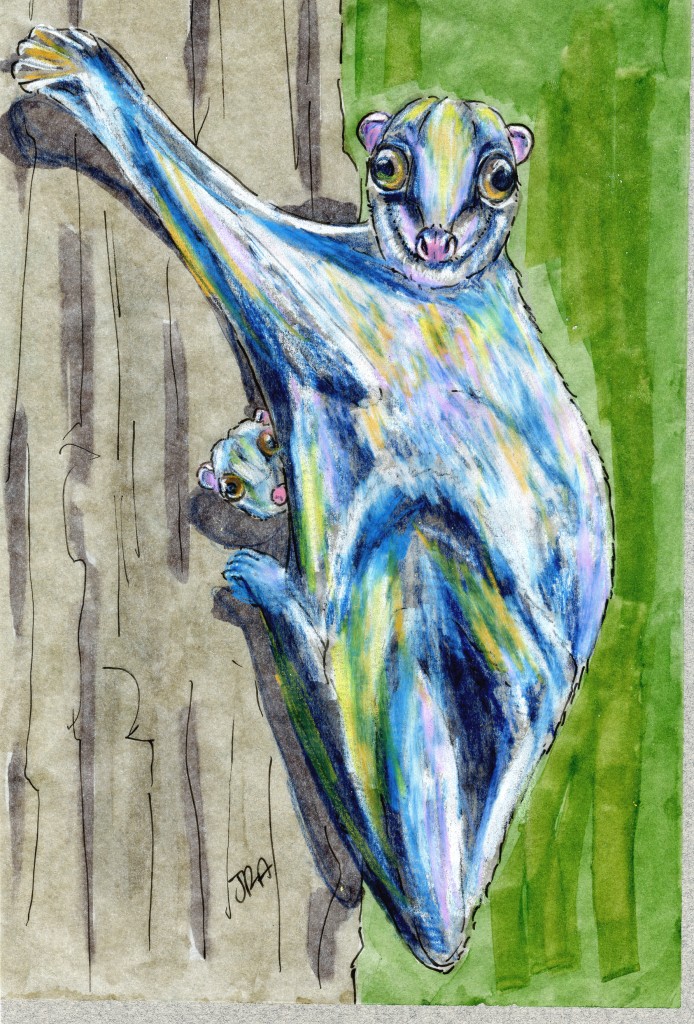
Here’s another order checked off the list. I think this is a goal we’ll reach, mammals! And what a mammal this one is. Have you ever heard of flying lemurs, also called colugos? There are two species, one that lives in the Philippines and one that lives in Thailand, Malaysia, Sumatra, Java, Borneo, and the like. Both species have this amazing membrane that stretches from their neck…to the tips of their fingers…to the tips of their toes…to the tip of their tail. Compare that to the flying squirrel, who has skin for gliding just between, basically, its wrists and ankles. It’s amazing, this colugo membrane.

Colugos flip their tail up, sort of inside out, when they’re on the go so it doesn’t get “soiled,” according to Walker’s Mammals of the World, or caught on a branch. They’re truly arboreal, and they freak out if they somehow end up on the ground. They can climb in “a series of lurches” and they shuttle along horizontal branches hanging the way sloths do. But their most impressive mode of locomotion is their gliding. In a single glide, they can travel upwards of 100 meters (109 yards)!

These guys eat almost nothing but greenery. Walker’s also says that “the gliding membrane of the mother can be folded into a soft, warm pouch to hold the young,” and “the mother may leave the young in a nest tree or carry it with her while foraging,” as you see this lady colugo doing. And colugos are crepuscular, a lovely word meaning “active at twilight.” I wonder if there’s an equivalent word that means “active at dawn.”

Finally, please click to enlarge this photograph of a colugo in flight, which is from Pennsylvania State University. It’s so amazing!

The Daily Telegraph: ‘Your cousin, the ‘flying lemur’”

Consecutive days of mammals: 16
Previous record: 11

{ 5 comments }

click image to enlarge

0129

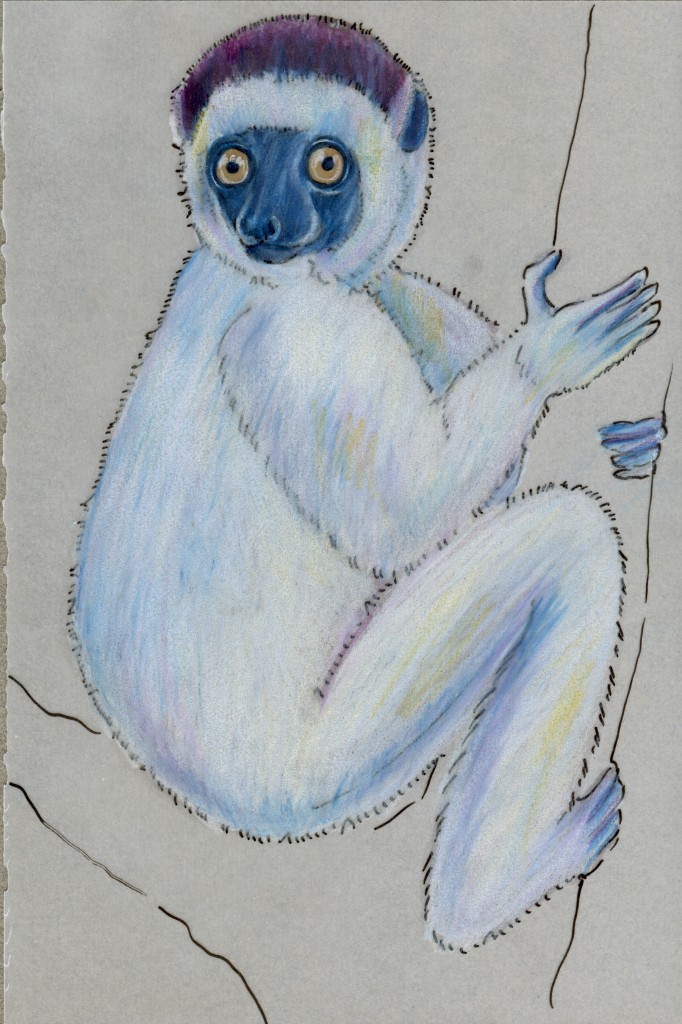
On Oscars night, here’s a special lemur named for an Oscar nominee! Discovered by scientists (although, actually, one of the scientists gives credit to their local guide) in 1990, this little woolly lemur was named in honor of actor/writer/director/man’s man/ladies’ man/man-about-town John Cleese 15 years later.

Lemurs, which are primates, are unique to Madagascar (maybe not quite unique—apparently there’s another island to which they were introduced, as well, but really, just Madagascar). Woolly lemurs, of which Cleese’s is one, are very small. This one only weighs about two pounds. Lemurs are excellent at leaping from tree to tree, and some of them race around on their back legs. The nature reserve where Cleese’s lemur lives is also home to 11 other lemur species. (I really want to go to Madagascar.)

Why John Cleese? you may ask. Check out his website, and you’ll see from the first page how passionate he is about lemurs. In fact, he made a documentary about them, and his follow-up to A Fish Called Wanda, Fierce Creatures, apparently presented a conservation viewpoint. I imagine the scientists named this lemur after Cleese because scientific types probably like the John Cleese humor, plus naming it after a celebrity would attract publicity and attention to the cause of conserving Malagasy biodiversity. (Yes, I just wanted to use the word Malagasy.) I think it’s a great name. What do you think?

You really should read this PDF of an article by Urs Thalmann, one of the scientists who described this lemur. It’s short, written for a general audience, full of pictures, and an account of dysentery, political unrest, malaria, bandits, and, sadly, two deaths.

This lemur is for Ted, a big fan of Basil Fawlty!

{ 4 comments }

pygmymouselemur720043

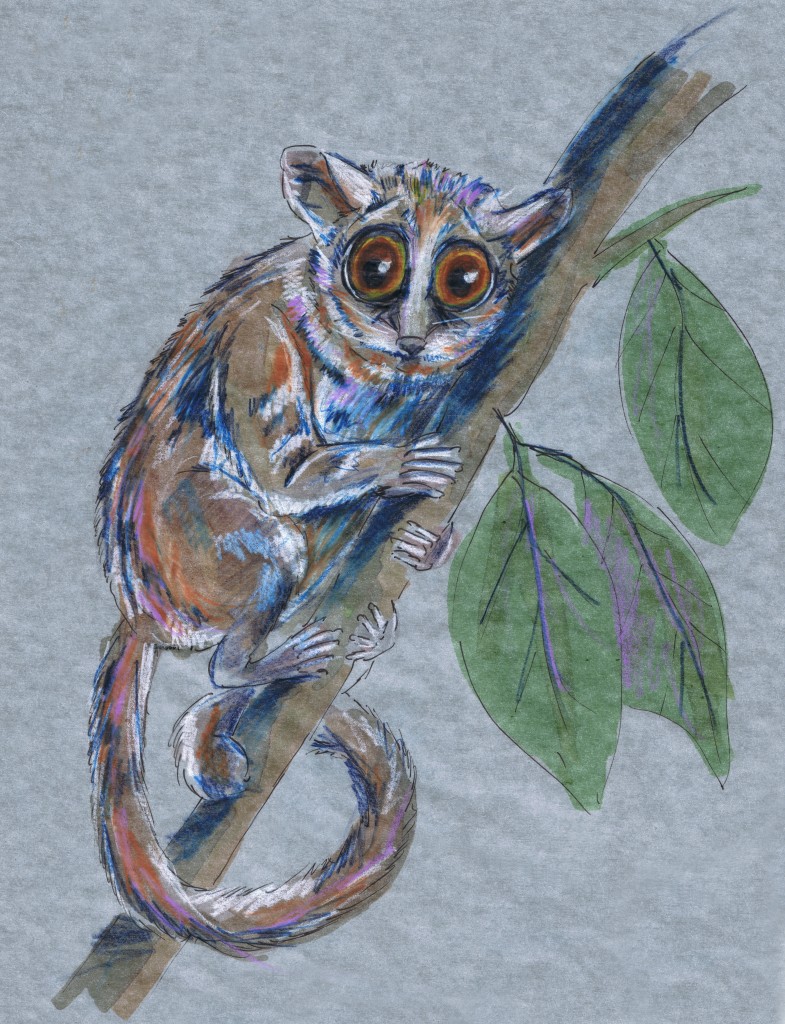
This pygmy mouse lemur inaugurates The Daily Mammal’s first-ever theme week! To celebrate my recent revelation that I’m actually not nocturnal, but rather a morning person who has difficulty waking up, I am pleased to introduce Nocturnal Week! The nocturnal pygmy mouse lemur is the world’s smallest primate. Andy requested this fellow. You will often see photographs of the little lemur in a person’s hand, which shows how tiny he is. They really are the size of a mouse.

{ 0 comments }