Posts tagged as:

ivan

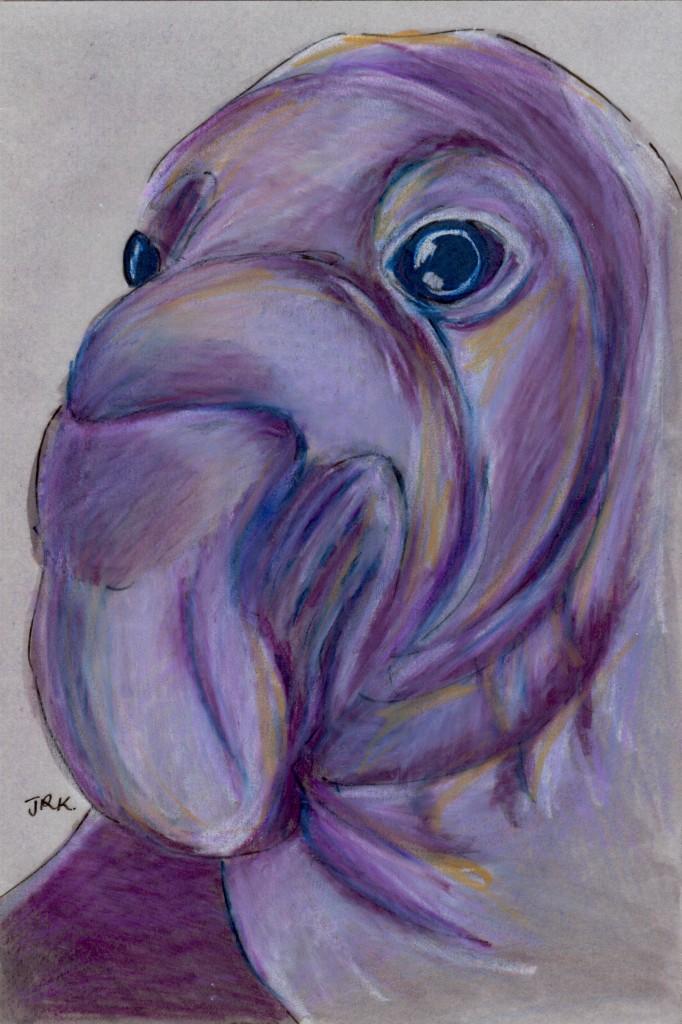
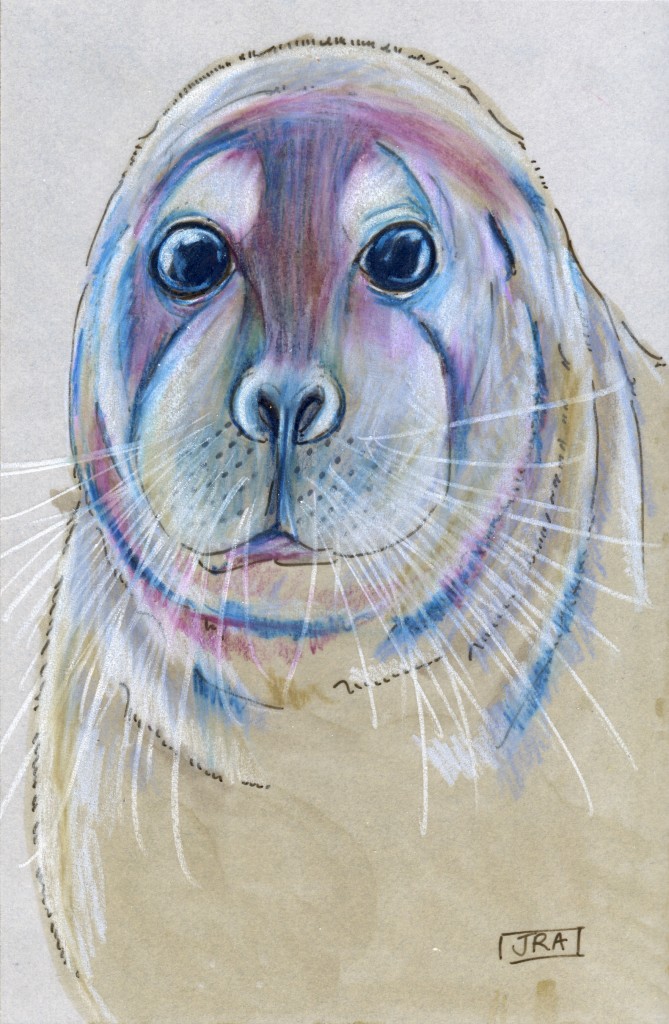
Bearded seal (click image to enlarge)

Bearded seal (click image to enlarge)

0266

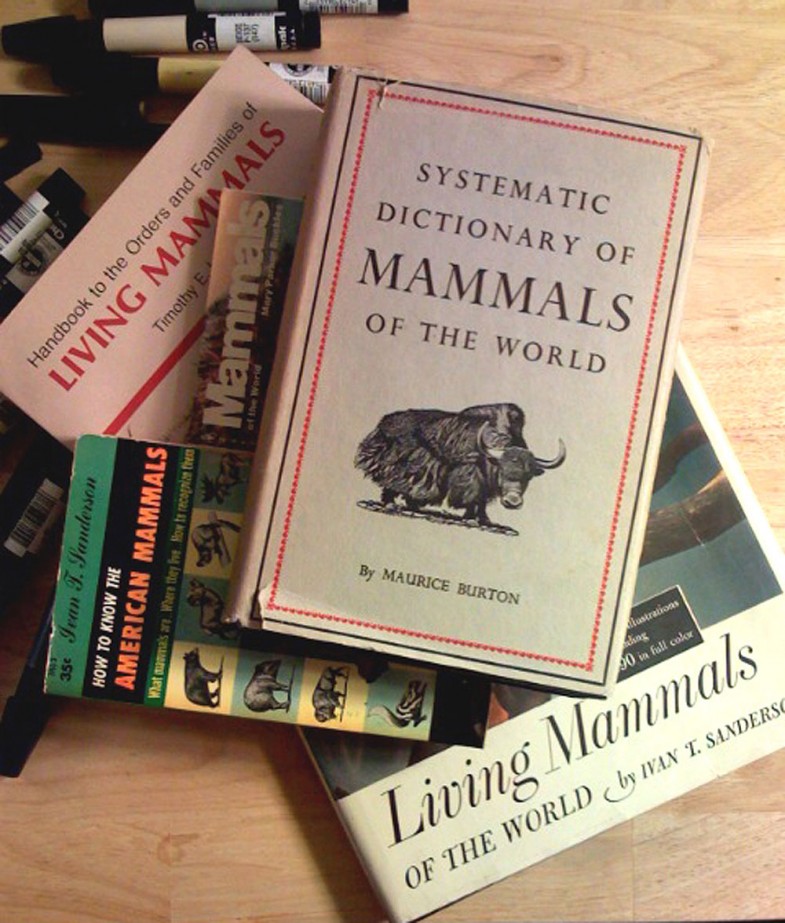
We continue our visit with the mammals of Alaska today, with this guy, the bearded seal. Like the bearded pig, he’s really more mustachioed than bearded, but that’s okay. Bearded seals live throughout the arctic. They eat mostly benthic creatures, which means creatures that live at the bottom of the water. That’s probably what their long, brushy whiskers are for: helping them find food at the bottom of the sea. They’re solitary and generally spend their time alone, floating around on small ice floes. Bearded seals are important to arctic native people for their hides and meat. Ivan T. Sanderson, in Living Mammals of the World, describes what it’s like to hunt these seals:

“Bearded seals are hunted by the Eskimos for their tough hide and tender flesh and they display a most singular trait when shot, leaping into the air and turning a complete back somersault from the ice into the water, so that one never knows if they are dead or alive.”

Isn’t that just like Ivan to say? By the way, I don’t ever want to take a month off from drawing mammals again! These last four have been so difficult, but each one gets a little easier. Next time you notice me falling down on the job, shoot me an e-mail, will you?

{ 0 comments }

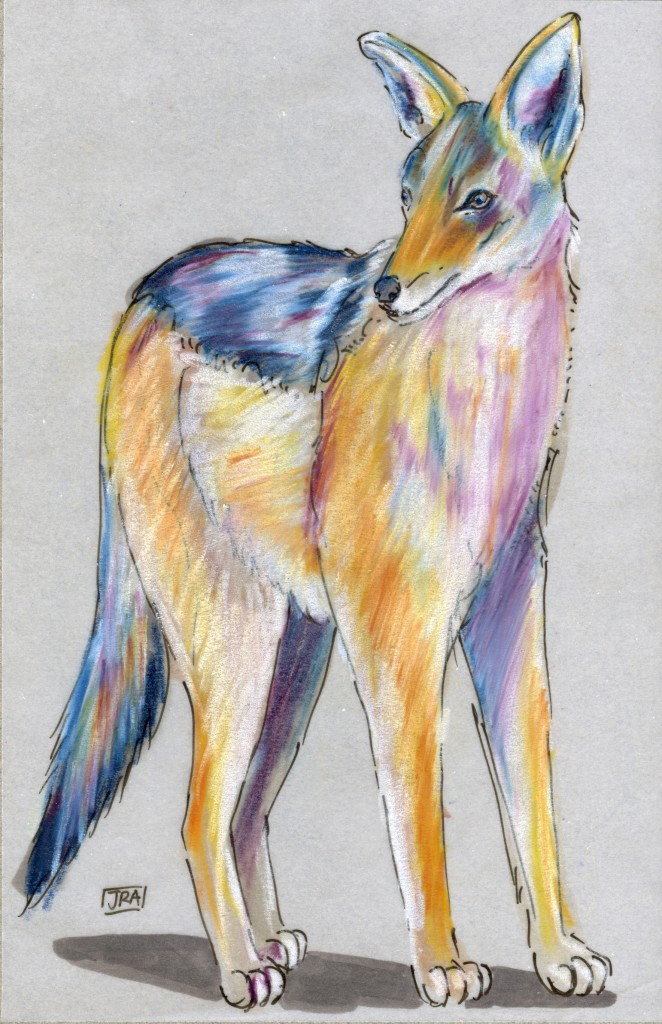
Black-backed Jackal (Canis mesomelas)

by J.R. Atkins on July 1, 2009

in Carnivores

canis_mesomelas_72

Black-backed jackal (click image to enlarge)

0263

Hello, mammals, and thanks for your patience through the long hiatus I seem to have taken from drawing and posting! We’re back in the swing of things now with this black-backed jackal, who lives in two separate parts of Africa, one in the east and one in the south. There is some controversy about who’s a jackal and who isn’t, but my copy of Walker’s indicates that there are four jackal species. This is the second featured on the Daily Mammal. (Here’s the golden jackal, which I drew a while back.) We’re halfway through with the jackals!

The black-backed jackal is both a scavenger and a predator. It will eat nearly anything: other mammals, birds, reptiles, insects, plants, whatever. It can band with other jackals to bring down a gazelle or antelope, or it can follow lions around and eat their leftovers. Black-backed jackals have been known to work cooperatively with cheetahs to bring down a tasty dinner. Ivan T. Sanderson, in Living Mammals of the World, says, “Their name has come to be applied to all forms of unpleasant hangers-on—a result of their habit of following the large cats, making a special noise when doing so, and then eating up most of the feast as soon as the cat’s back is turned.” I say it’s the cats’ own fault: if someone’s following you and making a special noise that indicates he wants your food, don’t turn your back!

Black-backed jackals live in groups of up to eight or so, at the core of which is a mated pair. A pair may stay together for several years. Adolescent jackals stick around to help their parents raise new babies. In some desert parts of their habitat, black-backed jackals can apparently go up to nine months without drinking water.

{ 1 comment }

Norway Lemming (Lemmus lemmus)

by J.R. Atkins on May 26, 2009

in Rodents

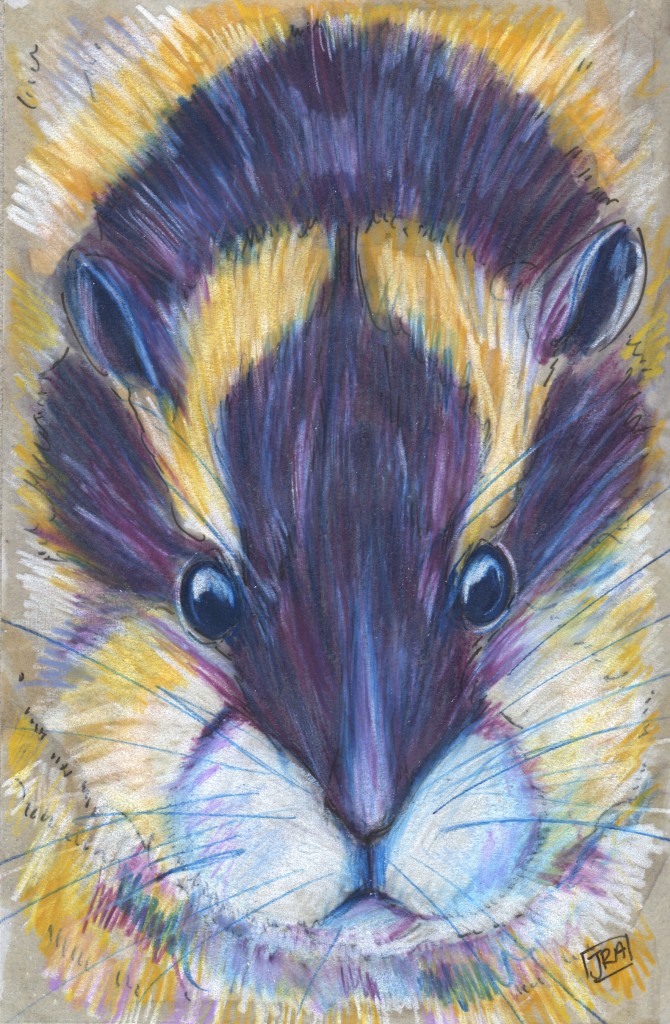
Norway lemming (click image to enlarge)

Norway lemming (click image to enlarge)


0261

Poor lemmings. We should thank them for how generously, if unwittingly, they have lent us their name as a metaphor for the unthinking hordes, who would indeed jump off the Brooklyn Bridge if their best friend did, who blindly follow the rest of the group, make the same bad decisions everyone else makes, and ultimately self-destruct, allowing the rest of us to smirk self-righteously. We’re not lemmings!

But it turns out that lemmings aren’t lemmings, either, in the sense of being brainwashed members of a mass-suicide cult. They don’t rush heedlessly to the sea, and they don’t throw themselves off of cliffs to their drowning deaths. Not exactly. What happens is that the lemming population fluctuates like crazy. A female Norway lemming can begin reproducing when she’s only two weeks old, and after that, she can have a new litter every three weeks. (The average litter size is 5 lemminglets.) So by the time she’s having her second litter, she has already become a grandmother, and by the time of her third litter, she could be a great-great, for pete’s sake.

Faced with harsh Scandinavian conditions and scarce food, lemmings might slow down the childbearing during the lean months. Then, as Ivan T. Sanderson puts it in Living Mammals of the World, “things get out of hand,” and the lemmings make up for lost time by having as many children and grandchildren and great-great-great-great-great-great-grandchildren as they can stand. These legions of lemmings devour all the available roots, grass, bark, leaves, and berries, and then what? They’re out of food, and there are thousands of them, and they can’t just stay there or they’ll all starve.

So they leave. And because they’re social, they leave en masse, but not necessarily solely in one direction. They may kind of fan out, searching for a new place to call home. They’re pretty good swimmers, and they have no problem crossing the occasional fjord or river. In Norway, any dissatisfied lemmings who haven’t found a suitable place to set up shop will, inevitably, come to the sea. And some of them—perhaps thinking it’s just another fjord, perhaps just wanting to keep going—will end up in it, only to drown. So, yes, lemmings have been known to plunge into the ocean and to die there. But it’s not a regular thing, it’s not every lemming, and it’s not in a precision-formation army of rodents on a mindless march to their doom.

The prevailing explanation for why the myth has stuck so well involves a sad story of duplicitous documentarians. In 1958, Disney won the best documentary Academy Award for its movie White Wilderness, which was about the wildlife of Canada. Check out this sequence:

Dramatic, isn’t it? Heartbreaking? Horrifying? Yes. But fake! Fake fake fake! The filmmakers made this segment in a part of Canada where there are no lemmings. They imported the little fellows and made them run around on a turntable they covered with snow. Then they chased them to a cliff and pushed them off of it! All to make you think that lemmings commit mass suicide. Infuriating! (Here’s an article with some more details.)

Animal Planet ran a segment in its Most Extreme series about the lemming-suicide misconception:

So that’s that. Some “documentary.” A blight on the Academy, if you ask me. Anyway, Norway lemmings are about five inches long, cute as heck, shaped somewhat like tribbles, and active year-round, both day and night. So they have difficulty controlling themselves sometimes. Who doesn’t?

{ 7 comments }

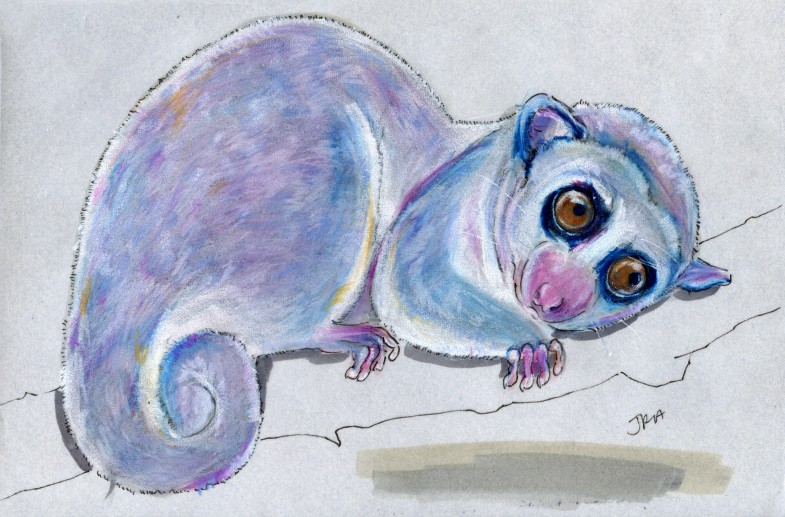
click image to enlarge

0222

Well, I originally picked this lemur for Hibernators Week because I was under the impression that it was an estivator (see Sunday’s post if you’re wondering what I’m talking about). My beloved but flawed Ivan T. Sanderson told me that, as did Animal Diversity Web. But from what I can tell, that’s not necessarily correct. These Malagasy lemurs go into torpor between March and November…which is winter in the southern hemisphere. It’s rather hemisphericentric of us to call that estivation, isn’t it? Estivation can also refer to torpor during a hot or dry season, so maybe it’s not technically wrong, but it certainly is etymologically. So instead of an estivator, here’s a torpid primate for you.

But the fact that the fat-tailed dwarf lemur is a torpid primate is extraordinary enough, it turns out. This guy is one of only two primate species that enter into seasonal torpid periods, and our friend here is the only primate that is torpid for such a long period. And that fat tail of his? It’s literally a fat tail, where the fat-tailed dwarf lemur stores the fat reserves that get it through its torpid season. And it gets really fat, more so than I showed here.

These lemurs feast on fruit, flowers, nectar, pollen, and the occasional insect or two. They may be responsible for pollinating some of the plants in their Malagasy home, and the fact that they mark the branches they’re traveling on with their feces helps create a fecund (I just looked it up, and feces and fecund do not come from the same root at all—weird, huh?) environment for parasite plants to grow on the trees. During Madagascar’s wet season, fat-tailed dwarf lemurs spend their nights eating up to get those tails nice and plump while they can. When it gets dry, they curl up in little balls and drift off into torpidity.

A word about Madagascar. I’m sorry to say that the country is in turmoil right now, and demonstrations have killed about a hundred people in the past few weeks. Today, the president of Madagascar fired the mayor of the nation’s capital, Antananarivo, after the mayor announced that he was now going to be in charge of the country. It’s all pretty awful and unfortunate. Madagascar is one of the most special and important places on earth, biologically, and is plagued by poverty, deforestation, and violent political upheaval. I wish all the Malagasy people and animals well right now. Here is a New York Times article from today about the situation.

And now a quick word about lemurs. You might like to watch this short video of the director of Duke University’s Lemur Center talking about why she thinks it’s irresponsible of scientists to keep “discovering” new lemur species, a state of affairs that obviously has an effect on the Daily Mammal. I regret that I didn’t get the chance to go to the Lemur Center when I had occasion to travel to North Carolina, and I hope I will get to visit someday. Of course, I also long to visit Madagascar.

{ 1 comment }

click image to enlarge
0213
0212

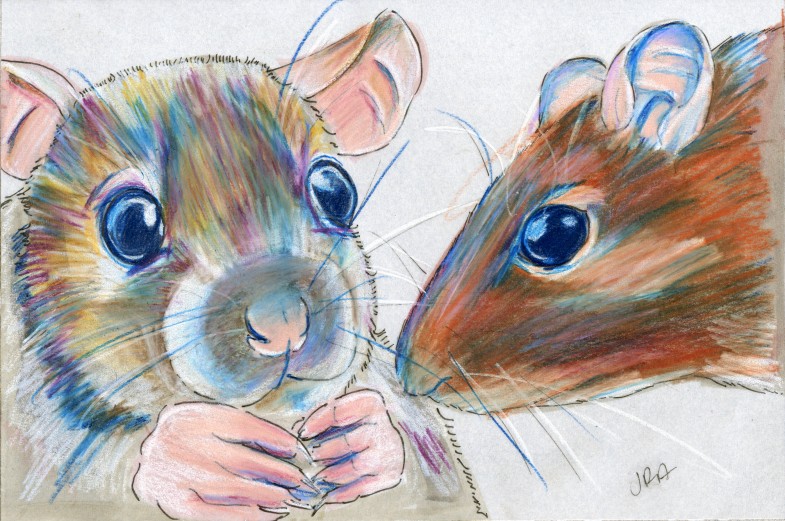
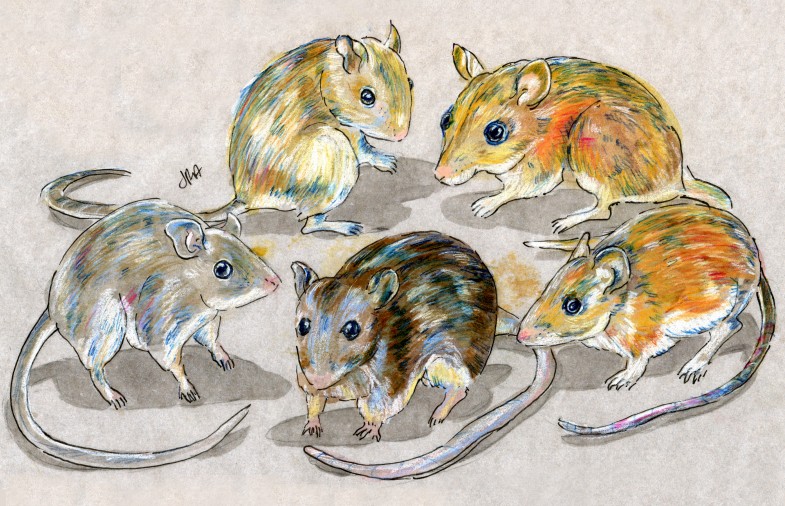
As I write this, there are only about 11 hours left until Barack Obama assumes the presidency, which means we’ll be celebrating his home state for only a little while longer here at the Daily Mammal. The other day, we looked at the small Asian mongoose, which was imported to kill Hawaiian rats. Now, let’s meet a couple of the rats in question.

On the left is the Norway or brown rat, Rattus norvegicus. This rat came to Hawaii on European ships in the 19th century. The fellow on the right is a Polynesian or Pacific rat, otherwise known as Rattus exulans. It came centuries earlier in Polynesian canoes. These two species, as well as the black or roof rat, are responsible for the extinction of a number of Hawaiian bird species and the decline of even more, both because they prey on the birds and their nests, and because they compete with birds for food. They also carry a range of diseases and parasites. And they love to destroy sugarcane, pineapple, coffee, macadamia, and banana crops. They don’t think of it as destruction, though; to them, it’s just lunch.

The mongooses didn’t eradicate the rats of Hawaii, as it was hoped they would. Now, poison is the best way to get rid of them, and you can use electric fences to keep them out of places you’d rather they not visit.

We haven’t visited with Ivan T. Sanderson, author of Living Mammals of the World, in a while. Here’s what he says about one of today’s rodents:

“Although Man is undeniably ‘top-mammal’ in certain ways, and the Elephant may be regarded as the most highly ‘evolved,’ there is little doubt that some rat, and probably the Brown Rat (Rattus norvegicus) is actually the finest—in every sense of the word and especially in efficiency—product that Nature has managed to create on the planet today…Rats preserve a much more practical balance between compassion for and indifference to their own kind than we do. While weaklings or cripples among their numbers may be left alone, ‘fools’ and ‘criminals’ seem often to be deliberately eliminated or killed outright. All of this results in much sounder eugenics than we practice. That there are more individual Brown Rats in North America than there are people, is not the result of man’s carelessness, indifference, or wasteful and dirty habits; it is the result of the greater stamina and, frankly, commonsense of the rats.”

I don’t know about you, but I’m okay with our unsound eugenics! The Polynesian rat is called kiore in the Maori language, and it reached New Zealand, as it did Hawaii, in Polynesian canoes. In traditional Maori culture, the kiore plays an important part in ceremonies and mythology. You can read about that here in the Te Ara Encyclopedia of New Zealand.

{ 0 comments }

Mountain Lion (Felis concolor)

by J.R. Atkins on June 22, 2008

in Carnivores

click image to enlarge

0179

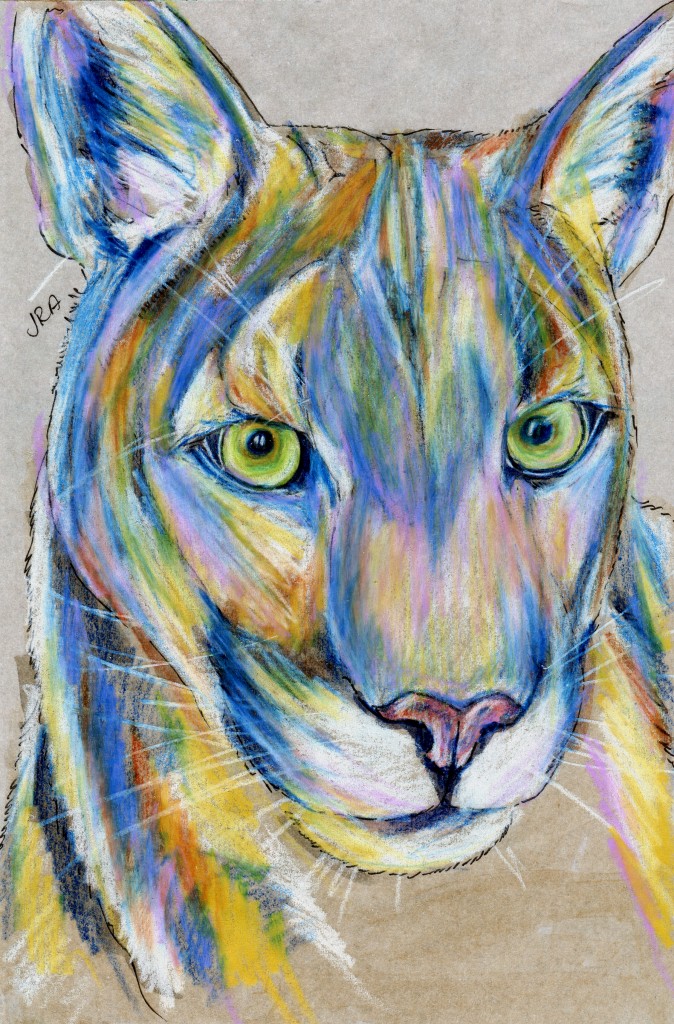
I want to tell you about these amazing old books I recently acquired. A couple of weeks ago, my mom and I went to our local “indoor flea market.” I happened across this old hardbound green book called Wonders of Animal Life, volume four. It’s one of those great old 1920s or 1930s books with the copperplate photo captions and tinted plates for illustrations and lots and lots of black-and-white photos. I fell so in love with volume four that I had to hunt down the rest of the series, and through AbeBooks.com, I found someone selling volumes 1–3. What luck! They arrived today and they’re just as wonderful as volume 4.

The series comprises essays by various scientists and other kinds of experts. There’s no rhyme or reason to their selection or to their arrangement, as far as I can tell. Topics include “Strange Tails and Their Many Uses,” “Gluttons of the Sea,” “Long Necks and Short Necks,” “The Gamut of Sound in the Insect World,” The Wonderful Wanderings of Animals,” “Nature’s Strange Show of Freaks,” “Is Evolution Still Going On?,” and, most pertinent to today’s Daily Mammal post, “The Mystery of the Puma” by Hamilton Fyfe.

Mr. Fyfe is a gentleman not unlike our beloved Ivan T. Sanderson, the Daily Mammal’s patron saint. A war correspondent and political propagandist, a practicer of what he termed vagabondage, a man about town with an opinion on everything, Mr. Fyfe here expounds on the puma, also known as the catamount, the cougar, the panther, the painter, or the mountain lion. After explaining that the puma’s favorite food is horseflesh, he states that “it will not attack or even in some circumstances defend itself from the human race…due to some unexplained influence which the human race seems to have upon it.” Fyfe continues, “This influence is strong enough to make the puma…run from man, and even sit unresisting and trembling while man deals it a death-blow.” According to Fyfe, “the natives of South America” refer to the puma as el amigo del cristiano, the friend of the Christian, and “it has actually been known to volunteer its services as a protector of man.”

A photograph of a puma accompanying the essay is captioned “ONLY WILD ANIMAL THAT IS FRIENDLY TO MAN” and informs that “when confronted by man it usually seems to behave like a large and friendly cat. A wild puma will purr in the presence of man and even rub itself against his legs. But apart from this it has the pleasing habit of playing for hours by itself in the midst of the desert at hide-and-seek or at chasing butterflies.”

Now, I know that pumas avoid man whenever possible. In my life as a citizen of the western United States, I’ve seen bobcats, coyotes, and bears, but never a mountain lion. Whether this is due to some magical influence man has over the species, I don’t know, but Fyfe is correct that they avoid us. That makes it particularly unlikely that they really volunteer their services as bodyguards or that they like to rub up against people’s legs, purring, and it’s hard to imagine them cowering in acceptance when dealt a death blow. Maybe in South America that’s true, but it’s hard to imagine.

While mountain lion attacks on people have always been quite rare, they have increased rather alarmingly in recent decades. A month ago, a large animal that may or may not have been a mountain lion attacked a five-year-old boy in the Sandia Mountains here in Albuquerque. As we humans move closer and closer to the homes of other animals, as we do things that make it harder for them to feel safe and find food and live their lives, we experience more encounters of all kinds with wild animals. It would be nice if they all rubbed up against our legs and purred and protected us and chased butterflies with us. I bet they think it would be nice if we just left them alone.

Consecutive days of mammals:2
Previous record: 16

{ 4 comments }

click image to enlarge

0155

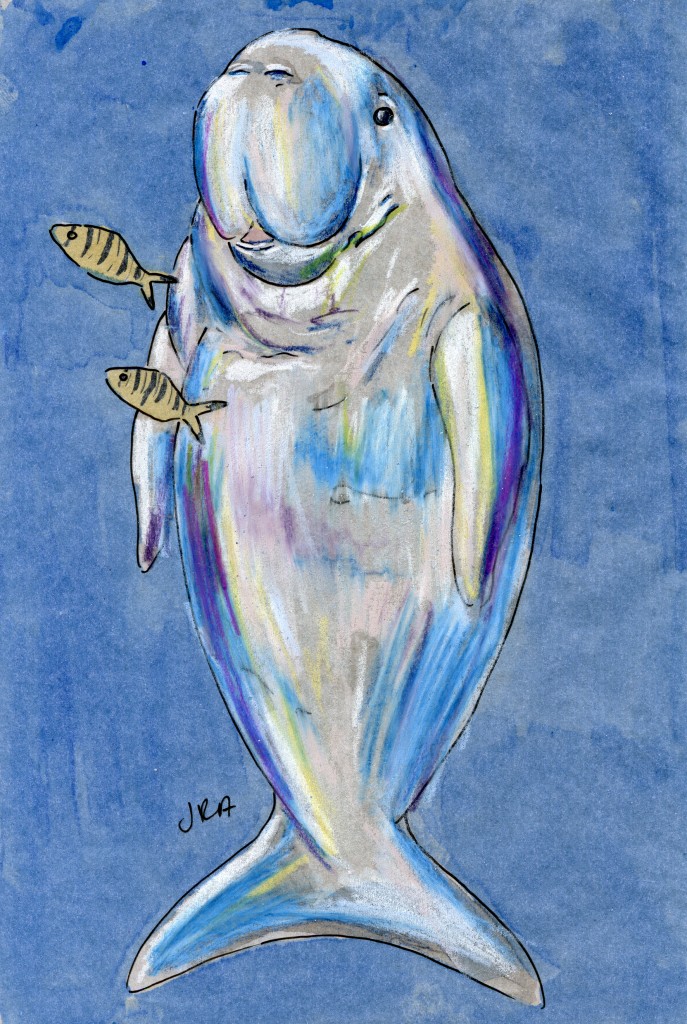
These manatee relatives are big, slow-moving, marine vegetarians who swim around, dragging their flippers and munching on sea grass. In Living Mammals of the World, Ivan T. Sanderson tells us,

They are also rather easygoing, sluggish beasts that drift back and forth with the tides to feed; they used to be found in enormous herds and were so trusting in places where they had not previously been hunted that it is recorded in the accounts of early voyages that they could be patted on the head from small boats…They have been mercilessly persecuted, being harpooned or caught in mile-long nets and then drowned, for they are air-breathers and have to surface to fill their lungs at rather short intervals.

Dugongs live in the Indian Ocean, the Red Sea, and the Pacific, in warm waters from Australia to Africa. They are now rated either endangered or threatened, depending on who’s doing the rating. This friendly dugong is for my cousin Hilary. (It was her birthday an hour ago.)

—————-
Now playing: M.I.A – Galang
via FoxyTunes

{ 0 comments }