Posts tagged as:

hibernation

click image to enlarge

0231

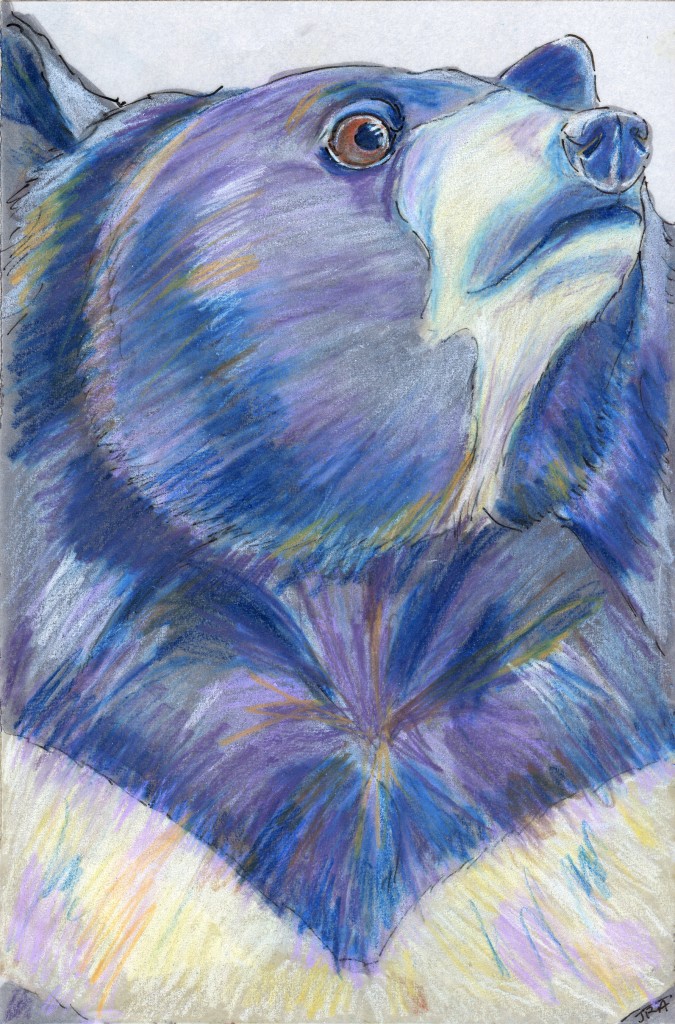
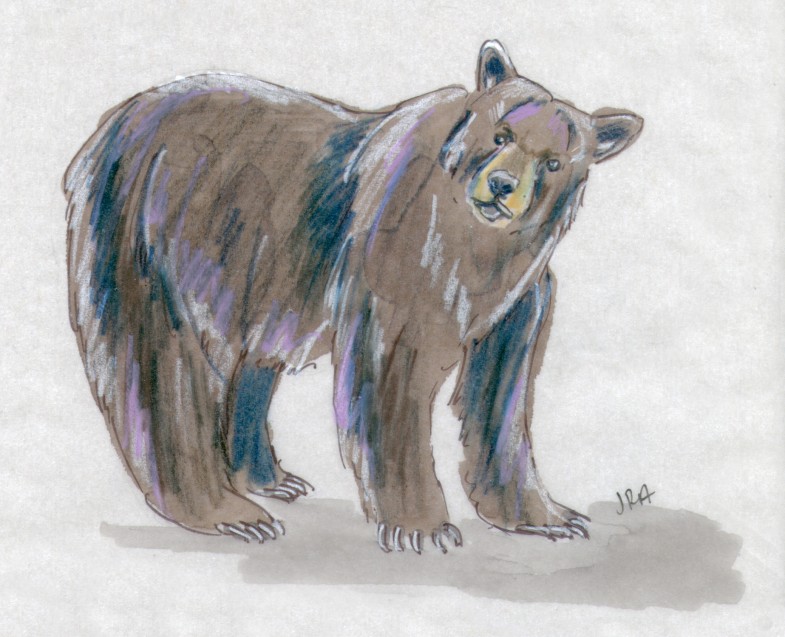
Today is the last day of Hibernators Week at the Daily Mammal, so I’d like to introduce you to a bear, that classic hibernator. This particular bear is an Asiatic black bear. It lives in forests in several countries in southern Asia, including China, Japan, Iran, and Pakistan, among others. In the northern parts of its range, it hibernates, filling up on acorns and seeds to put on fat before time to head into the den. In the south, only females who are going to give birth in the winter hibernate.

IUCN classifies this bear as vulnerable, which is the last stage before endangered. Unfortunately, the Asiatic black bear is extensively hunted for its paws and its hide, and it’s a victim, like nearly everyone else, of habitat destruction. But the biggest and most upsetting threat to the Asiatic black bear is the “traditional medicine” industry. I knew that bear gall bladders were used in traditional Chinese (and Korean, Vietnamese, and others) treatments, but not until just now did I know just how terrible this is—not until just now did I think about it, I’m sorry to say.

In “traditional medicine,” a bears’ gall bladders and the bile they produce are used to treat hemorrhoids, pinkeye, impotence, headaches, heart disease, and more. Wild bears are hunted and their gall bladders taken. In 1980, informing us that this would reduce the number of wild bears killed, China began allowing bears to be “farmed” for their bile. (It didn’t reduce the number of bears being hunted in the wild. Instead, it made wild bear bile more valuable.)

And this is where it gets really, realy ugly. The “humane” method of harvesting the bears’ bile is to create a permanent hole in the bear’s abdomen and gall bladder, through which the bile drips. Other methods include metal catheters, repeated surgeries, and metal jackets. The bears on the “farms” are kept in cages not much bigger than they are. Their teeth and claws are pulled. They moan in pain, banging their heads on the bars of their cages. They live in terror and agony. This can go on for their entire lifetime: 25 years. Of pure torture. And there are thousands of bears undergoing this abuse right now.

It’s enraging, cruel, disgusting, and inhuman. And it’s also completely unnecessary. Not only does “traditional medicine” recognize a range of herbal substitute for bear bile, but Western medicine has synthesized the compound that gives the bile what healing capacity it has. (An acid in mammalian bile is especially concentrated in bears. This acid can help treat some liver ailments. But again, no one needs to take it from bears, and there’s no rational reason to think it can help a headache or hemorrhoids.)

When I added the Asiatic black bear to my list of hibernators for this week, I was just thinking about how fun it would be to draw a big, furry bear. Now I’m angry. Today, the Associated Press reported on a rescue of 12 Asiatic black bears from years of torture on a “farm” in China. They were suffering from liver tumors, blindness, and ringworm, and some of them were compulsively biting the bars of their cages. The group that rescued them is called Animals Asia, and you can help it rescue bears through a donation. If you knit, there’s another way you can help. The bears need surgery after their rescue, and they need to keep warm when they’re under anesthesia. Knitters are helping them by making big old bear mittens for them to wear. You can find out more at this site, and you might also like to read the Animals Asia blog about its rescue efforts.

{ 2 comments }

click image to enlarge

0228
0227
0226
0225
0230
0229

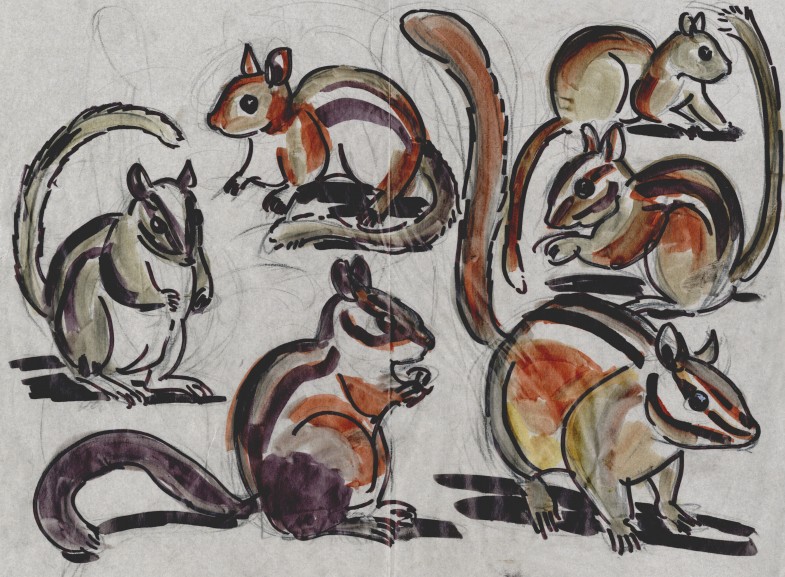
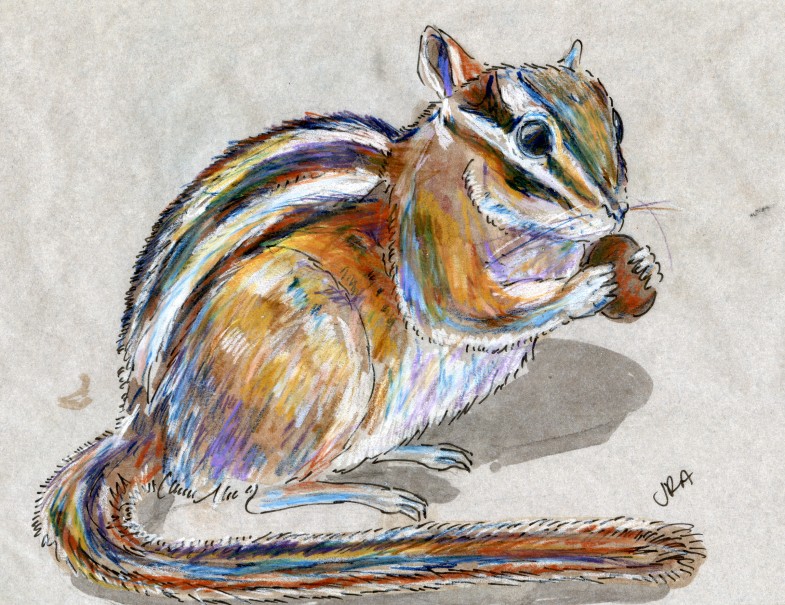
In one sense, I got lazy with this drawing, doing it in sharpie on top of my pencil with no shading, no blending, no colored pencil, and it’s on my tracing paper sketch instead of a nice crisp sheet of vellum. No furry details, no crazy colors. But if you knew how long I researched it and how many times I tried to draw it the normal way, you would know it wasn’t lazy at all. So here are six species of chipmunks from the Tamias genus. Clockwise from the top right: T. obscurus, T. quadrimaculatus, T. speciosus, T. senex, T. amoenus, and T. alpinus. All six species live in California.

Six more rodents! Check ‘em off if you’re scoring at home!

{ 0 comments }

click image to enlarge

0224

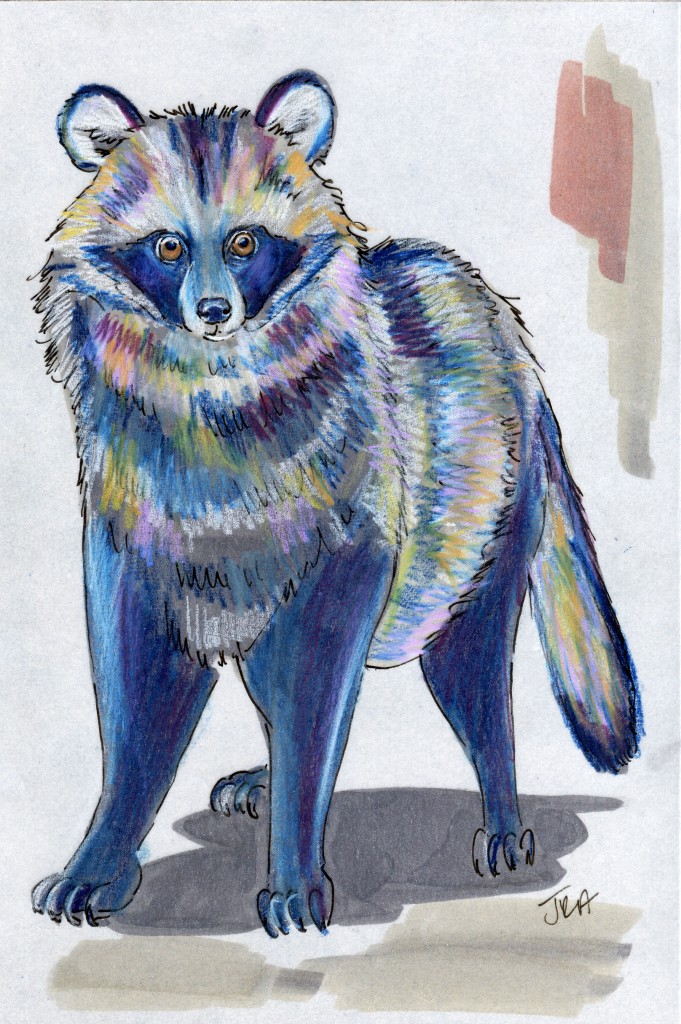
Guess what! The raccoon dog is not endangered. In fact, in some parts of its range, it is considered a nuisance! How exciting for us, don’t you think?

The raccoon dog is in the canid family, although it does resemble a raccoon, especially facially. It originally lived from Siberia to Vietnam, as well as throughout Japan, but it was introduced into Russia to provide more work for fur trappers. Now it has made its way into northern Europe, and has been found in France, Germany, Sweden, and Finland, among other countries. It is the only canid that hibernates (torpor, I think, not “true” hibernation), although in warmer parts of its range, it doesn’t.

In Japan, where the raccoon dog is called the tanuki, the species is pretty common and can even be found in some urban areas. The tanuki is an interesting figure in Japanese folklore. It’s a shapeshifter and a bit of a trickster, and tanuki statues can bring good luck. The most interesting and, to me, strange element of the tanuki legend is the animal’s remarkably large scrotum, which it can use—in myths and stories now, not in real life!—as shelter from a storm or as a net for catching fish. I recommend this baffling series of 19th-century comic prints that show some of the tanuki’s creative uses for its endowments.

{ 5 comments }

click image to enlarge

0223

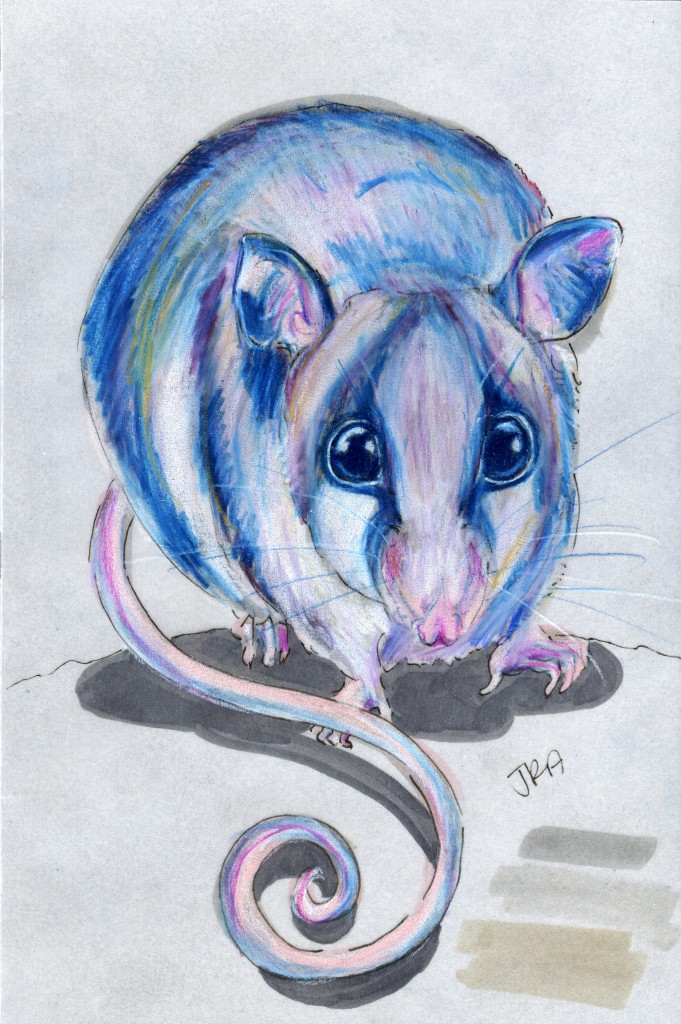
These teensy marsupials live in the Australian alps (and boast the saddest IUCN range map I’ve ever seen). They hibernate in the winter under a thick layer of snow. In the warmer months, they eat lots and lots and lots of moths, along with some other things, and also store berries and seeds to munch on when they occasionally wake from torpor. They’re the only marsupial that stores food, and I think they’re the only marsupial that hibernates, although I haven’t confirmed that for sure. They’re only about 4 inches long, with their prehensile tails adding another 6 inches on to that.

A recent study found that animals that hibernate or burrow are less likely to become endangered or extinct. The theory is that hibernation and burrowing protects them from environmental changes. Sadly, that isn’t the case for the mountain pygmy possum, whose population is being ravaged by the Australian skiing industry. Is it more important to have perfectly groomed slopes to schuss down, or to keep this evolutionarily distinct mammal alive? We may find out too late.

(I’m not purposely picking the most sad-case endangered animals to share with you, by the way. Not at all. It just turns out that we humans have a whole lot to answer for when it comes to the other animals on the planet. I think my next theme week should be Mammals There Are Too Darn Many Of, just to cheer us up. But then again, there are often Too Darn Many of a mammal because there are Too Darn Few of another one, usually because of something humans did.)

ARKive has some nice videos of the adorable mountain pygmy possum. I like the one that’s catching moths to eat.

{ 2 comments }

click image to enlarge

0222

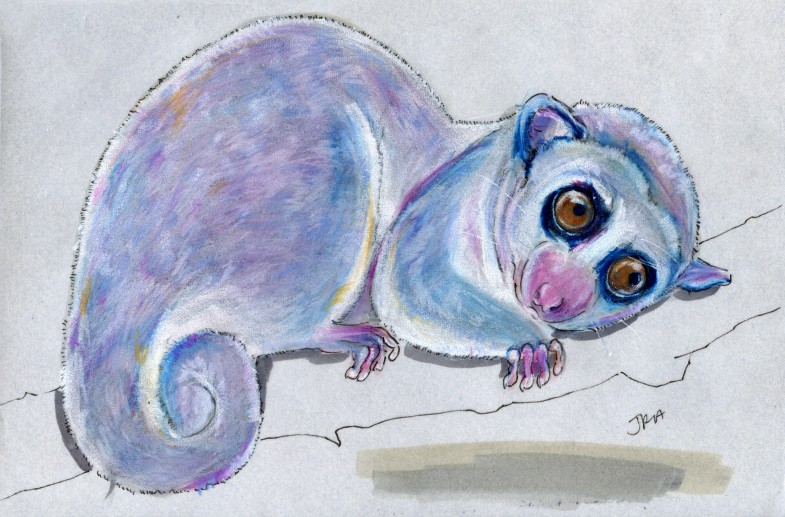
Well, I originally picked this lemur for Hibernators Week because I was under the impression that it was an estivator (see Sunday’s post if you’re wondering what I’m talking about). My beloved but flawed Ivan T. Sanderson told me that, as did Animal Diversity Web. But from what I can tell, that’s not necessarily correct. These Malagasy lemurs go into torpor between March and November…which is winter in the southern hemisphere. It’s rather hemisphericentric of us to call that estivation, isn’t it? Estivation can also refer to torpor during a hot or dry season, so maybe it’s not technically wrong, but it certainly is etymologically. So instead of an estivator, here’s a torpid primate for you.

But the fact that the fat-tailed dwarf lemur is a torpid primate is extraordinary enough, it turns out. This guy is one of only two primate species that enter into seasonal torpid periods, and our friend here is the only primate that is torpid for such a long period. And that fat tail of his? It’s literally a fat tail, where the fat-tailed dwarf lemur stores the fat reserves that get it through its torpid season. And it gets really fat, more so than I showed here.

These lemurs feast on fruit, flowers, nectar, pollen, and the occasional insect or two. They may be responsible for pollinating some of the plants in their Malagasy home, and the fact that they mark the branches they’re traveling on with their feces helps create a fecund (I just looked it up, and feces and fecund do not come from the same root at all—weird, huh?) environment for parasite plants to grow on the trees. During Madagascar’s wet season, fat-tailed dwarf lemurs spend their nights eating up to get those tails nice and plump while they can. When it gets dry, they curl up in little balls and drift off into torpidity.

A word about Madagascar. I’m sorry to say that the country is in turmoil right now, and demonstrations have killed about a hundred people in the past few weeks. Today, the president of Madagascar fired the mayor of the nation’s capital, Antananarivo, after the mayor announced that he was now going to be in charge of the country. It’s all pretty awful and unfortunate. Madagascar is one of the most special and important places on earth, biologically, and is plagued by poverty, deforestation, and violent political upheaval. I wish all the Malagasy people and animals well right now. Here is a New York Times article from today about the situation.

And now a quick word about lemurs. You might like to watch this short video of the director of Duke University’s Lemur Center talking about why she thinks it’s irresponsible of scientists to keep “discovering” new lemur species, a state of affairs that obviously has an effect on the Daily Mammal. I regret that I didn’t get the chance to go to the Lemur Center when I had occasion to travel to North Carolina, and I hope I will get to visit someday. Of course, I also long to visit Madagascar.

{ 1 comment }

click image to enlarge

0221

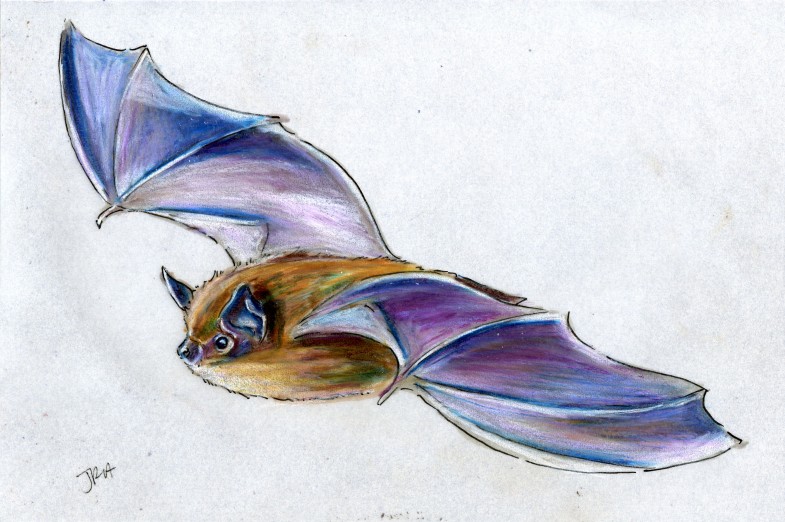
This little brown bat, called the little brown bat—like our moon is called the moon—is quite a common fellow throughout most of North America. It eats a ton of insects every night—okay, not a ton, but at least a couple of grams, which is a lot for a little brown bat! It favors aquatically inclined insects, but will also munch moths and mayflies. It hunts through the night, coming out at dusk and returning home just before dawn.

The little brown bat is a true hibernator, but even true hibernators have to wake up occasionally. This guy, for instance, will hibernate for between a couple weeks and a few months at a time, repeating as necessary from fall to spring. Waking up occasionally may be a way for the bats to correct metabolic problems that arise from the very low body temperatures they maintain during hibernation. Hibernating little browns lose about half of their body weight and drop their body temperatures to about 10ºC (50ºF). Besides hibernation, little brown bats can use torpor, too (see yesterday’s post if you’re confused here!), on a day-to-day basis to conserve energy after fruitless, or rather bugless, nights of hunting.

Sadly, all is not well for the little brown bats currently hibernating in the northeastern United States. They are being ravaged by a strange disease called white nose syndrome. It first appeared in 2007, and it affects several species of bats in their hibernation roosts. Little brown bats, though, are sustaining the most deaths from the illness, which appears to involve a cold-loving fungus. The most obvious initial symptom is a fuzzy white growth around the nose and sometimes on the wings or other parts. Afflicted bats act very strangely, coming out of their roosts in the middle of day and the middle of winter. They seem to be starving and sometimes try to drink snow. And then they die.

The syndrome was first observed in upstate New York and has since spread to five other states. Just last week authorities confirmed the first cases of white nose syndrome in Pennsylvania and New Jersey. No one knows what’s causing it or how it’s spread…but it is spreading. Hundreds of thousands of bats have died from it over the last two years. The mortality rate in many affected caves is more than 90 percent. If we don’t figure this out, there’s a possibility that cave-dwelling bats, such helpful insectivores, could become extinct in the very near future, which would in turn have a catastrophic effect on the ecosystem.

There are two funds you can donate money to if you’d like to try to help the bats, one at Indiana State University and the other through Bat Conservation International.

{ 4 comments }

click image to enlarge

0220

It’s the middle of winter, and although I can take naps, I can’t do what I’d really enjoy, which is hibernate. The next best thing is to celebrate hibernation, torpor, and estivation of other mammals. And let’s start by clearing those up, in case, like me, you didn’t know the differences between them. Here we go:

  • Hibernation, torpor, and estivation are three types of dormancy that animals experience. (There’s one more, diapause, but it doesn’t really apply to mammals, so forget it for now, unless you just can’t, in which case, go ahead and click on the link to Wikipedia.) Dormancy is a state of suspension or slowing of normal physical functions.
  • “True” hibernation is an extreme form of dormancy. It generally takes place in the winter and usually involves curling up in a den of some kind, lowering your body temperature, and slowing your heartbeat until it can barely be detected. Only smallish mammals are true hibernators. (If you know French, you will recognize the similarity between the French word for winter—hiver—and the word hibernate.)
  • Torpor is less extreme. Your metabolism and heart rate slow, but not as dramatically as in hibernation. You can wake up from torpor if you have to without too much trouble, but you will probably stumble around a bit before you shake it off.
  • Estivation was completely new to me, but it’s neat. It’s like hibernation, but it happens in hot and/or dry times and places: it’s sort of a summer version of hibernation (and in Italian, estivo or estiva indicates that something is occurring in the summer).

This week, I’ll be drawing and writing about animals that practice all three of these kinds of dormancies (I think…), so I’ll be using the word “hibernator” not in its pure sense but to mean torpor or dormancy. Okay? Okay.

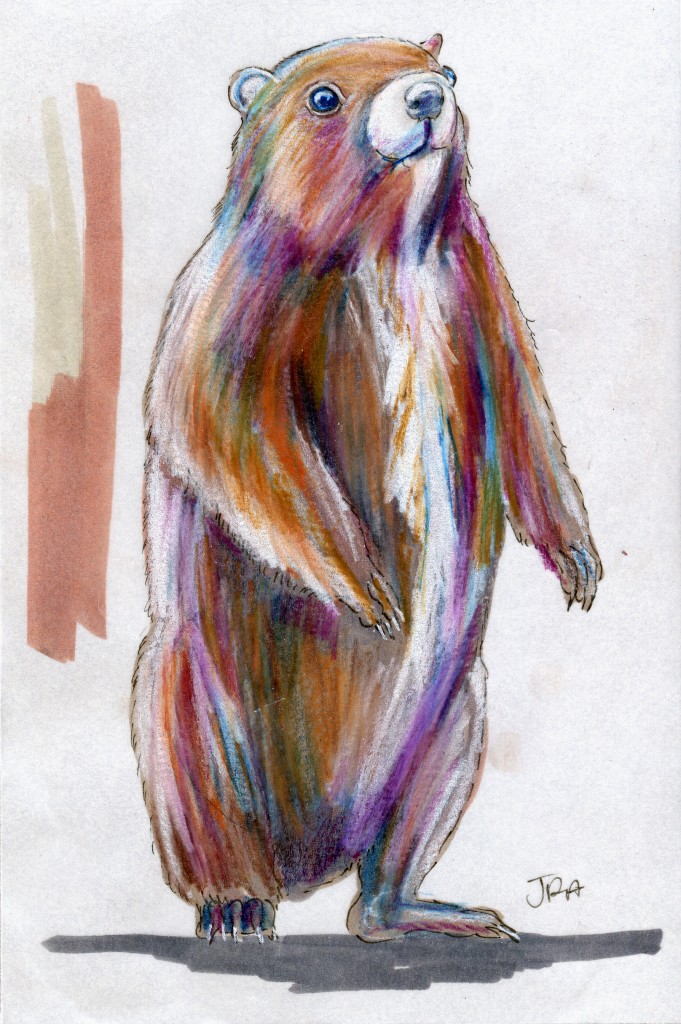
Now. Our marmot here is a true hibernator. In the winter, marmots’ hearts beat only three or four times a minute! Three…or…four…times…a…minute. So slowly. This species hibernates in its burrows from October to May. So right now, Vancouver Island marmots are snoring sweetly underground, snug as can be.

All 150 of them.

Seriously. This guy is one of the most endangered mammals in the world. Confined to just a few mountain areas of their Canadian island—and nowhere else in the world—the marmots have been victim not just to deforestation directly, but also to the effects deforestation has to the balance of the Vancouver Island ecosystem in general. It seems complex, but basically, the logging industry makes some areas more appealing to marmots than they should be, and they turn out to be very ill-suited to hibernation. And the logging destroys other animals’ habitats, meaning the predator/prey relationships on the island are screwy, and now the marmot is more vulnerable than usual to its natural predators.

Like other marmots, the Vancouver Island variety has a sophisticated communication system consisting of a number of different kinds of calls. (The Mammalian Species account of the marmots says that their whistles have three harmonics, a variety of durations, and changing intensities.) You can hear some of their calls at this page from UCLA. (Your dog may take an interest, too.)

The 2010 Winter Olympics will be in Vancouver, and the games have a better-than-usual set of mascots, including a Vancouver Island marmot “mascot sidekick” named Mukmuk.

The Marmot Recovery Foundation is working to save the Vancouver Island marmots from extinction. The group operates a captive breeding and reintroduction program that is showing some success. Its website has some other information and photographs of the marmots, too.

{ 0 comments }