Posts tagged as:

dolphin

Spinner Dolphin (Stenella longirostris)

by JR Kinyak on April 8, 2010

in Marine Mammals

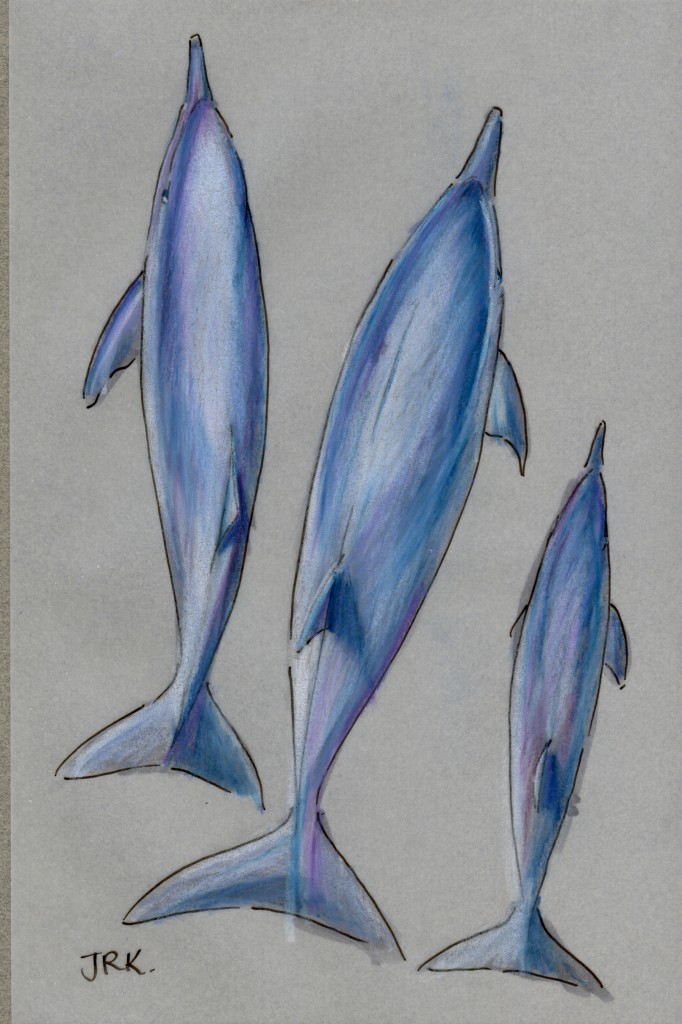
Spinner dolphins (click image to enlarge)

0289

Spinner dolphins, who live in a great big swath of the world’s oceans (right around the middle of the earth like a belt), get their name from their acrobatic twists and rotations. They spin as part of their social interaction and probably as a way to communicate, or maybe to dislodge parasites, which is of course a much less romantic thing to think about when watching their graceful feats. Their society is a fission-fusion one, in which they feed in large groups at night and split off into smaller bunches to hang out during the day.

Spinner dolphins are one of the species most affected by tuna fishing, and although fewer of them are killed by the fishing industry these days, the species is not recovering nearly as quickly as one would hope. And some quick research I’ve just done indicates that the “dolphin-safe” labels that have so assuaged our worries and guilt may not be particularly reliable. And even tuna catches that are dolphin-safe are not safe to the other marine life, like sea turtles, sharks, and other fish, that are caught in tuna nets and discarded. So another day, another Daily Mammal post that ends on a futilely depressing note. Here’s Theo’s beautiful dolphin drawing to add some grace.

Spinner dolphin by Theo, age 13 (click image to enlarge)

{ 0 comments }

click image to enlarge

0245

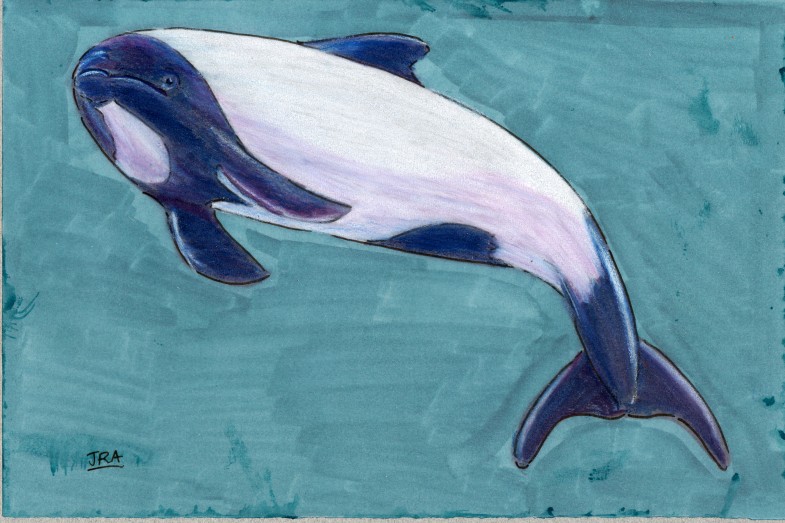
This dolphin is also called the piebald dolphin. You know who else is piebald? The horse in National Velvet. That’s where I first learned the word. It’s a lovely word. It comes from the magpie, which is black and white, and an old definition of bald that meant “streaked with white.” The Pied Piper of Hamelin is so called because of his particolored outfit. Another nice word is skewbald, which means brown and white patches.

Oddly (I think it’s odd, anyway), there are two subspecies of Commerson’s dolphin found in two rather far-apart places, and that’s it. One group is around the Falkland Islands and the southern coasts of Chile and Argentina. The other is in the Kerguelen Islands, which are in the Indian Ocean some 3,000 miles southeast of Africa’s southern tip.

{ 3 comments }

click image to enlarge

0211

Today we continue our look at the mammals of U.S. President-Elect Obama’s home state, Hawaii.

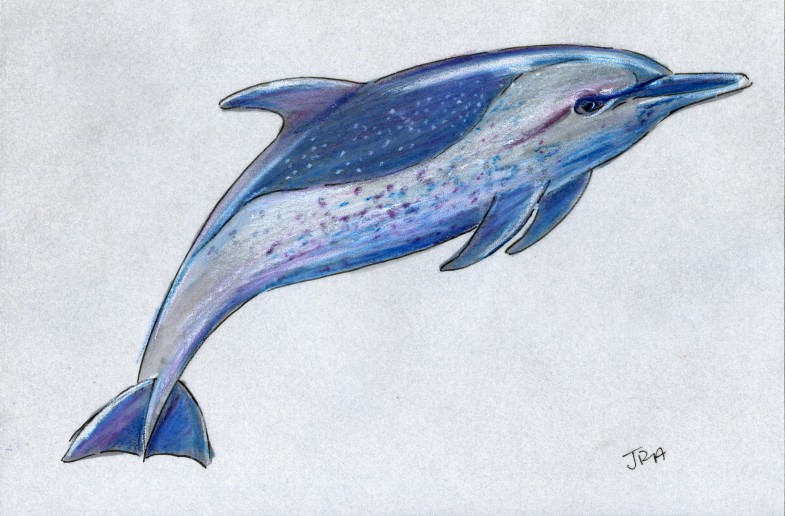
While Hawaii is rather short on native land mammals, it enjoys an abundance of native marine mammals. One of these is the pantropical spotted dolphin, which is found in all of the oceans in the world between 40ºN and 40ºS. As its name broadcasts, it’s characterized by its light-on-dark and dark-on-light spots, which increase with age.

You probably remember the public discussions and movements about dolphins and tuna fishing from the 1980s and early 1990s. The pantropical spotted dolphin is the species that was most affected by the tuna industry. You see, these dolphins have a close relationship—a loyalty almost—with yellowfin tuna. Before the 1950s, tuna had to be caught one at a time. Then advances in net technology made it possible to catch them in a big net called a purse seine. The best way to do this was to find their dolphin friends, who have to surface to breathe (unlike tuna, which are fish).

The idea was to catch the dolphins and tuna together, then release the dolphins, but catching the tuna was the priority, not saving the dolphins. The number of dolphins “accidentally” killed by tuna fishing since the 1950s is more than three times the number of whales killed—on purpose—by the commercial whaling industry in all of the 20th century.

Dolphins, the quintessential charismatic megafauna, were able to rally the support of the public, and a series of regulations, organizations, boycotts, and laws have brought the number of dolphins killed way, way down. Despite the Bush administration’s efforts to undermine the integrity of the Dolphin-Safe Tuna label, it’s now easy, in the U.S. and many other countries, to buy tuna caught without killing dolphins. (If your tuna doesn’t say dolphin-safe, it probably isn’t, so shop on the safe side.)

Unfortunately, the pantropical spotted dolphin has yet to recover from the years of dolphin-dangerous tuna fishing, and the IUCN calls it conservation-dependent. Here’s hoping Barack Obama will help protect his fellow native Hawaiians.

From NOAA: a good, brief primer on the tuna/dolphin issue.

{ 0 comments }

click image to enlarge

0190

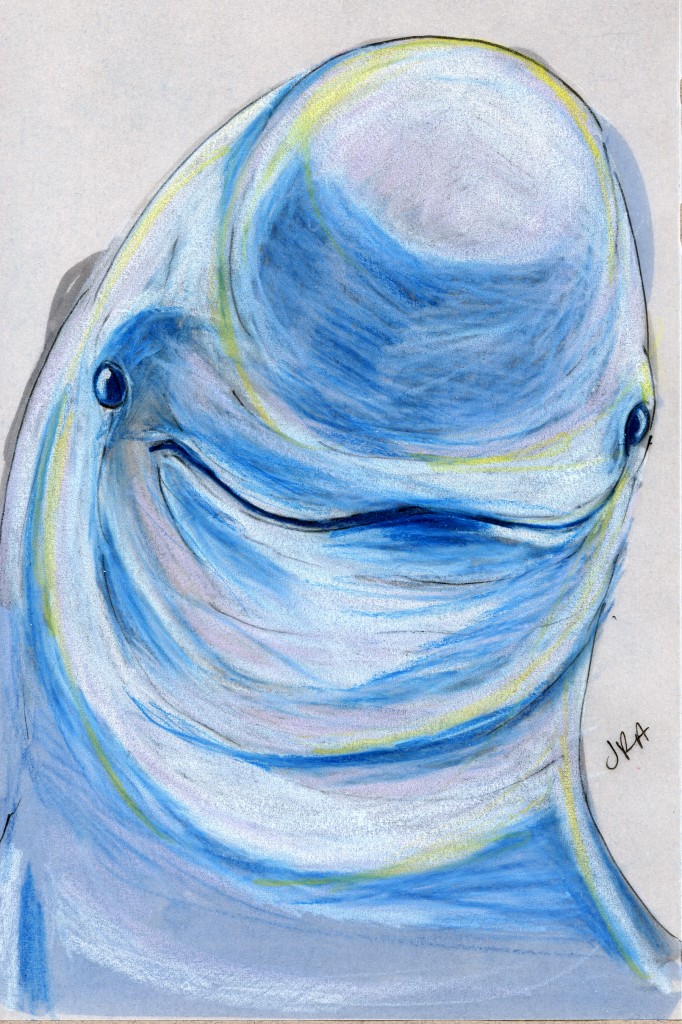
This littlest of the cetaceans lives in the seas of Asia and the East Indies, including the Persian Gulf. So named because it lacks the dorsal fin that other porpoises have, the finless porpoise is a slow-moving fellow who frequently finds himself, an innocent byswimmer, killed by errant fishing methods. Sometimes he’s hunted for his meat, his skin, or his oil, too. Female finless porpoises have a neat child-rearing adaptation: there’s a rough spot on their backs that serves as a saddle where their babies can ride without slipping off.

Porpoises and dolphins are related, but they’re in different families.* There are a few characteristics you can use to tell them apart. Generally, dolphins have beaks while porpoises don’t, and porpoises have small, round heads. Porpoises, other than this species, anyway, have triangular dorsal fins, while dolphins’ dorsal fins are hooked. Also, porpoises have stockier bodies than the slender dolphins do.

Speaking of dolphins and the Persian Gulf, the US military has used dolphins, sea lions, and other marine mammals for reconnaissance and mine-finding missions for more than four decades, including in the Persian Gulf since at least the late 1980s. More recently, 152 dolphins mysteriously washed up dead on the shores of Iran: “Suicide or murder? Iran blames US after 152 dolphins die,” says the Guardian.

*Of course, this is controversial. Some scientists think dolphins and porpoises are members of the same family (the dolphin one, to be precise). As regular Daily Mammal readers know, we usually come down on the side of More Mammals! Also, here’s a helpful mnemonic device: Kids Pour Coke On Fat Green Snakes. What does it help me remember nearly every day?

Consecutive days of mammals: 1
Record: 16

{ 4 comments }