Posts tagged as:

deer

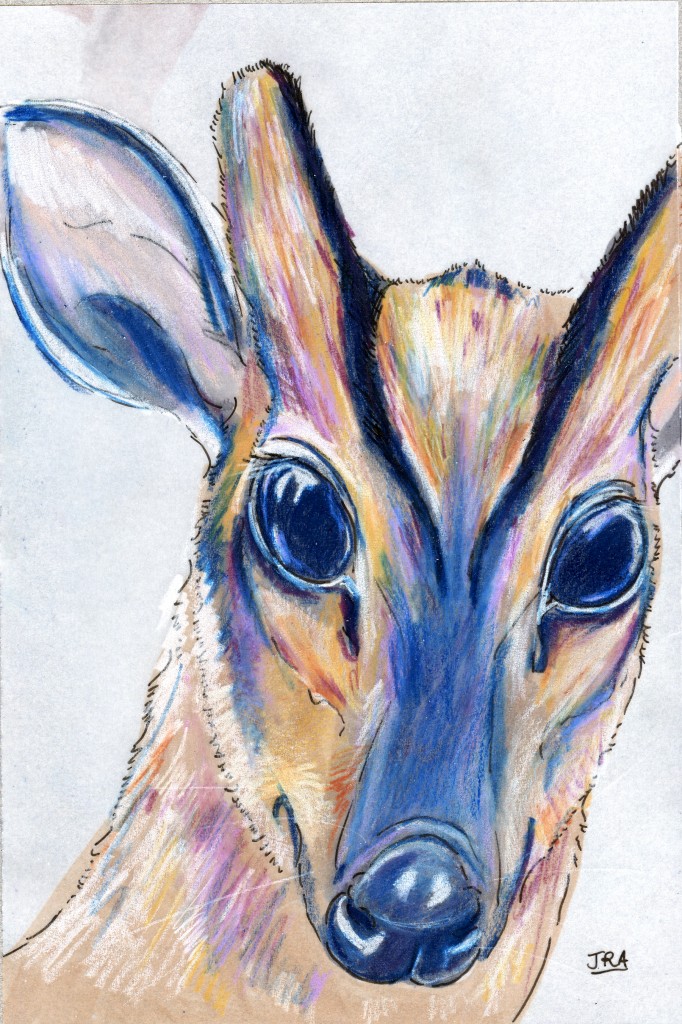
Pudú (click image to enlarge)


0341

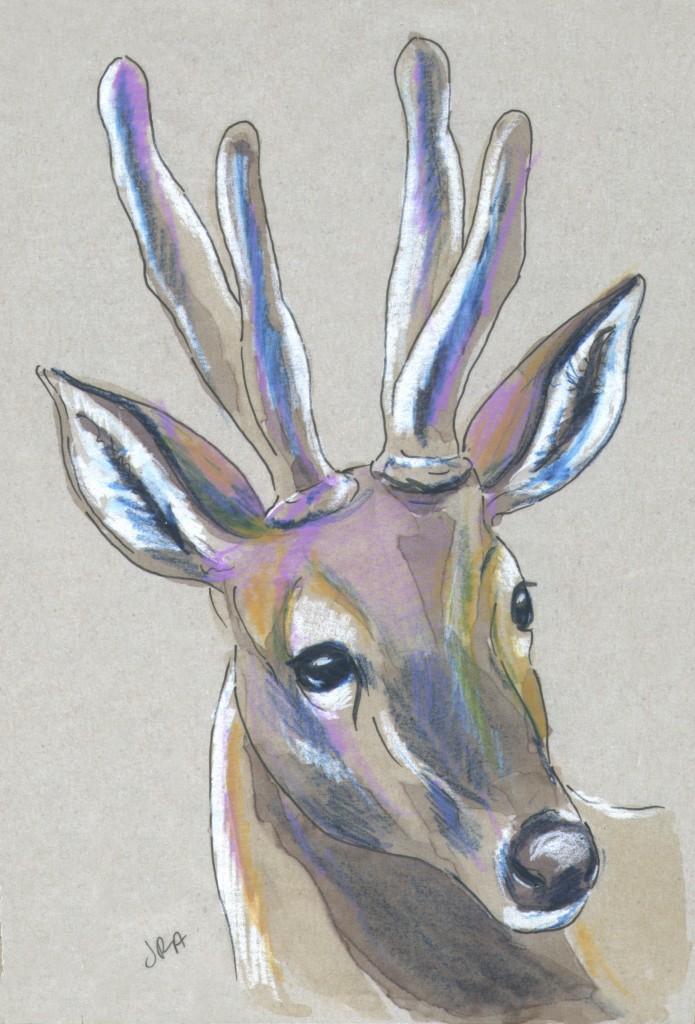
The Mammals of the World Cup series is almost finished! Just two more countries after today’s representative from Chile, the Chilean or southern pudú, which is the second smallest deer in the world, the first being the northern pudú, this guy’s cousin. The Chilean pudú is less than a foot and a half tall and is vulnerable to becoming endangered because of habitat loss (join the club, little pudú) in its forest home, poaching, and domestic dogs.

There’s a Chilean metal band called Power of the Pudú, and they have a song called “Oda al Pudú,” or “Ode to the Pudú.” Check out the video below, which has translated subtitles (seemingly translated by a computer). It’s pretty good!

As for Chile’s soccer team, they have a long and sometimes disgraceful World Cup history. They’ve made it to the big tournament eight times, earning third place in 1962, when they hosted, and making it to the Round of 16 this year. But in 1990, the team was banned from that year’s tournament and the next one, too (1994), because of something that happened at a 1989 qualifying game against Brazil. Chile was behind 1–0 when a Brazilian fan threw a firework onto the pitch. The goalie, Roberto Rojas (nicknamed Cóndor) fell to the ground, his head bleeding, and the team doctor came out to have a look at him. They took him off on a stretcher, and then the Chilean team captain came out and said the team would not be returning to the game because conditions were unsafe.

Well, it turned out that the firework did not hit Rojas, but that he had cut himself deliberately in order to stop the game. It also came out that the team doctor had submitted a “fraudulent medical certificate” and that the coach had ordered Rojas and the doctor, by walkie-talkie, to stay on the ground. In the end, Rojas, the doctor, and the coach were all banned from soccer for life, the team captain who kept the team from returning to play was banned for five years, and the team was banned from the following two World Cups. In 2001, FIFA lifted the ban against Rojas.

YouTube has several videos about the incident, but they’re all in Spanish or Portuguese. Here’s one, marking the game’s 20th anniversary. You may or may not be able to understand the words, but the footage of the firework and the injury say a lot on their own.

{ 0 comments }

Greater Mouse-Deer (Tragulus napu)

by JR Kinyak on July 13, 2009

in Ungulates

Greater mouse-deer (click image to enlarge)

Greater mouse-deer (click image to enlarge)


0273

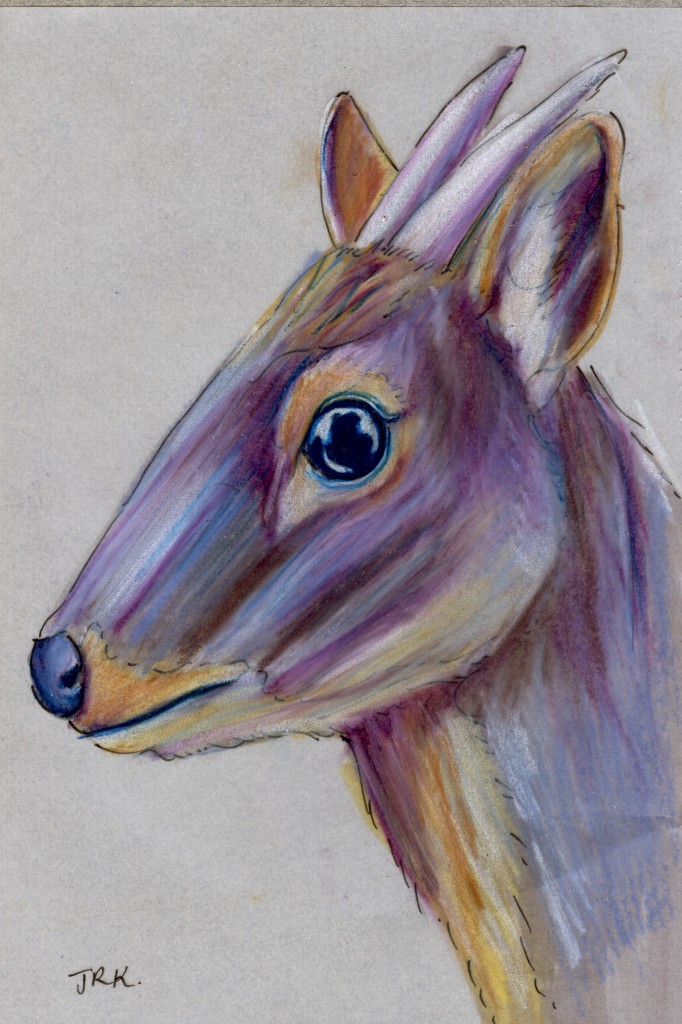
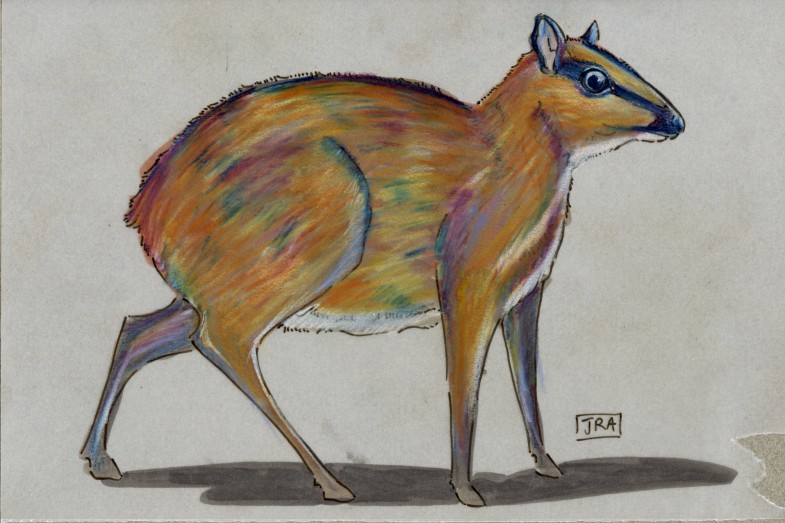
The greater mouse-deer is a teeny-tiny little thing, more or less rabbit-sized with legs the size of pencils. (I drew this one’s front legs too big.) The deer, also called chevrotains, live in Brunei, Indonesia, Malaysia, Myanmar, and Thailand. They weigh about 11 pounds, and unusually for deer, they don’t have horns or antlers. They do have big ol’ upper canine teeth, though, that become tusk-like in males.

Here’s an alarming (to me) fact: female greater mouse-deer spend only about two hours between giving birth and becoming pregnant again! They’re pregnant their whole lives. This leads me to ask a question of my biologist readers: are the pregnancies of other mammals as uncomfortable as ours? I’m thinking of morning sickness, varicose veins, hemorrhoids, backache, swollen ankles, etc. Is this unique to humans, and if so, why?

A remarkable thing about greater mouse-deer (which are sometimes called “living fossils” because of how ancient they are as a species) is that they are amazingly good swimmers. Scientists have observed them fleeing predators—say, humans or mongooses—by jumping into the water and staying under for up to five minutes at a time. They’ll swim around for an hour to keep away from a threat. Another Asian mouse-deer species does the same thing, as does an African relative of the species. These observations have lent credence to the idea that whales evolved from deer-like mammals.

Supposedly, greater mouse-deer make good pets. I think they would look particularly cute paired up with an Italian greyhound.

BBC: “Aquatic deer and ancient whales”

{ 3 comments }

click image to enlarge

0243

“Yesterday” (ahem…), we met the common palm civet, from whose droppings we get kopi luwak, coffee made from the seeds that pass through the civets’ digestive systems when they eat coffee berries. Whether this really creates some kind of gourmet delicacy or it’s actually a crazy scam to get people to spend lots of money on something they don’t need, we don’t know. Either way, people do seem to market and drink the stuff.

So how about we celebrate a couple other Coffee Achievers? (Boy, the ad linked there really makes me want to drink some coffee so I can be more like David Bowie and Heart. But I learned today that I’m especially susceptible to celebrity endorsements: shopping for eyeshadow, I rejected a set of exactly the colors I wanted because they had Andie MacDowell’s signature on them and almost bought completely wrong colors because Aishwarya Rai had endorsed them. Anyway…)

Muntjacs are also known as barking deer because of the strange vocalizations they make. (You can hear one barking here.) Native to Taiwan and China, the Reeves’s muntjac is also easily found in parts of England, as well, where it was introduced. And coffee beans that have passed through the muntjac’s system and been pooped out can be yours, supposedly, for exorbitant prices. I can’t find any for you to buy online, though. Maybe it was a hoax; maybe it’s just a weird fad that has worn out its appeal. But don’t worry: I’ll have one more Coffee Achiever for you “tomorrow”!

{ 1 comment }

click image to enlarge
0188

{ 0 comments }

click image to enlarge

0163

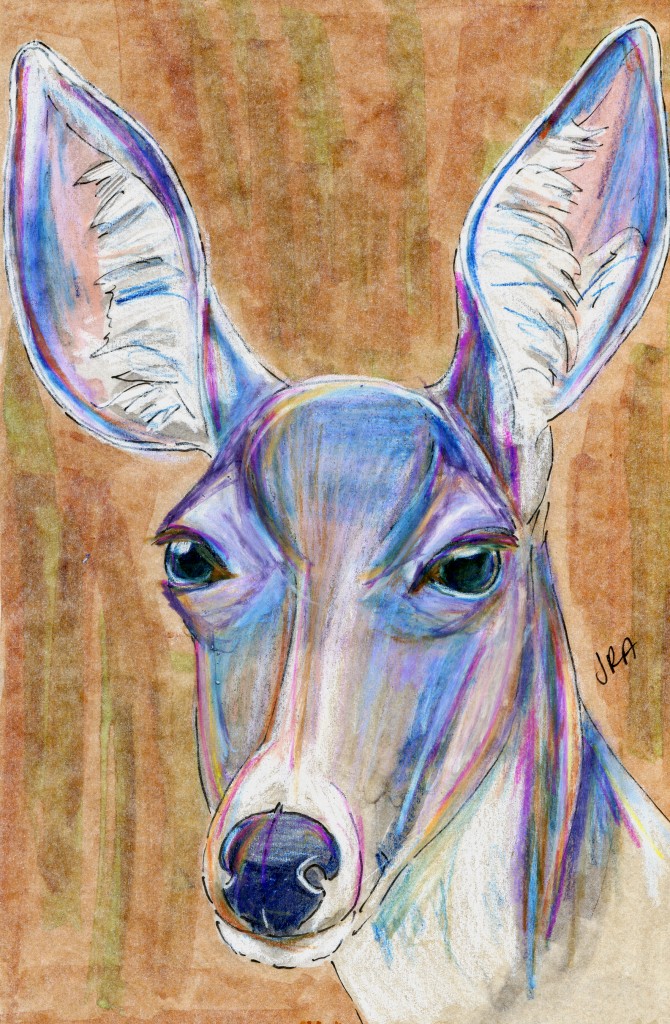
My dad requested, among other mammals (thanks, Dad!), a mule deer. Big old mule ears! She looks sleep-deprived. But they kind of always do to me.

Consecutive days of mammals: 8
Previous record: 11

{ 1 comment }

click image to enlarge

0116

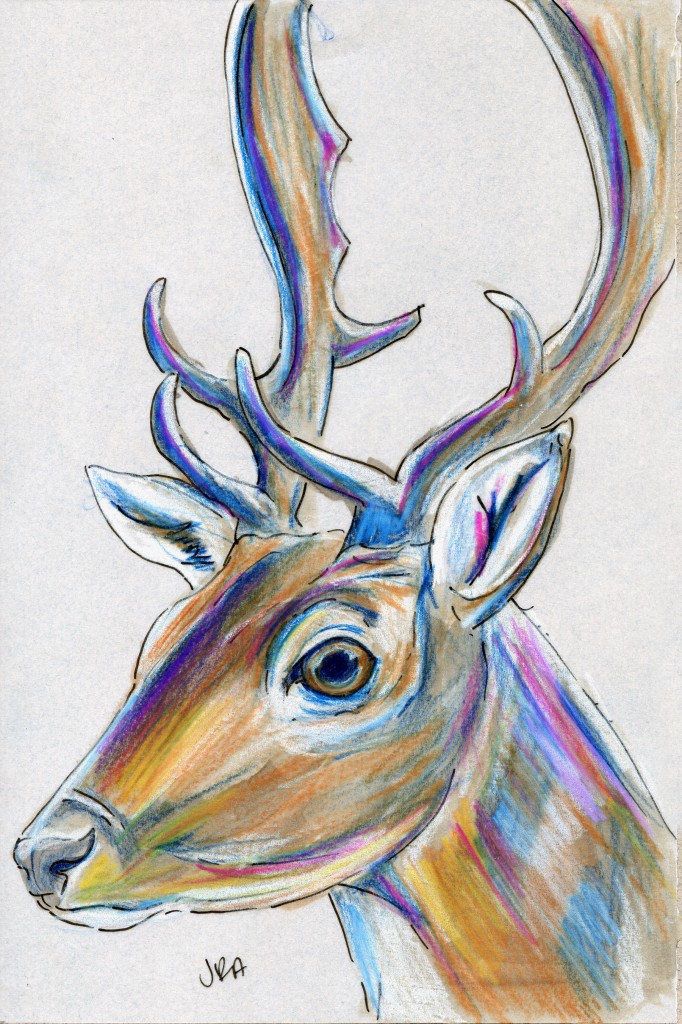
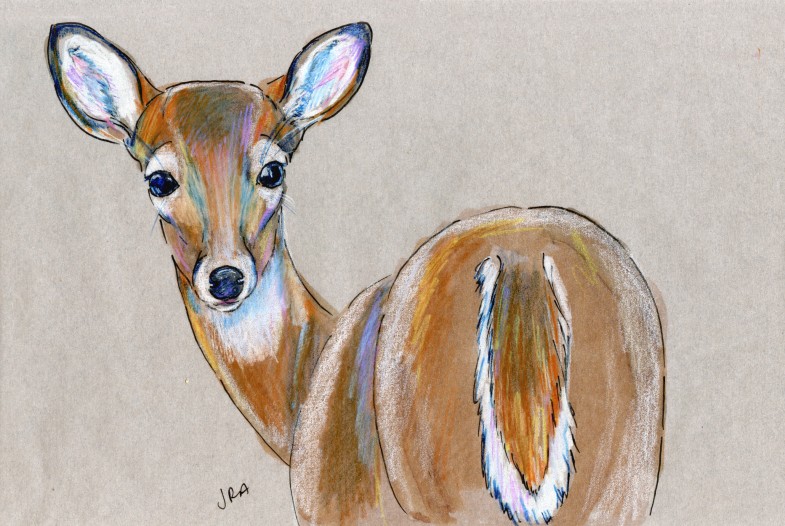
It’s the last day of North Carolina Week, time to bid adieu—for now—to our Carolinian mammal friends. Looking back at us as we wave goodbye is this white-tailed deer.

White-tailed deer live from Canada to Central America, including nearly all of the United States. They are, according to Animal Diversity Web, the jumpiest, most nervous of our deer, and they swish their tails when they’re anxious. They have scent glands on the bottoms of their feet and on their legs, and for them, the scents these glands produce are a form of communication. The deer are solitary much of the year, but they do form small groups in the winter.

Thanks for visiting some of North Carolina’s beautiful mammals with me at The Daily Mammal! Now on to the rest of the world…

{ 5 comments }

24 Hours: Elk (Wapiti)

by JR Kinyak on December 23, 2007

in Mammalthons, Ungulates


0094

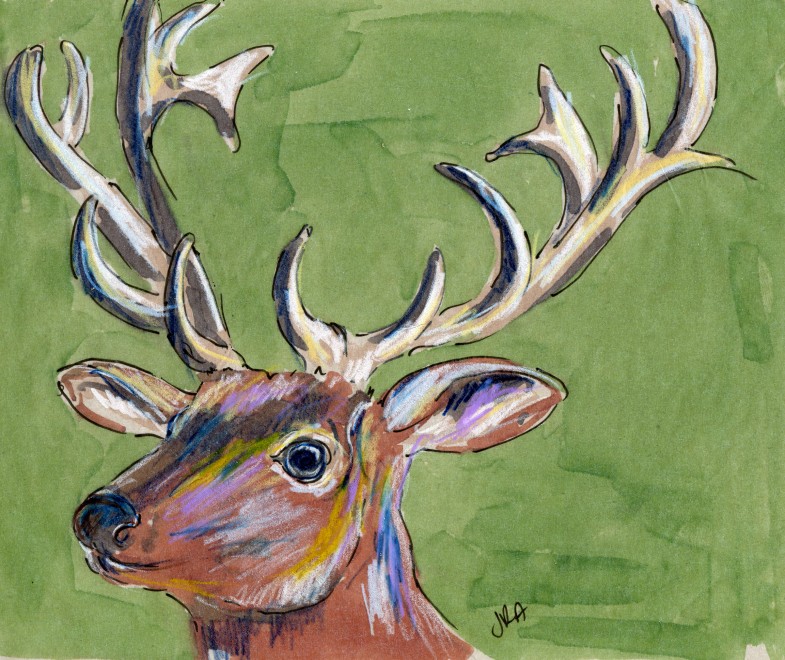
This is for Maleta. She gave me my choice, and I choose an elk! I know Maleta likes animals that can be found in New Mexico, and this is one.

—————-
Now playing: Explosions In The Sky – Welcome, Ghosts
via FoxyTunes

{ 0 comments }