Posts tagged as:

bat

click image to enlarge

0221

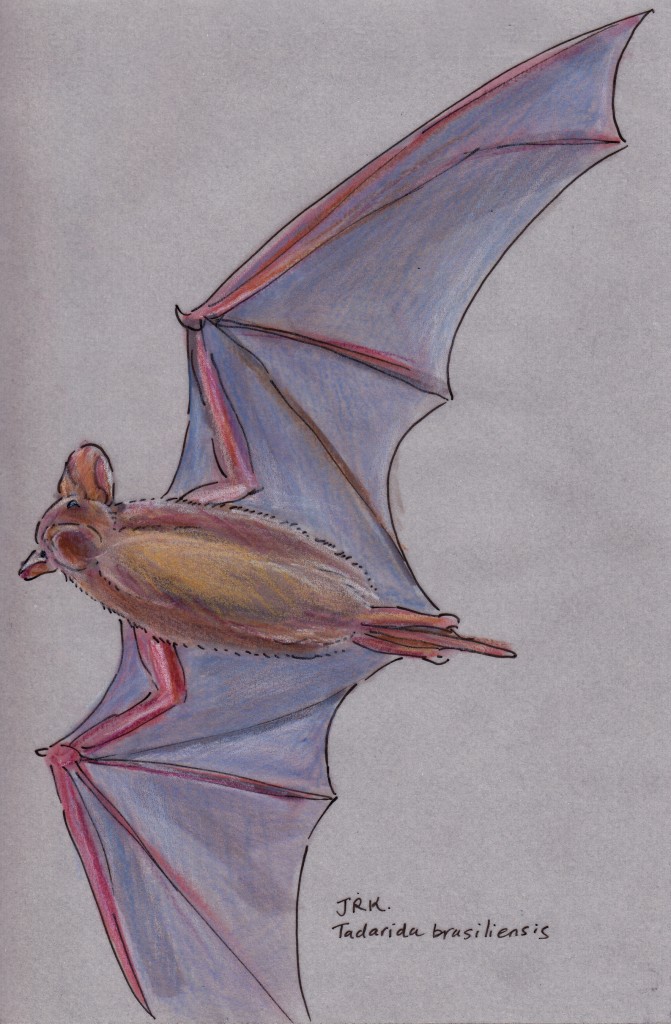
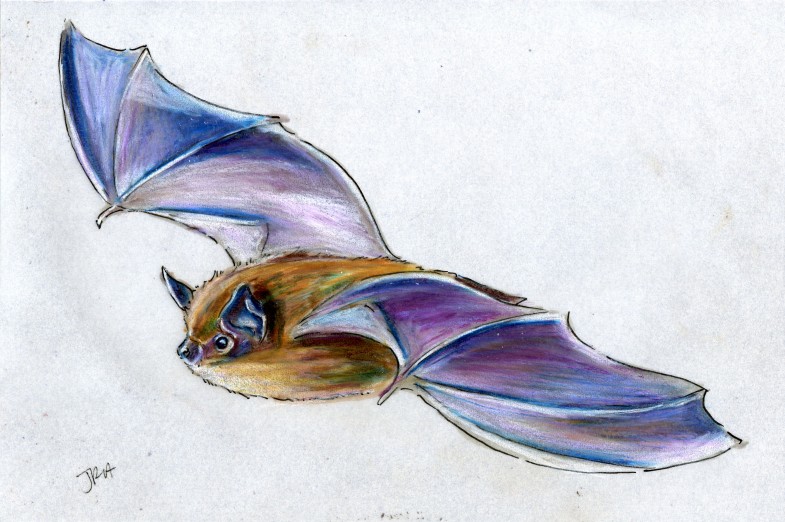
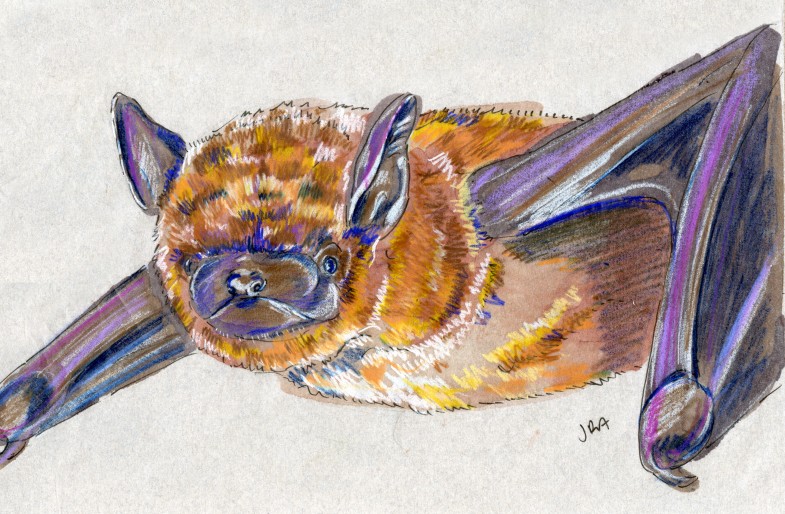
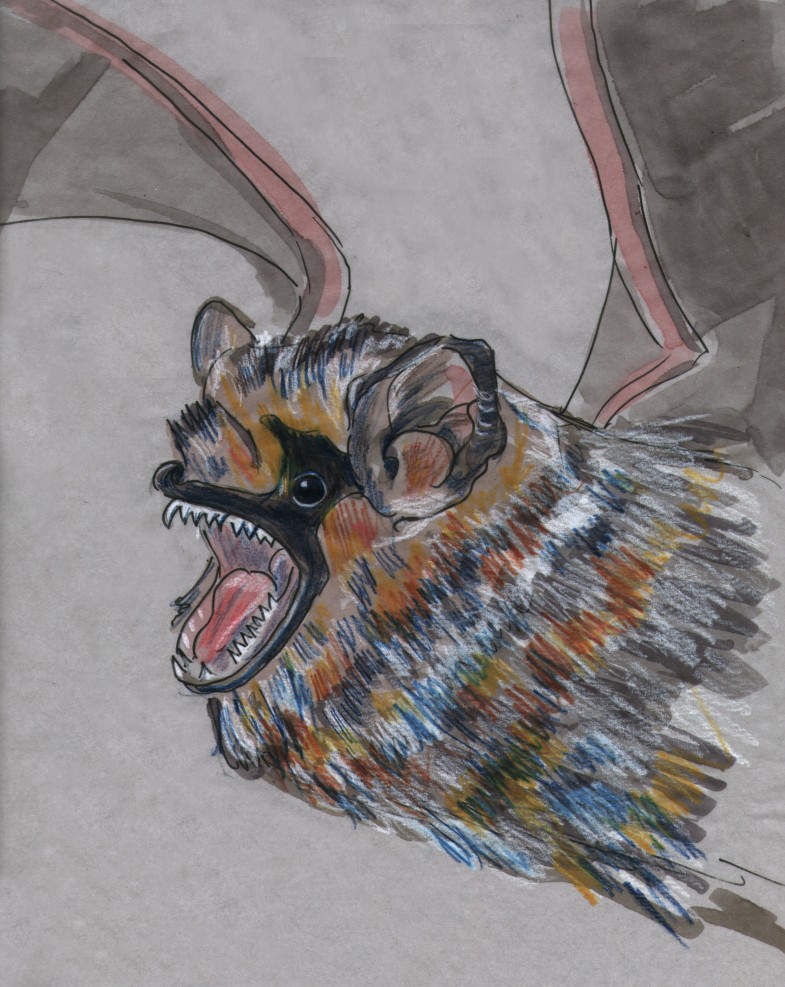
This little brown bat, called the little brown bat—like our moon is called the moon—is quite a common fellow throughout most of North America. It eats a ton of insects every night—okay, not a ton, but at least a couple of grams, which is a lot for a little brown bat! It favors aquatically inclined insects, but will also munch moths and mayflies. It hunts through the night, coming out at dusk and returning home just before dawn.

The little brown bat is a true hibernator, but even true hibernators have to wake up occasionally. This guy, for instance, will hibernate for between a couple weeks and a few months at a time, repeating as necessary from fall to spring. Waking up occasionally may be a way for the bats to correct metabolic problems that arise from the very low body temperatures they maintain during hibernation. Hibernating little browns lose about half of their body weight and drop their body temperatures to about 10ºC (50ºF). Besides hibernation, little brown bats can use torpor, too (see yesterday’s post if you’re confused here!), on a day-to-day basis to conserve energy after fruitless, or rather bugless, nights of hunting.

Sadly, all is not well for the little brown bats currently hibernating in the northeastern United States. They are being ravaged by a strange disease called white nose syndrome. It first appeared in 2007, and it affects several species of bats in their hibernation roosts. Little brown bats, though, are sustaining the most deaths from the illness, which appears to involve a cold-loving fungus. The most obvious initial symptom is a fuzzy white growth around the nose and sometimes on the wings or other parts. Afflicted bats act very strangely, coming out of their roosts in the middle of day and the middle of winter. They seem to be starving and sometimes try to drink snow. And then they die.

The syndrome was first observed in upstate New York and has since spread to five other states. Just last week authorities confirmed the first cases of white nose syndrome in Pennsylvania and New Jersey. No one knows what’s causing it or how it’s spread…but it is spreading. Hundreds of thousands of bats have died from it over the last two years. The mortality rate in many affected caves is more than 90 percent. If we don’t figure this out, there’s a possibility that cave-dwelling bats, such helpful insectivores, could become extinct in the very near future, which would in turn have a catastrophic effect on the ecosystem.

There are two funds you can donate money to if you’d like to try to help the bats, one at Indiana State University and the other through Bat Conservation International.

{ 4 comments }

Common Tent-Making Bat (Uroderma bilobatum)

by J.R. Atkins on January 6, 2009

in Bats

click image to enlarge

0198

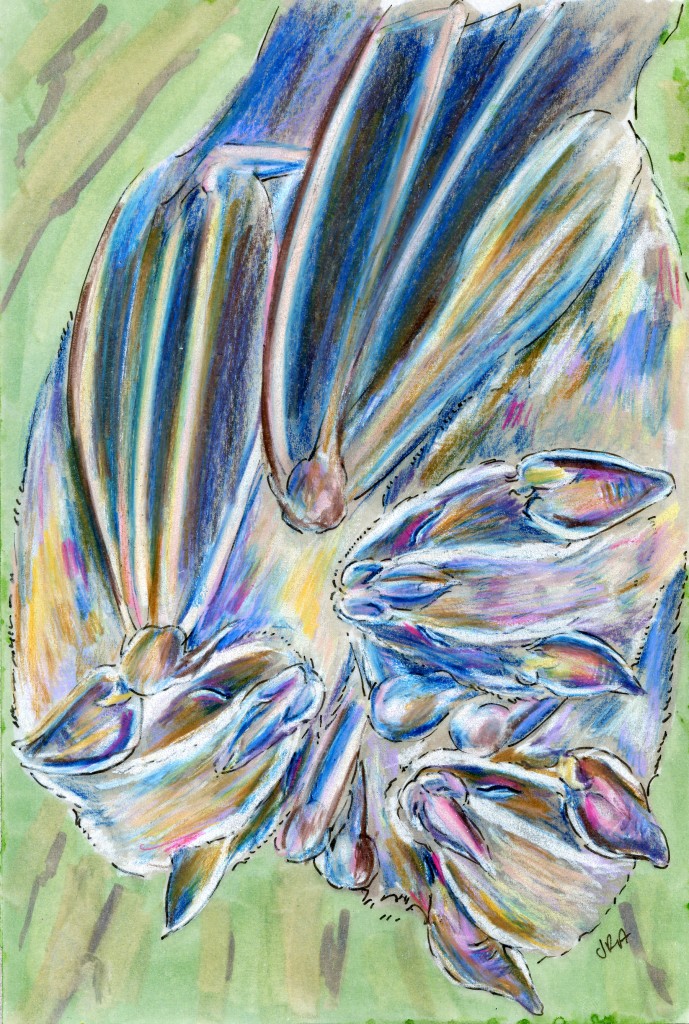
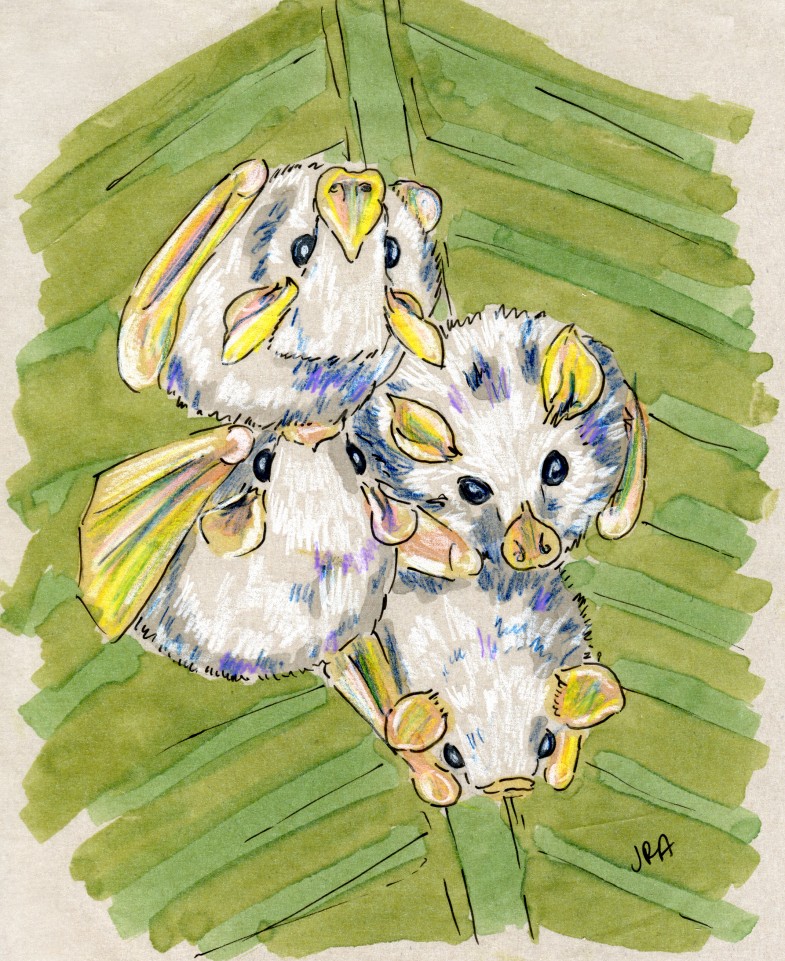
I drew a group of white tent bats in the very first Mammalthon, and I think learning about that species may have been the beginning of my current love for bats and for drawing them. Tressa saw that drawing and wanted a tent-making bat of her own, so these guys are for her. Thank you, Tressa, for giving these bats a home!

The common tent-making bat lives in central and South America, from Mexico to Bolivia and Brazil, and in Trinidad, too. They’ve been observed creating at least nine different kinds of tents from the leaves of at least five different plant families. Some of the styles of tents they make include (and this is all according to Walker’s Mammals of the World) conical, palmate umbrella, pinnate, and boat tents.

Walker’s says that making a tent can be a “long and arduous process,” but the good news is that a given tent will last a while—up to two months in some cases. The tents provide camouflage, shelter, a view, footholds, and a connection to the movements of nearby foliage.

Female tent-making bats roost together in a sorority-house tent, and the males roost either alone or in smaller groups.

{ 2 comments }

click image to enlarge

0192

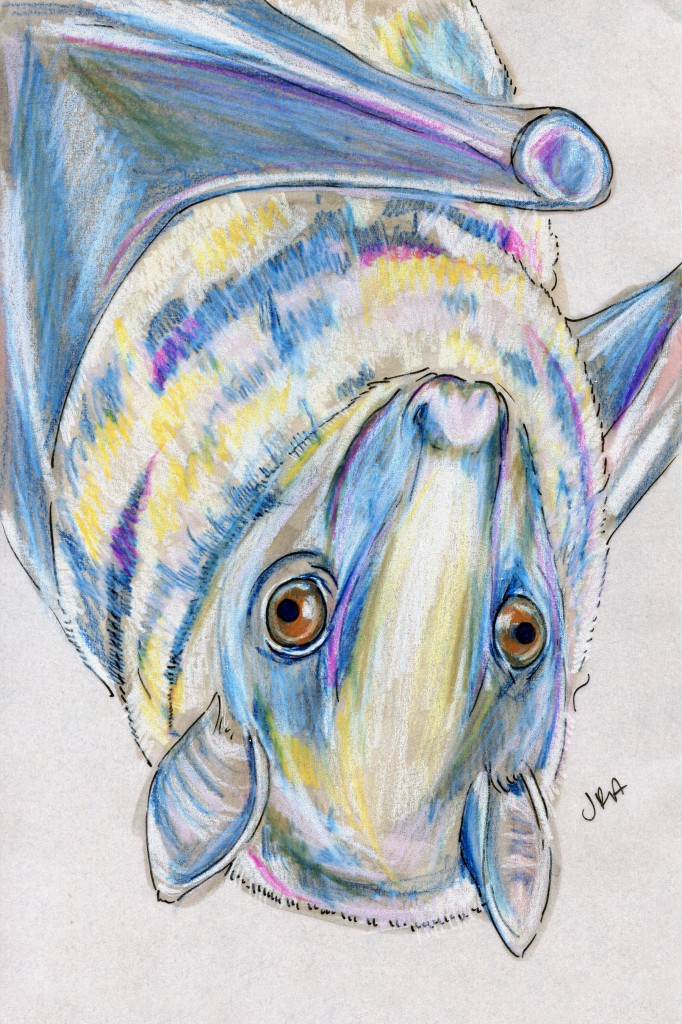
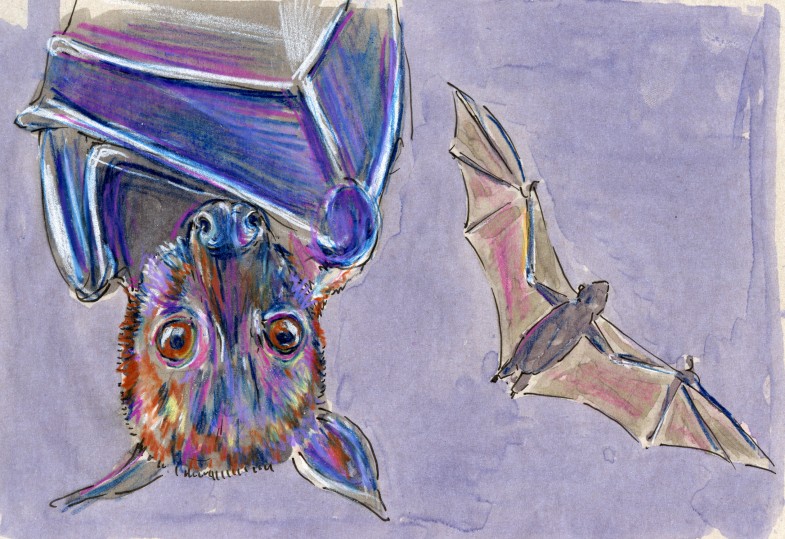
The Egyptian fruit bat (also called the Egyptian rousette) lives in the Middle East, Turkey, Cyprus, Pakistan, and India, and throughout Africa. It dines on fruits and nectars and helps to pollinate trees. Unfortunately, scientists confirmed last year that Egyptian fruit bats can carry the Ebola-like Marburg virus. Until then, the virus had never been found in animals other than primates, and the finding supports the theory that bats had infected two people in Uganda. Between 25 and 80 percent of people infected with Marburg virus die, it’s contagious, and there is no treatment.

Read about Marburg hemorrhagic fever on the World Health Organization website.

Consecutive days of mammals: 2
Record: 16

{ 0 comments }

Great Stripe-Faced Bat (Vampyrodes caraccioli)

by J.R. Atkins on June 24, 2008

in Bats

0184

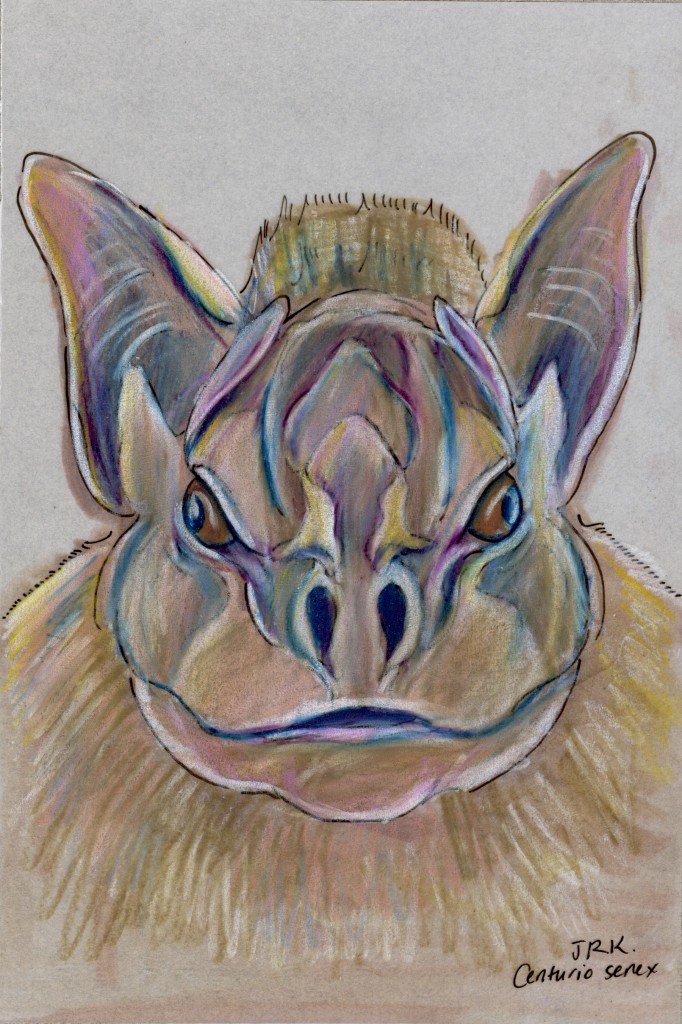
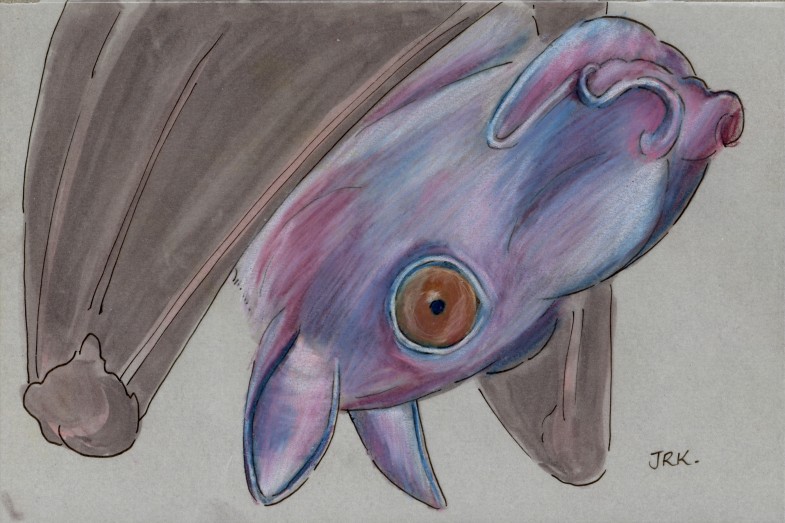
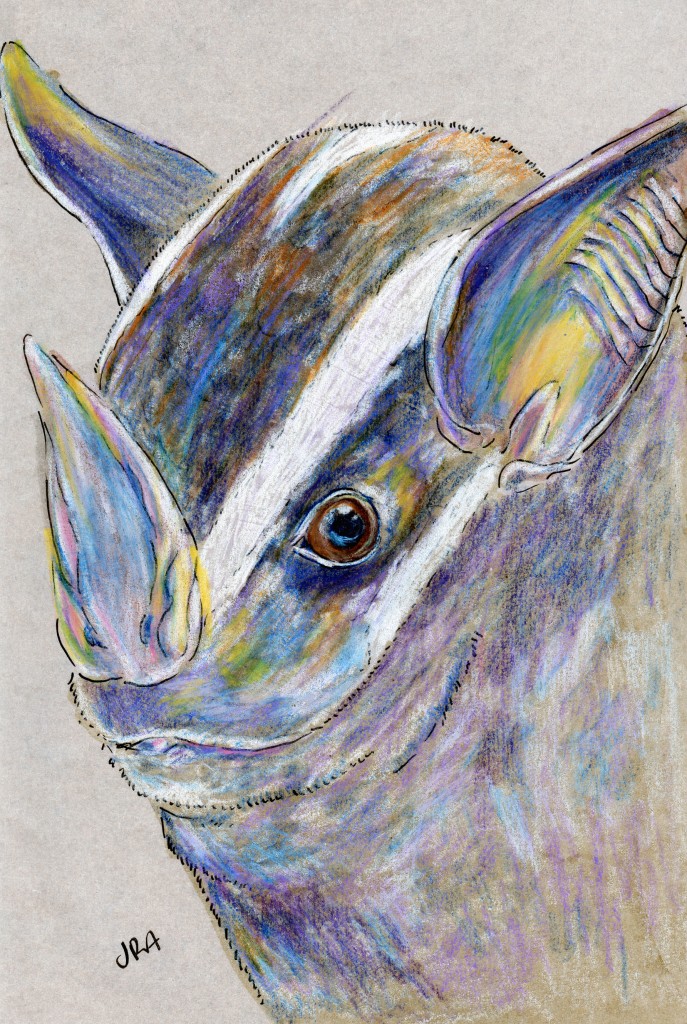
I chose this bat completely at random from among all the mammals with species accounts in Mammalian Species. It’s a leaf-nosed Central and South American bat, and it’s frugivorous, another wonderful adjective from the world of biology: it eats fruit. The great stripe-faced bat enjoys a veritable tropical fruit salad, dining on papayas, figs, and bananas that it forages for in the forest canopy. In fact, this bat, along with other frugivorous bat species, is a very important spreader of fruit-tree seeds.

Consecutive days of mammals: 4
Record: 16

{ 2 comments }

click image to enlarge

0159

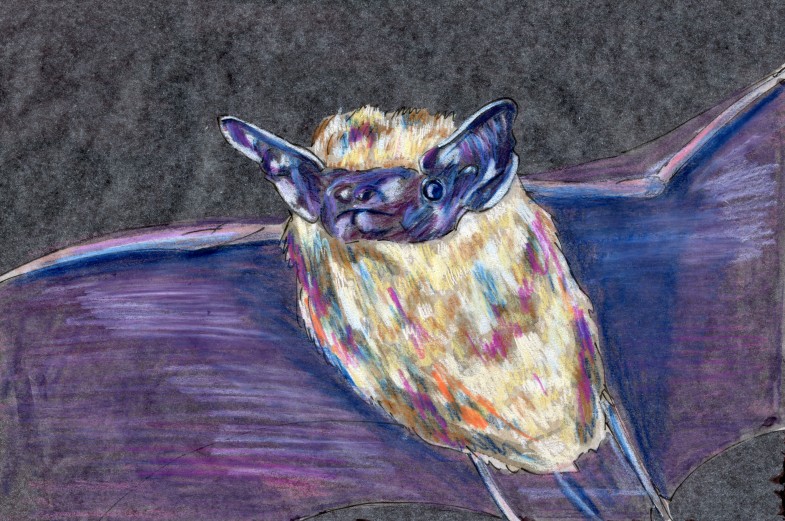
Here’s a little bat for Melinda! In fact, the western pipistrelle is the smallest bat in North America—far, far smaller than the drawing I made of it.

Here’s a nice little article about western pipistrelles by Merlin Tuttle.

{ 1 comment }

click image to enlarge

0149

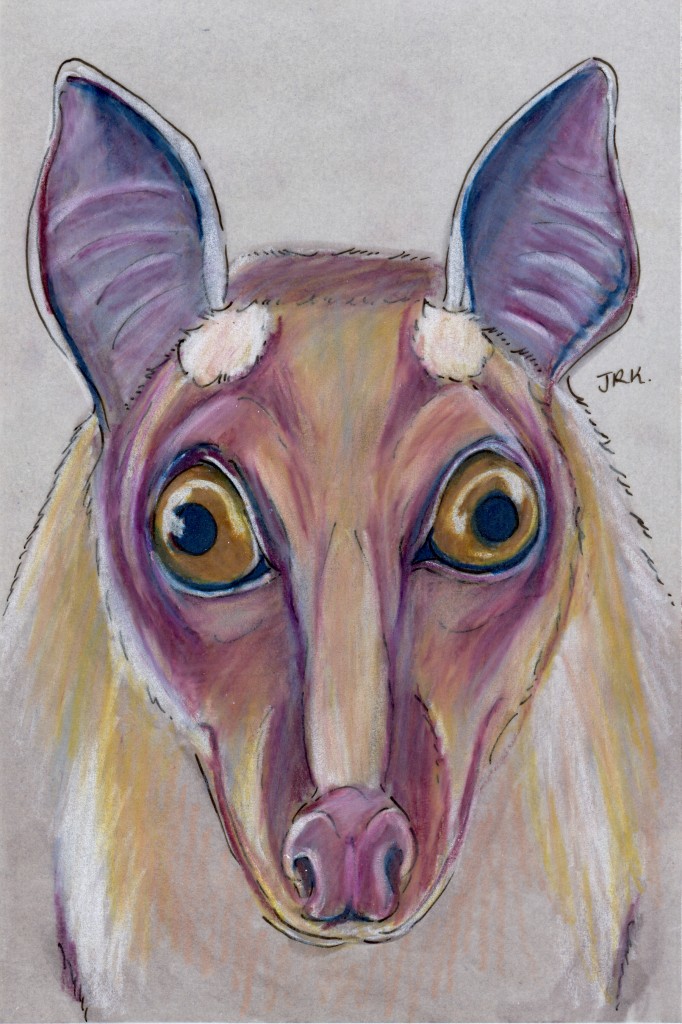
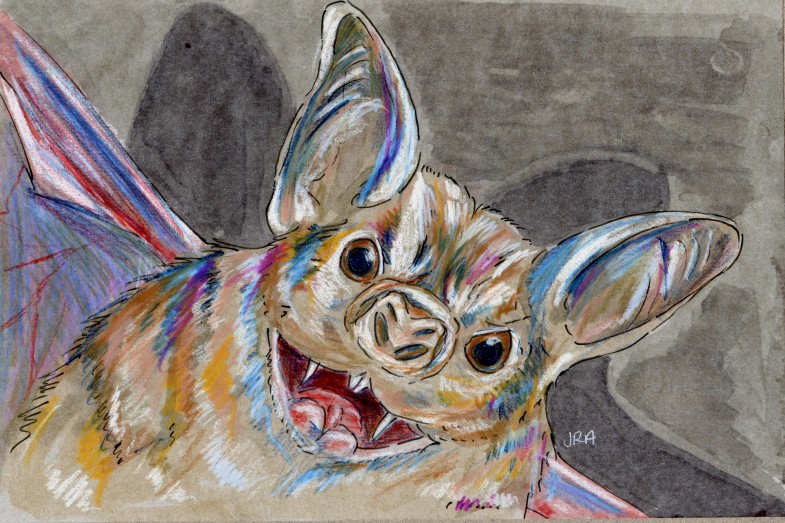
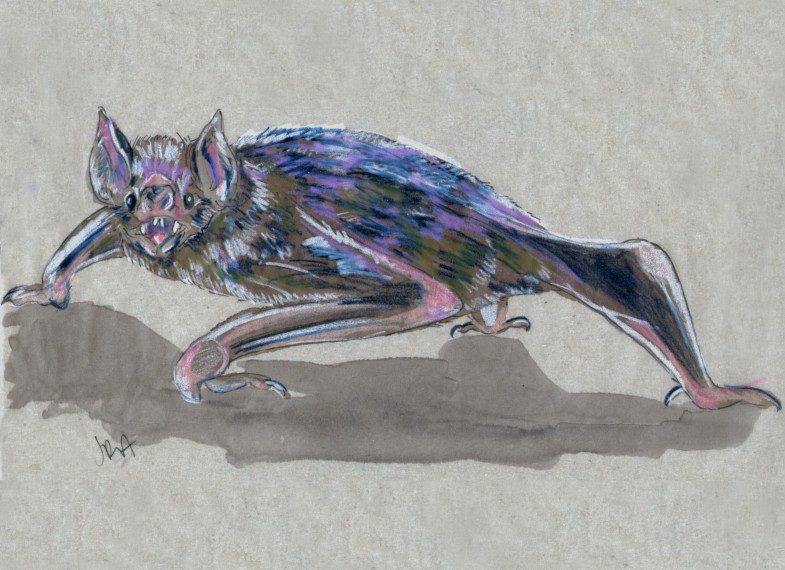
Good thing I drew this so early, while it’s still light out, or we’d all be too scared to continue! It looks like this guy is in Joe’s bedroom, getting ready to bite while Joe sleeps peacefully. Luckily for Joe, however, white-winged vampire bats get the blood they drink mostly from birds. When the white-winged vampire bat spots a likely target—perhaps an oblivious guinea hen resting on a branch—the bat slowly, carefully creeps along the branch until it can reach the bird’s foot. It starts by licking the foot a few times, then makes an incision with its teeth. It then licks some more to get the blood. If the bird notices this and starts, the bat hides under the branch until the bird calms down and then continues feeding! This all lasts about 15 minutes, at which point the vampire bat flies away.

Check out New Mexico’s own Rancho Transylvania, dedicated to a colony of white-winged vampire bats (they don’t, however, live in New Mexico ordinarily, but rather in tropical South America). You will especially want to look at the photo gallery of baby white-winged vampire bats, which are extremely adorable, it turns out.

Now I must go have my own lunch. I think I hear a bird on the tree outside…

—————-
Now playing: Great Lake Swimmers – The Animals Of The World
via FoxyTunes

{ 8 comments }

click image to enlarge

0127

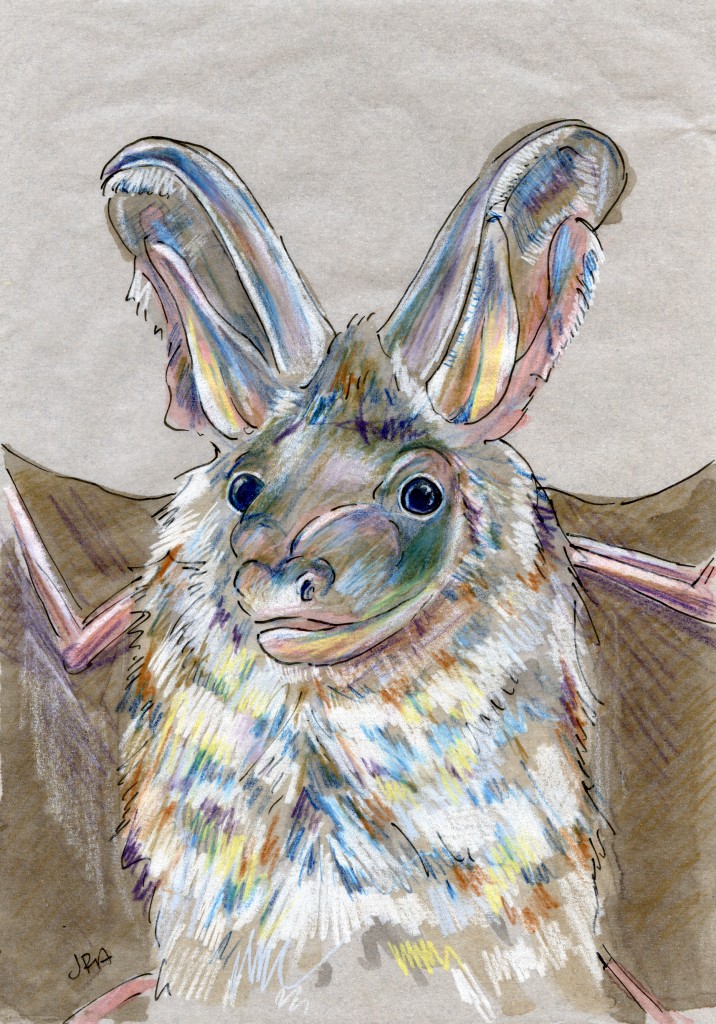
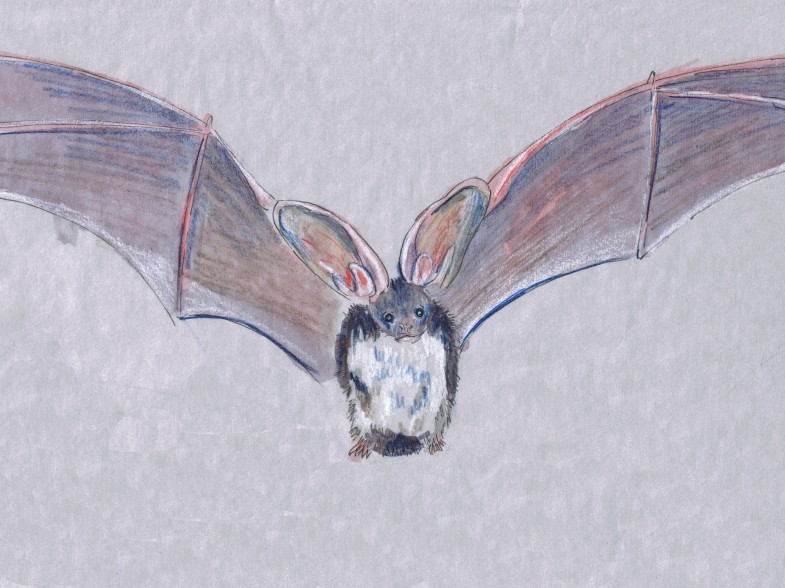
Here’s another one that was discovered to be a species through DNA, at least I think that’s what happened. I’m sorry to say that I’m a little too bushed to figure it all out right now. I’ll leave that to you, if you care to download the PDF of the 2002 article that described this little guy for the first time. Plecotus alpinus, my friend, I am sorry that your roll of the 5,000-sided die came up this month, when I cannot give you the time I ordinarily (I hope) would be able to, but it had to happen to someone.

Here is a fact I learned while researching Mr. Alpine Long-Eared Bat, though. See the long, sort of triangular-shaped things on the front of his ears? Those are called tragi (singular tragus). The word comes from the Greek tragos, or goat, which my dictionary explains thusly: “with reference to the characteristic tuft of hair that is often present, likened to a goat’s beard.” I think it’s likely that the triangular-shaped things we have in front of our ears are also tragi, although neither we nor the Alpine long-eared bat have the characteristic tuft of hair.

Homepage of Andreas Kiefer, one of the professors who first described this bat

{ 4 comments }