Posts tagged as:

ape

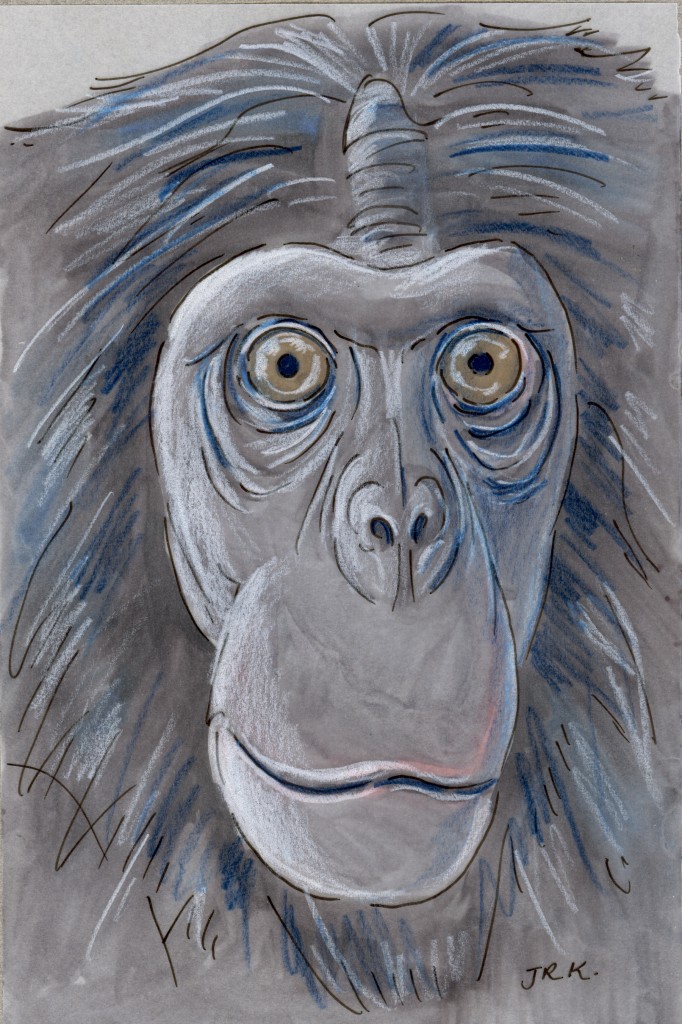
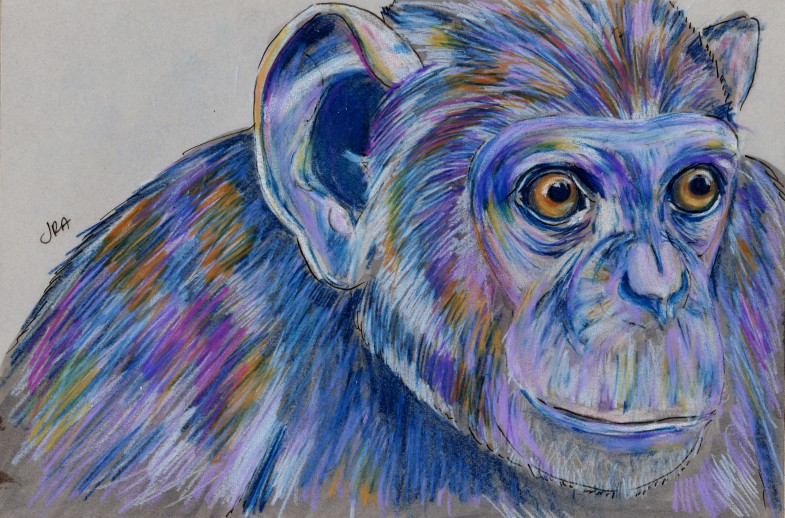
Bonobo (Pan paniscus)

by JR Kinyak on June 10, 2010

in Primates

Bonobo (click image to enlarge)

0309

There are two kinds of people: bonobos and chimpanzees. I’m more of a chimpanzee, I think. I’m hostile, territorial, and antisocial, I don’t like rubbing genitals with most other people, and I hate being groomed by others.*

Bonobos have been called the hippies of the great apes, the Venus to the chimpanzees’ Mars. Like the chimpanzees, bonobos (also called pygmy chimpanzees) share 99 percent of humans’ DNA. We studied chimpanzees first, though, and they’re still more well known among people who don’t live near any of our fellow apes. So it seems that the chimpanzees, with their aggression, homicide, male-dominated societies, and hunting, have helped shape how we see ourselves when we consider our ape lineage. We have been able to justify our own aggression and male dominance by saying, hey, it’s in our DNA! But the bonobos complicated all that with their female-centered societies, peaceful cooperation, mingling with outsiders, and seemingly endless sex. They don’t eat monkeys, they help others, and the females rub their genitals together “to relieve tension,” according to The Princeton Encyclopedia of Mammals.

Some people have taken all this so far as to hold up the bonobos as an example of how lovely life could be if we learned a little from our free-loving cousins, rejecting our affiliation with the chimpanzee side of the family to live in matriarchal bonobo communes where we braid each other’s hair and have seemingly endless sex. Now, of course I am in favor of most of that, and I’m happy if bonobos help us understand that it isn’t intrinsically human to be warlike bullies. But I find it strange that we are so quick to stereotype the two species as mirroring two dichotomous sides of us and to think we must align ourselves with one or the other, learning from them how to better lead our own lives. I think that the ancestor that humans, chimps, and bonobos shared six million years ago was probably as complex as all three species—and that bonobos and chimps are more complex than they seem, and perhaps not so easily reduced to hippies and rednecks or mods and rockers.

* I am kidding here. And even if I weren’t, I’m much more bonobo than chimp after all. In an interesting interview, Frans de Waal, a famous primatologist, says,

“I would say there are people in this world who like hierarchies, they like to keep people in their place, they like law enforcement, and they probably have a lot in common, let’s say, with the chimpanzee. And then you have other people in this world who root for the underdog, they give to the poor, they feel the need to be good, and they maybe have more of this kinder bonobo side to them. Our societies are constructed around the interface between those two, so we need both actually.”

{ 3 comments }

Good news today! I was planning a post on the study, released this week, finding that almost 50 percent of primate species are in danger of extinction. What else is new? More bad news from the Daily Mammal.

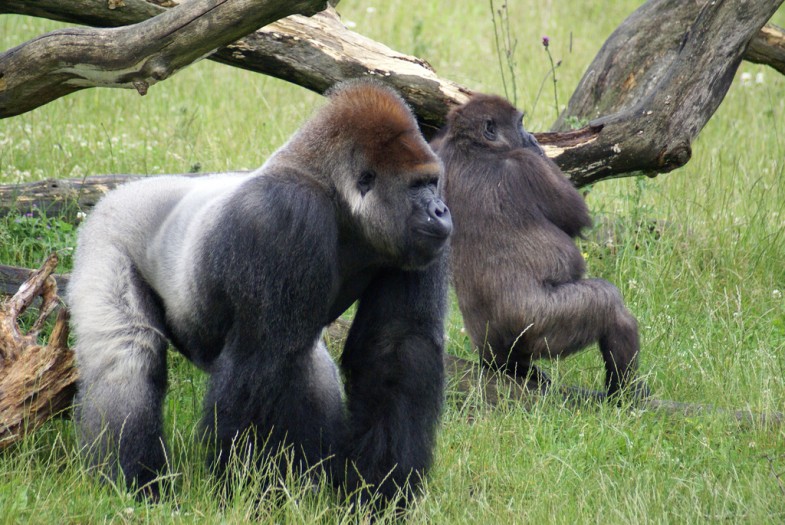
But! On the heels of Spain’s vote to grant certain rights to the great apes comes more good news for our cousins. The Wildlife Conservation Society announced today that it has found more than 125,000 western lowland gorillas secretly going about their business in a couple of swampy areas in the northern Republic of Congo! What makes this such wonderful news is that’s more than twice the number of western lowland gorillas that we thought were left in the whole world!

They’re not out of the woods (so to speak) yet, though; they’re still considered critically endangered. Major threats to the western lowland gorilla subspecies (Gorilla gorilla gorilla!) include the Ebola virus and poachers who kill gorillas and sell them on the bushmeat market. (Okay, it’s not all good news…) In fact, it was a hunter who pointed the Wildlife Conservation Society researchers to the gorillas. Don’t you almost wish they hadn’t been found?

Here’s a video showing the gorillas hanging out—in one case literally—in the swamp.

More western lowland gorilla info (and pictures and videos) on ARKive.


Gorilla photograph by Craig Gobler, used under a Creative Commons license.

{ 0 comments }

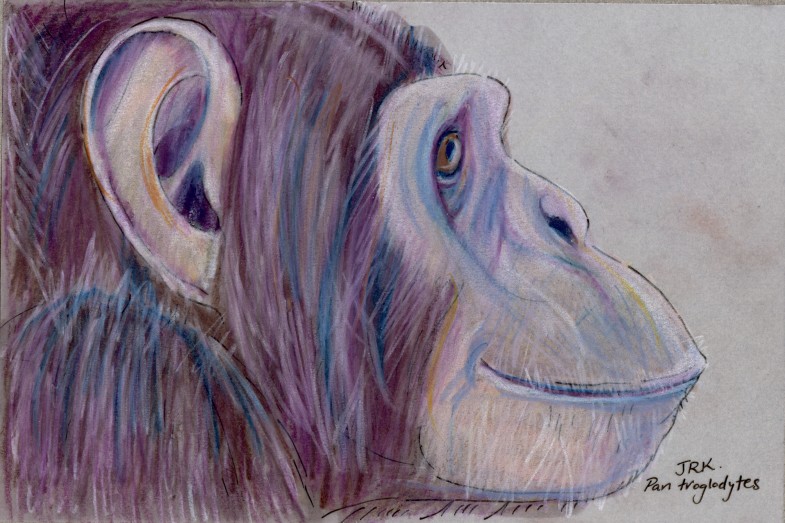
click image to enlarge

0191

Daily Mammal Now is an occasional feature that offers a drawing and discussion of a mammal currently in the news.

In June of this year, a committee of the Spanish parliament voted to grant limited “human” rights to the other great apes (chimpanzees, bonobos, orangutans, and gorillas). The law, which is expected to go on the books some time in the next several months, will prohibit laboratory testing on great apes, as well as holding them in captivity for entertainment purposes. Zoos can keep their apes, but circuses and the like cannot.

As far as I can tell, the idea behind this new act has been pushed forward by the Great Ape Project, an organization cofounded by the ethicist and animal rights activist Peter Singer. The Great Ape Project calls for all great apes to be granted freedom from torture, the right to live, and the right to freedom. This includes the right of due process and the right not to be imprisoned without a fair trial. (I’m not sure whether the Spanish act uses the same language as the Great Ape Project or whether the Great Ape Project has just seized the Spanish act as an easy way to get its message out. It’s not clear to me if the act uses the phrase “human rights” or speaks of all great apes—including humans—as equals.)

I have mixed feelings about this idea. I support a ban on using great apes as laboratory-test subjects, and I support banning cruelty toward animals in all forms. If I were in charge, factory farms would not exist, animal shelters would not euthanize animals just because they’d been there too long, high school students wouldn’t dissect frogs or rats or cats, and almost all animal testing—maybe even all of it—would be illegal.

What’s with my ambivalence toward the Great Ape Project, then? I support pretty much all of its aims. Where they lose me is with their talk about a community of equals and the right to due process. There’s something condescending about it. If we are declaring ourselves the species that has the ability to grant rights, how can we be equal? Since chimps can’t defend themselves in a court, a human advocate would need to be appointed. Who appoints that person? How do we know that what that person says is truly what the ape wants?

If all apes are to be granted freedom from imprisonment, where are we going to put the thousands of zoo, circus, and laboratory animals that we’d have to set free? Couldn’t it be crueler to send them out into the wild when all they’ve ever known is captivity? I think it’s shameful to keep apes in cold metal cages, and I’d love to see them in nice sanctuaries where they have social groups and plenty of space, but that’s still captivity, or imprisonment if you want to use the Great Ape Project terminology.

I guess I just don’t think we are equals. Our species, the great ape called Homo sapiens, has evolved so many capabilities so far beyond even those of our nearest cousins, the chimpanzees. I think that makes us responsible for them, and for all animals, and by accepting that responsibility, we help them far more than we would by calling them our equals and taking away our power to make choices about their treatment. Our dominion over the beasts doesn’t give us the right to abuse, use, or hurt them. It’s the opposite: it gives us the duty to treat them kindly. We don’t need to grant them personhood to fulfill that duty.

The New York Times came out in favor of Spain’s act: “When Human Rights Extend to Nonhumans.”

The Wall Street Journal was against it: “Monkey Business.”

The Chimpanzee Health Improvement, Maintenance, and Protection Act provides for peaceful retirement (as opposed to euthanasia) for “surplus” laboratory chimpanzees.

The Great Ape Project advocates for “equality beyond humanity.”

42 Ways to Help Animals in Laboratories: download a nice PDF from the Human Society of the United States on this page.

The American Anti-Vivisection Society was founded in 1883 and works to stop experimentation on animals.

Consecutive days of mammals: 1
Record: 16

{ 0 comments }

Human Being (Homo sapiens)

by JR Kinyak on August 20, 2007

in Primates


0055

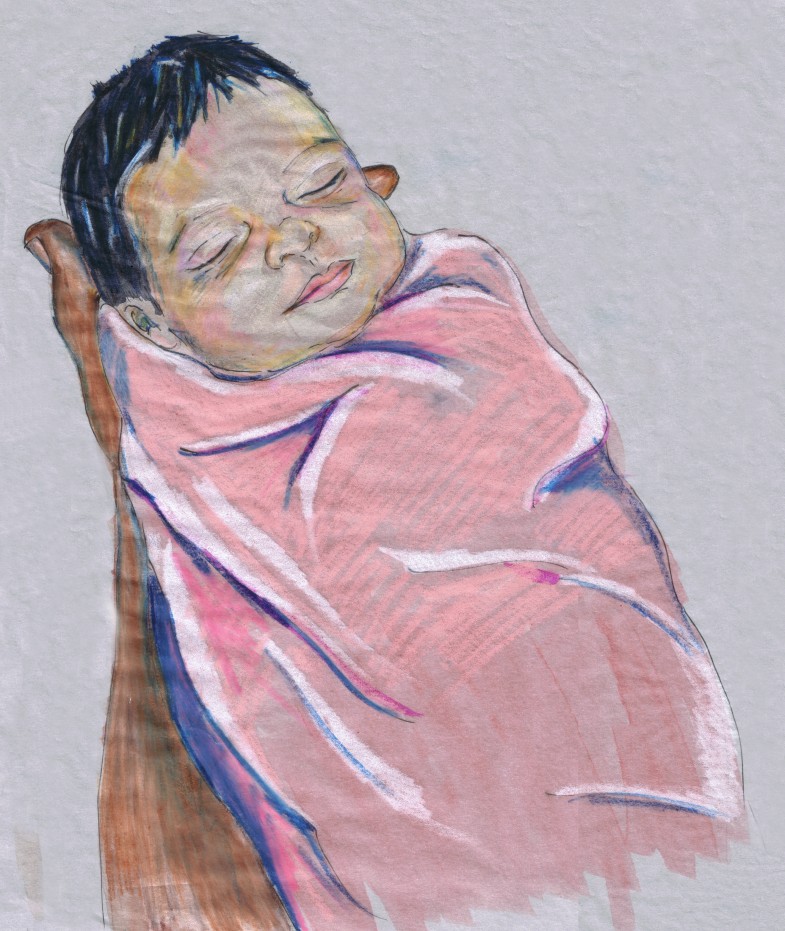
In a Daily Mammal first, today’s mammal is not just a generic depiction of a species, but a portrait of a specific mammalian: my new niece Raecheleia Jonelle, who is exactly one week old tonight.

Raecheleia is a human being, a species about which I think you already know. And a beautiful example she is!

{ 0 comments }

Gorilla (Gorilla gorilla)

by JR Kinyak on July 9, 2007

in Primates

gorilla72

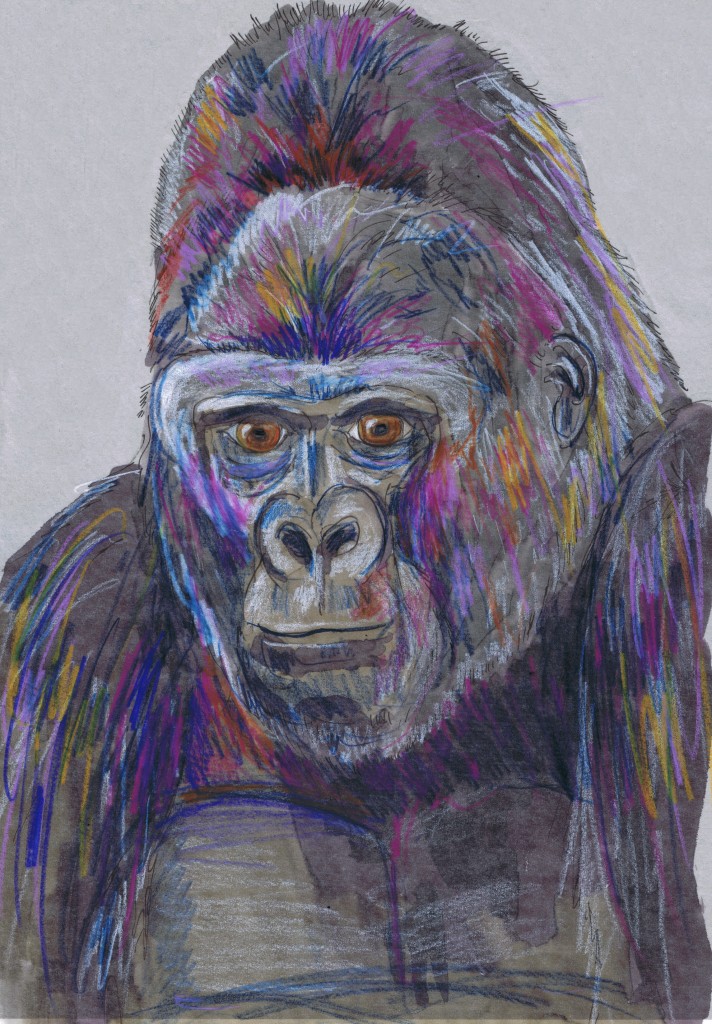
Click image to enlarge.

0037

This gorilla is for Andres, who loves King Kong! For the most part, the difference between monkeys and apes is that monkeys have tails and apes, like the gorillas and us, don’t.

(If the title of this post, featuring the gorilla’s scientific name Gorilla gorilla, struck you as funny, you’ll like to know that there’s a subspecies—or maybe it’s a subtribe or subfamily—called Gorilla gorilla gorilla!)

{ 1 comment }

Sumatran Orangutan (Pongo abelii)

by JR Kinyak on June 28, 2007

in Primates

sumatranorangutan720026

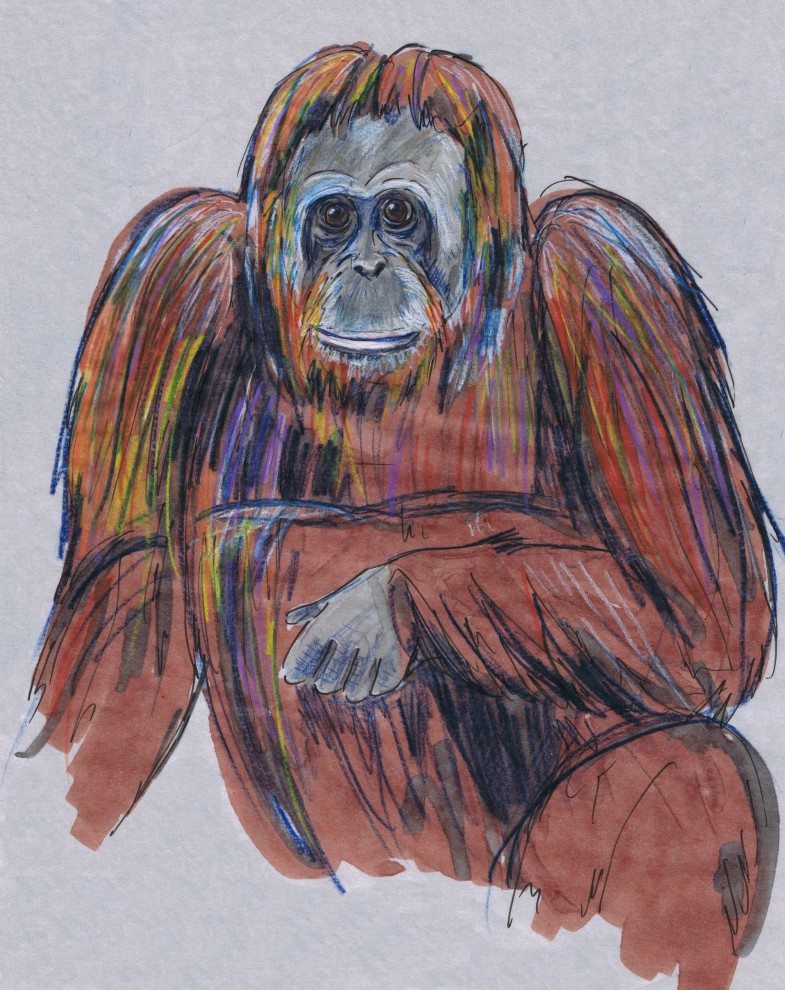
Until the 1990s, scientists thought there was only one species of orangutan, Pongo pygmaeus, with two subspecies, the Sumatran and Bornean orangutans. Well, DNA testing meant they could check to be sure, and what do you know? The Sumatran and Bornean orangutans turned out to be separate species. They’re pretty much indistinguishable unless you can inspect their genes, but I think the Sumatran ones have slightly longer hair.

{ 0 comments }