Posts tagged as:

about drawing

click image to enlarge

0228
0227
0226
0225
0230
0229

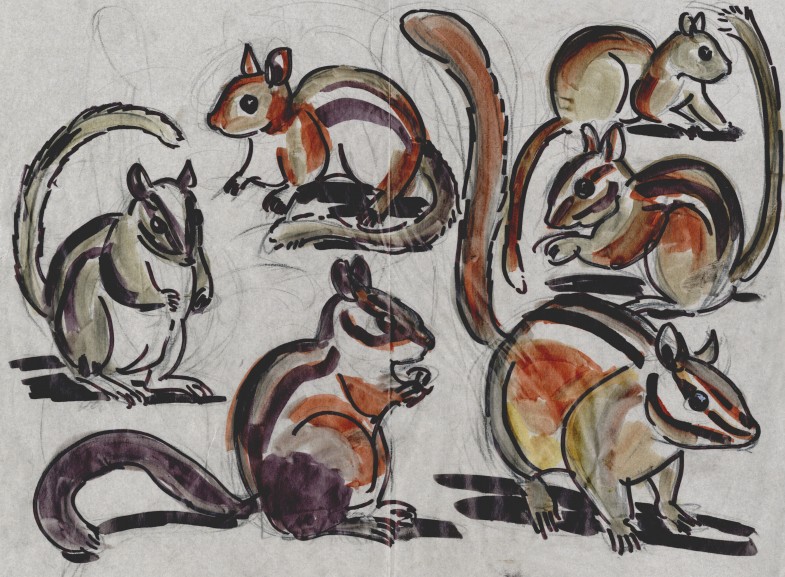
In one sense, I got lazy with this drawing, doing it in sharpie on top of my pencil with no shading, no blending, no colored pencil, and it’s on my tracing paper sketch instead of a nice crisp sheet of vellum. No furry details, no crazy colors. But if you knew how long I researched it and how many times I tried to draw it the normal way, you would know it wasn’t lazy at all. So here are six species of chipmunks from the Tamias genus. Clockwise from the top right: T. obscurus, T. quadrimaculatus, T. speciosus, T. senex, T. amoenus, and T. alpinus. All six species live in California.

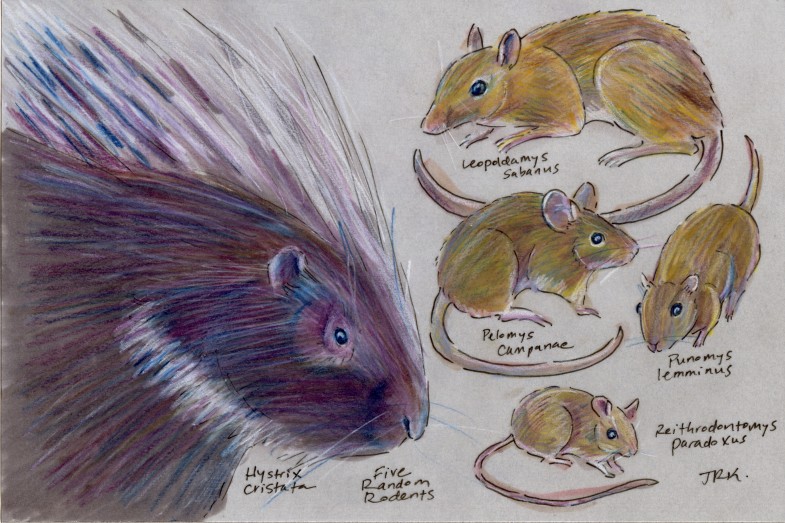
Six more rodents! Check ‘em off if you’re scoring at home!

{ 0 comments }

click image to enlarge
0207
0206
0205

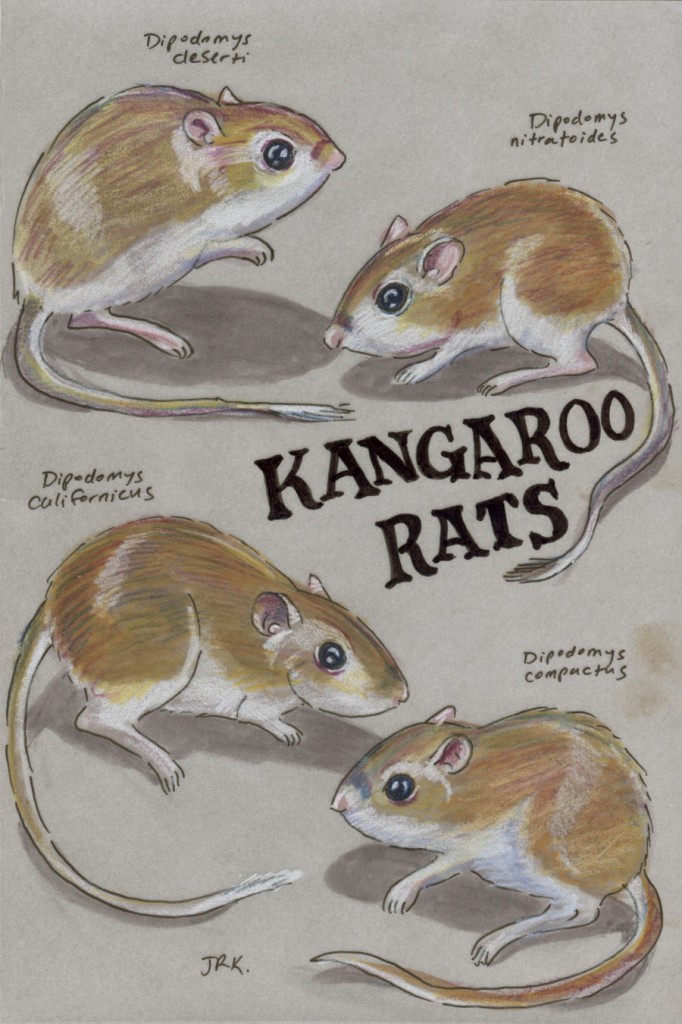
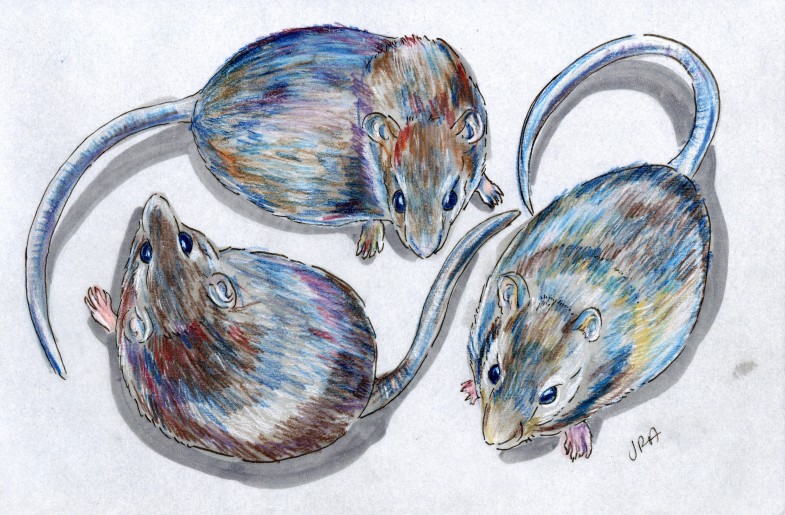
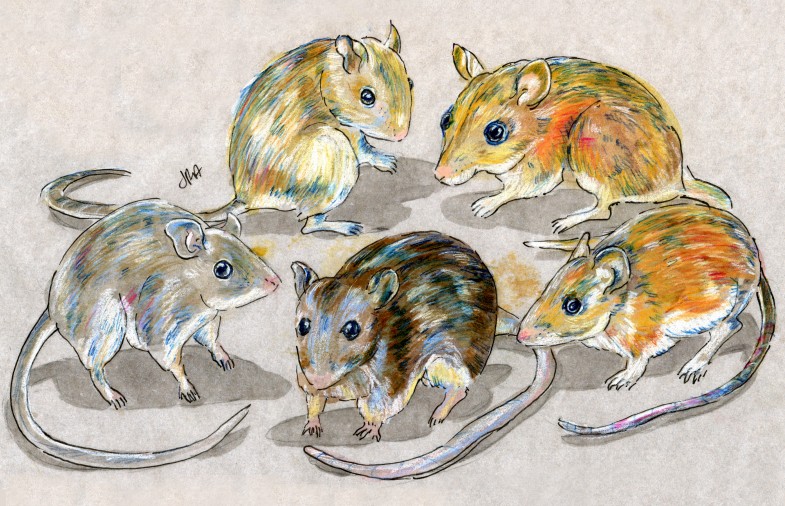
It’s always nice to knock off multiple rodents in one drawing. You have no idea how much the rodents gnaw at me. Forty percent of all mammals are rodents. Forty percent. As I’ve mentioned before, I did not consider that fact when I first thought, “I know! I’ll draw all the mammal species!” In order not to spend the last few years of this project drawing nothing but rodents, I should probably draw them three days a week. Would that bore you?

This particular drawing is one of those good exercises in perfectionism prevention for me. Sometimes I’m not at all happy with my work. But then I remember that there are 5,000 species, so I’m bound to dislike at least 500 of my drawings. Weird!

Shown here, clockwise from lower left, are:

Swamp Rat (Rattus lutreolus), who lives in Australia. This rat is notable, according to its species account in Mammalian Species, because “under experimental conditions, R. lutreolus was able to tolerate long periods of water deprivation. Intake of solid food and urine output declined during this period…The ecological significance of its extraordinary tolerance for water imbalance requires study.” Also, it has the shortest tail of all the rats in Australia. And other than the Tasmanian subspecies, it likes to live in wetlands.

Bush Rat (Rattus fuscipes), another Australian. Did you know there are Australian Alps? I didn’t, until I read that “although mainly a lowland species, R. fuscipes occurs in Australian Alps to 2,210 m.” in Mammalian Species. I could go on to tell you about what Mammalian Species describes as “a serendipitous discovery relating to dietary intake of fluoroacetate by R. fuscipes of Western Australia,” but I won’t. This particular species account is rather long, but in browsing through it, I see that “During major fires, R. fuscipes retreats into burrows; afterward it hides in deep accumulations of ash.”

Marsh Rice Rat (Oryzomys palustris), of the eastern United States, from southeastern Pennsylvania to the Florida Keys and as far west as Illinois. This rat is semi-aquatic, and like the swamp rat, it lives in wetlands. In several states, marsh rice rats are the main sustenance of barn owls, and they’re also preyed on by other owls, cottonmouths, water snakes, hawks, raccoons, foxes, mink, weasels, and skunks.

{ 6 comments }

click image to enlarge


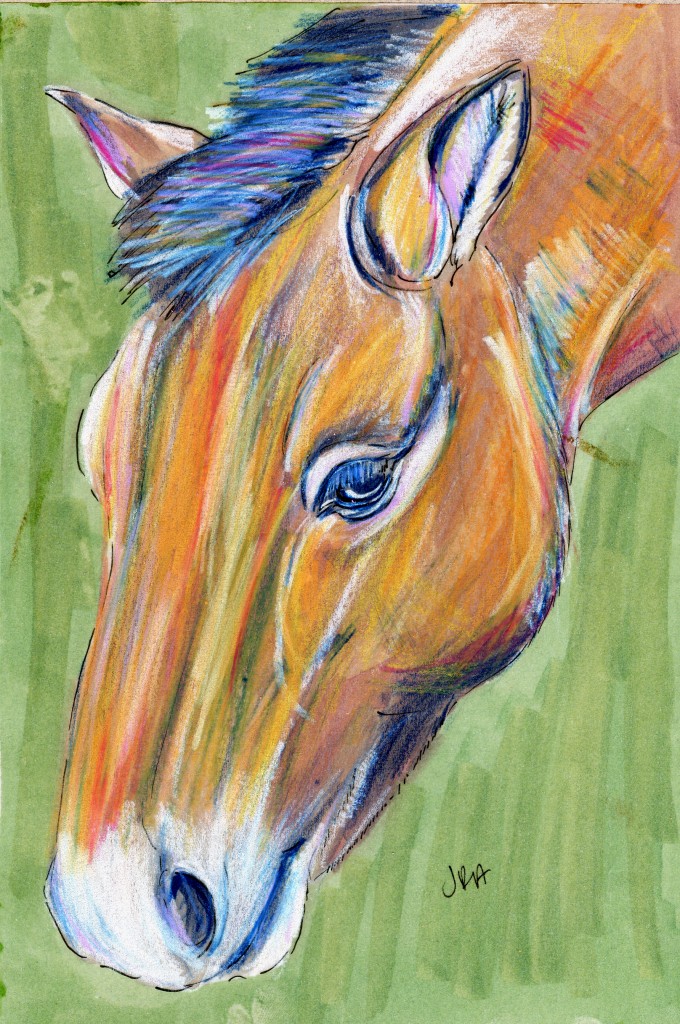
These tough little fellows from the Mongolian steppes are the only living example we have of a truly wild horse. (Other wild horses, such as the mustangs around these parts, are descended from domestic horses, and therefore not “truly” wild.) Unfortunately, Przewalski’s horse is extinct in the wild. In fact, we nearly lost the species altogether. In 1977, we were down to 300 of them. At that point, a group called the Foundation for the Preservation and Protection of the Przewalski Horse was created with the goal of organizing breeding programs between zoos and eventually reintroducing the Przewalski’s horse into the wild. Today, there are some 1,400 of the sturdy guys, and some of them are enjoying a semi-wild life in one of Mongolia’s national parks.

The reason I chose the Przewalski’s for today, other than the fact that I’ve had a fondness for the species since I was a horse-crazy little girl, is that tomorrow morning, I’ll be leaving on a trip to Switzerland and then to France, where I’ll be visiting some prehistoric cave paintings. Animals of various kinds were frequent subjects for the artists who created the mysterious and enduring paintings. Painted horses gallop through some of the caves, such as Lascaux and Chauvet, and although no one is sure whether they are the same species as Przewalski’s horse, they certainly look like they could be. See for yourself in these photographs of Chauvet from The Bradshaw Foundation. The Daily Mammal will return the week of September 15.

Consecutive days of mammals: 1
Record: 16

{ 1 comment }

click image to enlarge

0193

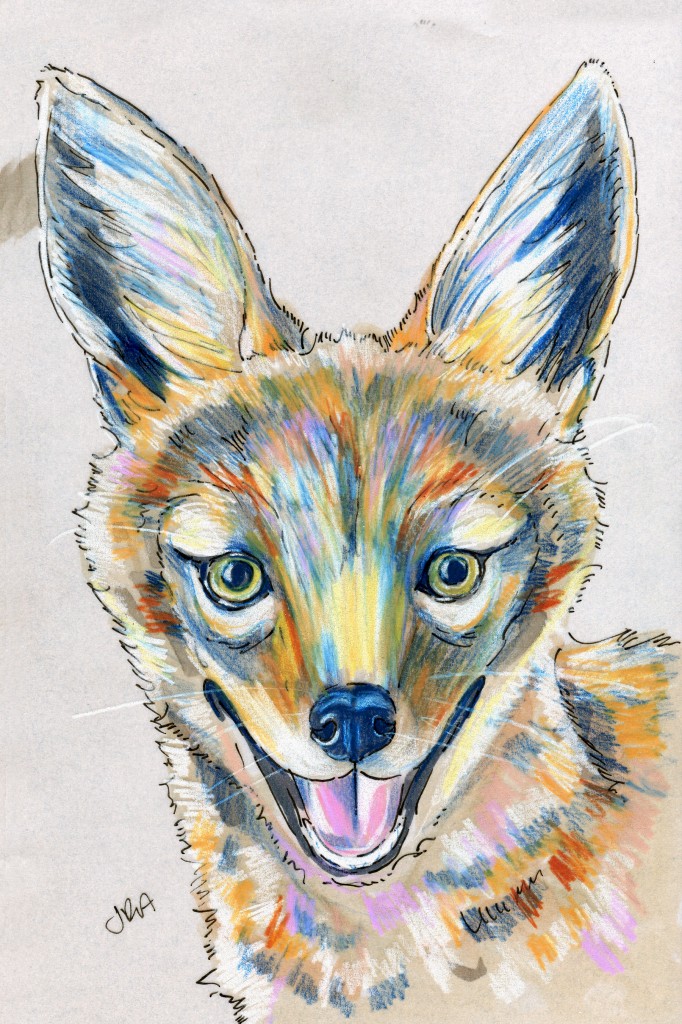
Golden jackals live not only in Iraq, but throughout northern Africa, Asia, and up into southern Europe. They mate for life, living in tight little family packs. They have one litter a year, and each time, a couple of their offspring stay on with their parents to help raise the next litter. These big brothers and sisters are called “helpers” and are vitally important to a jackal family’s survival, offering assistance in guarding, hunting, and regurgitating food for the little ones. Speaking of food, golden jackals like to eat eggs, birds, other small animals, baby gazelles, and fruit. They also enjoy taking lions’ leftovers, and they’ll bury their scavenged food if another animal happens upon the feast. The golden jackal is the last animal we’ll meet in this Mammals of Iraq series.

Incidentally, I want my husband Ted to start writing an advice column called “Help! My Jackal Looks Like a Cat!” He says there’s no market for it, but I think the demand’s there. What’s your opinion?

Consecutive days of mammals: 3
Record: 16

{ 3 comments }

click image to enlarge

0187

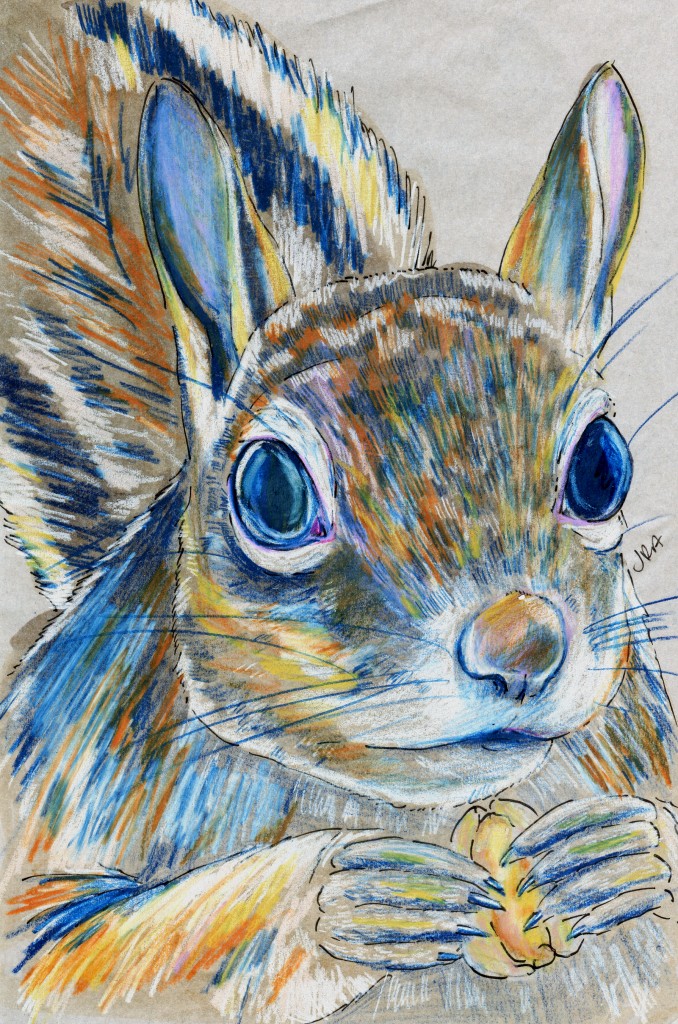
Sigh. It was so long ago that I started the Mammals of Iraq series. Then I decided to draw a jerboa…and it was really difficult…and I started putting it off…and forever passed. I decided to skip that particular jerboa species for now and just get on with it already. This squirrel, also known as the Persian squirrel, was the result. I wish his two eyes didn’t look like they belonged to two different squirrels, but oh well. One thing I really need to work on with the Daily Mammal is perfectionism. I don’t mean in the sense that I do everything perfectly, but almost the opposite: I do nothing perfectly, and I beat myself up about it, and I give up, and I spend way too much time. When your goal is to draw all 5,000 mammal species, though, perfect is the enemy of the good, as someone says. (Voltaire, actually. One interesting thing is that business writers have flipped that around to “the good is the enemy of the great,” which is the opposite meaning.)

Anyway, here are three interesting Caucasian-squirrel-related links.

“Almost 300 languages and their word for squirrel”: According to this site, there are two Kurdish words for the Persian squirrel, sihoreek and simolak.

Listen to a Persian squirrel’s chirps. When I first played this recording on my computer just now, my dog Minnie ran over to cock her head back and forth at the speakers. But she either figured it out or lost interest pretty quickly, and now she ignores it.

“My friend Fındık,” a delightful Flickr set of photographs of a pet Caucasian squirrel who lives in Turkey. Check out Fındık’s relaxed poses: you never see squirrels lounging about like that in the wild.

Edit: I shouldn’t have said you “never” see squirrels lounging about like that in the wild. I just found a new Flickr group called Squirrel Pancakes, full of photos of secure squirrels in parks and backyards.

Consecutive days of mammals: 1
Record: 16

{ 0 comments }

Happy birthday, Daily Mammal!

by JR Kinyak on June 4, 2008

in Operations

Today, June 3, is the Daily Mammal’s first birthday! A few weeks ago, I posted a couple of goals I wanted to meet by today. And guess what! I met them! You wouldn’t know, though, because I have six drawings of mammals in six orders that have never previously been seen on this site, but I haven’t scanned and posted them yet. I hope I can start posting them this week.

So to recap, in the first year of the Daily Mammal, while I did not draw 366 mammals as would have been ideal, I did draw half a year’s worth, coming in at about 185 species (plus a few repeated species due to mammalthon requests). And I managed to draw at least one species in every order of mammal, and since there are a few orders that contain only one species, they’re officially retired—cross ‘em off the list!

Speaking of lists, I’m going to start periodically making available an updated spreadsheet of all the mammal species that shows which I’ve already drawn. You can download the spreadsheet, which is in Excel format, by clicking here.

Thanks for supporting the Daily Mammal for the past year, and let’s have another great year starting now! Only thirteen years to go…

{ 7 comments }

click image to enlarge

0167

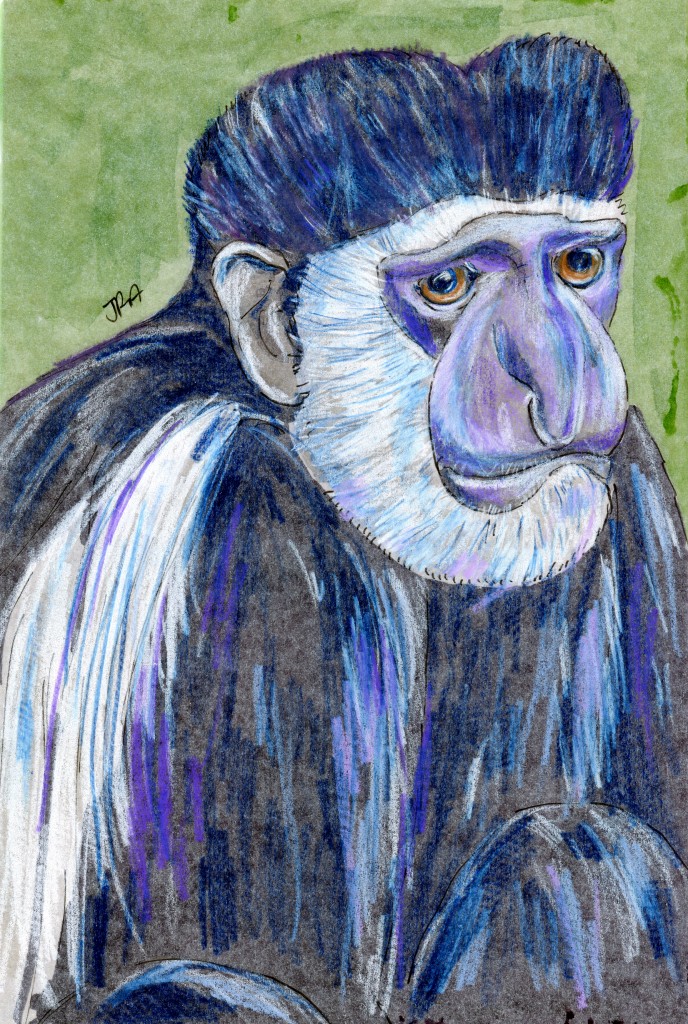
Last one! That was sure a looooong 24 hours, wasn’t it? My tía Laura let me pick for her, and I selected this black-and-white colobus monkey species, the guereza. It lives in Africa, and the white feathery fur you see off its shoulder here is called its mantle. It also has a very long tail, not shown here. This guy reminds me of a certain famous painting, and painter. Check it out:

Consecutive days of mammals: 12
Previous record: 11

{ 2 comments }