From the category archives:

Ungulates

Yak (Bos grunniens)

by JR Kinyak on June 4, 2010

in Ungulates

Yak (click image to enlarge)


0299

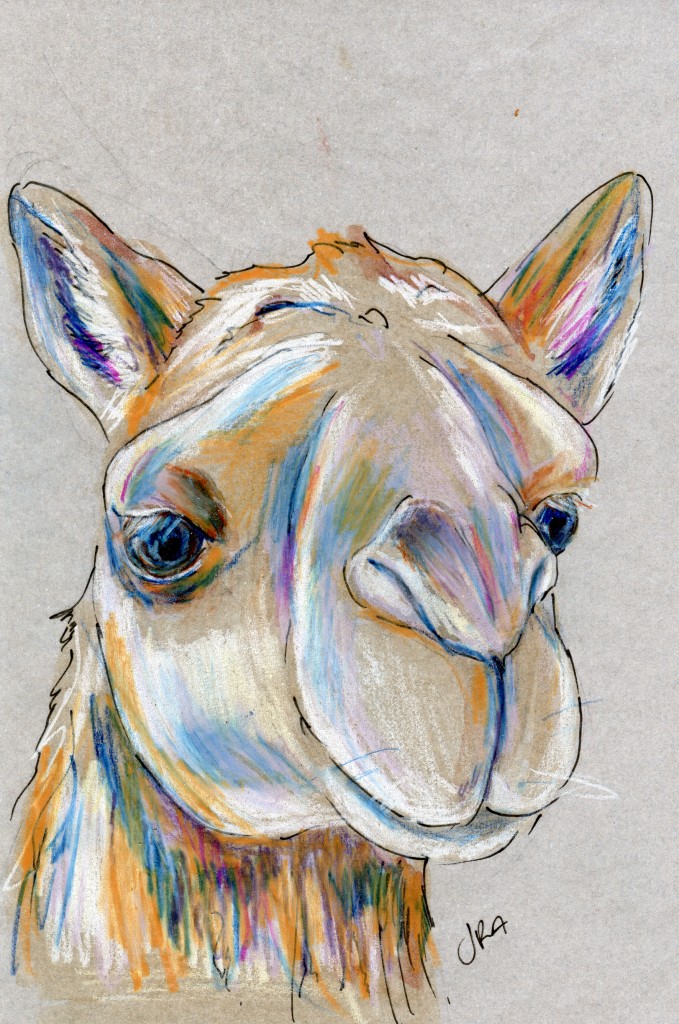
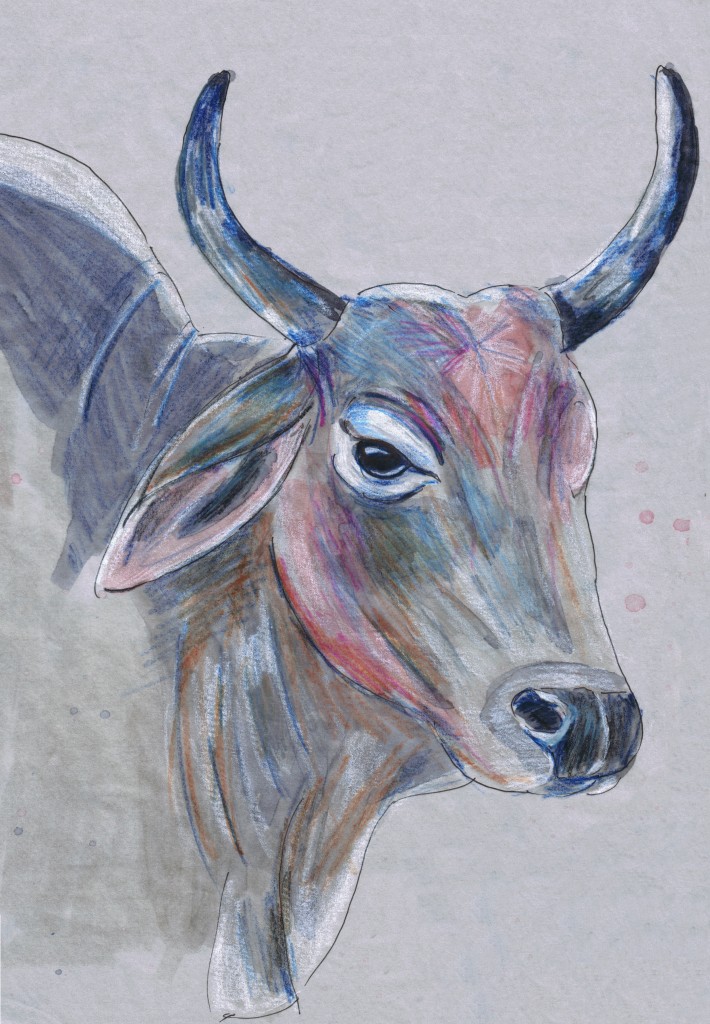
In honor of our adoption finalization and name change to Kinyak, Theo and I drew yaks! The powerful, shaggy animals are native to Tibet and produce delicious butter, which Tibetans use in their tea.

Yak by Theo, age 13

{ 2 comments }

Gemsbok (Oryx gazella)

by JR Kinyak on September 12, 2009

in Ungulates

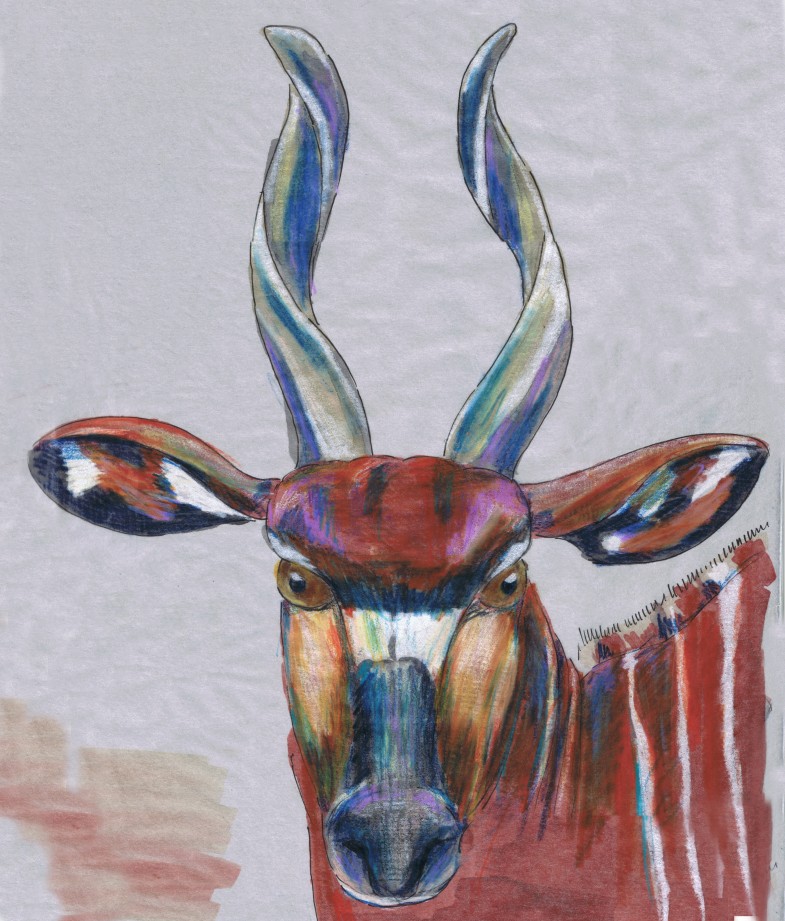
Gemsbok (click image to enlarge)

Gemsbok (click image to enlarge)


0285

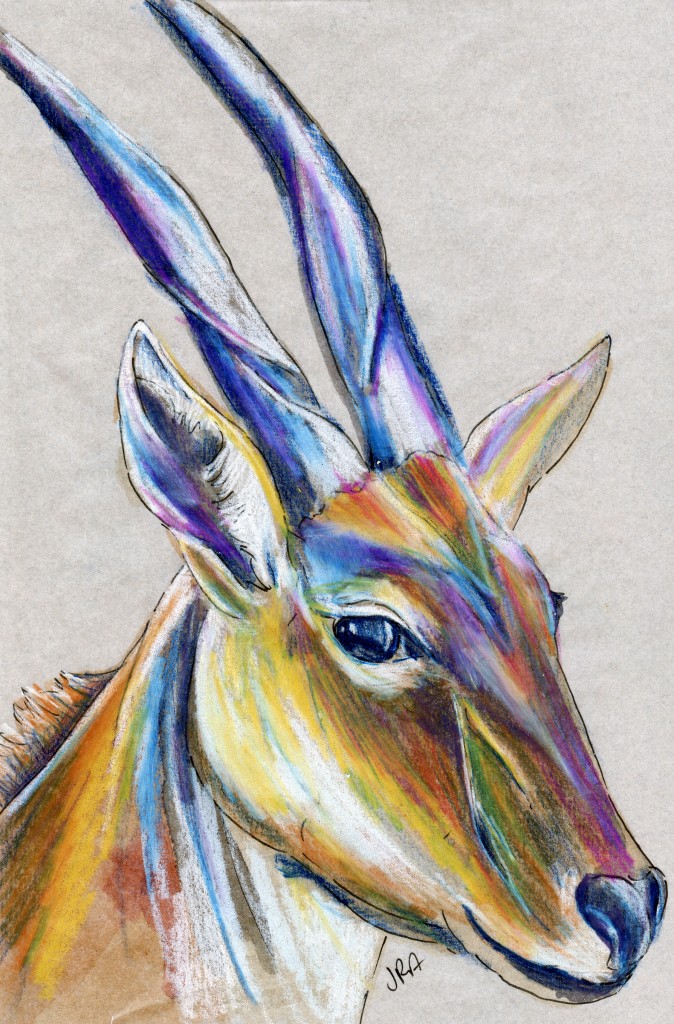
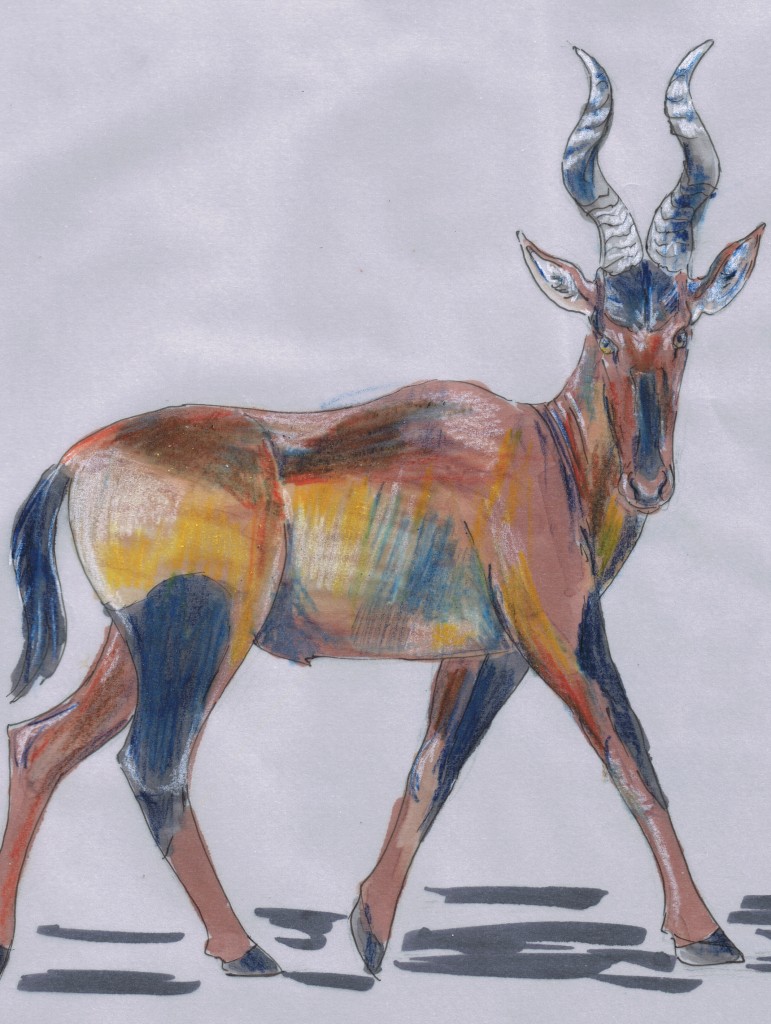
At long last, an update for the Daily Mammal. For those who hadn’t heard, about a month ago my husband and I adopted two kids, a 13-year-old and a 10-year-old. It’s going wonderfully—we love them so much—but becoming a mother to two half-grown humans all of the sudden has definitely changed my world, and it’s taking some time for me to get it all reorganized. I’ve actually finished 7 mammal drawings, but I haven’t done the research or writing on them. I’m going to start posting them now, trying, as always, for daily posting, and, also as always, probably falling short.

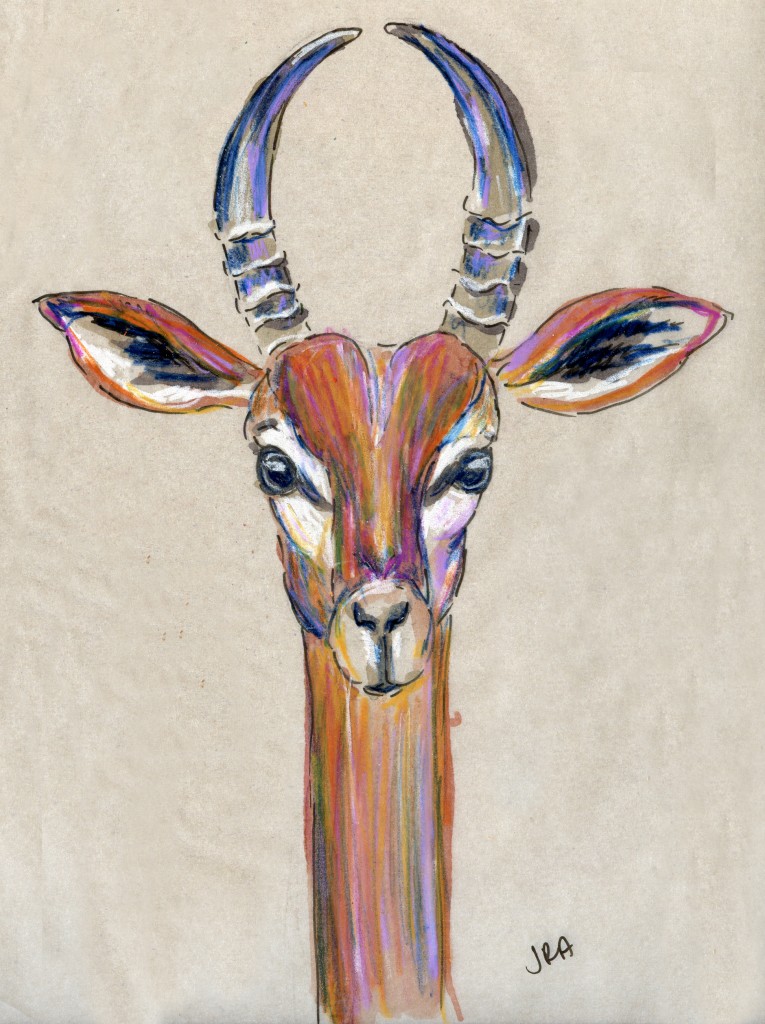
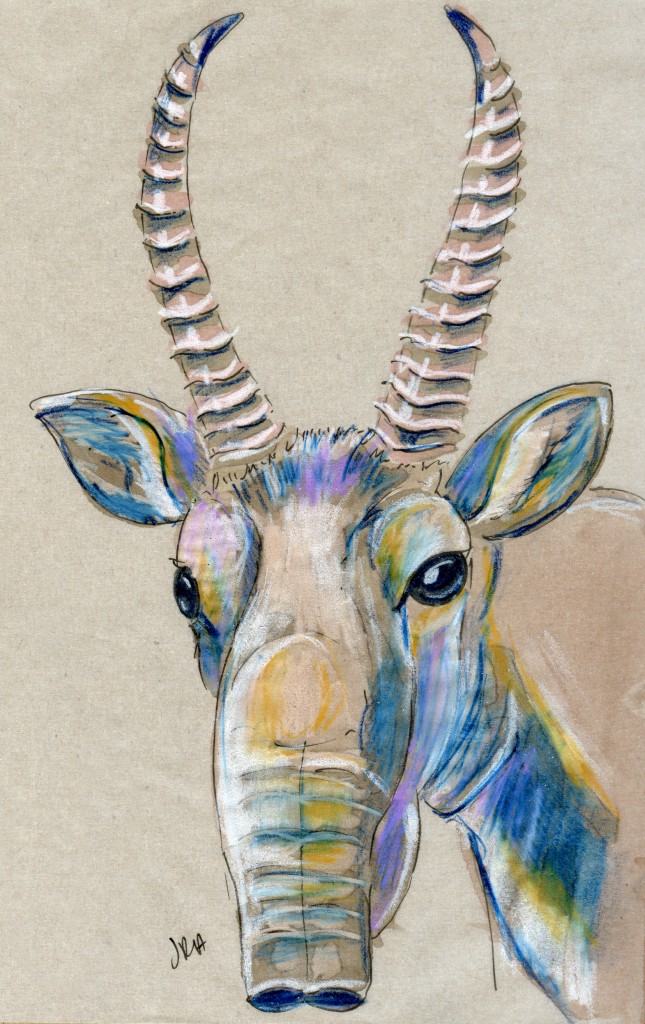
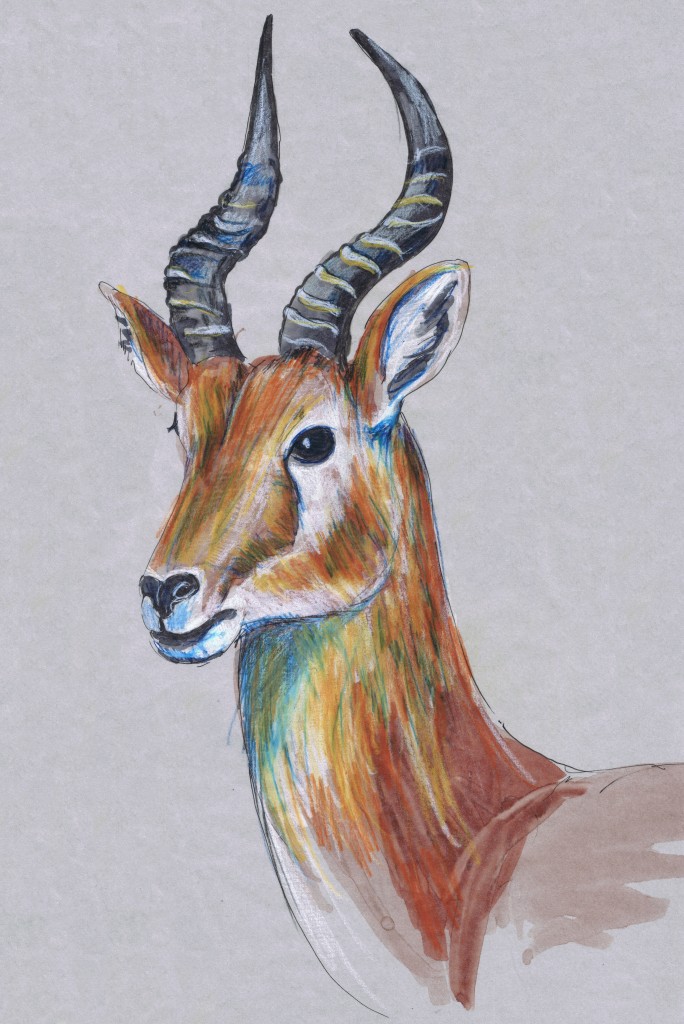
The gemsbok is a large antelope in the oryx genus. It lives in southern Africa and, I’m sure you’ll be glad to know, is not really in any danger of extinction. In fact, its numbers are increasing in some places. While there was a time when the gemsbok’s range was constricted by human encroachment and development, the animal’s value as a trophy for hunters means it’s not likely to die out on private land anytime soon. Plenty of gemsboks are thriving in protected areas, too.

Here’s a video of a mother gemsbok defending her calf from a pair of hungry cheetahs.

{ 3 comments }

Greater Mouse-Deer (Tragulus napu)

by JR Kinyak on July 13, 2009

in Ungulates

Greater mouse-deer (click image to enlarge)

Greater mouse-deer (click image to enlarge)


0273

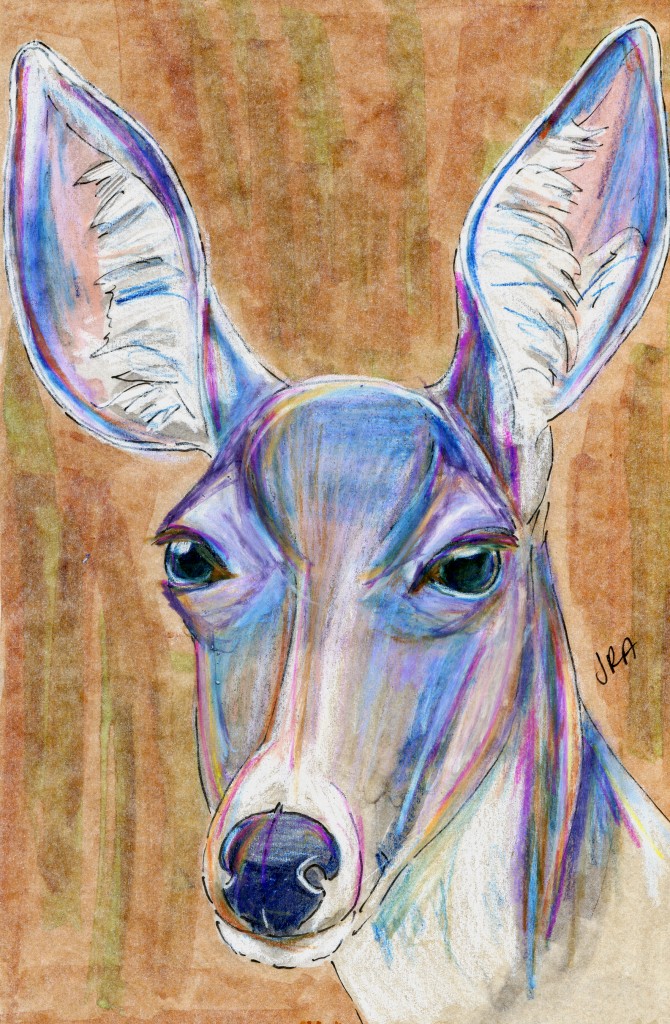
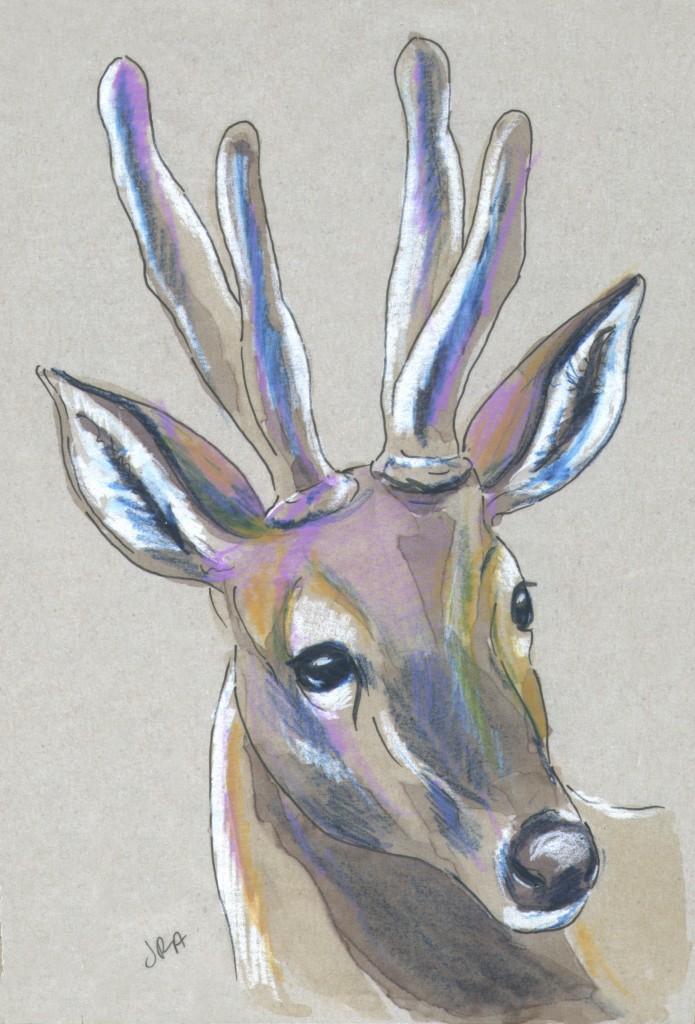
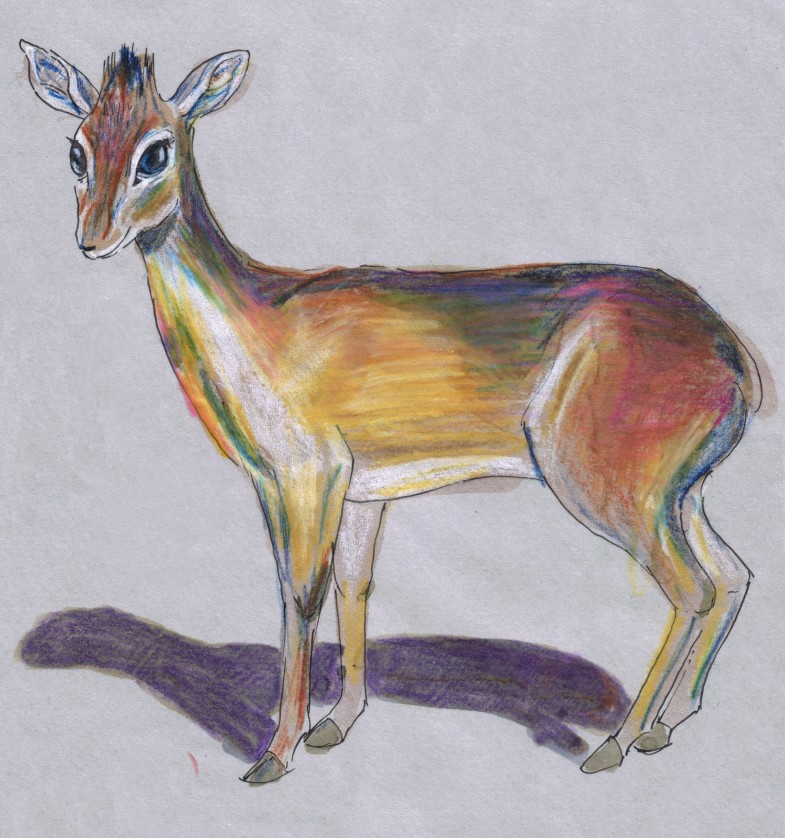
The greater mouse-deer is a teeny-tiny little thing, more or less rabbit-sized with legs the size of pencils. (I drew this one’s front legs too big.) The deer, also called chevrotains, live in Brunei, Indonesia, Malaysia, Myanmar, and Thailand. They weigh about 11 pounds, and unusually for deer, they don’t have horns or antlers. They do have big ol’ upper canine teeth, though, that become tusk-like in males.

Here’s an alarming (to me) fact: female greater mouse-deer spend only about two hours between giving birth and becoming pregnant again! They’re pregnant their whole lives. This leads me to ask a question of my biologist readers: are the pregnancies of other mammals as uncomfortable as ours? I’m thinking of morning sickness, varicose veins, hemorrhoids, backache, swollen ankles, etc. Is this unique to humans, and if so, why?

A remarkable thing about greater mouse-deer (which are sometimes called “living fossils” because of how ancient they are as a species) is that they are amazingly good swimmers. Scientists have observed them fleeing predators—say, humans or mongooses—by jumping into the water and staying under for up to five minutes at a time. They’ll swim around for an hour to keep away from a threat. Another Asian mouse-deer species does the same thing, as does an African relative of the species. These observations have lent credence to the idea that whales evolved from deer-like mammals.

Supposedly, greater mouse-deer make good pets. I think they would look particularly cute paired up with an Italian greyhound.

BBC: “Aquatic deer and ancient whales”

{ 3 comments }

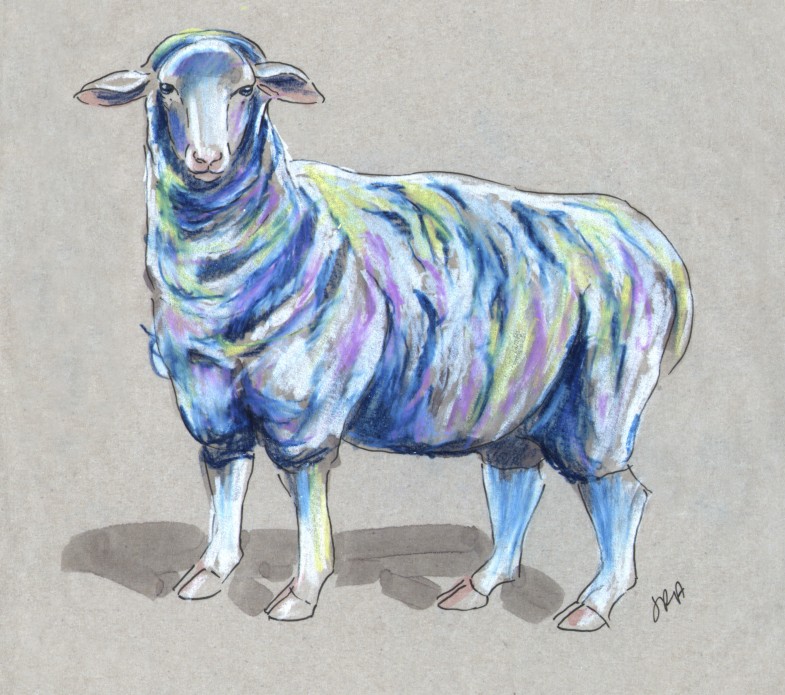
Thinhorn sheep (click image to enlarge)

Thinhorn sheep (click image to enlarge)


0267

The thinhorn sheep is closely related to the bighorn sheep, only its horns are more thin than big. (Another relative of the two is the snow sheep, which lives in Siberia.) There’s a bit of nomenclatural confusion with these guys. Never mind that some scientists think that all members of Ovis should actually be in Capra (the goats). The specific issue with the thinhorns is that they’re divided into two subspecies, Dall (or Dall’s) sheep and Stone (or Stone’s) sheep. Only some people don’t think they should be considered separate species. And a lot of people call them all Dall sheep instead of thinhorns.

Whatever you call them, these sheep live in dry, mountainous regions, and only in Alaska and northwestern Canada. Thinhorn rams band together in cranky, uncomfortable groups, jostling each other for position. When it comes time to start meeting ewes, the rams really start in, fighting with their horns to establish a hierarchy. The winners get to mate more; the losers are run out of town on a rail. (Ewes fight amongst themselves, too, with their shorter horns. They live in women-and-children groups when they’re not mating.)

Thinhorn rams have six separate ranges that they live in during different seasons. Ewes have four. These sheep are preyed upon by wolves, coyotes, golden eagles, and bears, as well as human hunters.

{ 2 comments }

Muskox (click image to enlarge)

Muskox (click image to enlarge)


0265

To honor (if that’s the word) Sarah Palin’s stepping down as governor as Alaska, let’s meet some of the mammals of the 49th state. (Because yesterday’s beluga whale lives in Alaska, I took the liberty of retroactively including it in this theme week, which I only just thought of.)

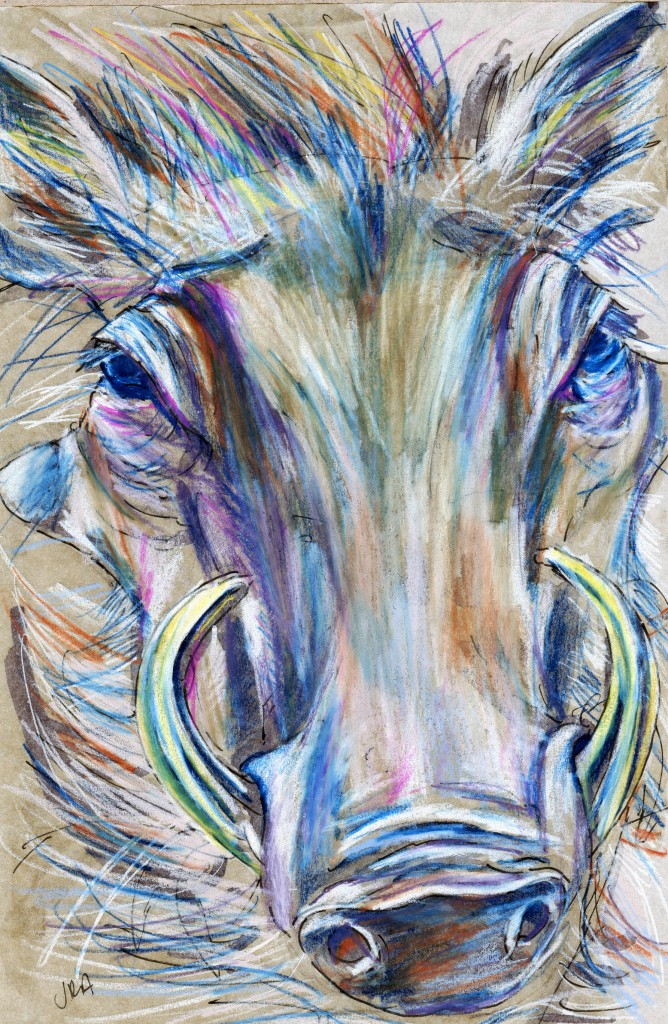
The muskox’s scientific name means “musky sheep-cow.” DNA analysis suggests that it’s more closely related to the goat family than to sheep or cows, and it doesn’t have musk, per se, but it does have rather pungent urine that it uses in various intimidating ways.

Muskoxen are native to Alaska, Greenland, and Canada, but they became extinct in Alaska in the 1800s. In the 1930s, 34 muskoxen from Greenland were reintroduced to the then-territory, and now there are some 2,000 living in the state. They’ve been introduced to Svalbard, Russia, and parts of Scandinavia, too.

The muskox has two coats, an outer one called guard hairs and an incredibly warm, downy undercoat called qiviut. And yes, that is an acceptable Scrabble word! Pronounced kiv-ee-yute, qiviut is several times warmer than sheep’s wool and softer than cashmere. As you can imagine, that means it’s very luxurious and expensive. (If anyone wants to send me a qiviut scarf, I won’t complain!)

Qiviut is one of the muskox’s very effective Arctic adaptations; others include short legs and a lot of body fat. Those short legs and fatty bodies mean that muskoxen can’t run very fast for very long, so when they’re threatened, a herd of muskoxen will line up facing their predator, showing their fearsome horns and keeping their calves behind them. If the predators come from multiple directions, the muskoxen form a circle with the babies in the middle.

{ 1 comment }

Nilgai (click image to enlarge)

Nilgai (click image to enlarge)


0254

The nilgai is an antelope that lives in India and parts of Nepal and Pakistan. For an antelope, it has a weird scientific name: Boselaphus tragocamelus means ox-deer-goat-camel. Perhaps they just really didn’t know and wanted to hedge their bets. The word nilgai comes from a Hindi word meaning “blue bull.” (The male nilgai’s bluish gray hide reminds me of grulla, my favorite color in Ben K. Green’s The Color of Horses. When I was a kid, my dad and I enjoyed looking at that book at B. Dalton or Waldenbooks while my mom and sister were shopping elsewhere in the mall.)

Some 35,000 feral nilgai roam ranchland in Texas. In the 1930s, the King Ranch decided to experiment with breeding the hardy antelope in tough Texas as an alternative source of meat. That didn’t really take off. Now, the Texas nilgai are handy targets for trophy hunters.

{ 2 comments }

Click image to enlarge.

Click image to enlarge.

0251

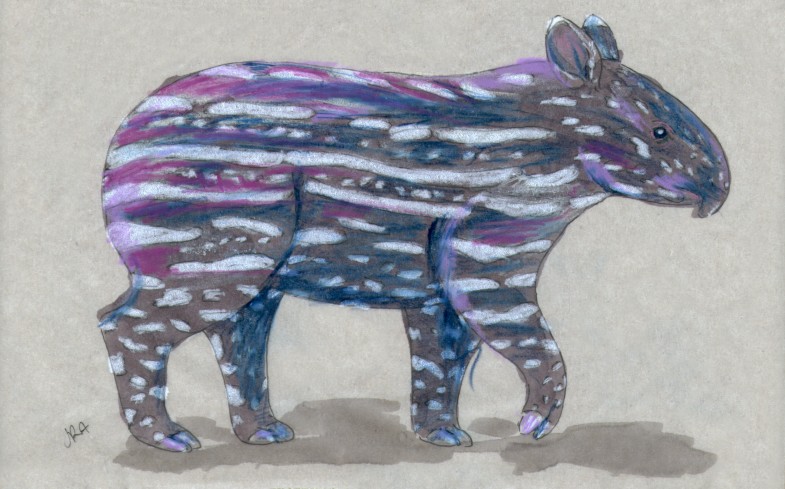
Our current system of naming animals and plants is based on the system that Carl Linnaeus published in 1758. While others, including Aristotle, had previously attempted to organize the world’s living things into various arrangements, Linnaeus gave us an important innovation: the binomial system. Each animal (or plant or whatever) is known by a unique pair of names; no other creature has the same name. We’re the only Homo sapiens; the cotton-top tamarin is the only Saguinus oedipus. (Of course, there can be other members of the genus Homo and the genus Saguinus, but they have to have distinctive second, or species, names.)

The organization that keeps track of and codifies the system of naming animals is the International Commission on Zoological Nomenclature. The rules are quite extensive. My favorite guidelines are those that require namers to make every effort to ensure that their names are euphonious (pleasing to the ear) and that they don’t give offense.

Linnaeus was Swedish, but he wrote in Latin, as did pretty much everyone else writing about scientific matters at the time. The scientific names of animals are often referred to, casually, as their Latin names, and the rules governing naming do require the Latinization of some words. But there’s also a lot of classical Greek in the names, and many names derive from local words for the animals.

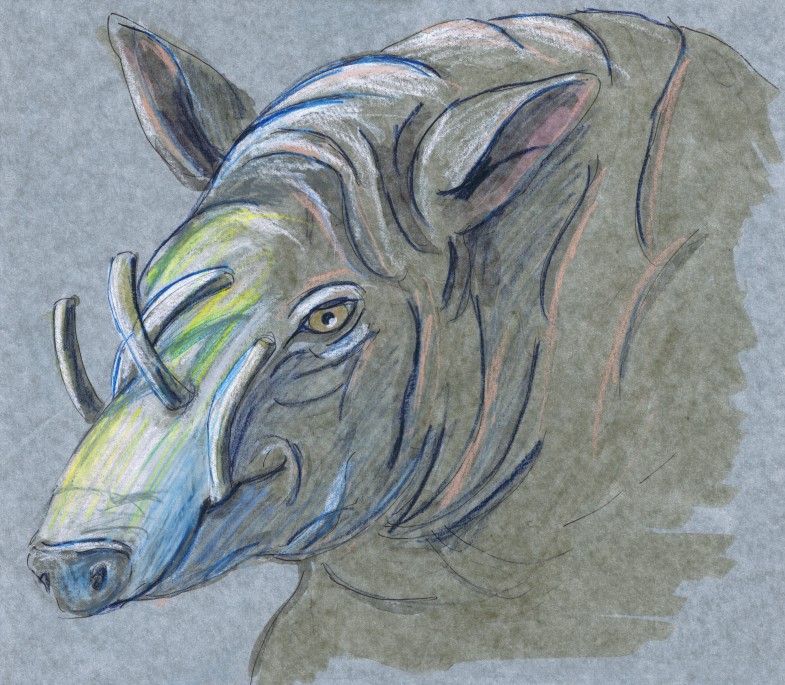
Many animals have redundant names (tautonyms, to use the official terminology), like Gorilla gorilla, Dama dama, and Uncia uncia. Usually, this happens when the name of the animal’s genus (the first name in the binomial system) changes, but the species name can’t. I like the black rhinoceros’s name because it’s redundant in two languages: diceros means two horns in Greek and bicornis means two horns in Latin.

The black rhinoceros’s common name is odd, too. The rhino is not black; it’s gray. Apparently, it was named the black rhinoceros to distinguish it from the white rhinoceros, which is also gray, not white. That animal’s common name comes from the Dutch word weit, which means wide, like the rhino’s muzzle. (My source for all this is A.F. Gotch’s book Mammals: Their Latin Names Explained.)

The black rhino is classified as critically endangered, the last step before extinction. It’s so bad, in fact, that the IUCN, which assesses the status of the world’s species, obscures the rhino’s range on its map “for security reasons.” While the black rhino was pretty numerous at the start of the 20th century, poaching caused a 96 percent decrease in the species’ population between 1970 and 1992. Black rhino horns are carved to create decorative handles for weapons and used in traditional medicine. Traditional medicine is going to be the death of a lot of mammal species.

{ 2 comments }