From the category archives:

Ungulates

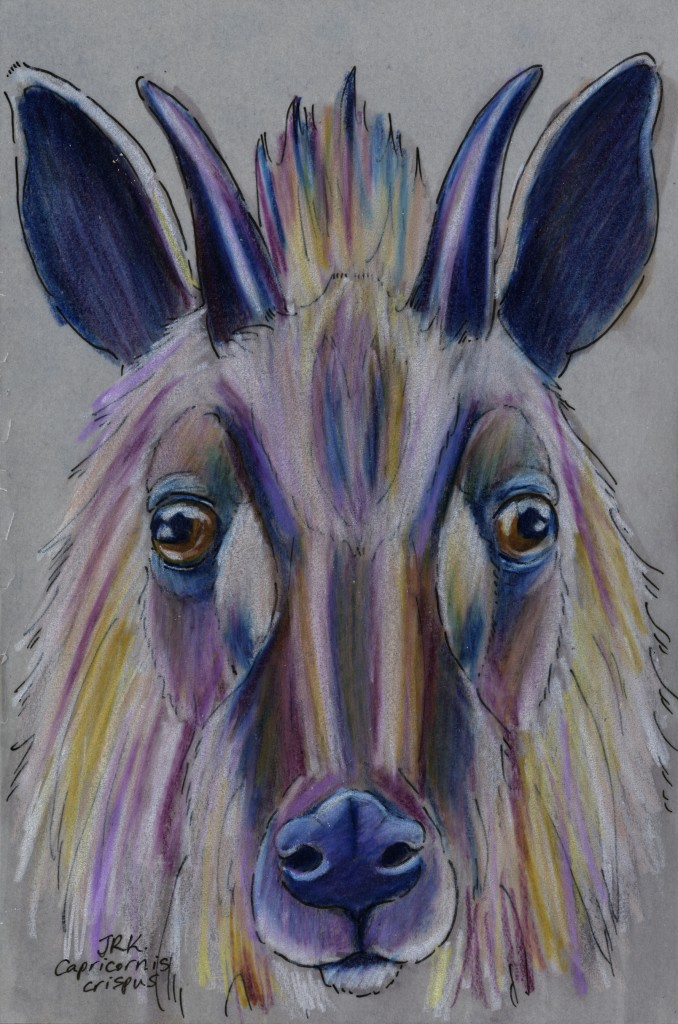
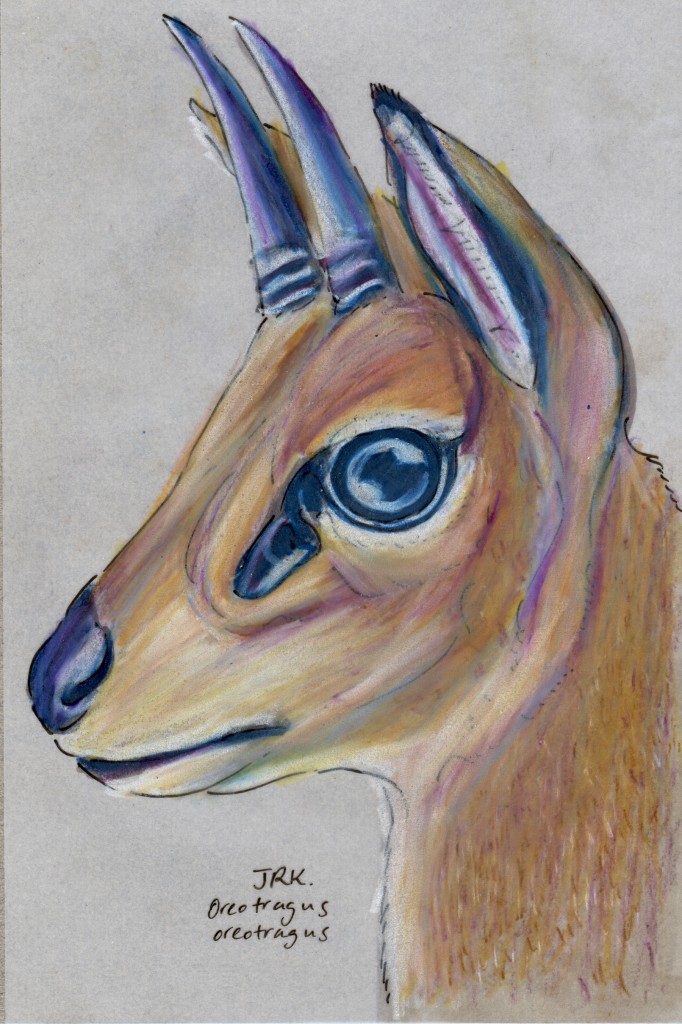
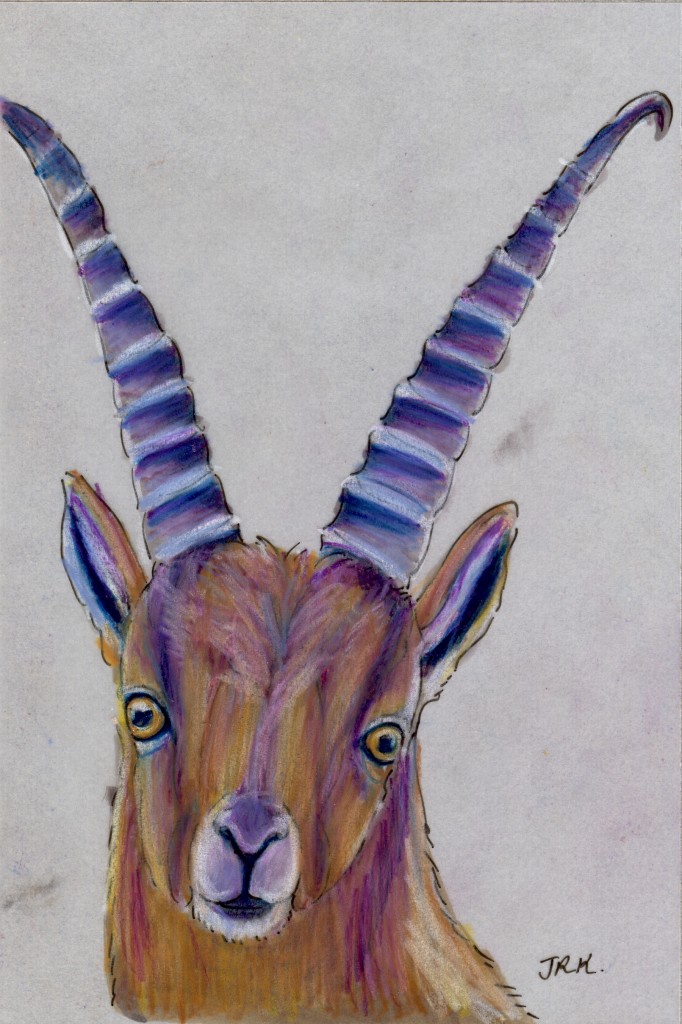
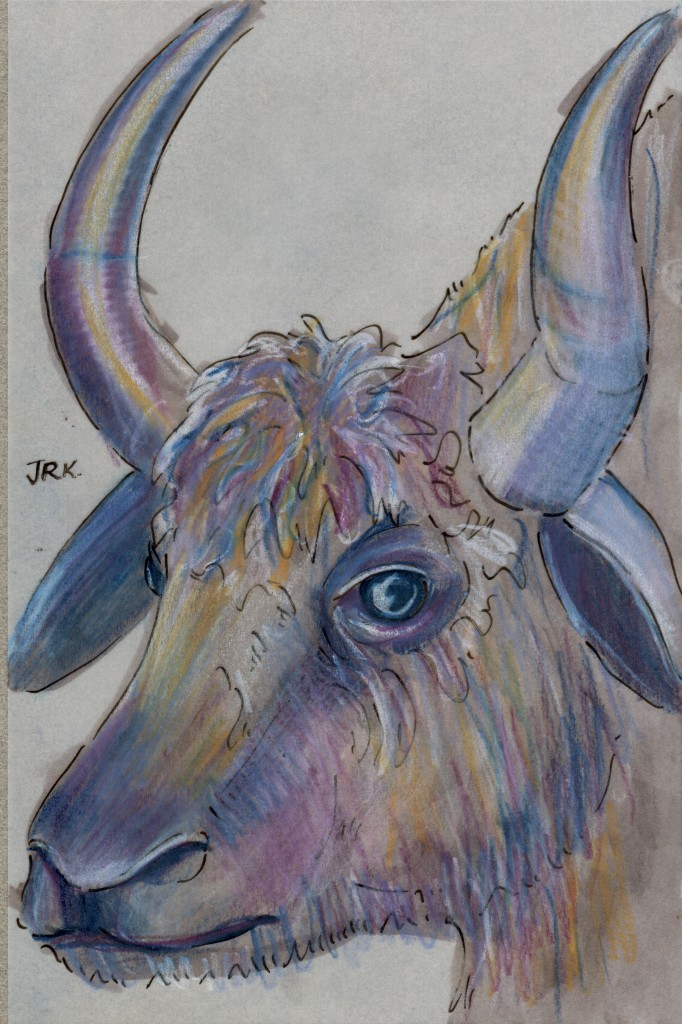
Long-tailed goral (click image to enlarge)


Long-tailed goral by Coco, age 12


0393

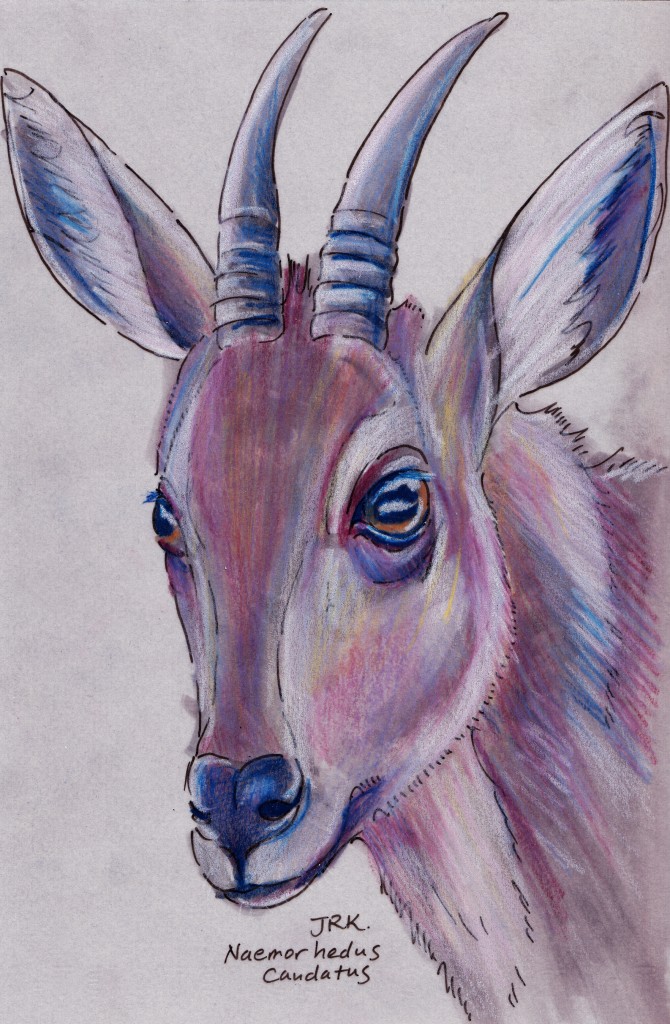
Here is a long-tailed goral, another mammal of Primorye, the region in the far east of Russia that we’re visiting this week. If you’d like a brief introduction to the place and why we’re there, check out Monday’s musk deer. The long-tailed goral is a goat that lives in China, Russia, and north and south Korea. It’s rare for a goat to have a long tail, so this goral has something to boast about. There are about 1,300 long-tailed gorals in all the world. Isn’t that remarkable? There are 6 billion of us—just the one species, Homo sapiens—and only 1,300 of this other species. They’re currently classified as vulnerable by the International Union for Conservation of Nature, and they are a natural monument in South Korea.

According to Animal Diversity Web, long-tailed gorals (which are also called Chinese gorals) “communicate with one another in times of emergency with wheezing alarm sounds…During mating season, males attract females with a “zer… zer” or “ze-ze-ze” call. When females approach and are ready to encourage a male, they make a whistling noise.” That is also what I do when I’m ready to encourage a male, coincidentally.

{ 5 comments }

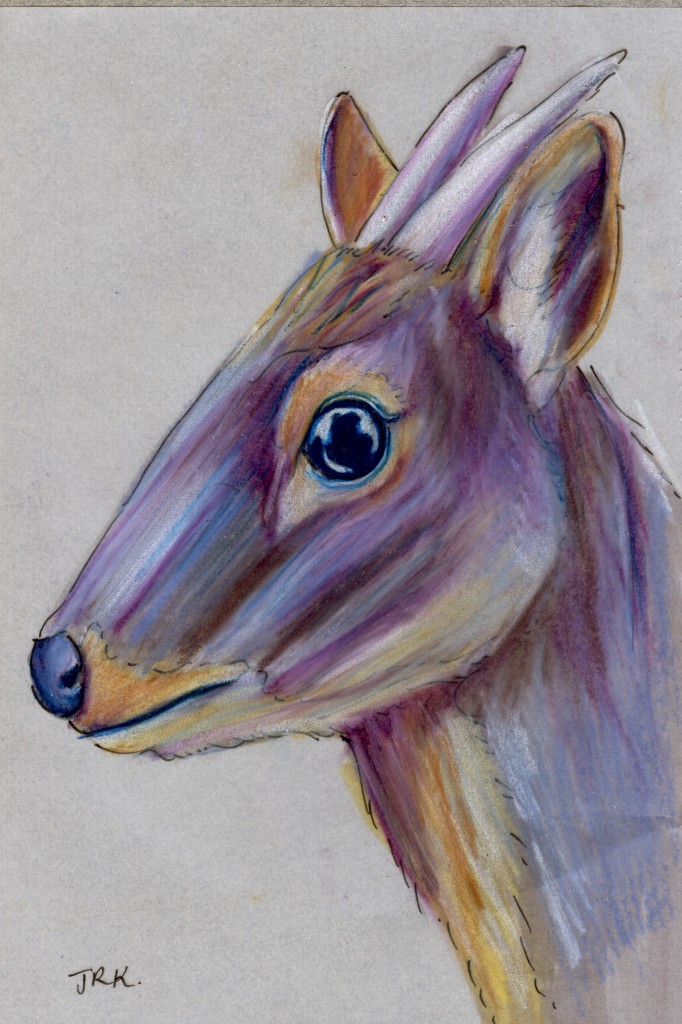
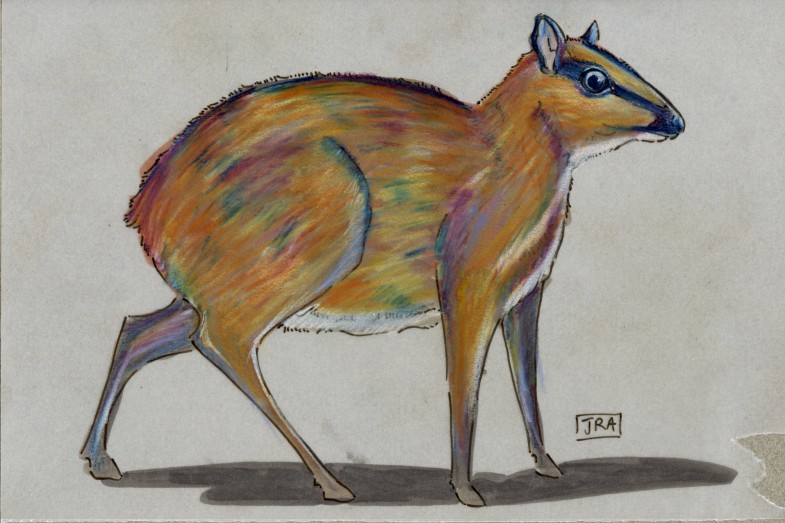
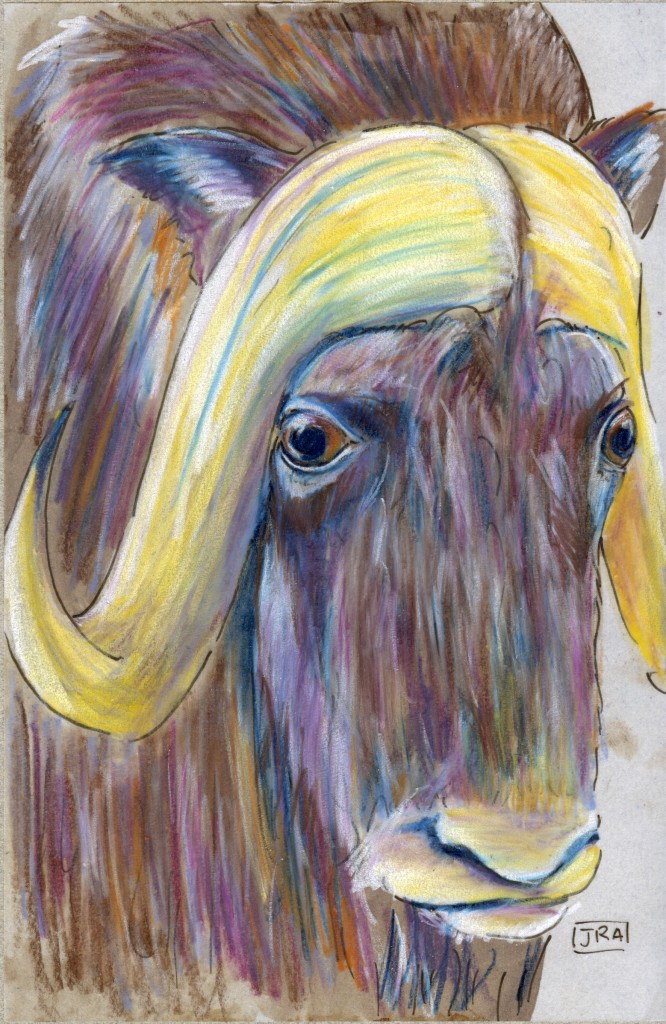
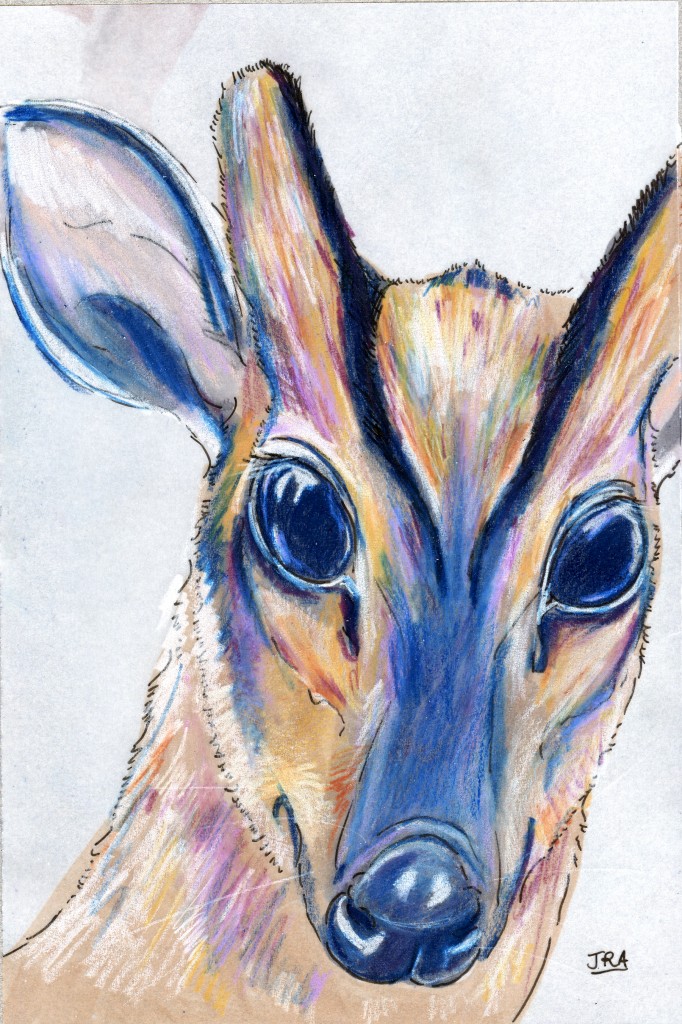
Siberian musk deer (click image to enlarge)


0388

I’m reading a book called The Tiger: A True Story of Vengeance and Survival, by John Vaillant. It’s about Siberian tigers and tiger trackers in the far east of Russia, a region called Primorsky Krai, the Maritime Province, or Primorye. It’s a fascinating place, closer geographically to Beijing and even to Australia than to Moscow, and amazingly biologically diverse. Vaillant says that “Primorye is also the meeting place of four distinct bioregions,” the taiga, the steppes, the subtropics, and the far-northern forest:

“Here, timber wolves and reindeer share terrain with spoonbills and poisonous snakes, and twenty-five-pound Eurasian vultures will compete for carrion with saber-beaked jungle crows. Birch, spruce, oak, and fir can grow in the same valley as wild kiwis, giant lotus, and sixty-foot lilacs, while pine trees bearing edible nuts may be hung with wild grapes and magnolia vines. These, in turn, feed and shelter herds of wild boar and families of musk deer whose four-inch fangs give them the appearance of evolutionary outtakes. Nowhere else can a wolverine, brown bear, or moose drink from the same river as a leopard, in a watershed that also hosts cork trees, bamboo, and solitary yews that predate the Orthodox Church. In the midst of this, Himalayan black bears build haphazard platforms in wild cherry trees that seem to fragile for the task, opium poppies nod in the sun, and ginseng keeps its secret in dappled shade.”

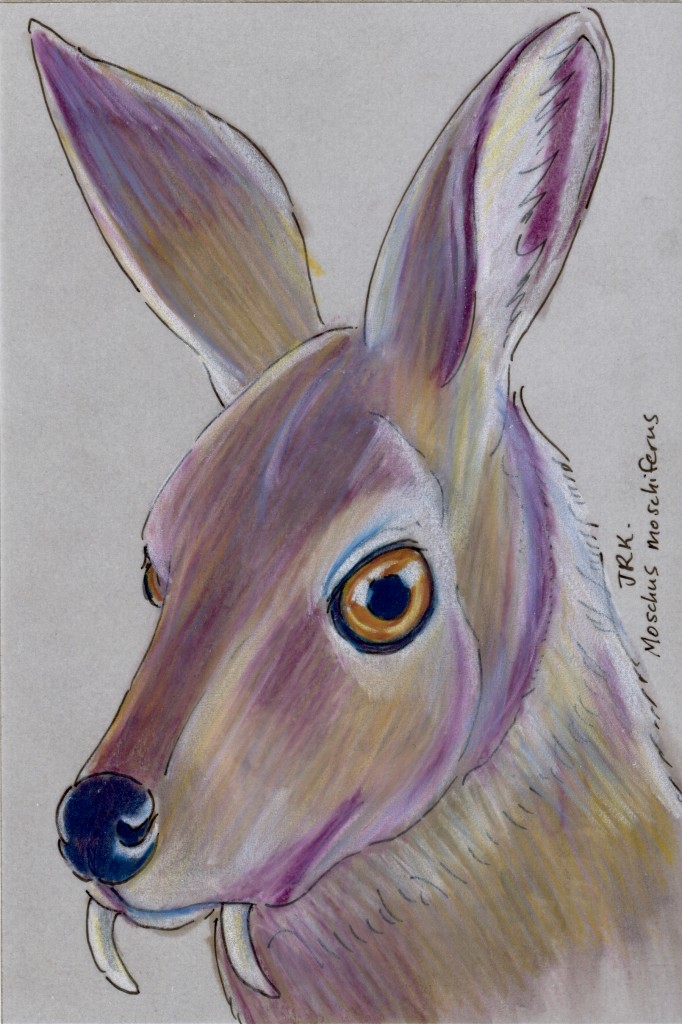
Beautiful, isn’t it? And inspiring to an amateur mammalogist like me. This week, we’ll look at some of the mammals of Primorye, like those mentioned above, beginning with today’s fellow, who isn’t Bunnicula, but rather the Siberian musk deer.

Musk deer, as their name suggests, are the traditional source of the musk that we use in perfume. Musk comes from a gland, or musk-pod, in the male musk deer, and generally, someone who wants that musk-pod will kill the deer for it. The musk deer has been so heavily hunted that it is now internationally protected, but still, poachers poach, and our friend’s numbers are declining.

Here is a link to a video from Arkive of the musk deer in action. It has powerful hind legs and weaker front ones, like a rabbit, and it moves through a series of bounds. I also like the sound of the cold wind in this video.
ARKive video - Siberian musk deer - overview

{ 5 comments }

Today begins our week-long Mammalthon to benefit Japan. As I’m sure you know, Japan was hit by a major earthquake and tsunami earlier this month. Tens of thousands of people have died, and hundreds of thousands have lost their homes. The Daily Mammal would like to do something to help in some small way.

Both of today’s drawings have sold, but all week, Coco and I will be posting drawings of Japanese mammals. You can buy the original drawings and 100 percent of the purchase price will go to benefit victims of the Japanese earthquakes: half to the American Red Cross and half to Animal Refuge Kansai, a Japanese organization that’s rescuing pets who lost their homes in the earthquakes and tsunamis.

You can buy just a drawing—mine are $50 and Coco’s are $25—or get it matted for $10 more. We’ll cover the shipping, and we’ll send them all out at the end of the week. Please note that if you want a matted drawing, you’ll have to wait an extra week or so because while I’ve ordered mats, I don’t have them yet.

Click the “Donate” button at the bottom of this post if you’d just like to donate to our fund without buying a drawing.

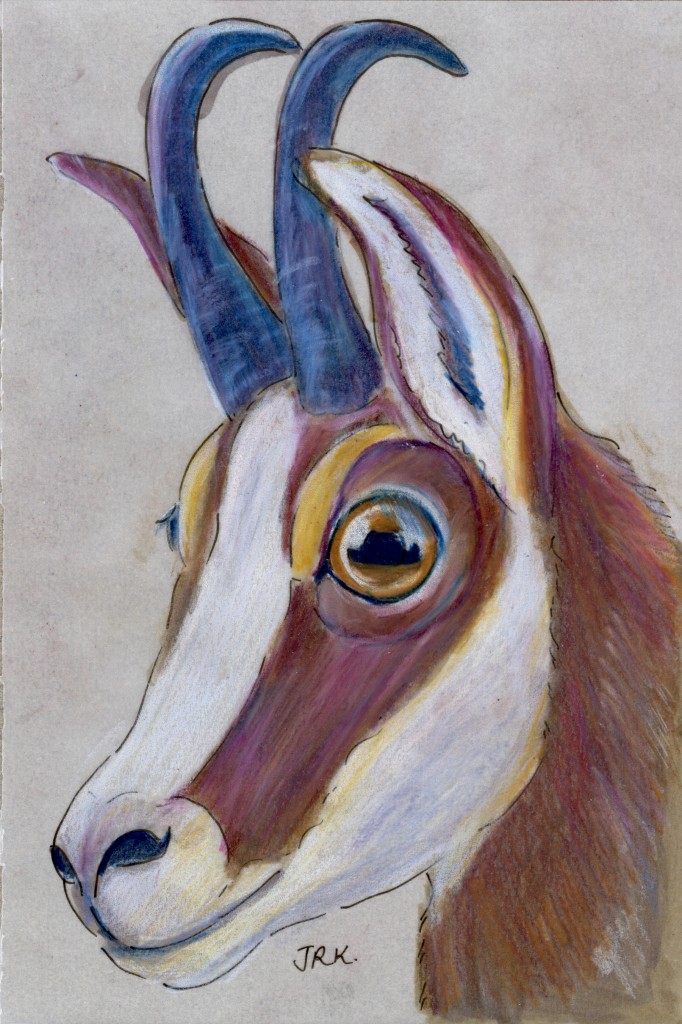
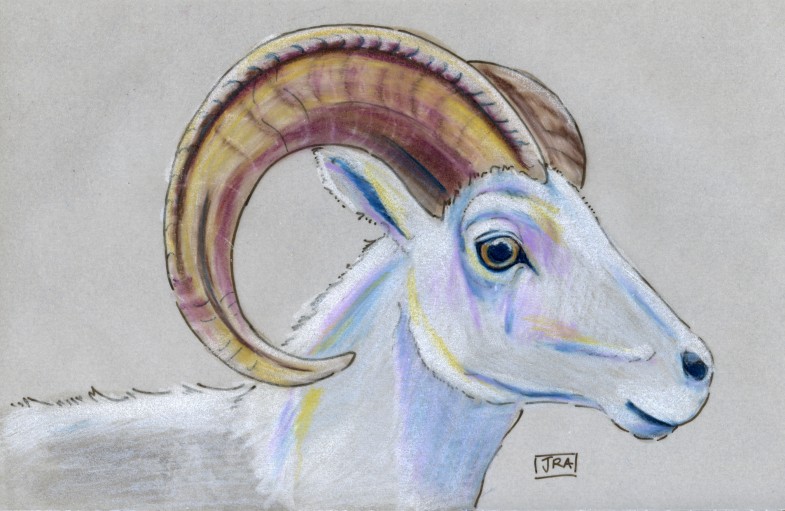
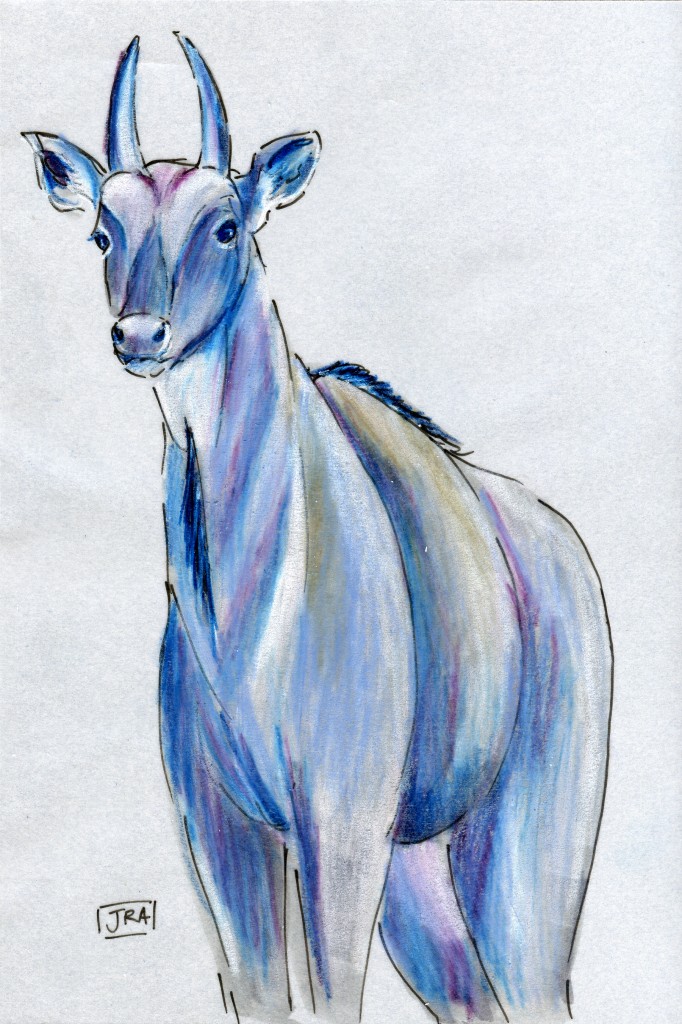
Japanese serow (click image to enlarge)

0369

Today’s mammal is the Japanese serow, a goat-antelope that is endemic to the mountains of Japan. It’s particularly widespread on the islands of Honshu and Shikoku. The IUCN says it’s a species of least concern. As I’ve been researching and drawing these wild mammals, I’ve been wondering about how they’ve been affected by the earthquakes. I don’t think anyone’s had the time to find out yet. Here’s Coco’s drawing of the serow:

Japanese serow by Coco, age 12 (click image to enlarge)

Japan designates certain places, minerals, plants, and animals as natural monuments deserving of recognition under the country’s laws that protect cultural properties. There are about 1,000 so designated natural monuments, and 75 of them are further classified as special natural monuments. The Japanese serow was named a special natural monument in the 1950s. At least one of the other species we’ll be meeting this week also has this prestigious designation.

{ 2 comments }

African Buffalo (Syncerus caffer)

by JR Kinyak on March 26, 2011

in Ungulates

There certainly is a fierce beast to meet today, but don’t forget that tomorrow is the beginning of the Japan Mammalthon, and Coco and I will be posting original drawings that you can buy, with all proceeds benefiting victims of the tsunamis and earthquakes. Read this post for all the details.

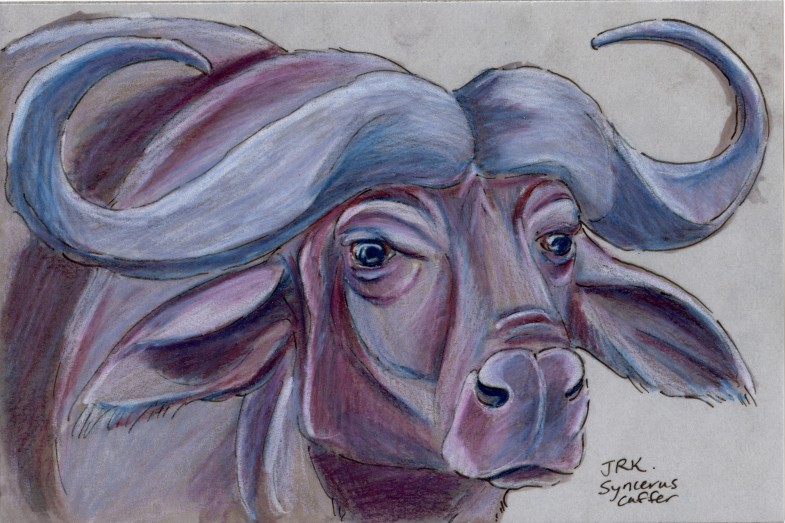
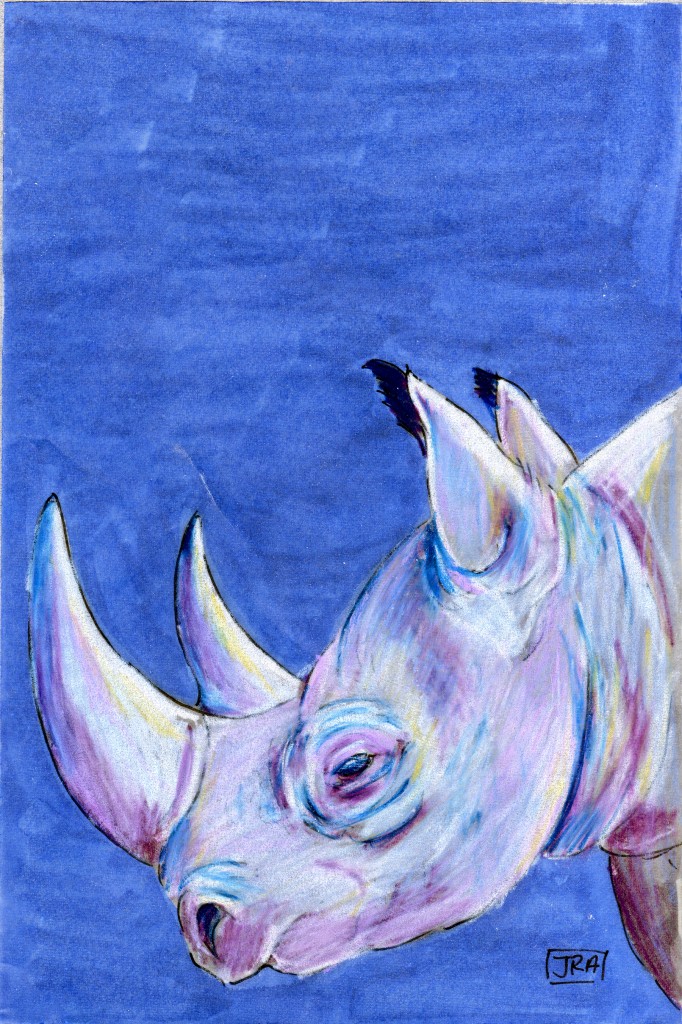
African buffalo (click image to enlarge)

0368

“…[I]t has an unpleasant habit of remaining quietly in its lair until the unsuspecting traveler passes closely to its place of concealment, and then leaping suddenly upon him like some terrible monster of the waters, dripping with mud, and filled with rage. When it has succeeded in its attack, it first tosses the unhappy victim in the air, then kneels upon his body, in order to crush the life out of him, then butts at the dead corpse until it has given vent to its insane fury, and ends by licking the mangled limbs until it strips off the flesh with its rough tongue.”

John George Wood,
The Illustrated Natural History, 1865

The African or Cape buffalo provides a fine case study for anyone interested in the human relationship to other mammals. This buffalo, which lives in southern Africa, is one of the “Big Five” specially prized trophy animals for hunters on safari in Africa. The five animals—the others are the leopard, the lion, the rhinoceros, and the elephant—are considered the most difficult and dangerous to hunt, and no more so, I’m sure, than this behorned fellow.

I searched Google Books for 19th-century accounts by naturalists and self-satisfied hunters and found descriptions including “grim and vicious,” “ever sulky and completely inaccessible to any mollifying influences,” “fierce, treacherous, and savage,” “terrible in outward aspect,” “savage ferocity,” and “fierce and malignant aspect.”

Seasoned hunters of the 1800s advise that “unless you are tired of life,” you should not attempt shooting this beast from the front, for it “fears nothing” and is “one of the few animals which seem to cherish the spirit of revenge.” One writer says that its ugly mug is a good illustration of the principle that “the face is the index of the mind or disposition”; another says that the buffalo’s “little fierce eyes twinkle with sullen rays.” Beware, says one chronicler of the ferocious buffalo, for it “will willingly meet the hunter half-way and try conclusions with him.” Wounded buffalo, in particular, are depicted as ruthless in their bloodthirst, power, and vengefulness. As a vegetarian, I particularly enjoyed this comment:

“It is singular that so much malignity should be found in a beast which subsists only on vegetable food; but such is undoubtedly the case.”

Not only are these buffalo depicted as dangerous, they are universally said to be downright homicidal. I read several references to their insanity and treachery. Interestingly, unlike the similar-looking Asian water buffalo, the African buffalo has never been domesticated, at least not successfully. In interviews—or at least press releases—from a couple of years ago, a scientist who published a study pinpointing genetic “regions” connected with domestication mentioned the African buffalo as a particularly hard case, one that might be helped with some sort of genetic modification.

I do not dispute that African buffalo are incredibly dangerous and responsible for many deaths, but I can’t help but think that some of these anthropomorphized accounts of their ferocity are exaggerated by the pomp and bluster of vainglorious “white hunters” who feel compelled to make their “sport” seem as perilous as possible. Hunters still spout the same lines: safariBwana.com, which calls itself “the African hunting authority,” says that the African buffalo is a “worthy hunting adversary” and “one of the only beasts in the bush that looks at you as if you owe it something.” I tried—not very hard at all—to find video of a buffalo attacking hunters, but I didn’t find much to remark on. Anyway, someone who’s being shot by a powerful rifle with a reinforced bullet—because the buffalo has such thick skin—has a right to be angry, even vengeful, if animals ever do feel such emotions.

{ 0 comments }

Blackbuck (Antilope cervicapra)

by JR Kinyak on March 11, 2011

in Ungulates

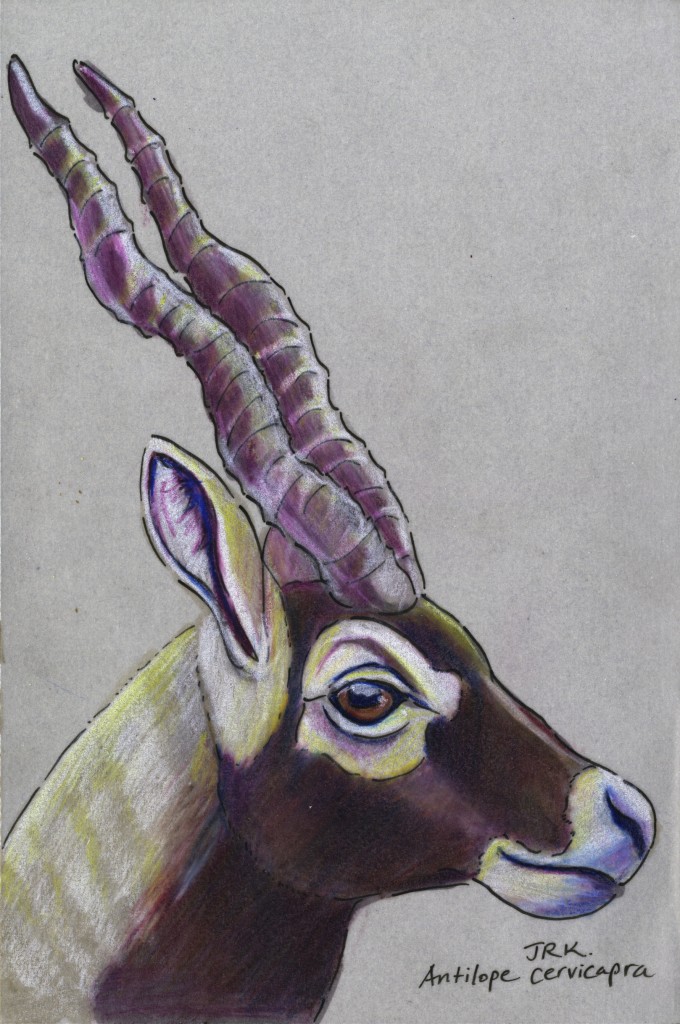
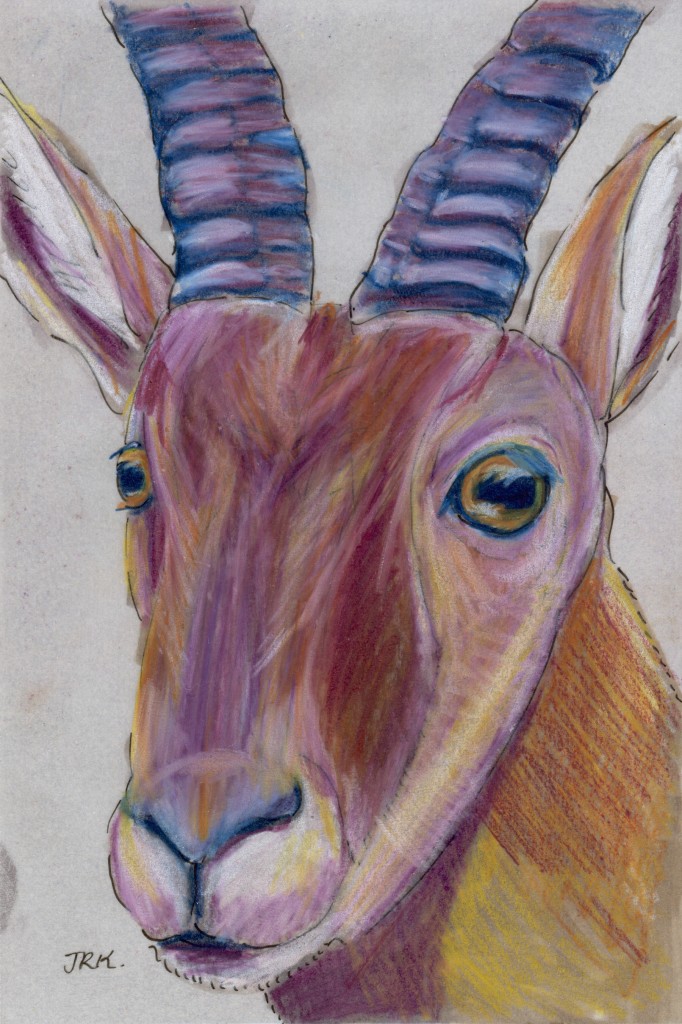
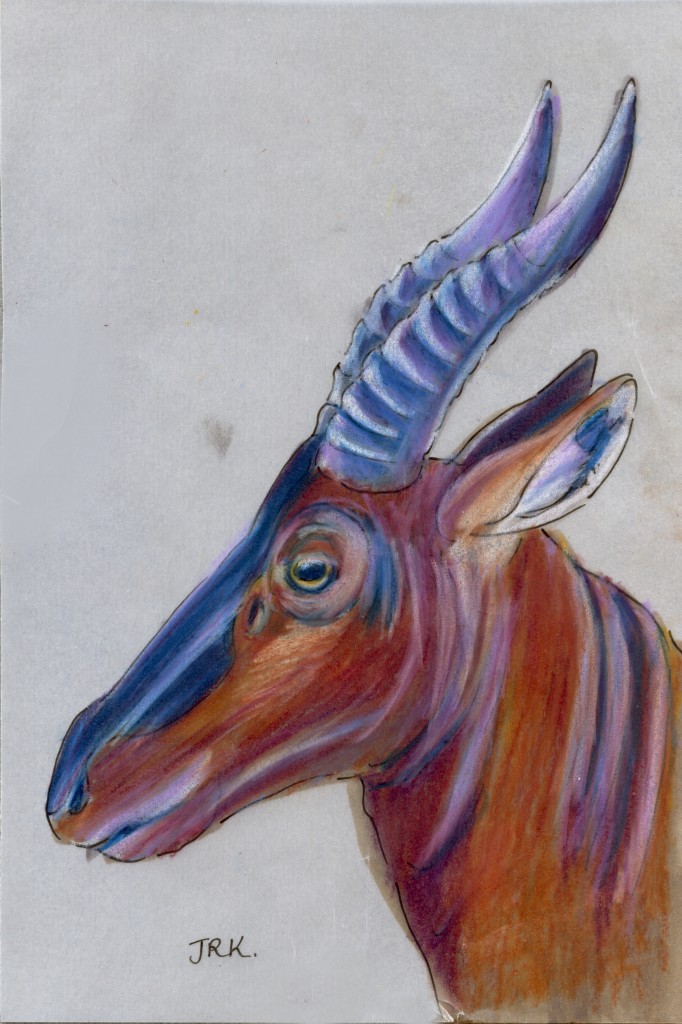
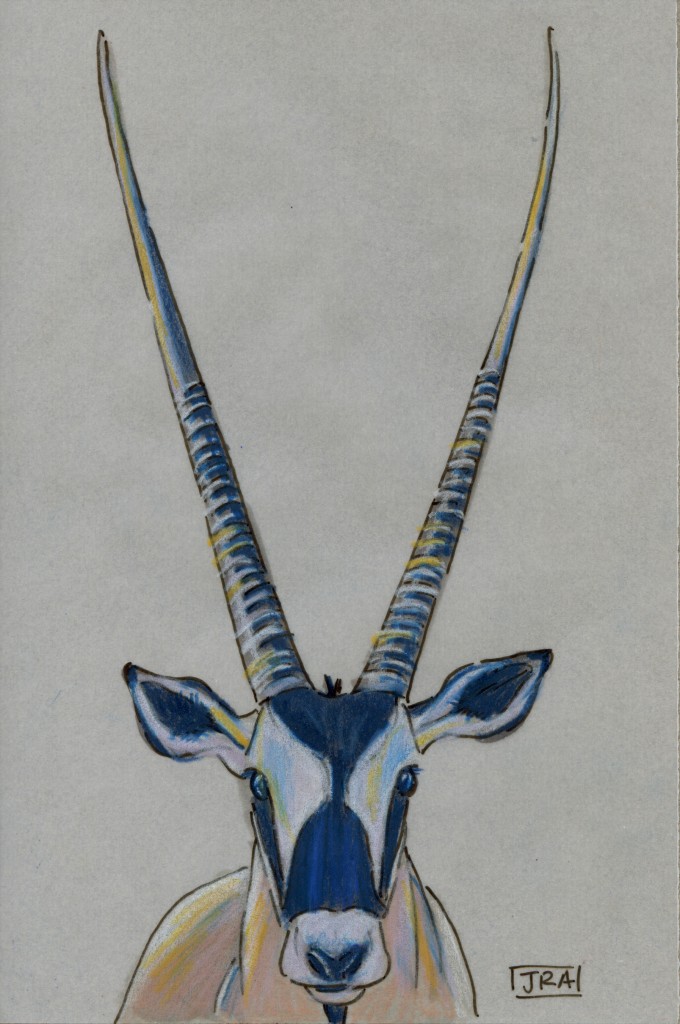
Blackbuck (click image to enlarge)

0361

I do love seeing that mammal counter inching toward 365! Say good afternoon to the blackbuck, an antelope native to India, Bangladesh, Nepal, and Pakistan, but now extinct everywhere but India—and Argentina, Australia, and Texas, where it has been introduced. I’ll try to tell you what I’ve learned about the blackbuck roughly in the order of my learning about it:

1. According to the IUCN, there are some 50,000 blackbuck remaining in India, an increase from 22–24,000 in the 1970s. But there are at least 35,000 in Texas. As far as I can tell, those are all on game ranches, for “an exotic hunt would not be complete without a Black Buck Antelope,” according to the website of one of the ranches. I think the blackbuck in Australia are also confined to ranches, but there may be a feral population in Argentina.

2. Blackbuck are protected as endangered species in India, but they are still poached. In fact, Salman Khan, the star of one of my favorite Bollywood movies, was sentenced to five years in prison for poaching blackbuck (in addition to another protected species, the chinkara, I think—some of the news accounts are a little obscure on this) in 2007. IMDB says that Salman Khan is known as “Bollywood’s Bad Boy” and “Controversial Khan.” His court case continues, apparently. An Indian cricket star named Mansoor Ali Khan was also sentenced to prison time, in 2005, for poaching blackbuck.

3. In Living Mammals of the World, Ivan T. Sanderson writes: “Blackbuck have been the target of sportsmen, real and otherwise, since time immemorial and have been hunted with everything from Cheetahs to machine-guns—until this last revolting practice was summarily stopped.” My first reaction to that was “You can hunt with cheetahs?” Sure enough. I found the below video on YouTube. It purports to be from 1939, but it looks more 1950s to me, and the voice sounds quite contemporary, but wherever it’s from, it does show people using cheetahs to hunt blackbuck.

Coco also drew a blackbuck. It’s so hard to draw a straight-on portrait of an antelope because of the foreshortening of the nose and the way the eyes bulge out, but she completely nailed it. Here it is:

Blackbuck by Coco, age 12

{ 4 comments }

Bactrian Camel (Camelus bactrianus)

by JR Kinyak on March 8, 2011

in Ungulates

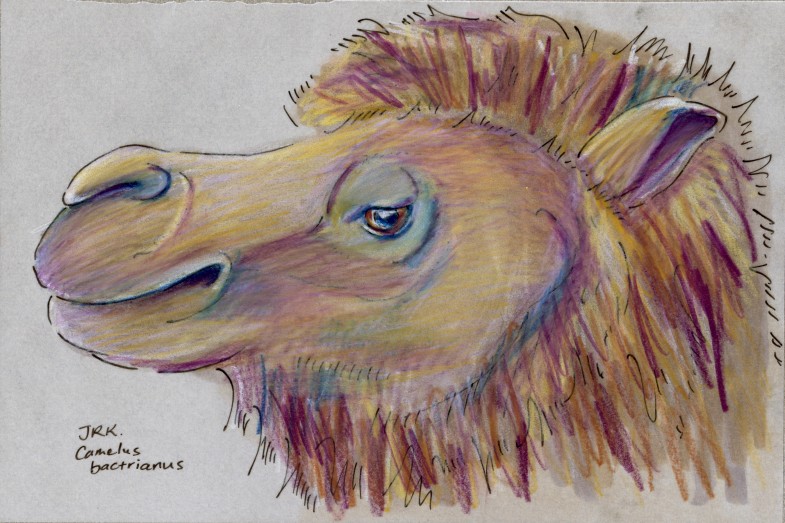
Bactrian camel (click image to enlarge)


0358

The Bactrian camel is the one with two humps. The Arabian camel or dromedary has only one hump. You can remember that by imagining the capital initials of their names turned on their side: B for Bactrian has two humps, and D for dromedary has one. (I didn’t come up with that, I read it on Ultimate Ungulate.)

Then again, maybe you don’t think there are two types of camels, not really. As far as I can tell, some scientists agree with you, believing that both the one-humps and the two-humps were originally one species. They can interbreed, but it’s possible that males born as a result are sterile. Then again, you may think that there are two kinds of Bactrian camels: domesticated ones, which you’d call Camelus bactrianus, and wild ones, which you’d call Camelus ferus. That distinction might make a bigger difference than you’d think. There are no Arabian camels/dromedaries in the wild, and fewer than 1,000 Bactrian camels in the wild. The International Union for Conservation of Nature and Natural Resources (IUCN) categorizes this camel (under the name C. ferus) as Critically Endangered, the last category before Extinct in the Wild, which is followed, of course, by plain old Extinct.

The reasons for their looming extinction in the wild are mostly human-related. Fifty or so are hunted each year for meat, and when there are only 1,000 of something, taking away 50 is a big deal. Much of their habitat—which by the way is in the rocky, sometimes very cold and sometimes very hot Gobi Desert of China and Mongolia—is being taken up by the raising of domesticated animals (including domesticated Bactrian camels). And continuing droughts, which some might call human-related if they’re connected to human-caused climate change, mean that wolves are increasingly preying on the camels. A human-related situation that actually hasn’t seemed to affect the camels is that part of their range was China’s nuclear-testing area for 45 years. It’s nice that that didn’t bother them, I suppose.

{ 5 comments }

Klipspringer

Klipspringer (click image to enlarge)


0352

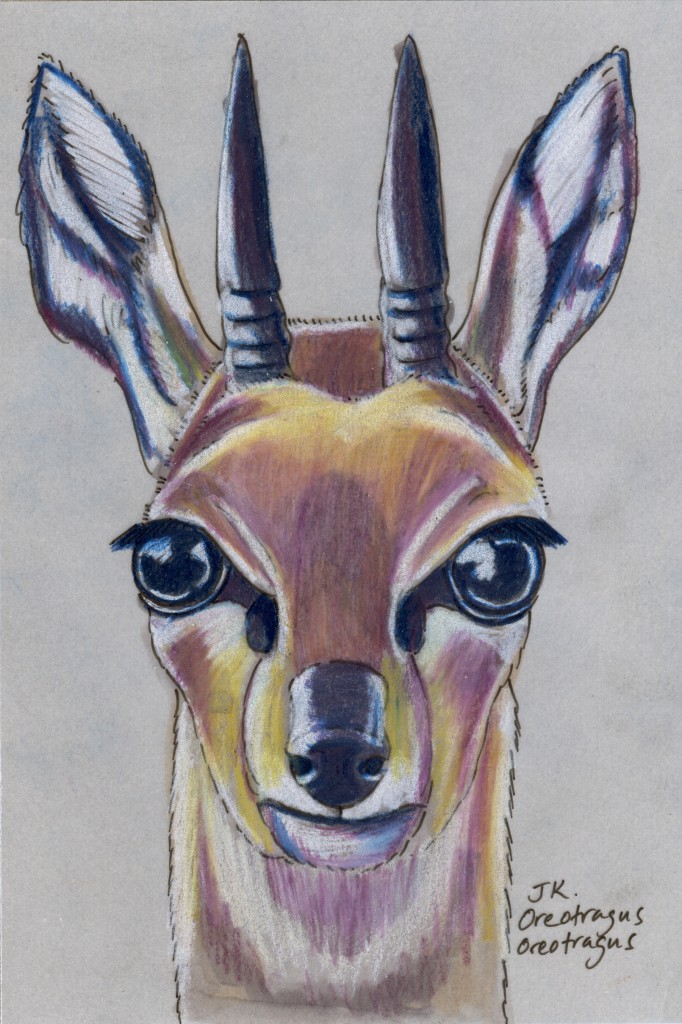
The klipspringer is a little-bitty antelope that lives in eastern and southern Africa on rocky cliffs. I originally picked it for my planned Mammal Mating theme week because it is a rare example of a monogamous mammal. (Most birds are monogamous; most mammals are not.) And what’s interesting is why it’s monogamous. And I also find it interesting that we humans—just apes, really—are able to reason out why other animals do things by analyzing their behavior and habitats and things like that.

Klipspringers are monogamous because monogamy gives them their best chance at avoiding predators. Most small mammals avoid predators by what’s called crypsis—either camouflaging themselves or hiding—or by running away. Klipspringers avoid predators by climbing up onto clifftops where it’s hard for predators to get and where the klipspringers can watch for trouble. But their food is at the base of the cliffs, and if your head is down and you’re eating, it’s easy for a lion to sneak up on you.

So klipspringers pair off—one male and one female—and take turns being lookout while the other eats. The female has to eat more, and also has to bear the children, so the male spends more time and energy watching for predators. The male’s increased alertness allows the female to be more relaxed and concentrate on reproduction and raising her babies. It’s also the male’s job to make sure the female never gets too far away—usually within five meters. She just munches along, knowing that he’ll keep track of her and let her know if trouble is near. (This is also more or less why I got married.)

It makes sense that a pair is the best size group for this. A male with a harem herd would have trouble keeping track of so many gals, and a large herd of males and females wouldn’t be able to so easily get up on the cliffs and away from danger. And a pair of females would both have to eat more to support reproduction and baby-raising, so neither of them could concentrate on guarding.

{ 2 comments }