From the category archives:

Carnivores

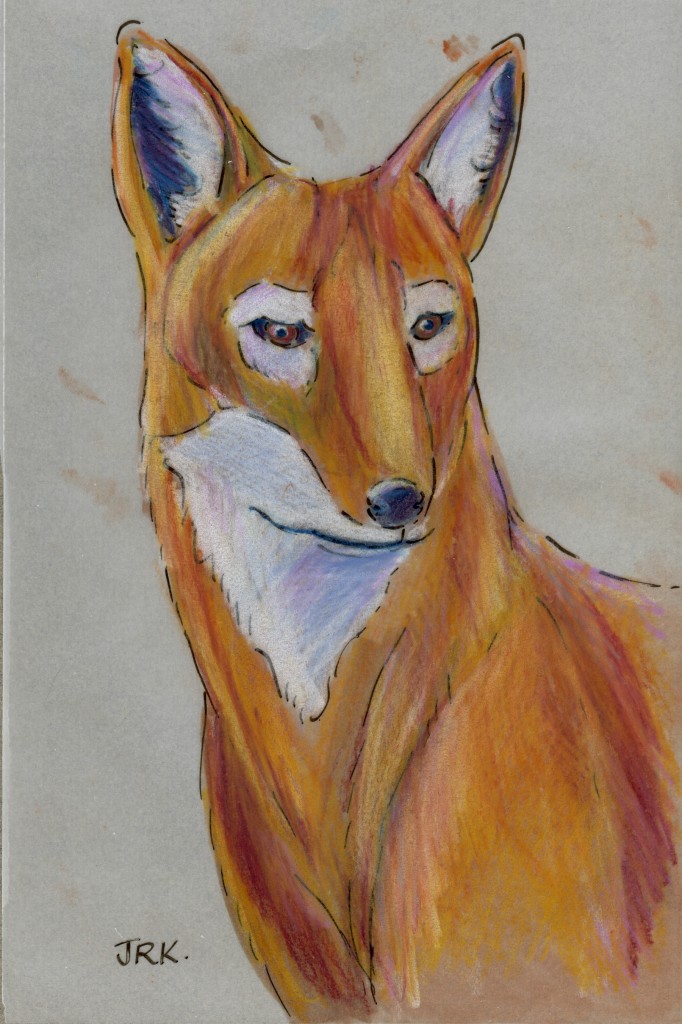
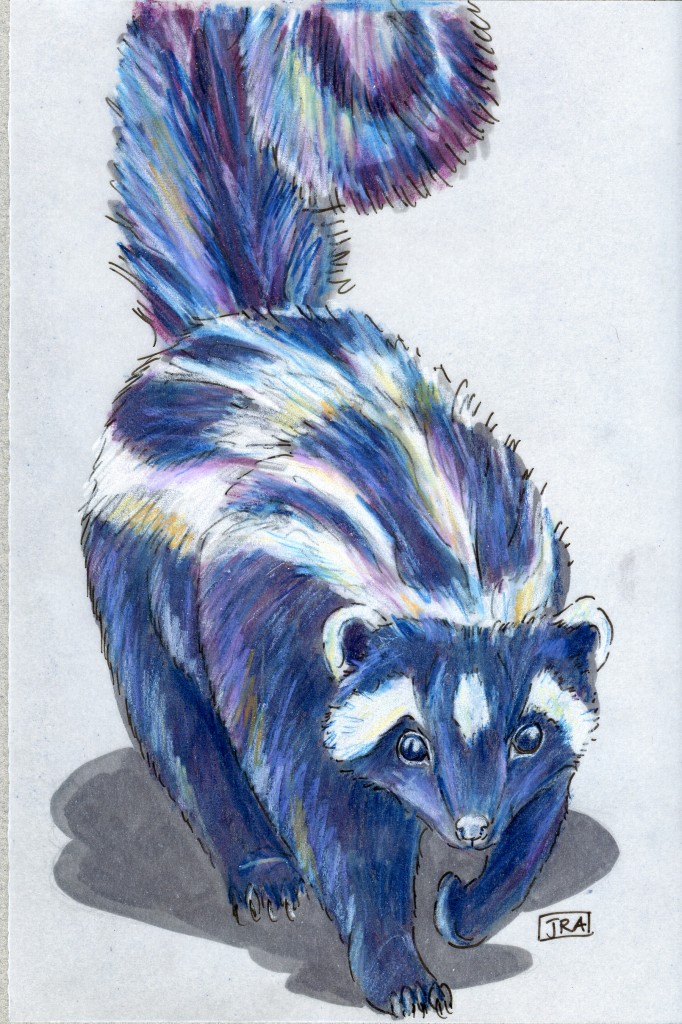
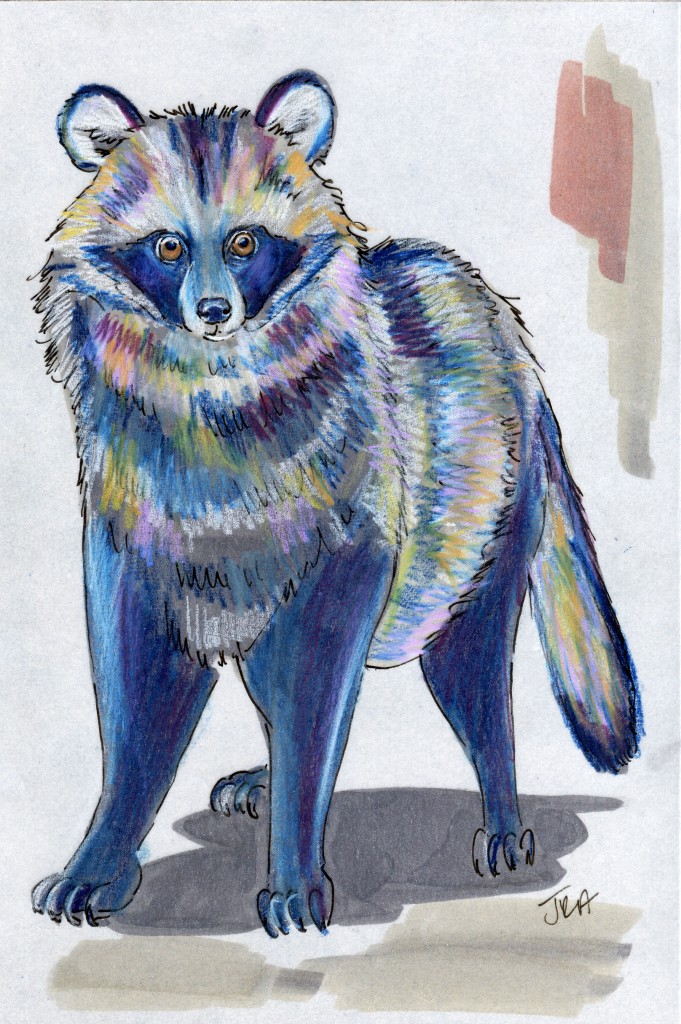
Today is the final day of our fundraising effort to help Japan. These two drawings, along with the few that remain from earlier in the week, are for sale, with their entire purchase price going to help people and animals affected by the earthquake and tsunami in March—half to the American Red Cross, half to Animal Refuge Kansai, an animal shelter in Japan. Please help!

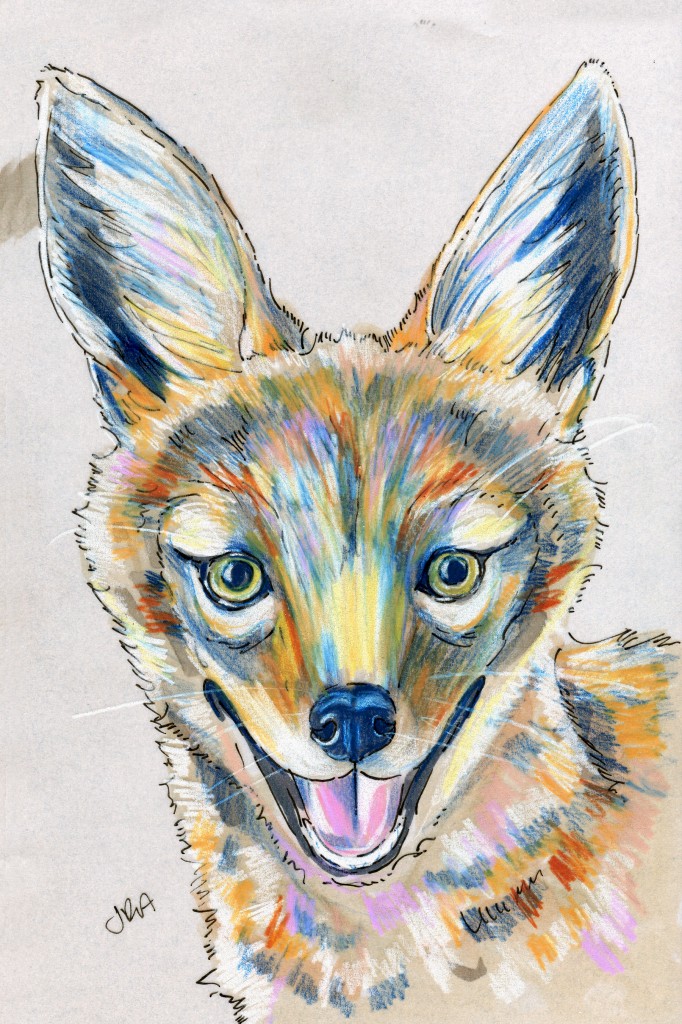
Raccoon dog (click image to enlarge)

This drawing has sold!

Besides today’s portrait, I drew the raccoon dog once before, back in February of 2009 during Hibernators Week—it’s the only canid that hibernates, which is interesting. But even more interesting is its position in Japanese legend. I shall quote from my own previous post, even though it feels a bit lame to do so, especially on the last day of our Mammals of Japan Mammalthon. Ah, well…

In Japan, where the raccoon dog is called the tanuki, the species is pretty common and can even be found in some urban areas. The tanuki is an interesting figure in Japanese folklore. It’s a shapeshifter and a bit of a trickster, and tanuki statues can bring good luck. The most interesting and, to me, strange element of the tanuki legend is the animal’s remarkably large scrotum, which it can use—in myths and stories now, not in real life!—as shelter from a storm or as a net for catching fish. I recommend this baffling series of 19th-century comic prints that show some of the tanuki’s creative uses for its endowments.

Seriously, check out those prints. You will be amazed. Perhaps envious. You may be inspired to buy your own tanuki art—no, not an expensive print from the 1800s, but an affordable original drawing!

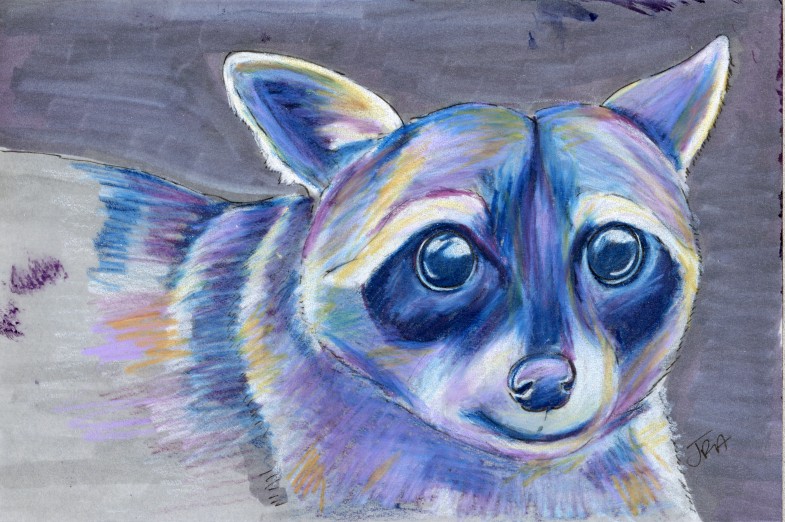
Raccoon dog by Coco, age 12 (click image to enlarge)

Coco’s drawing has sold!

Thank you for your support, comments, and visits during our week-long visit to Japan. We are so saddened by the devastation there, and we’re glad that—with your help—we could help, even if our help is small. In drawing and researching these mammals, I’ve been reminded just how beautiful and special Japan is. I hope reconstruction and recovery is smooth, and my heart aches for those who lost loved ones.

{ 4 comments }

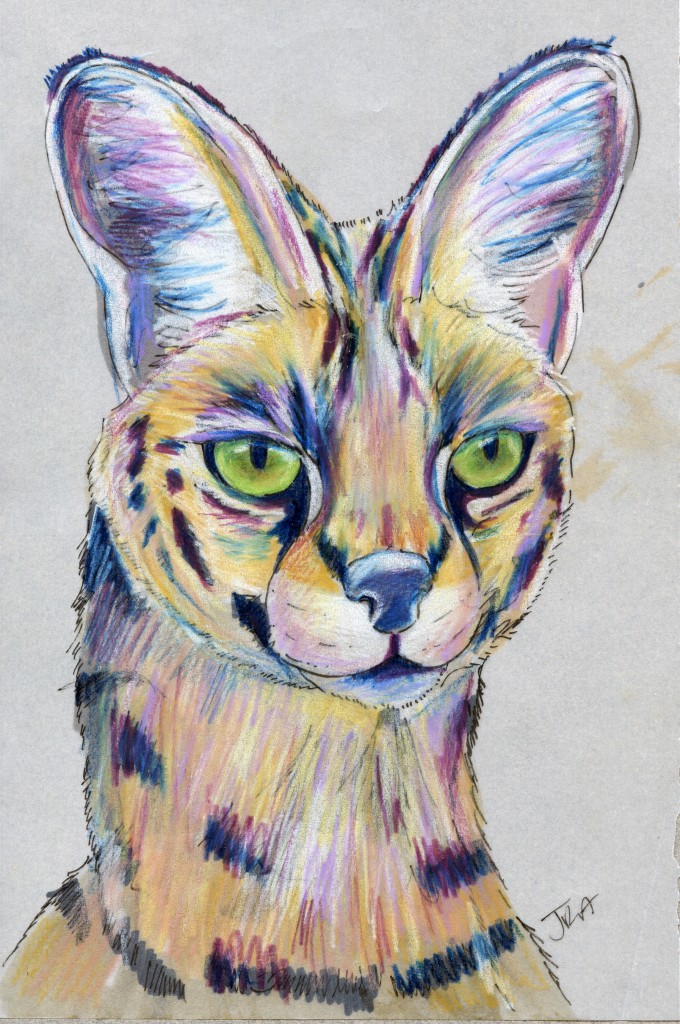
All week, my daughter Coco and I are selling our drawings of Japanese mammals to raise funds for Japan! If you buy one of them, whether matted or unmatted, your entire purchase price will go to help those affected by the earthquake and tsunami: half to the American Red Cross, half to Animal Refuge Kansai, a Japanese animal shelter taking in homeless pets. Please help, and please send your friends by, too!

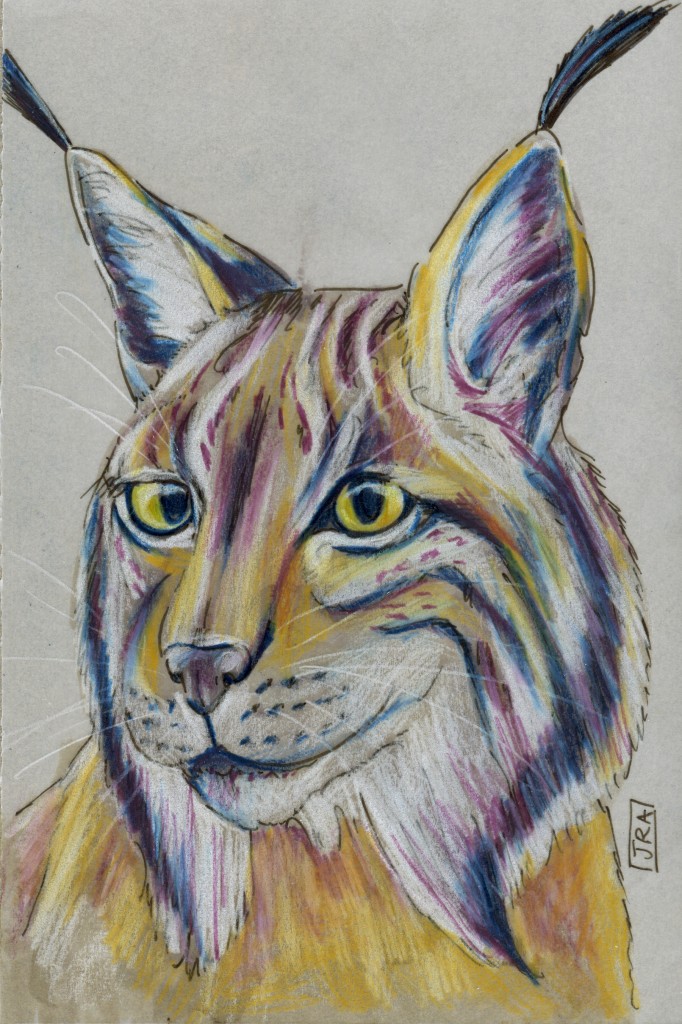
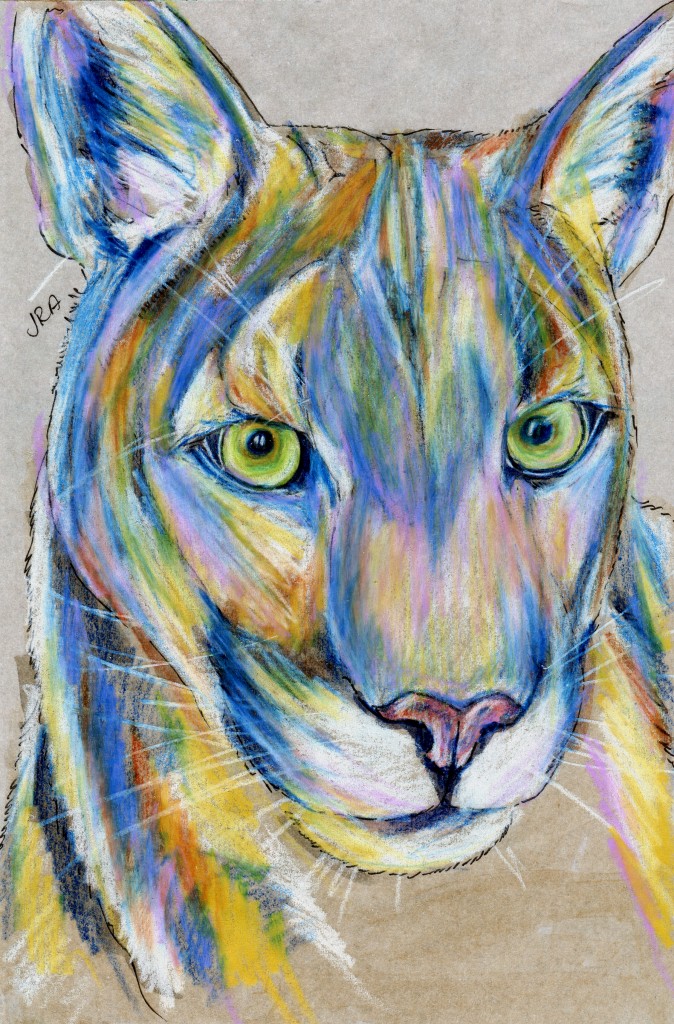
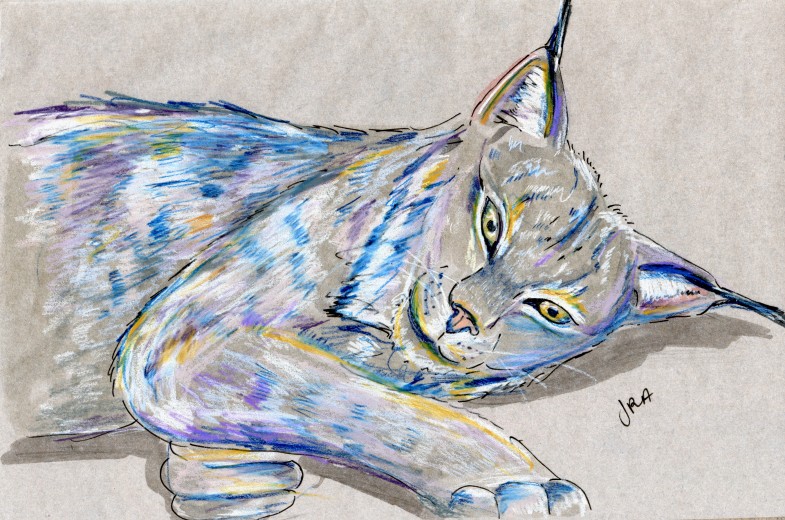
Iriomote cat (click image to enlarge)


0373

This drawing has sold!

This cat may be the rarest feline species on the planet. There are only about 100 individual Iriomote cats living, and they’re found only on the Japanese island of Iriomote, which is just east of Taiwan. It’s an island that’s made up almost completely of impenetrable forest and home to some 2,000 people. Unfortunately for the Iriomote cat, the people like the same part of the island it does, and their highway goes right through the cat’s habitat. Despite efforts to protect the rare cat from harm, about four cats a year become roadkill. They’re also threatened by their habit of interbreeding with feral domestic cats, instead of mating only with each other.

Iriomote cats are quite elusive. They’re solitary and mostly nocturnal, and some researchers who dedicate their lives to studying them still go years without seeing one. According to this great article from The New York Times, some residents of Iriomote don’t even believe the wild cat exists.

Iriomote cat by Coco, age 12 (click image to enlarge)

Coco’s drawing has sold!

I said that this cat may be the world’s rarest feline because it’s been part of a taxonomic controversy almost since it was first described in the 1960s. Back then, scientists theorized that it was a “living fossil” species, the only existing member of an extinct group of cats. Then, other scientists decided it was actually a subspecies of the leopard cat, which is pretty common on the Asian mainland. Then it was back to being its own species, but in the same genus as the leopard cat, not in its own “living fossil” genus like before.

None of that ever got settled for sure, and now it looks like some people are leaning back toward the leopard-cat-subspecies idea. It seems that the International Union for Conservation of Nature and Natural Resources considered it its own species until just a few years ago, but now the IUCN lists it under the leopard cat species, even though none of my other sources do.

This is important because the IUCN’s Red List is widely accepted and used as a definitive list of endangered species worldwide. Perhaps if I do a little digging in the records of the IUCN’s cat study group, I can find some of their reasons, and I may do that when I have the time. It’s good to remember that the designation of endangered species is dependent on many actors other than just counting how many cats there are that look alike.

If you’d like to help Japan without buying a drawing, click the Donate button below and we’ll add your contribution to our people-and-animals fund. And we still have two monkeys and one squirrel available for sale. See you tomorrow!


{ 3 comments }

This week we’re selling our drawings to benefit Japan! You can buy an original drawing by me or by my daughter Coco, we can mat it for you or leave it as-is, and the best part is that not only do you get a unique work of art, you also get to help people and animals affected by the tsunami and earthquake of earlier this month. We’ll split the entire purchase price in half, giving 50 percent to the American Red Cross and 50 percent to Animal Refuge Kansai, an animal shelter in Japan. Today’s mammals have sold, but we’ll post more tomorrow, and my squirrel from yesterday is still available, too. Please help, and please send your friends over, too!

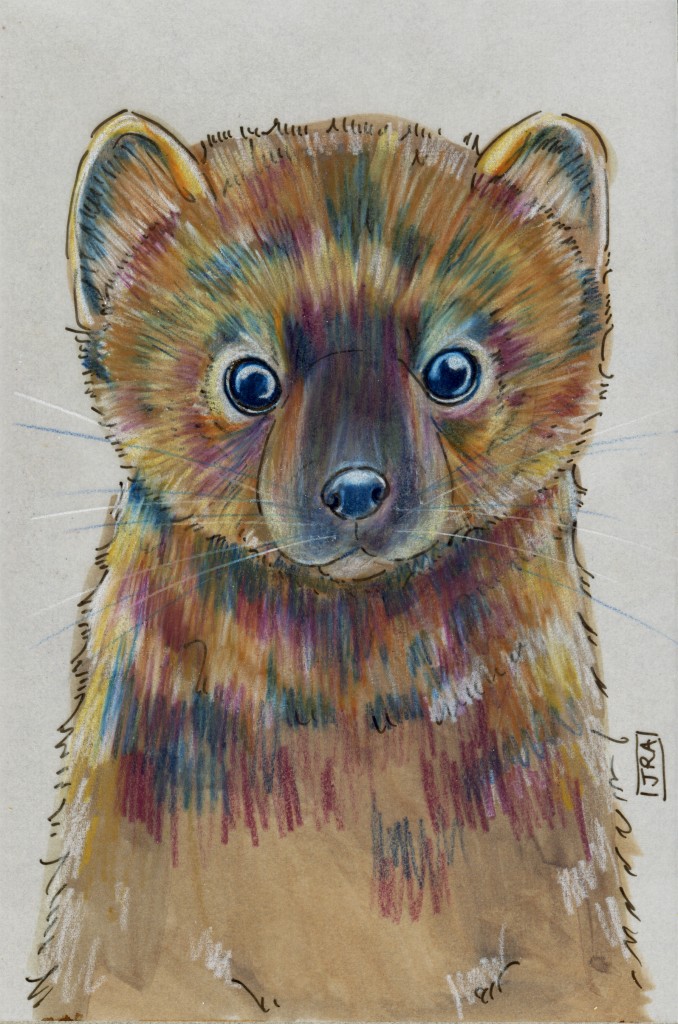
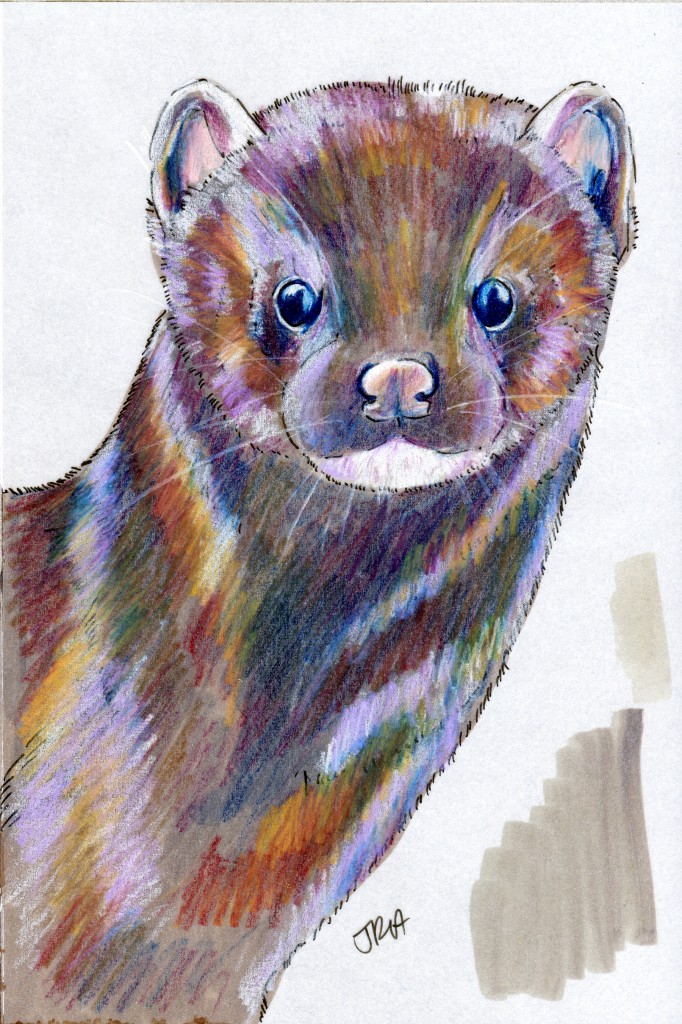
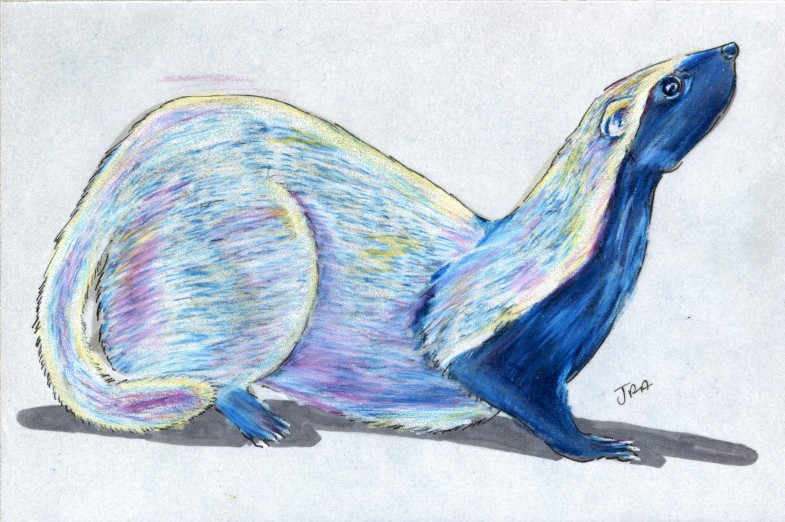
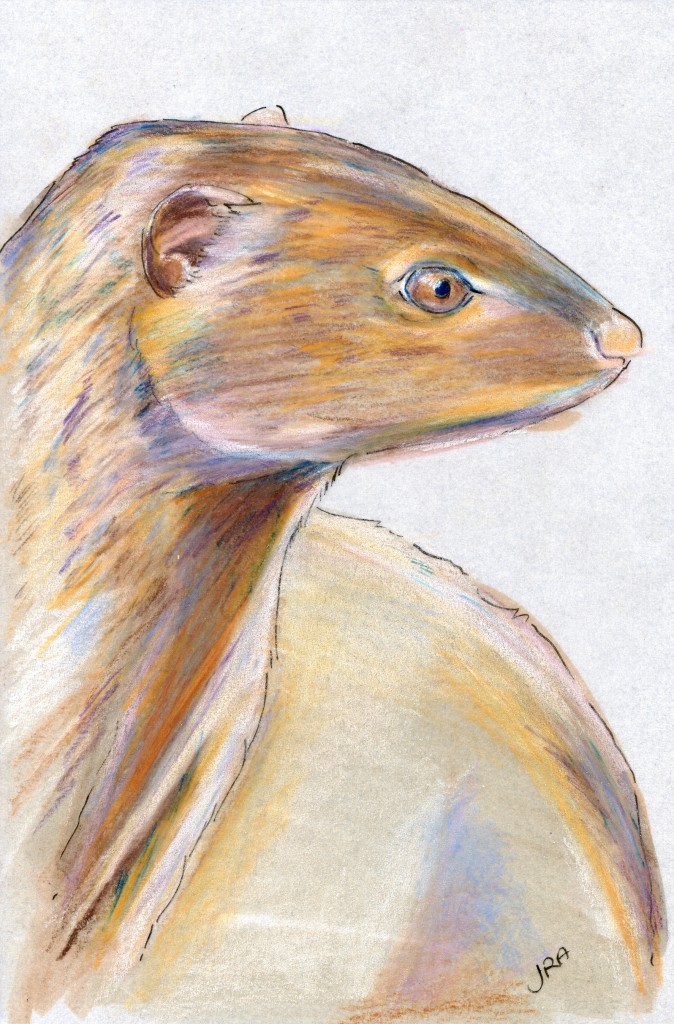
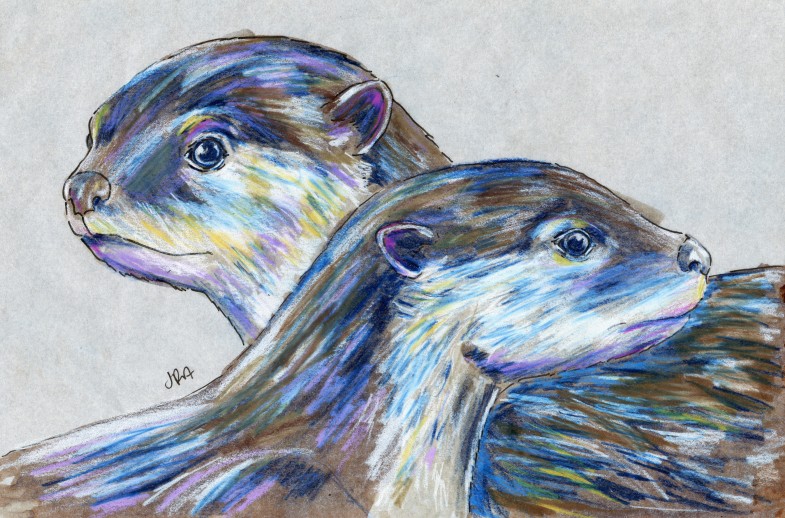
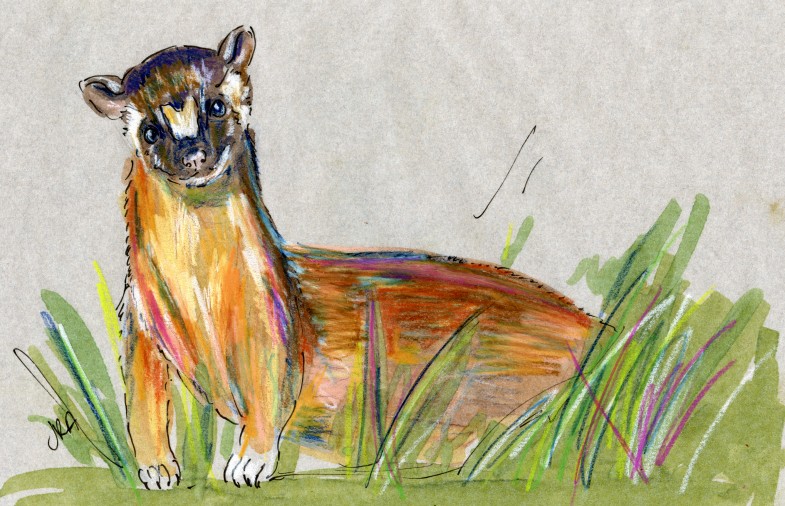
Japanese marten (click image to enlarge)


0371

SOLD, but please come back tomorrow!

The Japanese marten is a member of the mustelid family, which includes weasels, badgers, minks, ferrets, and otters—mustelids are those cute-yet-vicious little stinkers (sometimes literally) with pretty fur, beady eyes, and sharp teeth and claws. This marten lives in forests, but also sometimes in suburbs and residential areas, and Animal Diversity Web calls it an “opportunistic generalist” when it comes to food: it eats fruits, berries, and insects in the warm months and small mammals and birds all year long.

Japanese marten by Coco, age 12 (click image to enlarge)

SOLD, but please come back tomorrow!

Some of these guys have the most beautiful orange coloring, while some are a more dull brown. Coco and I both drew the orange variety. If you like their sharp little faces and tangerine-colored fur, please consider buying one of our drawings. (I recommend snapping Coco’s up while you have the chance—her previous two Japanese mammal drawings are already sold!) If you don’t care for the drawings, perhaps you’d like to donate to our Red Cross/Animal Refuge Kansai fund anyway. You can do that by clicking the donate button below.

See you tomorrow for another Japanese mammal!

{ 6 comments }

Bushy-tailed Olingo (Bassaricyon gabbii)

by JR Kinyak on March 14, 2011

in Carnivores

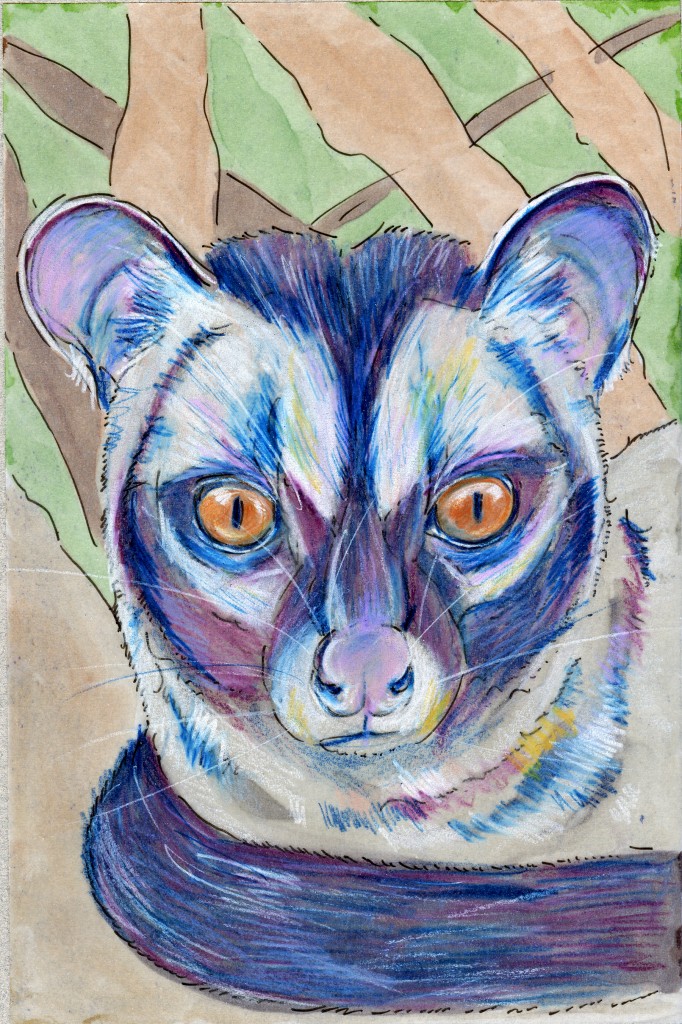
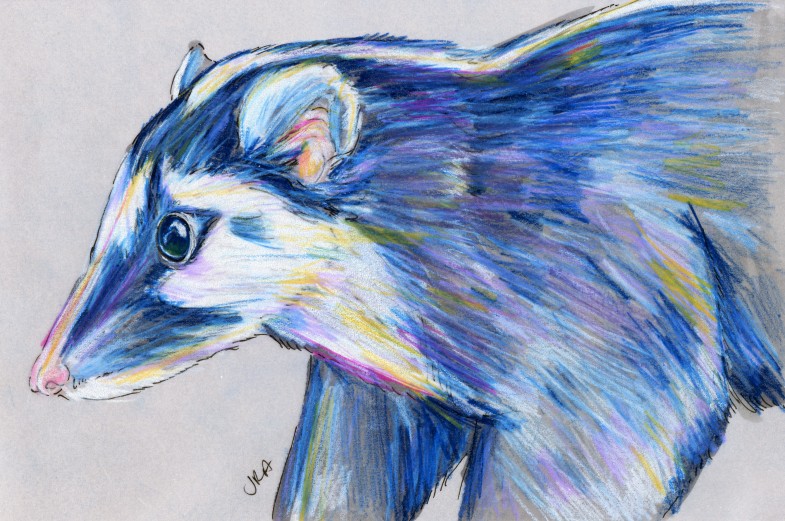
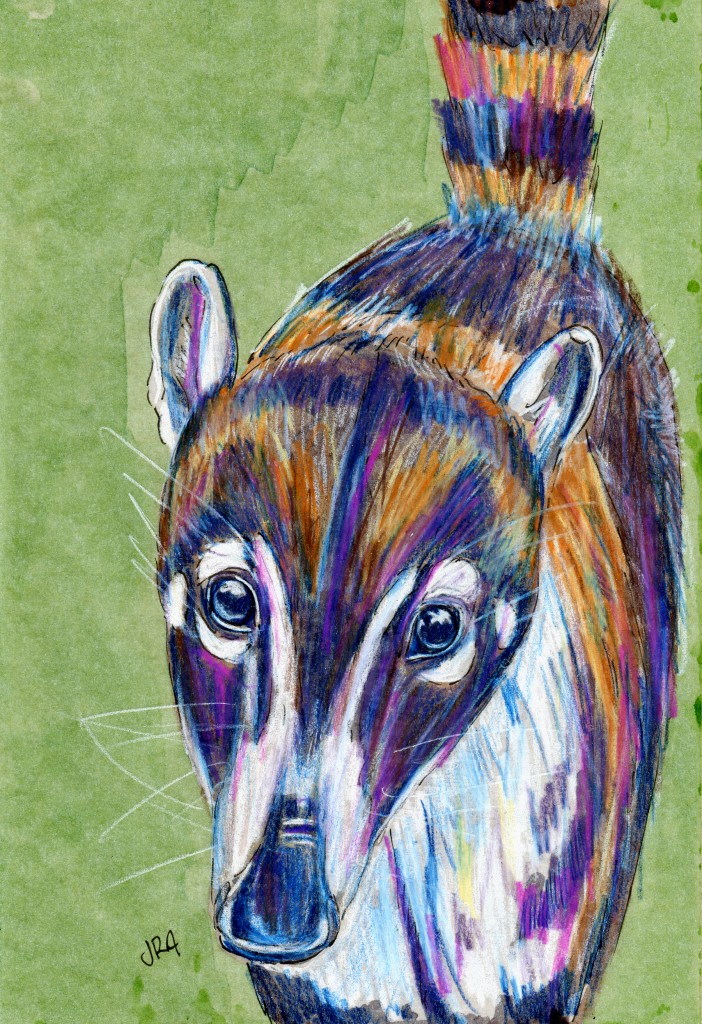
Bushy-tailed olingo (click image to enlarge)


0363

Sadly, my long mammal-posting streak was broken yesterday…because I jumped off a rock and broke my calcaneus, the big bone at the bottom of the heel. It hurts like mad! But while I recuperate, I will try to keep up the mammaling.

Today’s mammal is the bushy-tailed olingo, which lives in Costa Rica, Panama, Nicaragua, Ecuador, and Colombia. It is a procyonid, putting it in the same family as the raccoons, coatis, kinkajous, and their friends. The bushy-tailed olingo’s scientific name, Bassaricyon gabbii, comes from William Gabb (1839–1878), a paleontologist and geologist who collected natural history specimens in Central America for the Smithsonian.

The olingos caught my eye because of a characteristic Ivan T. Sanderson note on the genus in Living Mammals of the World:

“Of all idiotic scientific names for an animal this takes the cake: it means literally the ‘Fox-dog’ or ‘Dog-dog’ as bassara is an ancient Thracian word for dogs and foxes, and kyon meant a dog in classical Greek. The animal in question has caused a great deal of confusion in scientific records, completely bamboozles the nonspecialist, is usually overlooked, is seldom represented in museum collections, and yet appears to be fairly common.”

{ 2 comments }

Oncilla (Leopardus tigrinus)

by JR Kinyak on March 9, 2011

in Carnivores

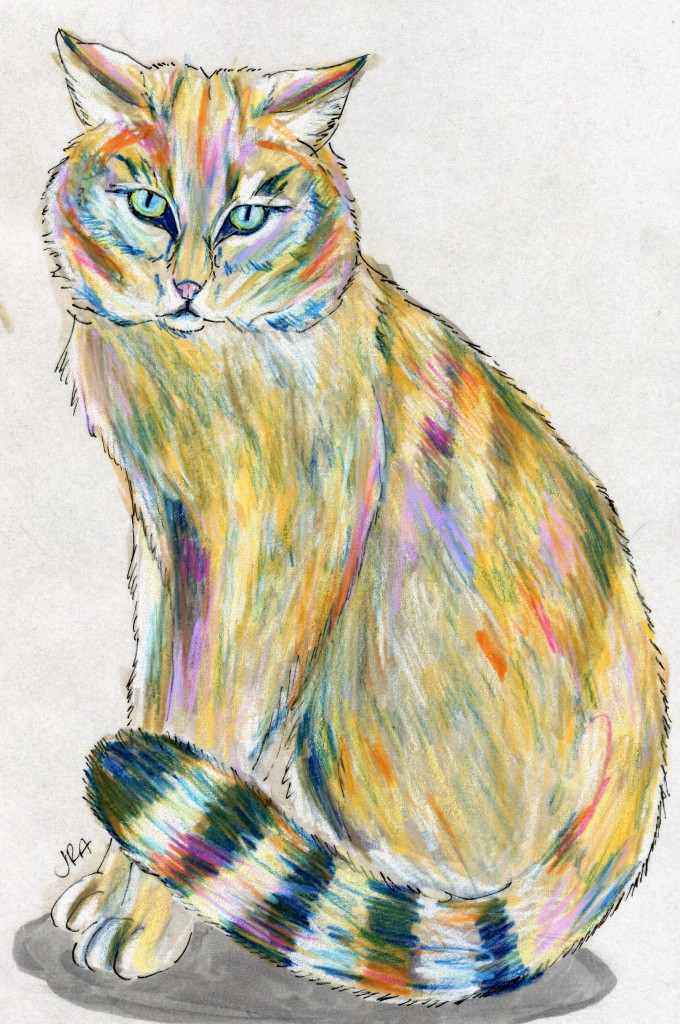
Oncilla (click image to enlarge)


0359

Today marks two straight weeks of mammals! How do you like them apples? Also, if you look to the right at today’s mammal’s number, you will see that sometime next week, if we continue on this track, we will complete a year’s worth of “daily” mammals! And it will have taken us less than four years…

Moving right along, my mom requested an oncilla. My three-year-old niece, Rae, has a subscription to National Geographic Little Kids, and with the magazine, you get little punch-out animal trading cards. One of the recent ones pictured the oncilla, which is also known as the little spotted cat, and it is a little spotted cat indeed. In fact, it’s one of the smallest wild cats in the world: it’s only as big as a small housecat, weighing in at about 5 pounds on average. Little ol’ thing!

Oncillas live in Central and South America, ranging in a rather patchy way from Costa Rica down to southern Brazil and eastern Argentina. They especially like forests, including two prettily named kinds of forests, elfin forests and cloud forests. Elfin forests are, apparently, forests where the trees are stunted, perhaps because of wind, dryness, mist, or other climate conditions, and cloud forests are forests covered in fog. The cats are nocturnal and solitary, and we don’t know a whole lot about them.

{ 8 comments }

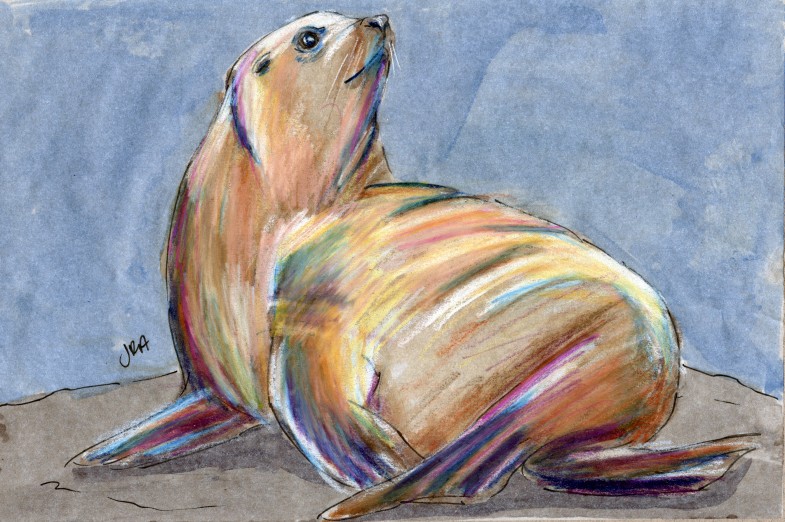
northern elephant seal

Northern elephant seal (click image to enlarge)


0353

There’s so much to say about elephant seals, and yet it’s so distasteful. These guys are rapists and baby-killers. Their necks are discolored by scars incurred during mating or fighting for mates, and one of my books, Wonders of Animal Life from 1928, lists “Sea elephants, frightfulness” in its index. In Living Mammals of the World, Ivan T. Sanderson says that they “present the most grotesque and revolting appearance, especially when they lounge around on shore in great misshapen, heaving masses under a hot sun, moaning, groaning, gurgling, and roaring.” A 1979 article in People about one of the top scientists studying elephant seals includes the sentence, “Says Le Boeuf bluntly, ‘It’s a rape society.’” (The title of the article is “Burney Le Boeuf Finds One Way to Pick Up a Seal of Approval.”)

I have a reprint of an 1874 book called The Marine Mammals of the Northwestern Coast of North America that includes a graphic account of the brutal way elephant seals were hunted for their blubber. Trust me, you probably don’t want to know, yet it’s not much worse than what the seals do to each other—except the blubber-hunters nearly drove the seals to extinction. Now they’re pretty healthily back in business in their habitat along the Pacific coast of North America.

And what is that business? Well, a dominant male controls a harem of females and can mate with them whenever he pleases. If a female objects, he holds her down with his massive body weight—up to three tons, and two or three times as much as the female weighs—and forces himself on her. Females have light-colored necks from all the scars they get when the males bite them during mating.

If a non-dominant male tries to mate with one of the females, the female starts screaming, which attracts the dominant male to defend his territory. At that point, he’ll get in a fight with the non-dominant male—a big, bloody fight, as any fight between two creatures that weight two tons would be. They beat each other with their noses and thrash around, sometimes suffocating other elephant seals in the process, especially babies. From Courtship in the Animal Kingdom by Mark Jerome Walters (1988):

Every spring along certain California beaches, bulls engage in bloody competition for female seals. The fight begins as a gruff shouting match with two males exchanging deep-throated roars. If one doesn’t retreat, then the shouting match escalates into combat…[T]hey slam their bludgeonlike noses into each other while trying to sink their large teeth into the neck of their opponent. Newborns are the most frequent victims as males throw their weight around, and the beaches resound with the shrill cries of crushed infants. Nearly half of the pups’ deaths in a single season are caused by battling males.

Walters goes on to say that sex is one of the major reasons for conflict among animals. “Spring is also the season when life’s astounding variety comes clearly into view—a richness that owes much of its existence to sex. And to which the world owes much of its woe.”

It certainly sounds like elephant seals lead woeful lives, and I’m glad that we humans have stopped contributing so murderously to their travails. But we are messing things up for them in another way, and that’s climate change. It seems that in warmer years, females give birth to more male babies. This is apparently because males and females have different feeding grounds. When it’s warmer, the food resources are more diffuse, and the females have to go further to find something to eat. If they have male babies, they won’t create competition for themselves the way they would if they had female young. So they’ve adapted to give birth to males when the weather is warm. Global warming could cause the proportion of male elephant seals to increase, which would mean more competition and more of the violence I discussed above. It could also mean that females have a harder time finding food, which would mean they’re undernourished and less likely to survive.

{ 4 comments }

Gray Seal (Halichoerus grypus)

by JR Kinyak on February 26, 2011

in Carnivores

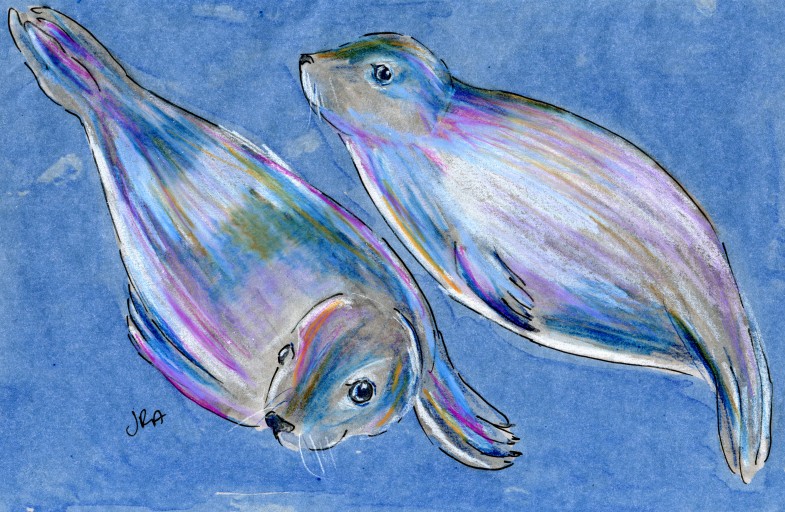
Gray seal

Gray seal (click image to enlarge)


0349

The gray seal lives in the north Atlantic, separated into three isolated populations. The seal’s scientific name, Halichoerus grypus, means “hooked-nose sea pig,” and refers to the male gray seal’s distinctively long nose. (The one I drew is a female. Sorry.) This seal’s numbers are increasing throughout its range—yay!

{ 2 comments }