From the category archives:

Carnivores

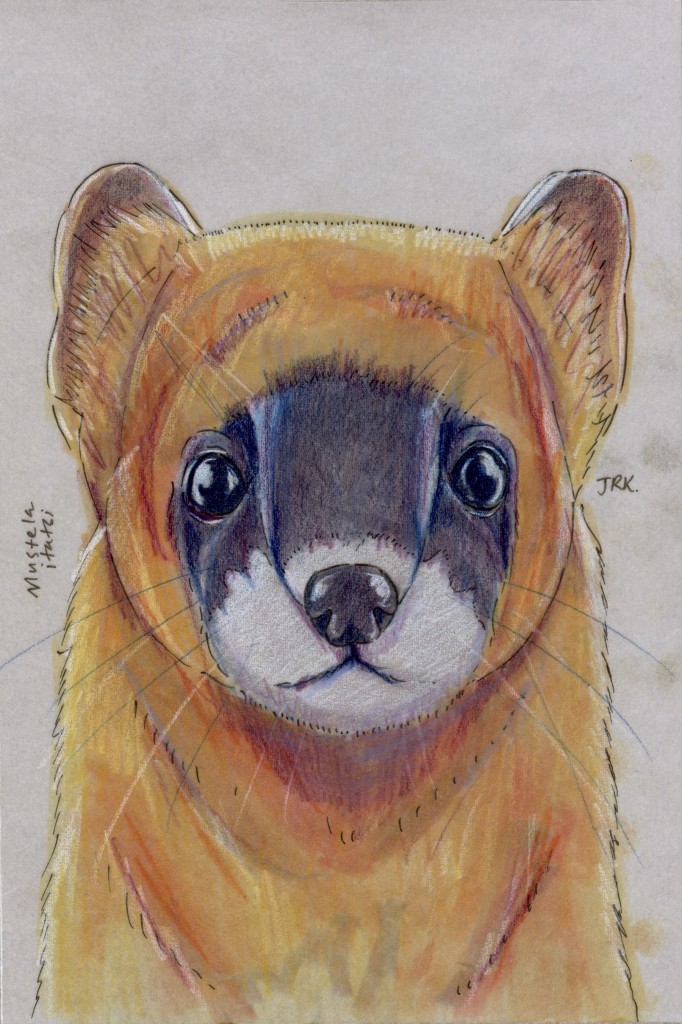
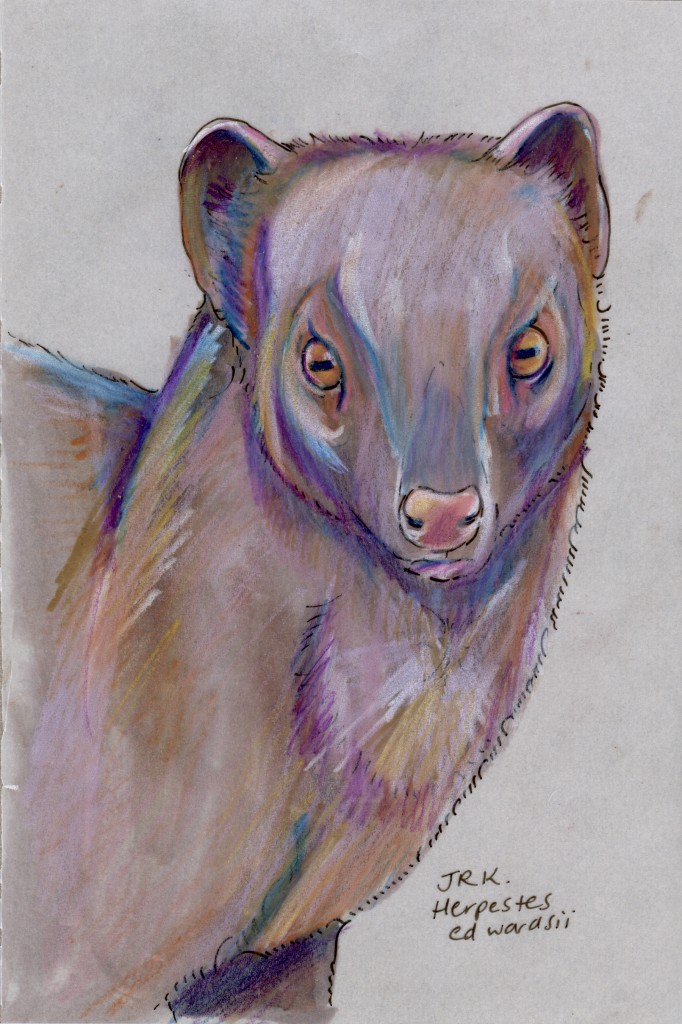
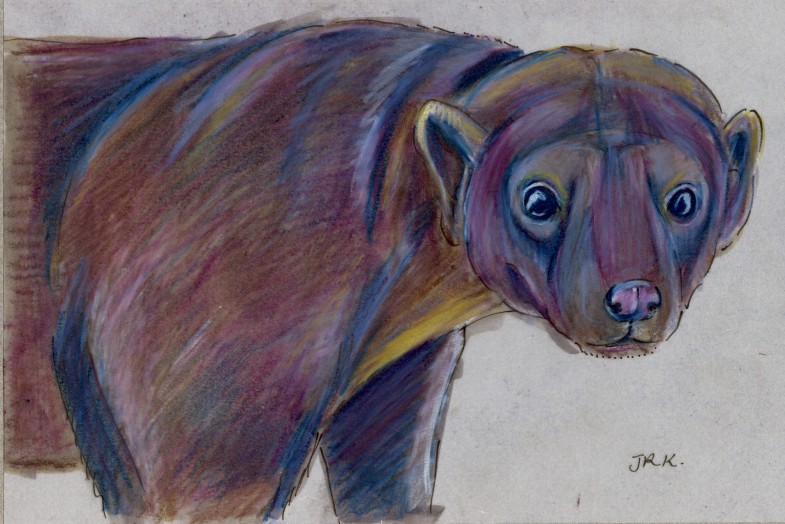
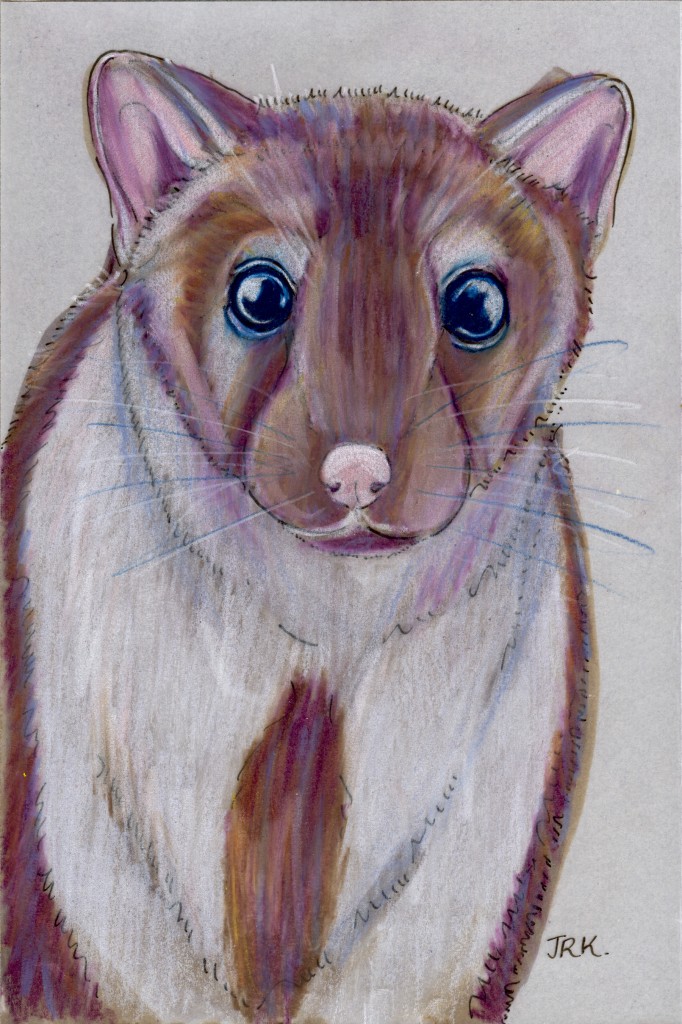
Tayra (click image to enlarge)

0340

We’re now in the last group of competitors in the World Cup. Just four more countries, including this one, and we’re all done with our look at the soccer tournament. Today’s mammal is the tayra, representing Honduras. It’s a mustelid, or a member of the weasel family, that is quite common in Central and South America. Tayras are not picky eaters. They mostly eat small mammals, like rats, but they also like honeycombs, birds, reptiles, and lots and lots of fruit. They are sometimes kept as pets, and when I googled “tayra pet,” I found this rather interesting historic artifact (the link is to a PDF): a short essay from 1882, reprinted in the New York Times from the London Field, about a pet tayra and animals’ trust of us. The author concludes with a rather utopian vision that contradicts what he said earlier about the viciousness of tayras, but it’s an interesting snapshot of 1882 nevertheless.

Honduras has qualified for the World Cup twice: in 1982 and this year. Both times, the team made it no further than the first round, and both times, the team did not win a single game.

Group G Results

I neglected to give the results for Group G yesterday, so here we go! Group G included the tree pangolin from the Ivory Coast, the common genet from Portugal, the silky anteater from Brazil, and the Korean hare from North Korea. The genet is the only carnivore in this group, and I don’t think it would have any trouble with the anteater or the hare. The pangolin’s armor might mean the match between the genet and the pangolin would end in a draw. Hares are pretty harmless, and as my husband Ted says, it’s surprising that the anteater can even beat the ants. So the pangolin’s superior defense takes it through to the next round. From Group G, continuing on to the Round of 16:

Common Genet (Portugal)
and
Tree Pangolin (Ivory Coast)

{ 0 comments }

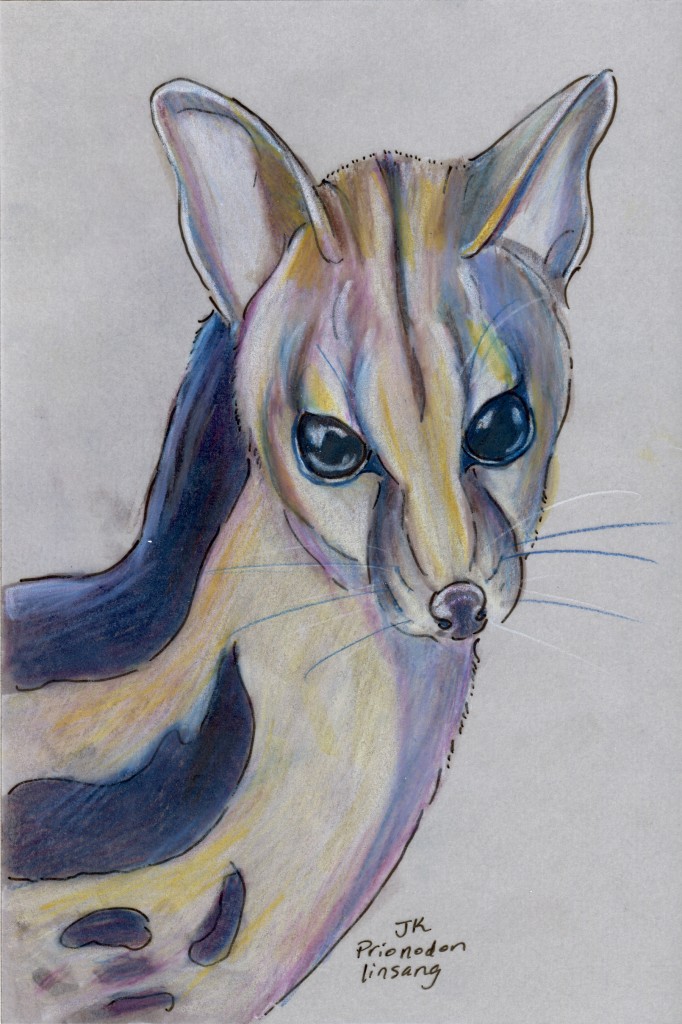
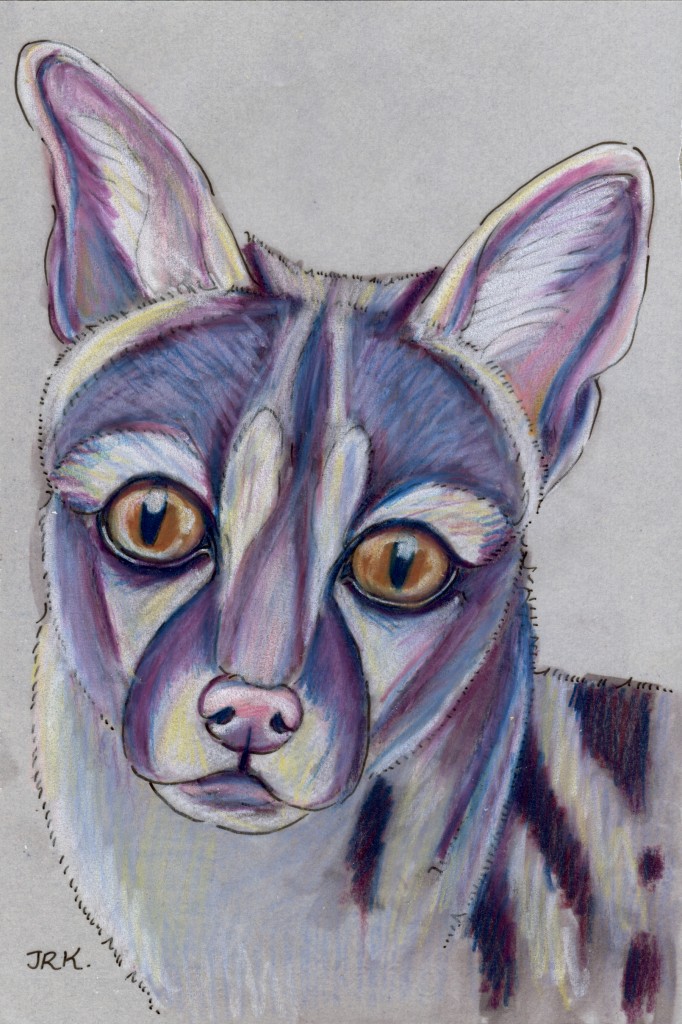
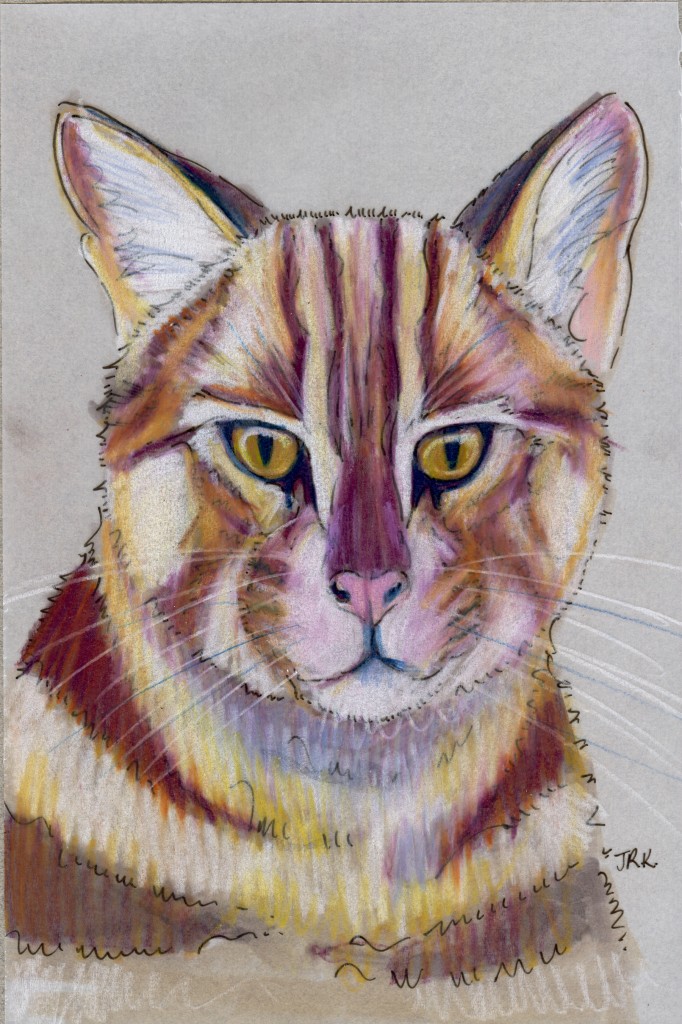
Common genet (click image to enlarge)


0337

This crazy-looking drawing is of a common genet, also called a small-spotted genet (I think the hyphen is important, but not everyone uses it) or a European genet. It’s representing Portugal in Group G of the Mammals of the World Cup series. It’s a carnivore in the Viverridae family, with the civets and linsangs. It lives in Europe, Africa, and the Middle East, and it mostly eats smaller animals. It’s nocturnal and a very skilled hunter. Walker’s Mammals of the World says, “The genet’s slender and loosely jointed body allows it to go through any opening its head can enter.”

Portugal’s soccer team, which includes a player whose full name is Danny, made it to the Round of 16 in this World Cup, where it was beaten by Spain, 1-0.

{ 2 comments }

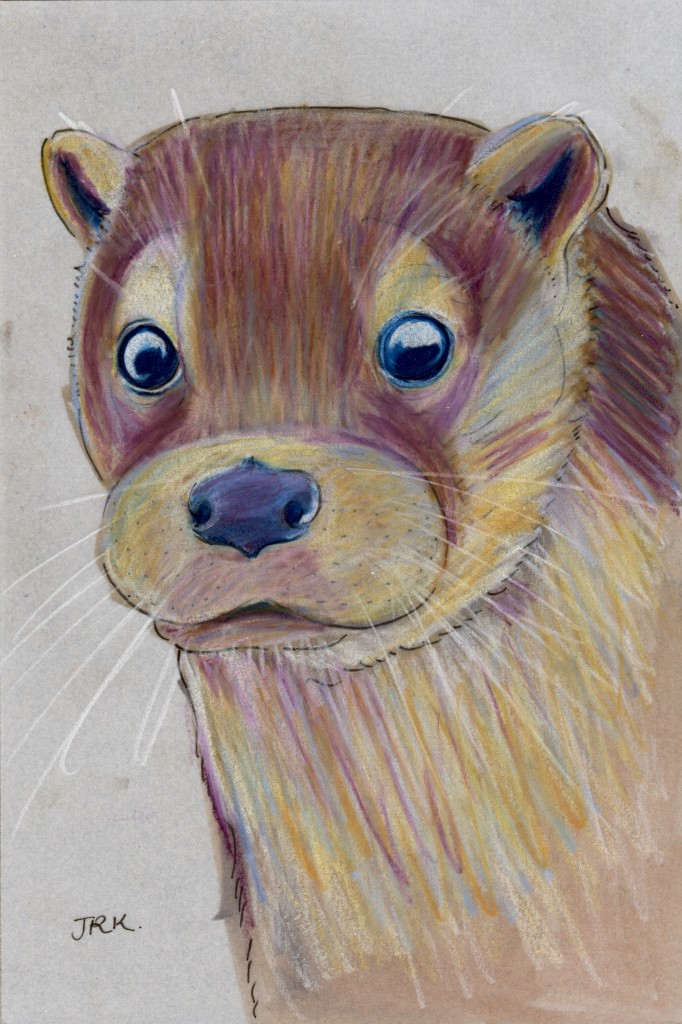
European otter (click image to enlarge)

0328

Hi, mammals! I think I’ll be on track to finish the Mammals of the World Cup on schedule with the actual World Cup if I post all of Group E today and then get back to once-a-day tomorrow. (Whether I will succeed is still unknown, as life has been pretty stressful around here. But I’m trying!) Also, I’m really not doing my best work lately, so dumping four mammals on you at once might distract you from that fact.

Our first mammal is the European otter (Lutra lutra), who is representing the Netherlands, where its numbers had decreased to almost nothing but it has been reintroduced. The Netherlands beat Slovakia (where the Yak part of my name comes from) in the Round of 16 and will be playing Brazil in the quarterfinals on Friday.

Orca (click image to enlarge)

0329

The orca or killer whale (Orcinus orca) is playing for Denmark tonight. Did you know that orcas in groups have been known to take down blue whales? It’s unlikely, I think, that anyone is going to beat the orca in this World Cup. Denmark, on the other hand, didn’t make it out of the group stage.

Japanese dwarf flying squirrel (click image to enlarge)

0330

From Japan, the Japanese dwarf flying squirrel (Pteromys momonga), which is also known as the momonga! It’s just too cute to be believed, really, and is also represented on one of my favorite Yu-Gi-Oh! cards, seen below. (I’m very into Yu-Gi-Oh! now. It comes with the 14-year-old son. I have a beast deck. Besides the Nimble Momonga, I also have a Tree Otter, a Sea Koala, a Kangaroo Champ, a Green Baboon Defender of the Forest, and a Rescue Cat.)

A very handy Yu-Gi-Oh! card (click image to enlarge)

Japan made it to the Round of 16 but lost to Paraguay today. After the group stage, they don’t allow ties anymore. First, they have 30 minutes of overtime, and if there’s still a draw, they take turns taking penalty kicks, which are kicks from a spot 12 yards from the goal. Five players from each team try that, and if there’s still a draw after the penalty kicks, they play sudden death. After the 30 minutes of extra time, the Japan-Paraguay game was tied 0-0, and Paraguay won in penalty kicks.

Allen's swamp monkey (click image to enlarge)

0331

This is Allen’s swamp monkey (Allenopithecus nigroviridis), and it’s from Cameroon (as well as Congo and the Democratic Republic of the Congo). Its scientific name means “Allen’s ape, black and green,” and it is indeed kind of black-and-green colored. Cameroon didn’t get out of the group stage at the World Cup.

Group E Results

Well, the killer whale is the killer whale, and none of these guys stand a chance against that apex predator. It moves on to the next round, and I think our mustelid friend in this group, the European otter, could do some damage to the swamp monkey, and obviously the momonga is adorable and tiny and hopeless against any of the other three. So the two mammals continuing on to the Round of 16 from Group E are:

Orca (Denmark)
and
European Otter (Netherlands)

{ 5 comments }

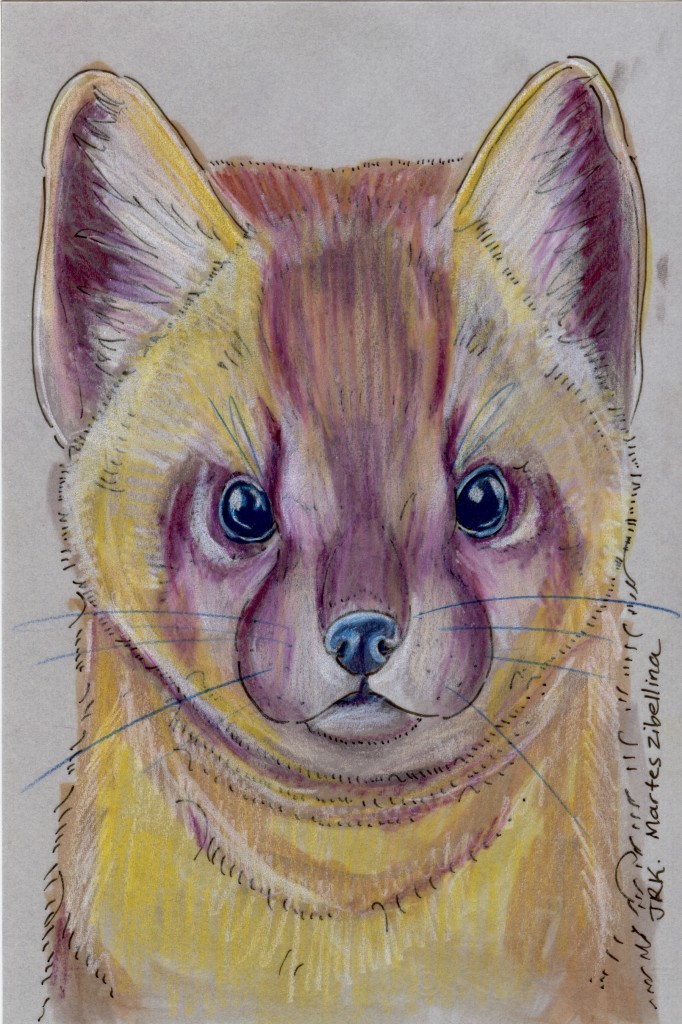
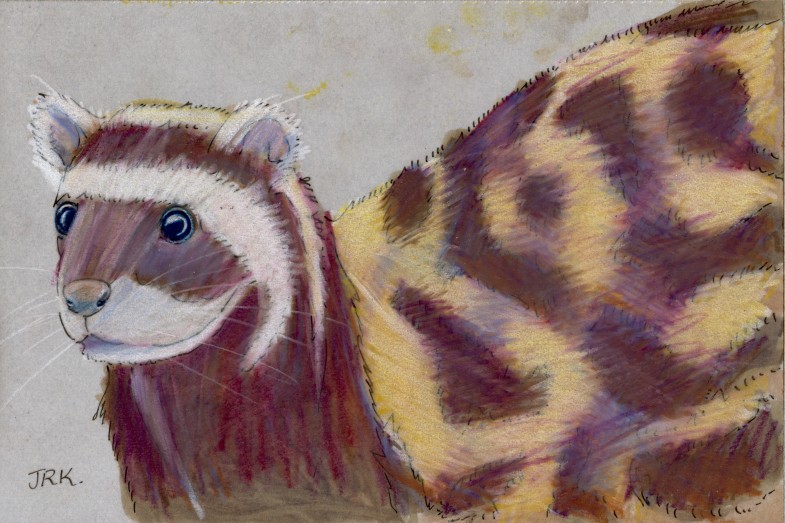
Marbled polecat (click image to enlarge)

0324

Today marked the end of the first stage of play in the World Cup, and the Round of 16 is set. Unfortunately, today’s country, Serbia, did not make it through, but no matter. The marbled polecat (our second mustelid in a row, by the way) still has a chance in the World Cup of Mammals!

Marbled polecats (who make me hungry with the way their fur evokes marble cake) live in Europe and Asia, but their numbers are decreasing, and the IUCN Red List classifies them as vulnerable, the last step before endangered. That is due to habitat loss, completely unsurprisingly. Polecats like steppes, brushland, and sometimes forests, and between climate change and humans being humanny, those kinds of habitats are going away.

Perhaps we should think twice before crossing them, though. The species account in Mammalian Species number 779, December 20, 2005, has the following chilling details to report:

“[Marbled polecats] have a repertoire of alternative methods to kill prey. They have 2 kinds of killing bites: the 1st is the penetration of the prey’s body by the canines, and the 2nd is crushing the prey without canine penetration (Ben-David et al. 1991). To kill small vertebrate prey, marbled polecats crush the thorax. If the prey struggles, they may pin the prey down with the forepaws and deliver head shakes or follow-up by a bite to the head or neck (Ben-David et al. 1991). On larger, more nondefensive prey (guinea pigs, Cavia porcellus), the polecat bites the nape of the neck and eventually severs the spinal column from the base of the skull. To kill large defensive prey such as rats, the marbled polecat bites the throat. Fleeing prey were bitten dorsally, but defending prey were bitten on the head or neck. Additional details on the killing methods of the marbled polecat are available (Ben-David et al. 1991).”

So let’s be careful around them, shall we? And so should the other mammals of Group D!

And what of Serbia’s national soccer team? Their showing in this World Cup was kind of confusing, apparently, with them beating a team no one thought they should have (Germany) and losing to teams everyone thought they should have beaten (Ghana, Australia). This is actually Serbia’s first World Cup under the name Serbia. The team is considered the continuation of both the Serbia and Montenegro team (after Montenegro seceded from Serbia and Montenegro, they got their own team) and the Yugoslavia team (which broke up when Yugoslavia did), so any records that the Serbia and Montenegro or Yugoslavia teams earned now belong to the Serbia team.

{ 3 comments }

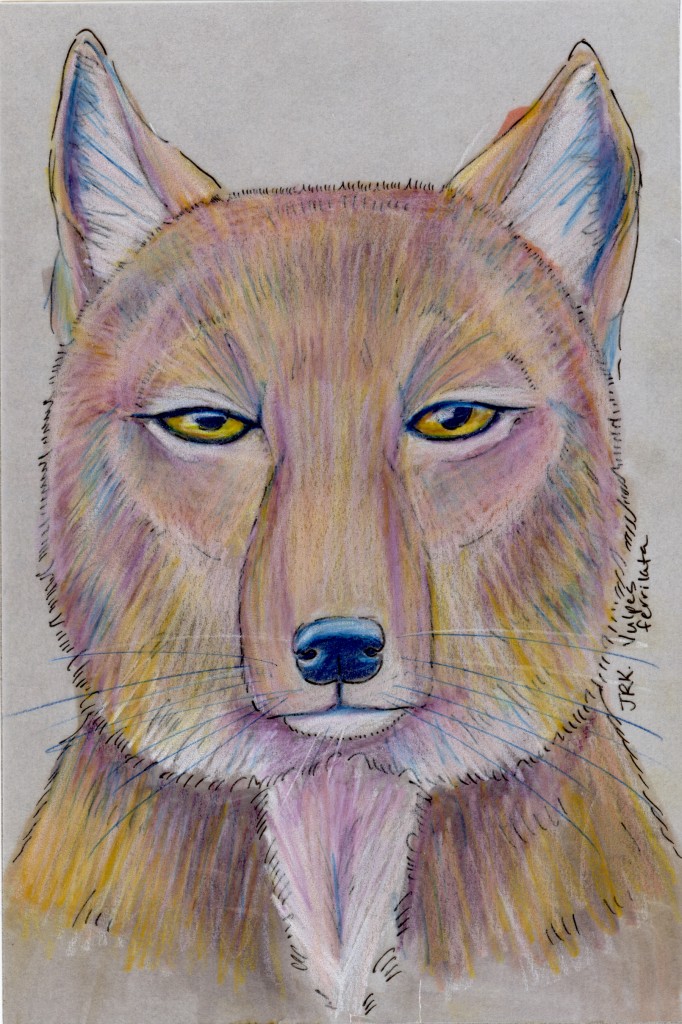
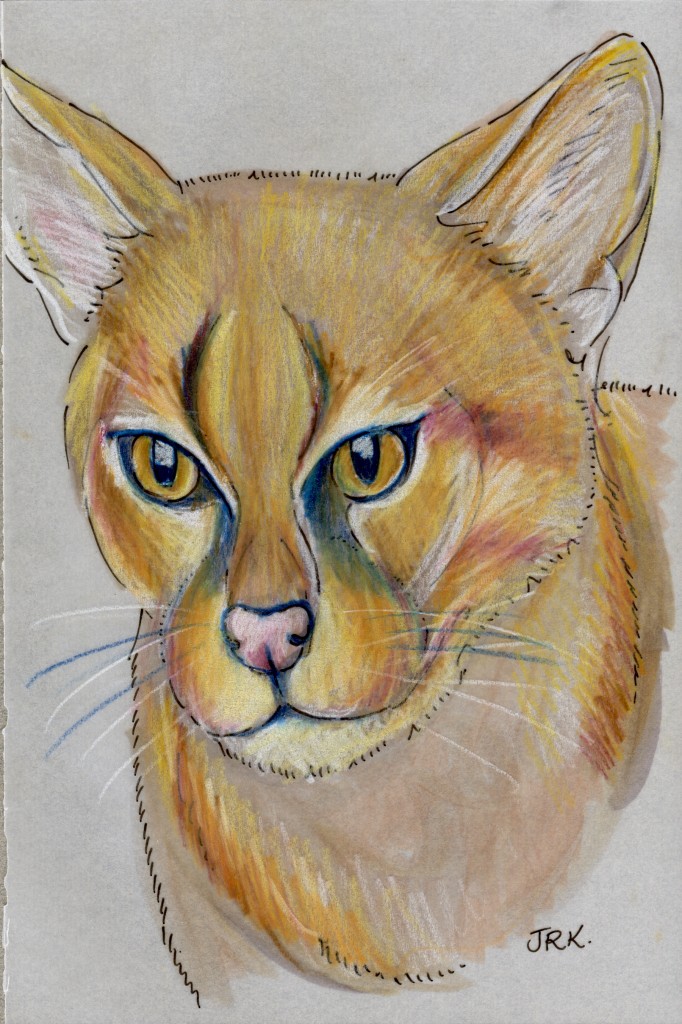
Beech marten (click image to enlarge)

0323

The World Cup continues and so do the mammals! Today we have a beech marten from Slovenia. Also called the stone marten, the beech marten is pretty widespread in Europe and Asia. It lives in forests, nests in cozy crevices and hollows, and eats rodents, birds and their eggs, and berries. In researching the beech marten, I learned a new word: commensal, as in “Commensal beech martens may cause damage to roofs, insulation, and electrical wiring and pipes in houses and cars,” which is a quote from the beech marten’s page on the IUCN Red List. The dictionary says that a commensal relationship is one in which one organism benefits and the other is neither benefited nor harmed (hmm, I think I may have been in a commensal relationship myself once or twice), which confused me because it seems like damage to roofs, insulation, and electrical wiring could qualify as harm. Basically, in biology, commensal animals are those who live among humans and may annoy us but don’t get in the way too much, if I’m understanding it correctly. Rats, for example, are commensal with us. And Wikipedia points out that the mites that live in our eyelash follicles are an example of commensalism, too! Oh good!

Slovenia came in third in Group C, ahead of Algeria but behind the U.S. and England. The team was formed after Slovenia split from Yugoslavia in 1991, and this was their second World Cup.

Group C Results

In Group C, we had the European beaver from England, the American badger from the U.S., the Barbary macaque from Algeria, and today’s Slovenian beech marten. Tough group! The beaver is a rodent, but a tough one, and even though beech martens do eat rodents, I don’t think they eat rodents that weigh ten times more than they do. Badgers are notoriously vicious. I usually give an edge to primates, but the Barbary macaque is kind of small and herbivorous. So I think the mammalian Group C goes in the exact order the soccer one did, and the two mammals continuing on to the Round of 16 are:

American Badger (USA)
and
European Beaver (England)

{ 4 comments }

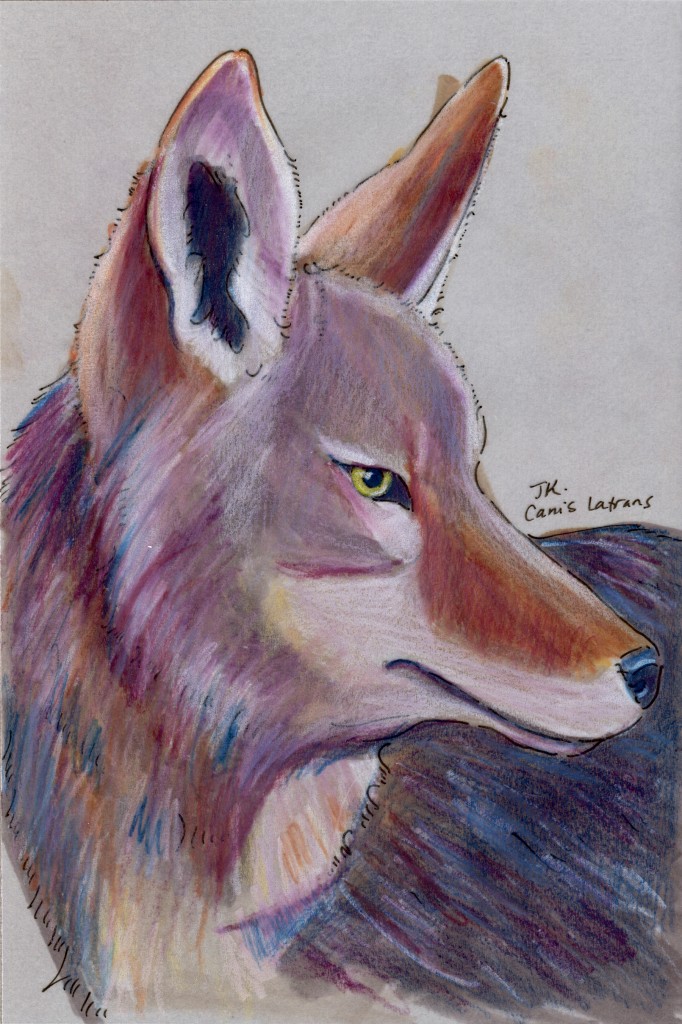
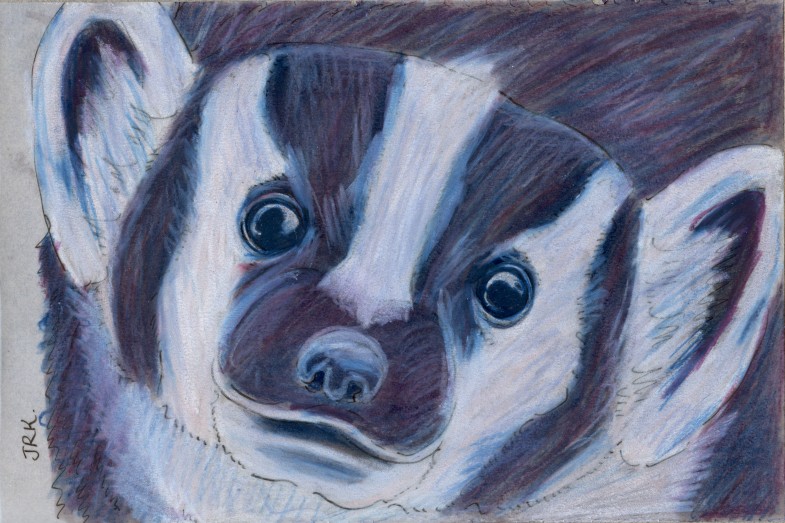
American badger (click image to enlarge)

0321

Do you realize that I’m currently on my longest-ever mammal streak? Three weeks and counting. I’m sure it’s bound to break any day now, so let’s continue enjoying the mammals from the 32 countries competing in the World Cup. Today it’s my own home, the USA, and the American badger, which I admit I picked because I regretted that I already drew the European badger and therefore couldn’t assign it to England. Thanks to The Wind in the Willows, badgers are quintessentially English to me. But just like the USA has conquered England in the World Cup, so we shall conquer their badgers in the World Cup of Mammals!

Okay, so the USA didn’t actually conquer England in the World Cup. But we did tie them, which is amazing. Look at this Daily Show segment about how ridiculous at least some English people think it is that we even have a soccer team:

The Daily Show With Jon Stewart Mon – Thurs 11p / 10c
World Cup 2010: Into Africa – Two Teams, One Cup
www.thedailyshow.com
Daily Show Full Episodes Political Humor Tea Party

Before the match, CNN reminisced about the long-ago time (1950) “when U.S. postmen and miners humbled England,” President Obama and Prime Minister Cameron made a friendly wager (when they could have been talking about, I don’t know, British Petroleum or something), Katy Perry wore a goofy dress (and I would point out that it’s half the Union Jack, instead of half the St. George’s Cross, which it should be, am I right?) because she’s engaged to an Englishman, and look at this English tabloid front page, in which they parody how we Yanks talk:

The Sun, June 12, 2010

After all that, it was a draw, which was satisfying enough to the USA and especially humbling to England after their goalie allowed a really embarrassing goal. (You can see the match reenacted in Legos here.) After that, Comedy Central changed its tune. Stephen Colbert is pretty merciless here:

The Colbert Report Mon – Thurs 11:30pm / 10:30c
America’s Strained Relationship With England
www.colbertnation.com
Colbert Report Full Episodes Political Humor Fox News

Tomorrow morning, Group C will be decided after the group’s final two games. If England beats Slovenia, they will go on to the Round of 16. If the US beats Algeria, they will. If the US and Algeria draw, the US needs Slovenia to beat England or also draw. By the time you read this, it will probably already be settled. How exciting!

(Oh yeah, the badger. It eats rodents and will sometimes team up with a coyote to hunt, which I think is pretty fascinating. American badgers live in western and central Canada and the United States, and western and northern Mexico.)

{ 4 comments }

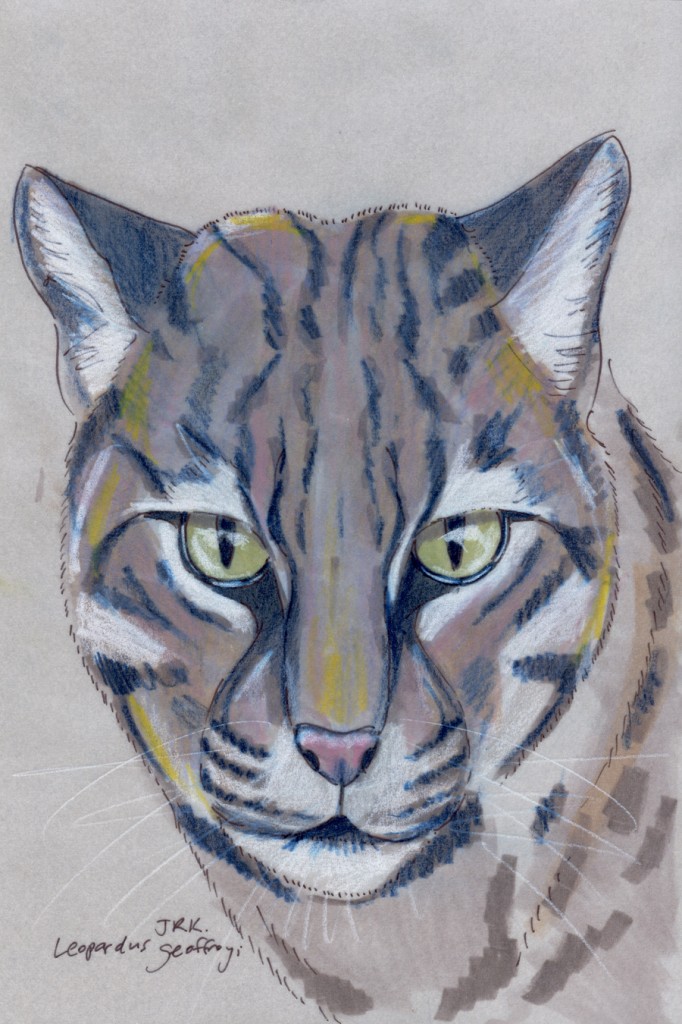
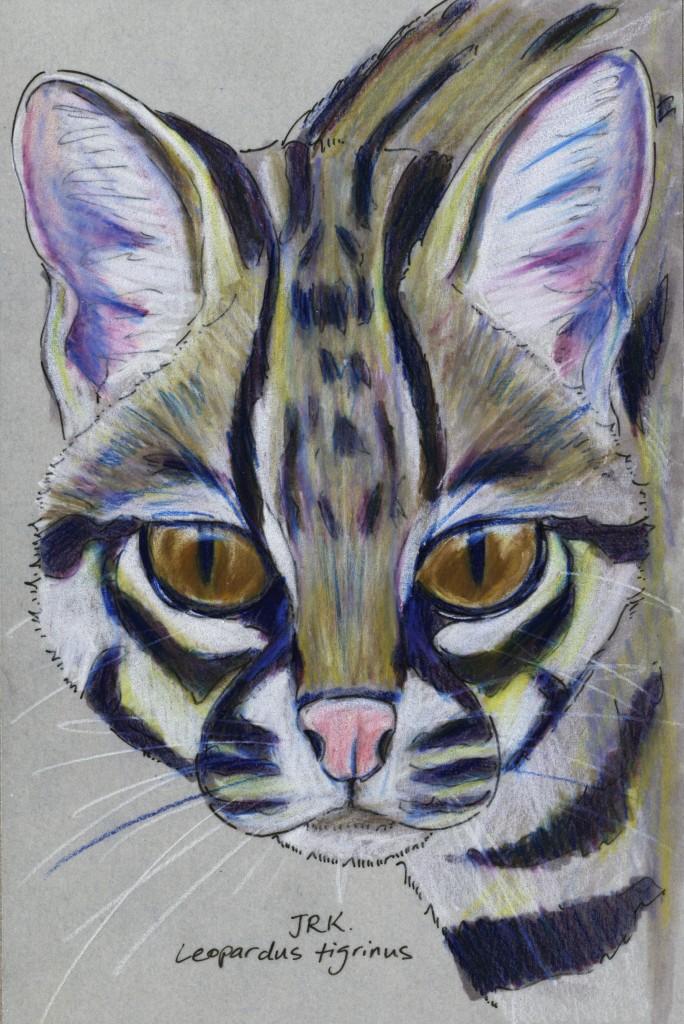
Leopard cat (click image to enlarge)


0316

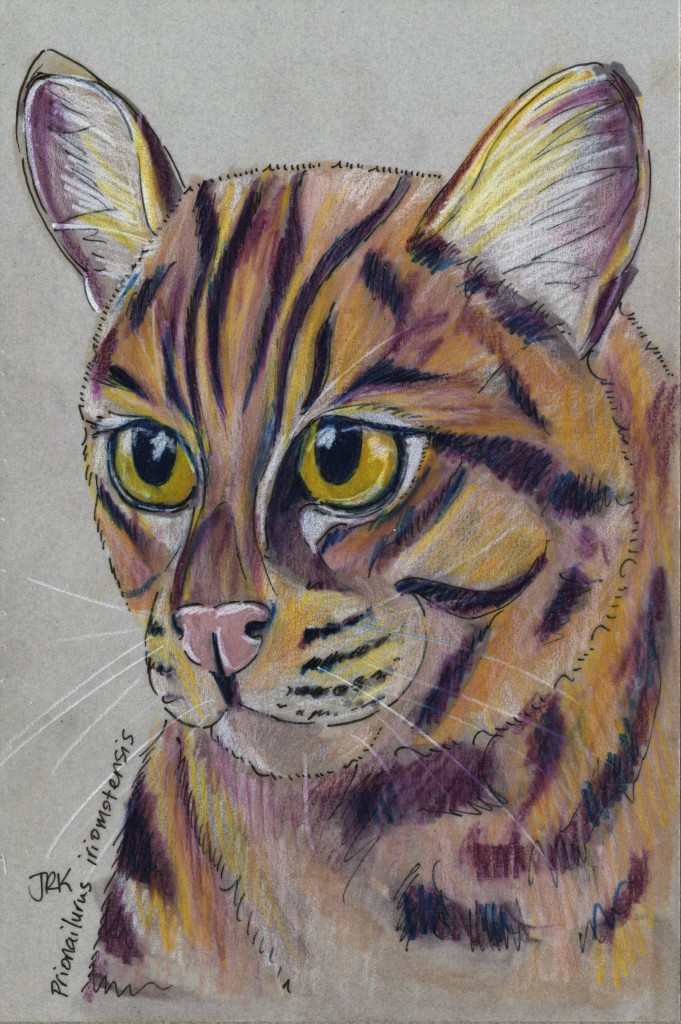
Having dispensed with the countries of Group A, let’s start looking at the World Cup’s Group B with South Korea and its leopard cat. The leopard cat is a small wild cat—generally not much bigger than a housecat—that’s widespread throughout Asia. The subspecies in Korea, Prionailurus bengalensis euptailurus, is one of the bigger subspecies, and actually looks pretty different from most of the other varieties. Some people think it should be its own species, but alas, it’s not, at least not today, at least not in general. I had some trouble locating many pictures of it until I found its Korean name—삵—but then I found several pictures of the cat as roadkill, which I guess tells us something. Also, people like to keep the leopard cat as a pet or cross it with the domestic cat to create a hybrid called the Bengal cat.

South Korea’s soccer team is a pretty powerful, successful one, especially compared to other Asian teams. It plays Argentina today (which is why I’m posting this at midnight—the game is on at 5:30 am my time, and I want to have some semblance of timeliness). Both teams won their first game, South Korea defeating Greece and Argentina beating Nigeria, so a win from either team today could tip the scales fairly heavily when it comes to finding out who advances to the next round. (Perhaps one could clinch it. I don’t want to figure out the probabilities right now.) Argentina is favored, but not extremely so.

South Korea’s coach, Huh Jung-moo, and Argentina’s, Diego Maradona, go way back. Here’s a picture of them when both were up-and-coming stars and they met at the 1986 World Cup.

South Korea's Huh Jung-moo and Argentina's Diego Maradona


Coco drew a family of leopard cats! Left to right, they’re Coco, Theo, Ted, and me. Coco is playing with yarn and Theo has his eye on a passing rat!

Leopard cats by Coco, age 11

{ 5 comments }