From the category archives:

Bats

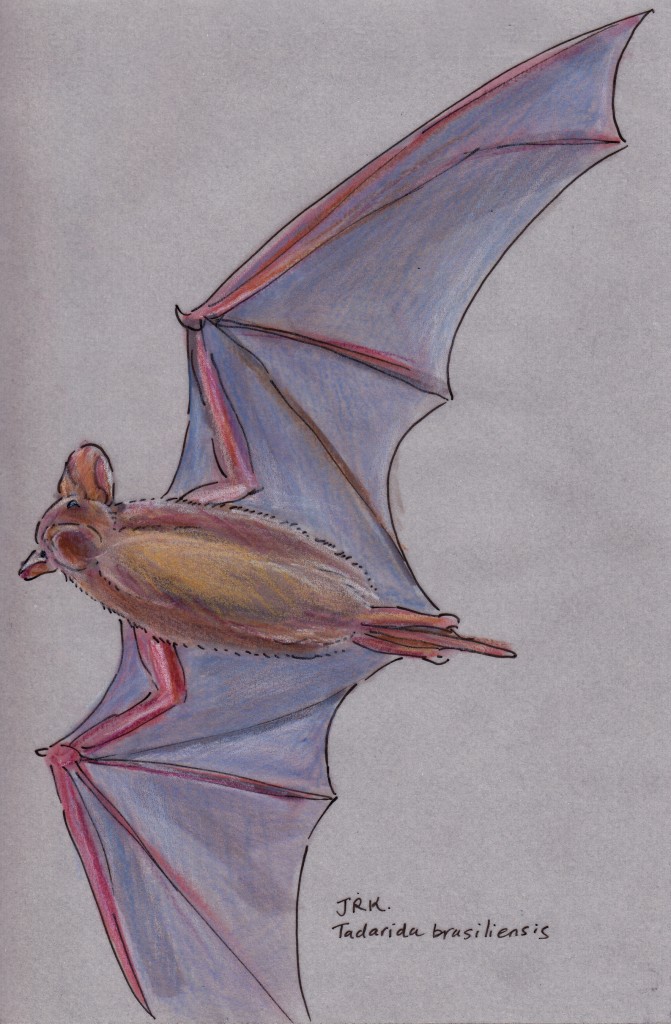
Mexican Free-tailed Bat (Tadarida brasiliensis)

by JR Kinyak on October 5, 2011

in Bats

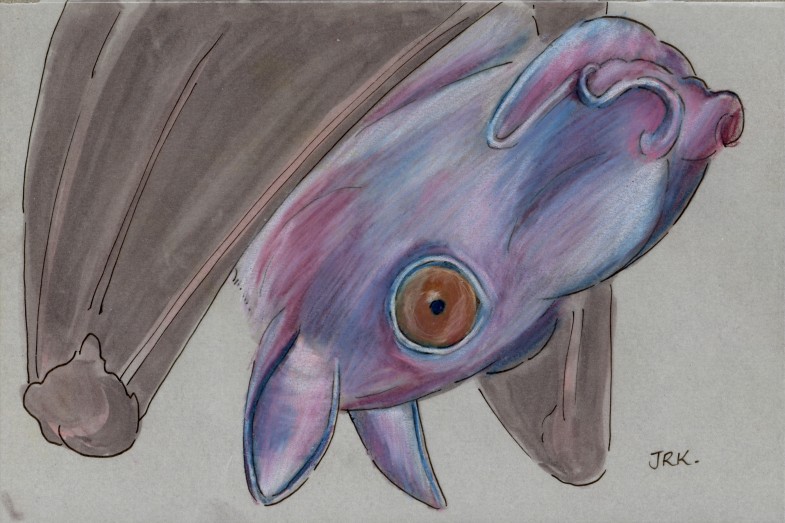
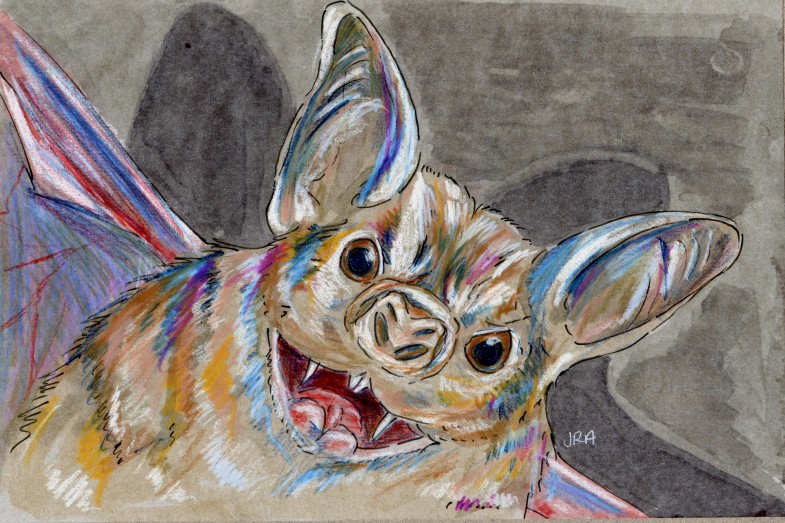
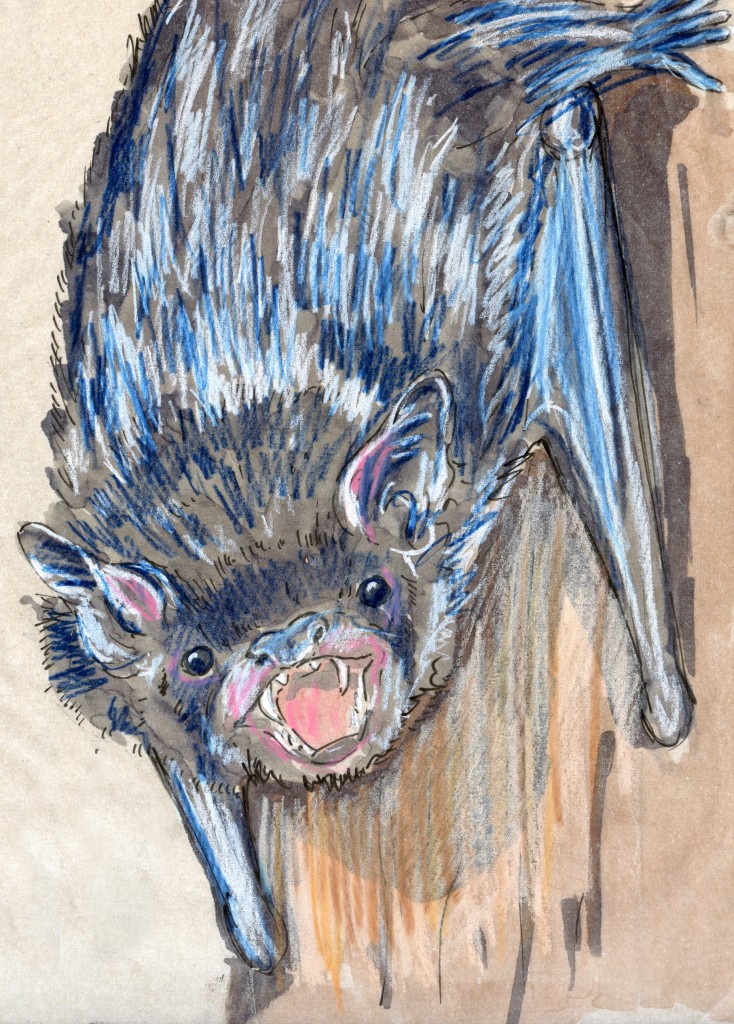
Mexican free-tailed bat (click image to enlarge)


Mexican free-tailed bat by Theo, age 15


Mexican free-tailed bat by Coco, age 12


0395

The kids and I are reading a book called Hanging with Bats, which starts with a chapter about the Mexican free-tailed bats at Carlsbad Caverns here in New Mexico. We decided to draw the bats, and then my son Theo wrote a poem to post on the Daily Mammal.

I think I may have mentioned, on this site, Thomas Nagel’s famous essay “What is it like to be a bat?” in which he explains that it is difficult (impossible?) for us to even imagine it, using the human-bat disconnection as an example of the inherent shortcomings of subjective experience in understanding objective truth. (I think that’s what it’s about.) As Nagel says, “In so far as I can imagine this (which is not very far), it tells me only what it would be like for me to behave as a bat behaves. But that is not the question. I want to know what it is like for a bat to be a bat. Yet if I try to imagine this, I am restricted to the resources of my own mind, and those resources are inadequate to the task.”

Theo’s poem, though, tries to help our imaginations, and it’s absolutely beautiful.

Through Tiny Eyes

Imagine
Screeches coming back at you, directing you
Imagine
Air flowing through your fur while slicing through air
Imagine
Air holding you airborne
Imagine
Hanging upside down,
huddling in the warmth of thousands of you
Imagine
Using your hands to cover your entire body
Imagine
Making an image of a black tornado
coming out of the black depths of a cave
Imagine
Being a bat

{ 6 comments }

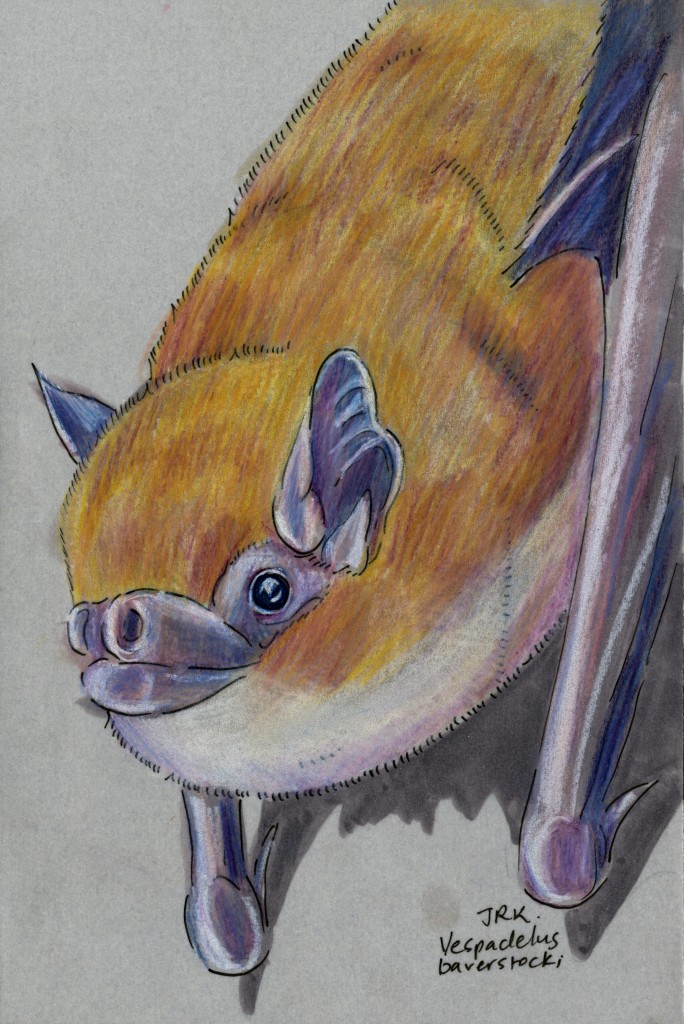
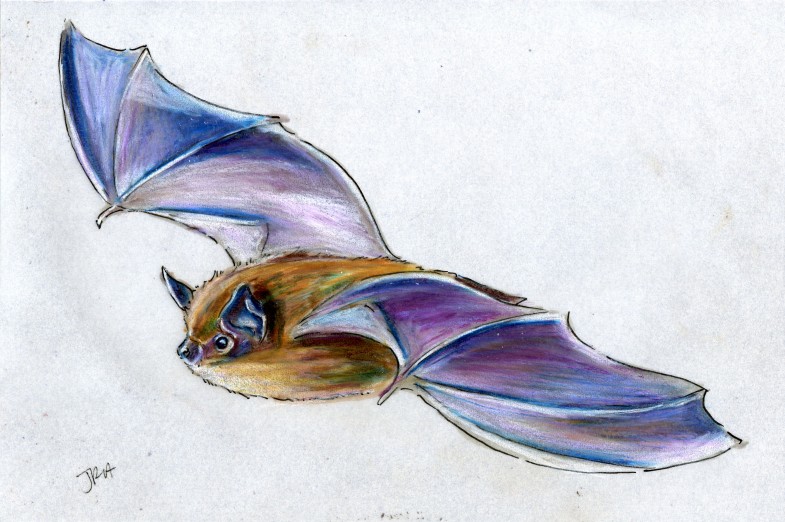
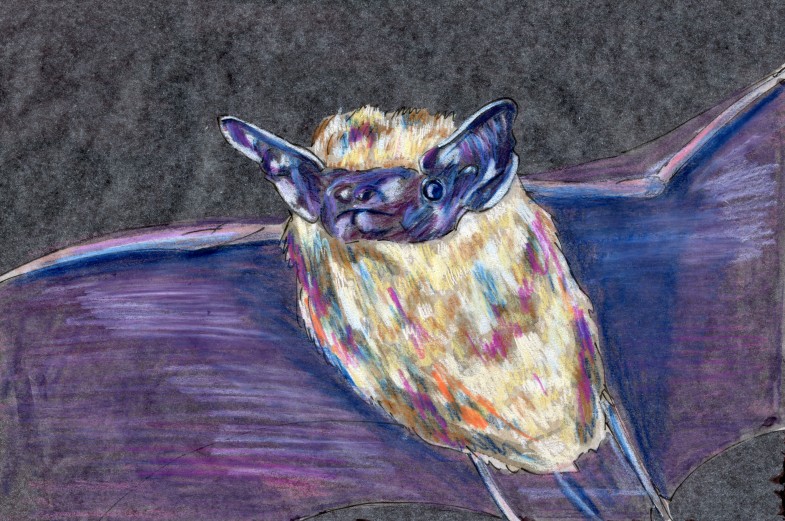
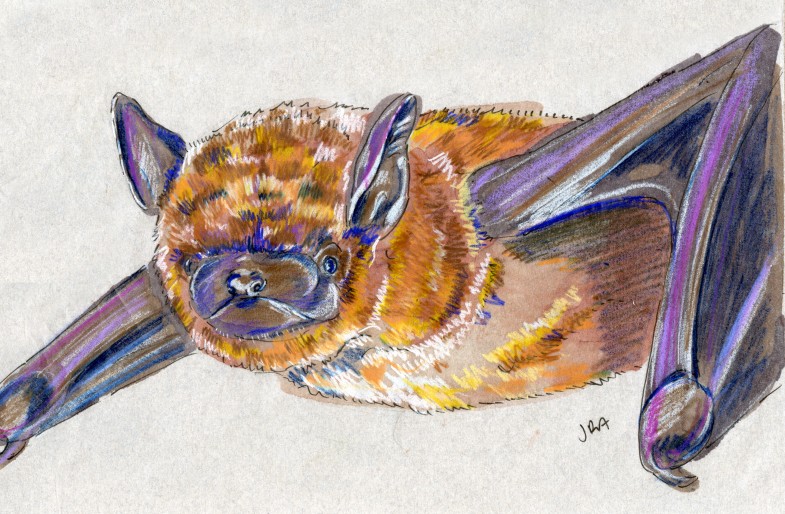
Inland forest bat (click image to enlarge)


0382

I had fun with the random rodents I drew the other day, so I’ve decided on a new theme week: Random Week! I put all the mammals I haven’t yet drawn in random.org’s list randomizer and for the next week-ish, I’ll be as surprised as you by what mammal I draw each day. (I only put in their genus and species names, not families or orders, so I’m more likely to be in the dark until I look them up.)

Today’s randomly selected mammal is an Australian bat, the inland forest bat, whose scientific name comes from a still-living zoologist, Peter R. Baverstock, who was born in 1948. I think this is my first mammal named for a baby boomer! Well, the first that I’ve noticed was named for a baby boomer. (Did they have a baby boom in the ’40s and ’50s in Australia?)

The inland forest bat is very small, weighing 3 to 7 grams, or 3 to 7 paper clips (thanks to Mrs. Beard, my third grade teacher, for that helpful comparison I’ve used my whole life). It lives throughout Australia in dry areas, roosting in hollow trees or abandoned buildings.

{ 3 comments }

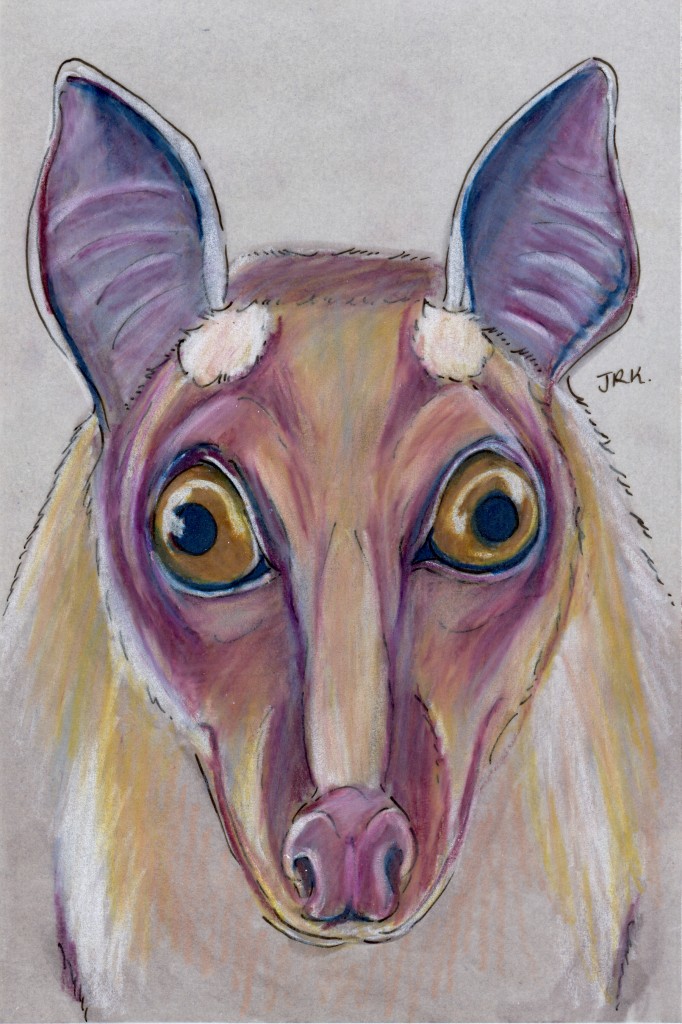
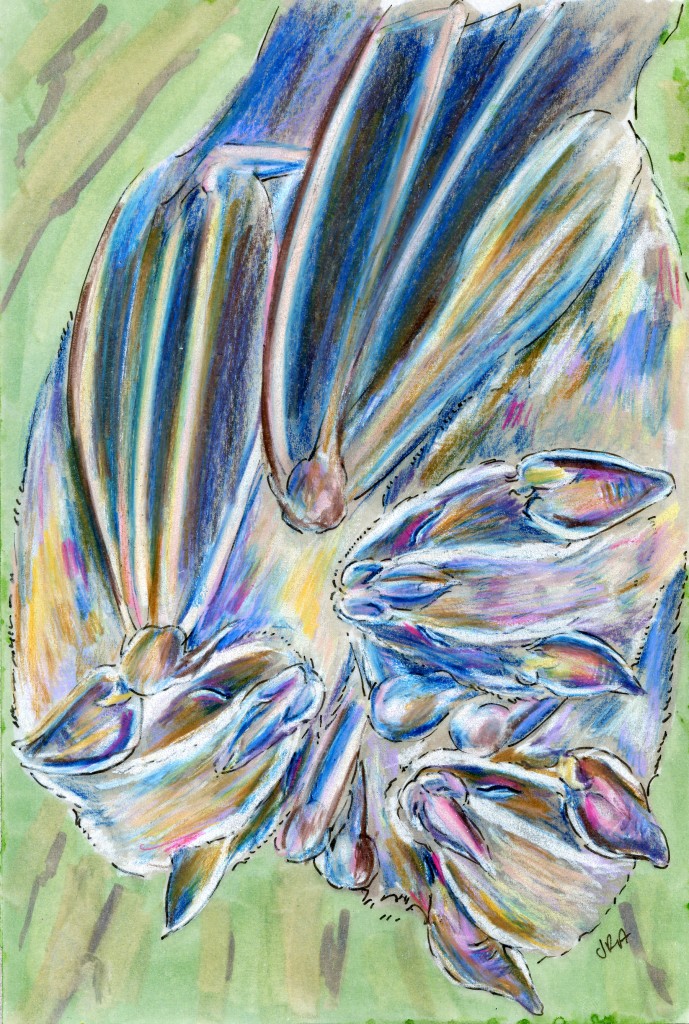
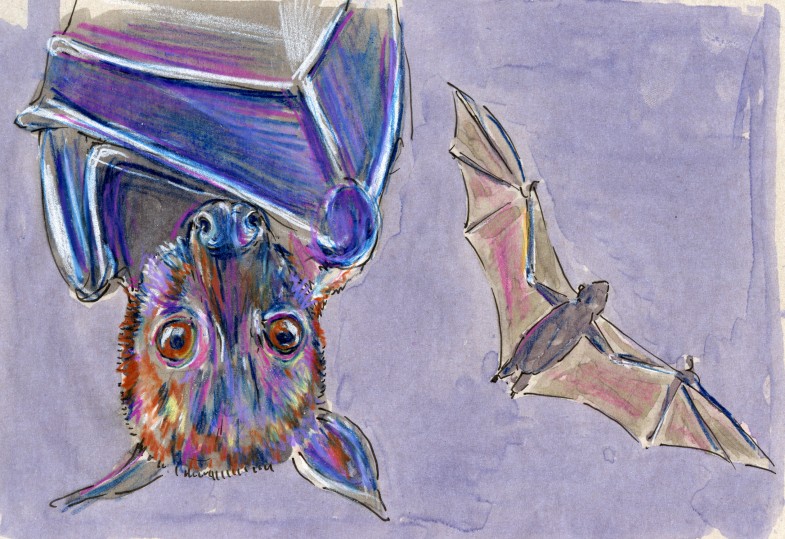
Gambian epauletted bat (click image to enlarge)


0354

Last June, I drew the hammer-headed fruit bat, which is known for its lek mating system. The Gambian epauletted bat, today’s mammal, uses a similar lek system. In Courtship in the Animal Kingdom, Mark Jerome Walters explains leks:

In some animals, however, males offer neither defense of the females nor any particular resource. There is no trade-off of riches, nor any guarantee that the male will help raise the offspring. Such males gather merely to display themselves. The group display is known as a “lek”—a word thought to have come from the Swedish for “sport” or “play”—and the tree, pasture, or other area where they display is known as an “arena.”

According to Walters, male Gambian epauletted bats “gather at dusk, inflate elastic cheek pouches, and emit a singsong honking sound audible for 200 yards or more. The male then unfurls tufts of white hair from pockets on each shoulder—hence the name. These epaulets are thought to contain pheromones. Wafted off into the twilight by the male’s gently flapping wings, they may help to attract a female.”

How neat, isn’t it? They have pockets on their shoulders, from which they unfurl tufts of hair, and then flap their wings to send their pheromones off as an only subconsciously perceptible advertisement for their charms. The males get to the arena as the sun sets, and the females keep them waiting until 11. Then the females get there and hover in front of each male in turn, checking out the epaulets and honking. After they make their choice and mate, the males “retire exhausted by 3 a.m.”

{ 3 comments }

Wrinkle-faced Bat (Centurio senex)

by JR Kinyak on February 28, 2011

in Bats,Theme Weeks

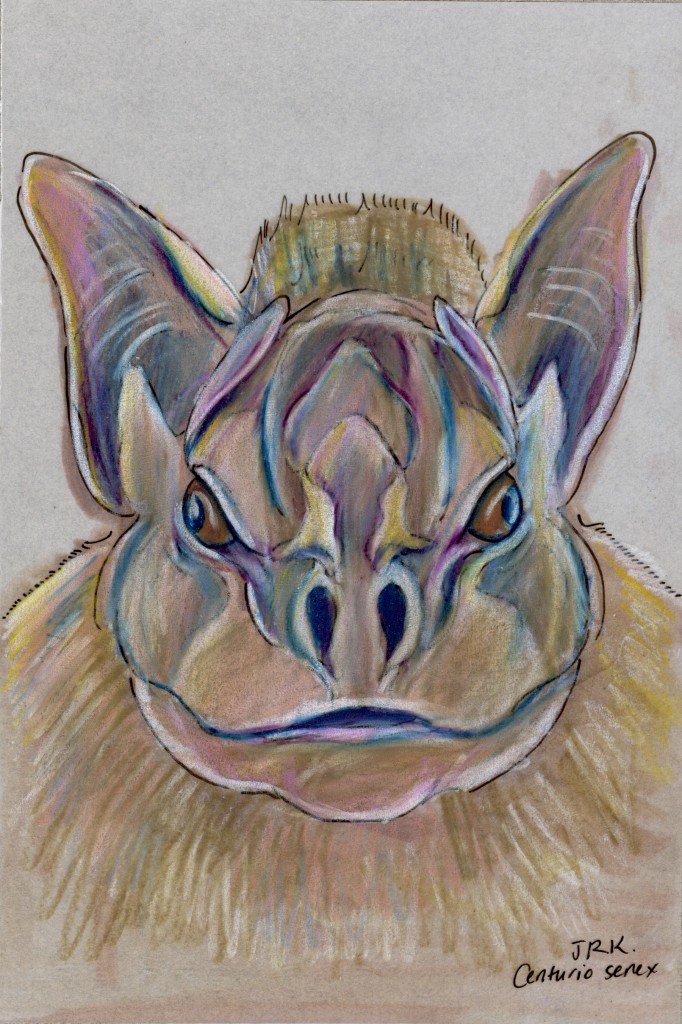
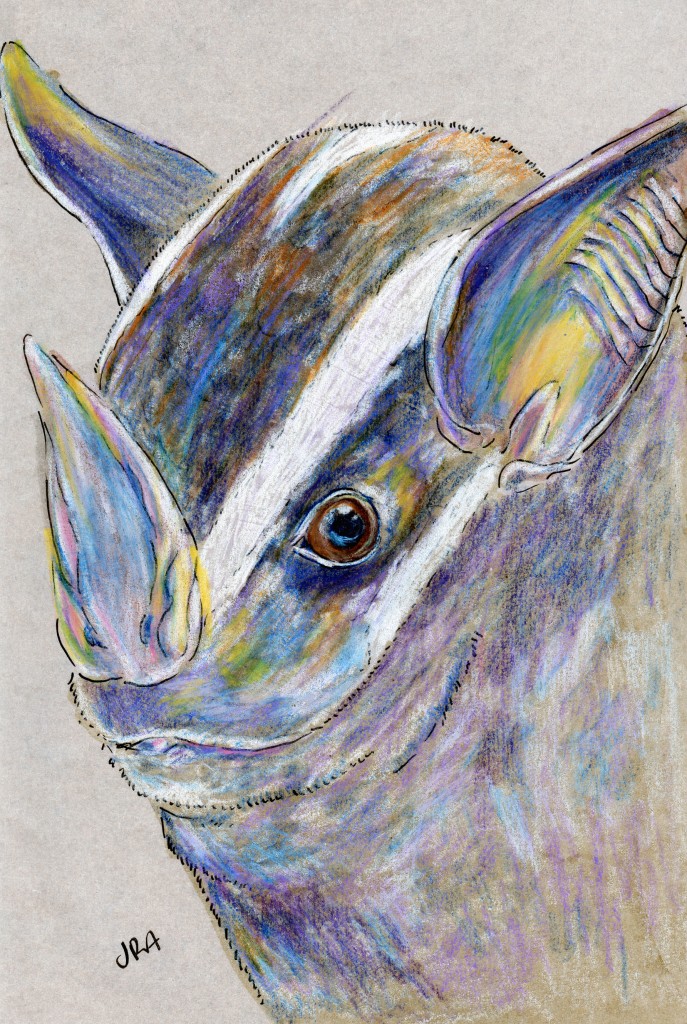
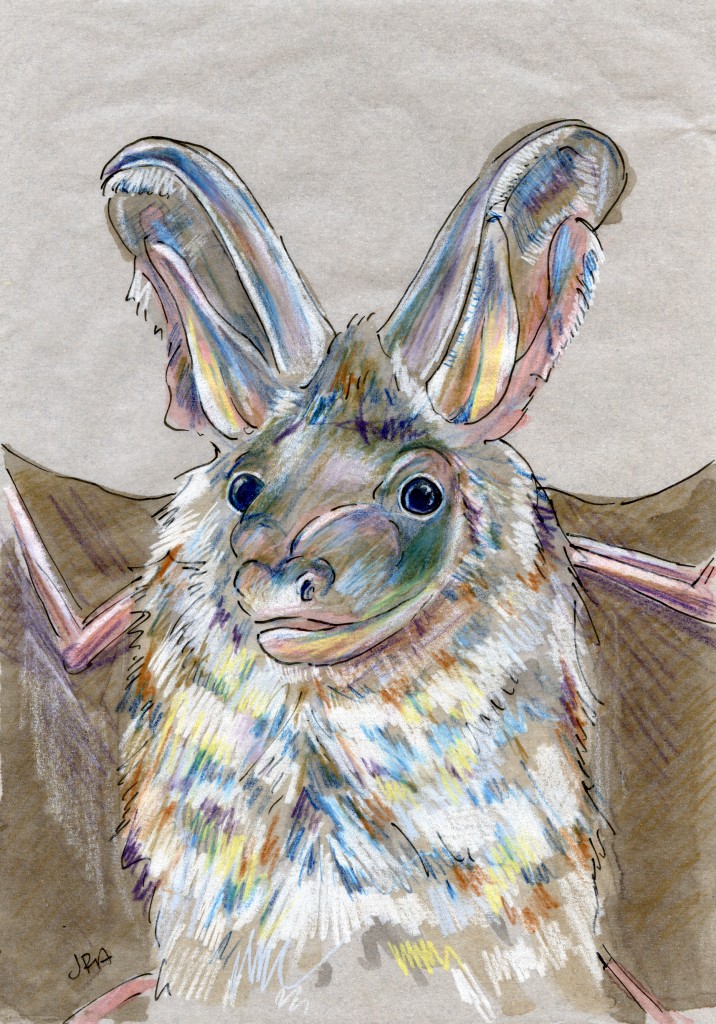
wrinkle-faced bat

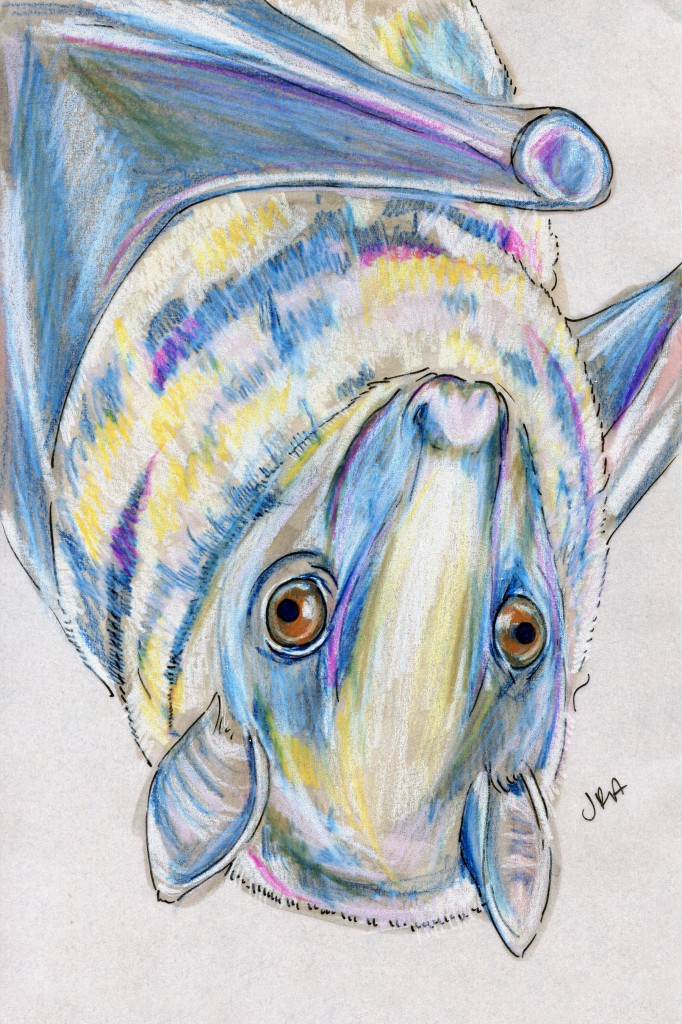
Wrinkle-faced bat (click image to enlarge)


0351

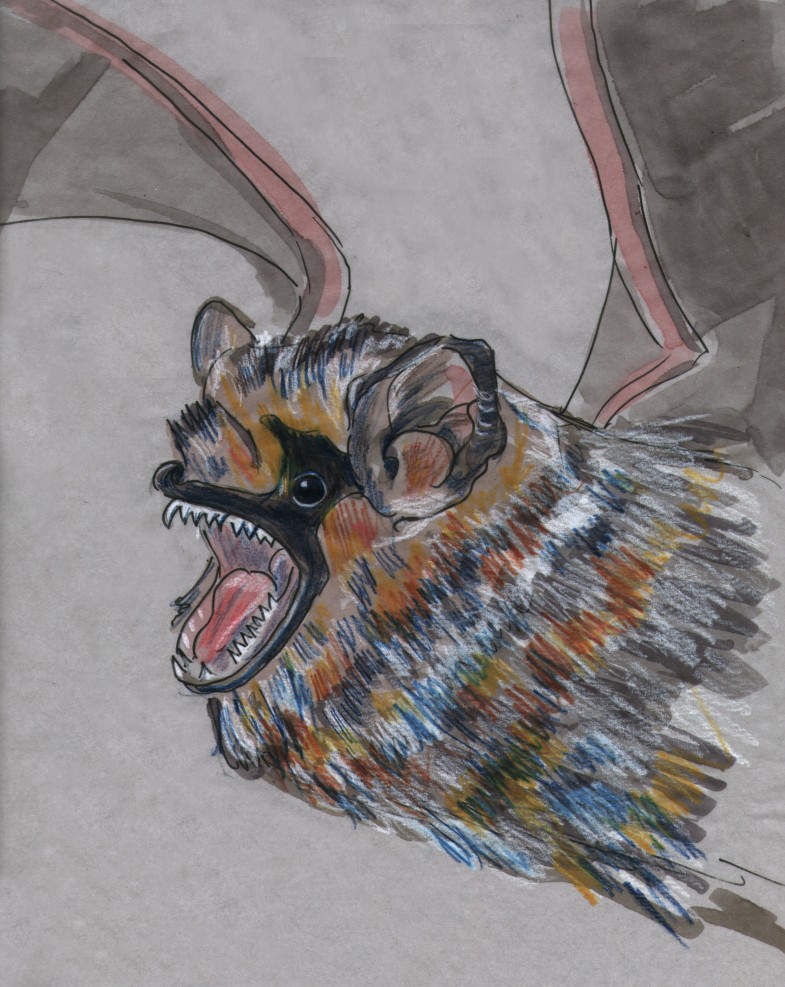
When I drew this guy, I was working on a Mammal Mating theme week, but that was several months ago, and now I can’t figure out what’s interesting about the wrinkle-faced bat’s mating habits, except that scientists speculate that the wrinkled face may be related to sexual selection. Only the males have big neck flaps, and they emit a musky odor from their chin regions, and why would males emit a musky odor from their chin regions if not to attract females?

The flaps at the male bats’ necks are so big that when they’re resting, they flip the flaps up to cover their entire faces. I thought it might be to keep light out so they could sleep better during the day, but then I learned that they have translucent patches over the eyes! Pretty amazing.

This article from the Journal of Zoology (link is to a PDF) uses words like bizarre, extraordinary, unusual, exceptional, enigmatic, and dramatic in describing the bat’s strange face and head. The wrinkle-faced bat is frugivorous, meaning it eats fruit, and the article’s authors conclude that it’s likely that the shape of the head, anyway, is in service of the bat’s strong bite, which perhaps helps it eat harder fruits and therefore survive when weaker-jawed frugivores wouldn’t. Usually, when a bat has strange facial folds, it’s thought that the wrinkles help focus the bat’s sonar so it can better catch insects. But this fruit-eater obviously doesn’t need that kind of help. I read one theory speculating that the wrinkles could channel fruit juice into the bat’s mouth.

The scientific name Centurio senex means “100-year-old man.”

{ 4 comments }

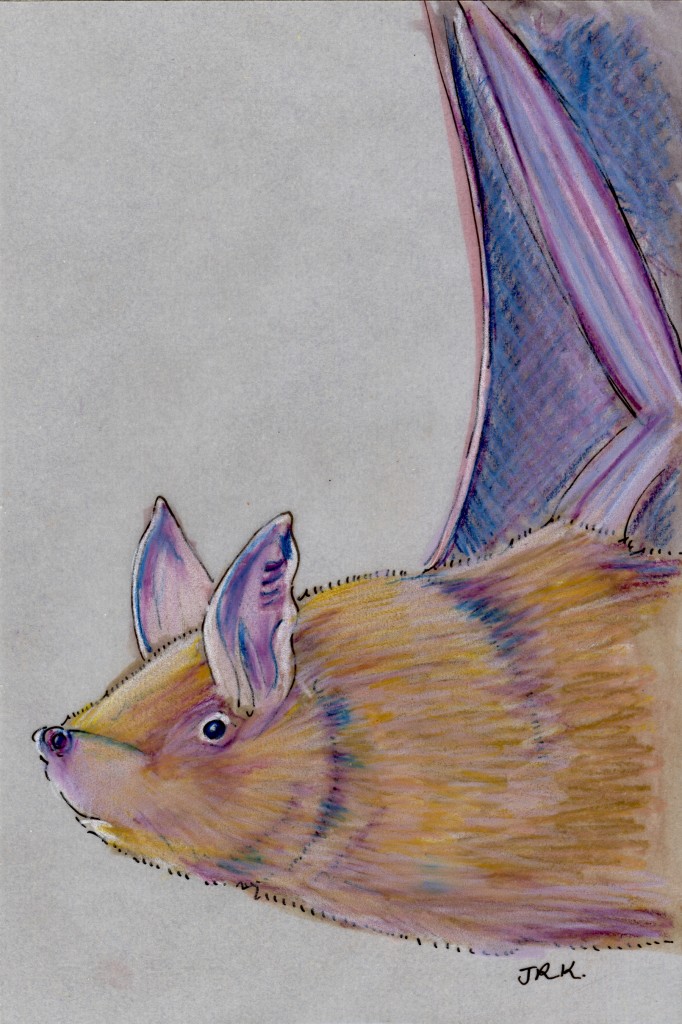
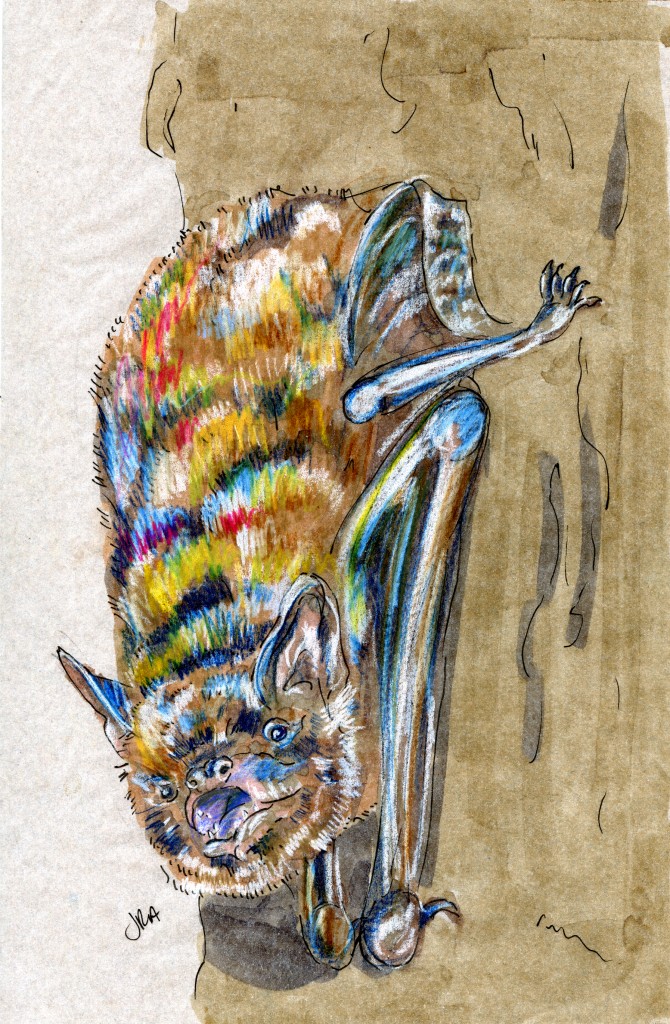
New Zealand lesser short-tailed bat (click image to enlarge)


0334

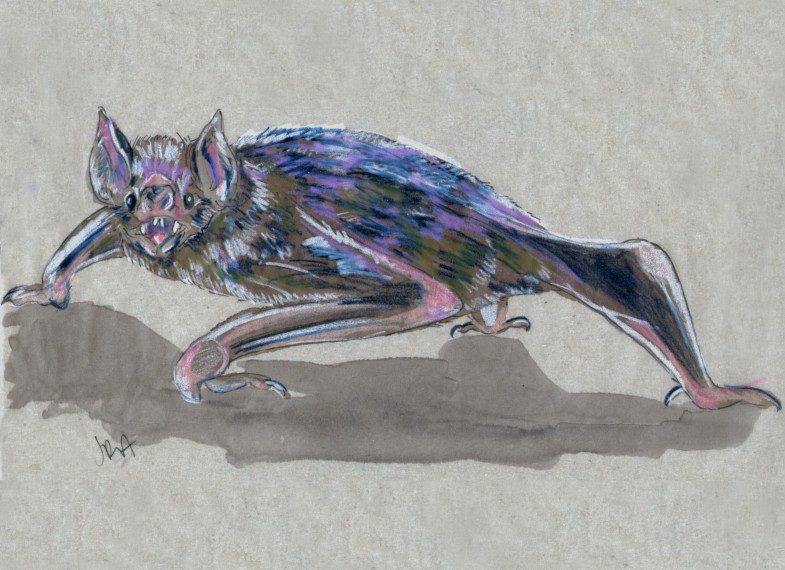
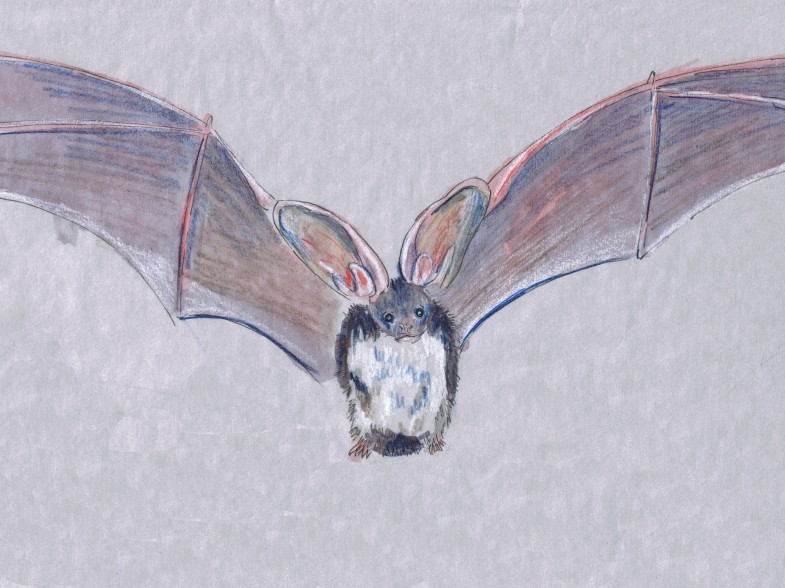
We are continuing our look at the World Cup, and with this particular entry, we have some officiating errors, just as they have in the soccer tournament. You see, I usually draw my bats the way they are usually photographed: maybe hanging upside down, probably crouched on a tree or something. I like drawing portraits, and besides, there aren’t that many great reference photos of flying bats available. But lately I’ve been feeling like I’ve been drawing the same few drawings over and over—the same monkey face, the same carnivore portrait, the same crouching bat—so this time, I decided to take the harder path and draw a flying New Zealand short-tailed bat. I gathered some reference for the particular species and some other reference for bats flying in general and cobbled together this drawing. It turned out okay, not spectacular, but not embarrassing. And then I started researching the species for my write-up.

And found out that this is a bat that doesn’t fly.

One of two species, out of more than 1,000, that can walk on the ground. (The other is the vampire bat, which I have already drawn; it’s all flying bats from here on out.)

And that’s the one I decided to draw flying.

It’s not that it can’t fly—I exaggerated when I said they don’t fly—but it does most of its feeding and foraging on the ground, and as MSNBC.com says, it’s an “odd creature” that “can walk on all fours and doesn’t get easily flustered.” Here’s a video from ARKive:

What’s neat is that it’s a bat that is evolving into a ground animal. That seems like a pretty good idea on an island like New Zealand, where the only mammals arrived there by air—the bats—or by sea—the seals—or else were introduced, like rats and livestock. That leaves a pretty good niche for a little ground mammal that eats insects and grubs, and that’s the niche the lesser short-tailed bat is filling. (Recent discoveries suggest, though, that the bat was already evolving in this direction before it arrived in New Zealand: a fossil found in Australia seems to be an ancestor of the New Zealand bat and is also adapted for walking).

So let’s just say that this soaring bat is experiencing a special moment in its life, just as the New Zealand soccer team did when it qualified for the 2010 World Cup, only its second qualification in its history (the other was in 1982). And New Zealand was undefeated in this World Cup! But the team’s three draws weren’t enough to get it out of the group stage, and so the All Whites (the country’s rugby team is the All Blacks, and the national basketball team, no fooling, is the Tall Blacks) went back home again.

The All Blacks—New Zealand’s rugby team—are known for doing a traditional Maori dance called a haka before games. I imagine it’s both intimidating to the opponent and energizing to the team. There was some talk of the All Whites doing a version at the World Cup, but as far as I can tell, they never did. So here’s a video of the rugby players’ haka from a game in South Africa.

{ 3 comments }

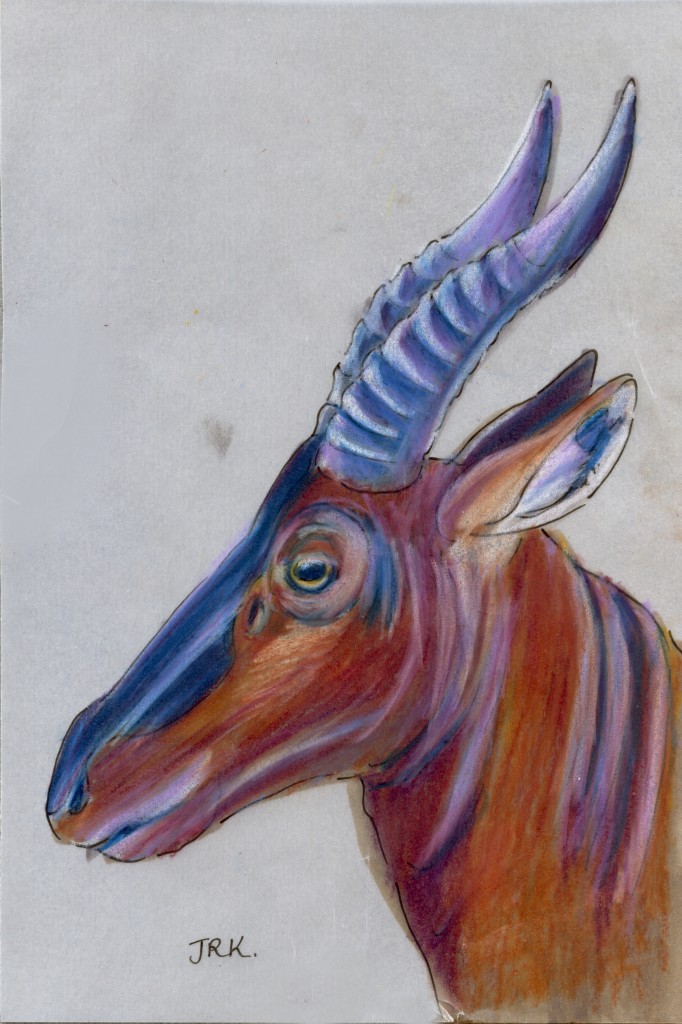
Topi (click image to enlarge)

0325

Because I missed a few days and because if I don’t step on the gas the World Cup will end before the World Cup of Mammals does, tonight I’m posting the final three mammals of Group D (the other being Serbia’s marbled polecat from the other day). This first one is the topi (Damaliscus korrigum), an antelope representing Ghana. Ghana was the only African nation to make it to the Round of 16, in which they beat the USA. Ghana plays Uruguay in the quarterfinals on Friday.

Bechstein

0326

Die Bechsteinfledermaus (Myotis bechsteinii), of course, represents Germany and is known as Bechstein’s bat in English. It was named after a German naturalist named Johann Matthäus Bechstein. Germany beat England in the Round of 16 and is going up against Argentina in the quarterfinals on Saturday.

Long-nosed bandicoot (click image to enlarge)

0327

We must have a marsupial to represent Australia, and the long-nosed bandicoot (Perameles nasuta) has volunteered for the task. This bandicoot lives only in western Australia, and right now it’s widespread, but the rate at which its population is declining is a bit disturbing. Australia didn’t make it out of the group stage in the World Cup.

Group D Results

We read about how the marbled polecat is a virtuoso of killing, and there’s no doubt in my mind that it should win this group. Of the others, I think the topi has the edge because of its size and the hardness of its hooves. So the two mammals continuing on from Group D are:

Marbled Polecat (Serbia)
and
Topi (Ghana)

{ 4 comments }

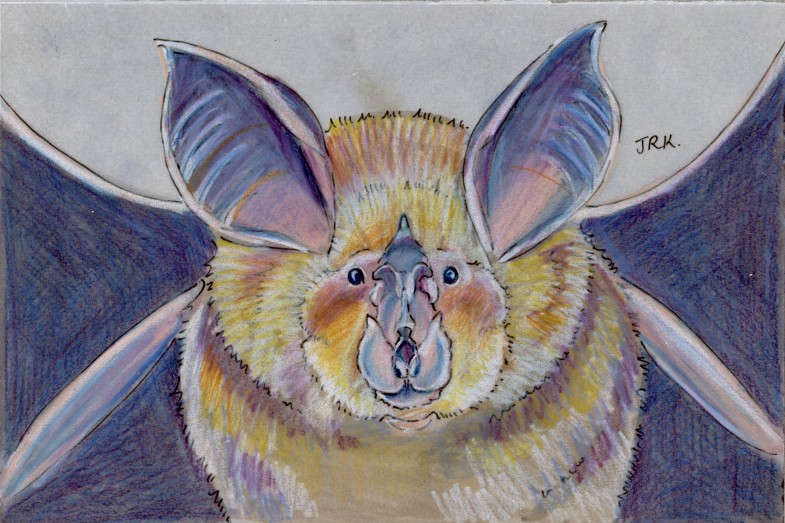
Mediterranean horseshoe bat (click image to enlarge)


0317

The Daily Mammal is celebrating the World Cup in the only way we can: by visiting with one mammal from each of the 32 participating countries. Today, let’s go to Greece! The Mediterranean horseshoe bat lives, yes, around the Mediterranean Sea, including in that land of olives and capers, Greece. The most pressing question about this bat is what’s up with that nose? Well, bats navigate by echolocation, of course, and horseshoe bats emit high-pitched noises through their nostrils and listen for the echoes to return to them. The going theory is that the rococo folds and petals of the bats’ noses help them focus the sound. I think their noses look like Georgia O’Keefe flowers…and you know what those are supposed to look like.

Now, Greece and the World Cup. Before this year, Greece only managed to qualify for the tournament once, in 1994. The team didn’t manage a single goal, though, and needless to say, did not make it out of the first round. Their first game in the 2010 World Cup, which they lost 2-0 to South Korea, seemed to indicate a continuing trend. In their second game, Greece gave up the first goal to Nigeria, and were once again behind. But then a Nigerian named Sani Kaita saved the day for Greece by getting himself sent off the pitch (don’t I sound like I know what I’m talking about?) about 30 minutes into the game.

In soccer, players who offend but not too badly are shown a yellow card and warned to knock it off. When they do something really uncalled for, reckless, unsportsmanlike, or violent, they are shown a red card and removed from the game. Then their team has to play with one fewer player than the other team for the rest of the game, and the offending player can’t play in the next game, either. After Sani Kaita’s ejection, everything turned around for Greece, and they would up scoring two goals: the first two goals they’ve ever scored in the World Cup. Here are the highlights (the red-carding comes at about 26 seconds in). Now, just like that, Greece can hope to advance to the Round of 16.

Coco drew a Mediterranean horseshoe bat, too. Didn’t she do a great job?

Mediterranean horseshoe bat by Coco, age 11

{ 5 comments }